


The Swiss Plateau is where Switzerland feels lived in rather than simply looked at. Between the high Alps and the Jura, this broad band of rolling countryside is threaded with efficient rail lines and dotted with compact historic cities. Choosing where to stay here is less about ticking off sights and more about deciding the pace of your trip: do you want medieval streets at your doorstep, a thermal spa after day trips, family-friendly space, or a quiet inn where cowbells are louder than traffic? This guide compares the main bases across the plateau between Zurich and the Bernese Oberland, focusing on Bern, Fribourg, Solothurn, Aarau, Baden and nearby countryside options.
Understanding the Swiss Plateau as a Base
The Swiss Plateau stretches from Lake Geneva to Lake Constance, and much of the country’s rail backbone runs along it. For travelers, that means you can sleep in one place and still day trip easily to the Alps, lakes and smaller heritage towns. Fast InterCity and InterRegio trains link Zurich, Bern and Geneva with stops at mid-sized hubs like Fribourg, Solothurn and Aarau, often every 30 to 60 minutes during the day. In practice, this makes the plateau ideal if you prefer to settle into one hotel for several nights instead of packing and unpacking daily.
Journey times between the main bases are short enough that you can treat them as one large, connected destination. Bern to Fribourg usually takes around 20 minutes by direct train, Bern to Solothurn roughly 30 minutes, and Bern to Aarau about an hour with a change depending on the service. Baden sits only about 15 minutes by direct train from Zurich’s main station and roughly half an hour from Zurich Airport, which makes it especially appealing at the beginning or end of a trip. These timings matter if you plan to buy a Swiss Travel Pass or half-fare card and maximize each day with multiple hops.
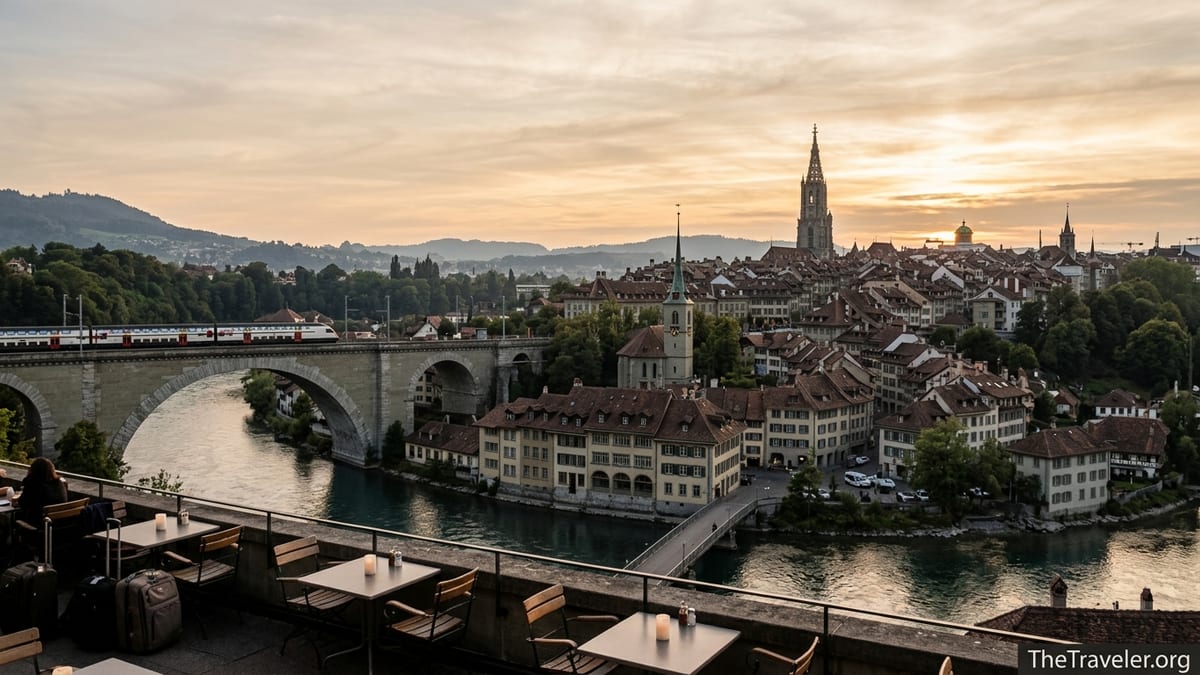
Because the plateau is more about lived-in Swiss life than big-resort spectacle, the feel of each base changes quite noticeably once you step off the train. Bern offers a UNESCO-listed old town with long arcaded streets and a capital-city cultural scene; Fribourg sits on a gorge and straddles the German and French language border; Solothurn and Aarau deliver small-scale baroque and painted-house charm; Baden combines a compact old town with serious thermal baths. Understanding these personalities will help you match your base to the kind of trip you want.
Price-wise, the Swiss Plateau generally sits below high-alpine resorts but is still Switzerland. In 2026, centrally located three-star hotels in these towns often run around the equivalent of 180 to 260 US dollars per night for a double room in high season, with historic four-star properties typically from the mid-200s upward. Shoulder seasons in April, early May or late October can offer noticeably better value, especially for midweek stays, while business-heavy towns like Baden may be cheaper on weekends.
Bern: Capital City Convenience and Historic Grandeur
Bern is the largest and most connected base on this list, and for many travelers it is the most practical hub for exploring the western and central Swiss Plateau. The station is one of the busiest in the country and sits at the edge of the UNESCO-listed old town, so you can step off a train and be under medieval arcades in minutes. From Bern, you can reach Interlaken and the Bernese Oberland in about an hour, Lake Thun in under 40 minutes, and Lucerne in around an hour by direct or one-change services, while still having an atmospheric city to come back to at night.
Accommodation in Bern runs from venerable five-star addresses to simple pensions. Classic choices for couples include the Bellevue Palace, a grand five-star hotel overlooking the Aare and the Parliament building, and the Schweizerhof Bern & Spa, a luxury property opposite the main station with its own spa and rooftop bar. Both are strong options if you want historic character with modern comfort and easy rail access, though rates typically start in the upper luxury bracket. Mid-range travelers often look to well-reviewed three and four-star hotels within a ten-minute walk of the station and the old town, which combine convenience with more moderate prices.
Families often find Bern easier than Zurich or Geneva because the center is compact, traffic-calmed and full of practical amenities like supermarkets under the arcades. Hotels near the station or along the old town’s main streets allow quick tram access to the Bear Park, the city zoo, and river swimming spots in summer. Many mid-range hotels offer family rooms or interconnecting doubles; checking for included breakfast can help control costs, as eating out in Switzerland adds up quickly. Bern’s combination of trains, trams and a walkable center makes it a smart choice if you are traveling with children and luggage.
For rail-focused itineraries, Bern’s timetable is a major asset. As a through-station on main east-west and north-south lines, it offers frequent departures even in the evening, which gives you flexibility if a hike runs longer than expected or you stay late in another town for dinner. If you expect to do day trips almost every day and you like having museums, restaurants and nightlife on your doorstep, Bern is the most versatile base on the Swiss Plateau.
Fribourg: Language-bridge Charms and Family-friendly Stays
Half an hour by train from Bern, Fribourg feels more intimate but no less historic. Perched above a loop of the Sarine River and stitched together by stone bridges, its upper town is mostly German-speaking while the lower quarters lean more French, making it an intriguing base if you want a mix of cultures without long journeys. The compact medieval core has ramparts, towers and a landmark Gothic cathedral, yet the modern station area offers supermarkets, cafes and quick rail connections in both directions.
Fribourg works particularly well for couples and families who enjoy exploring on foot. You can stay close to the station for easy day trips or pick a hotel in the old town overlooking the river. Several mid-range properties participate in a local guest card scheme, where an overnight stay can include benefits like regional transport discounts or museum reductions. When comparing hotels, it is worth checking whether a Fribourg guest ticket or similar perk is included, as it can effectively add value equivalent to a modest nightly rate reduction.
In terms of day trips, Fribourg places you within comfortable reach of both plateau and pre-Alpine destinations. Trains connect you to Bern in about 20 minutes, to Lausanne in roughly an hour and to local excursions like the Schwarzsee area via bus connections. Within the city, a small tourist train and a historic funicular link different quarters, which younger visitors often enjoy. Because the topography includes steep streets and stairways, staying closer to the station or in the relatively flat upper town can make logistics easier if you are traveling with a stroller.
Price levels in Fribourg are often a shade lower than in Bern or Zurich, which can appeal to budget-conscious travelers. A well-located three-star hotel within walking distance of the station might be somewhat less than an equivalent property in Bern in high season. The trade-off is that there are fewer ultra-luxury options and a smaller nightlife scene, so Fribourg suits travelers who prioritize atmosphere, bilingual culture and manageable costs over a big-city spread of dining and entertainment.
Solothurn and Aarau: Small Historic Towns for Quieter Nights
Solothurn and Aarau are two of the most attractive smaller bases on the Swiss Plateau for travelers who value quiet, historic surroundings more than an extensive list of bars or museums. Both lie between Bern and Zurich, have direct rail links to each and offer charming old towns filled with cafes, fountains and boutique shops. They excel as places to return to after busy day trips, when you want to stroll through cobbled streets and sit by the river without crowds.
Solothurn calls itself Switzerland’s most beautiful baroque town, and the central squares around the Saint Ursus Cathedral support that claim. A cluster of small hotels within the old town includes historic properties that belong to national heritage collections and recently renovated boutique hotels with contemporary interiors set behind centuries-old facades. Many of these are within a short walk of the railway station, so you can check in and be at your platform in around ten minutes. Travelers who enjoy a strong sense of place tend to appreciate Solothurn’s combination of river views, baroque architecture and a relaxed pace.
Aarau, further east, is known for its elaborately painted gable roofs and a compact, very walkable center. As the capital of the canton of Aargau, it has decent transport links without feeling like a business hub. For couples, a stay in the old town gives you easy access to restaurants and cafes while keeping noise levels down at night. Families may prefer hotels slightly closer to the station for easier luggage handling, though in practice distances are short. Aarau’s position makes it convenient for day trips along the main east-west line and to smaller Aargau towns along regional routes.
In both Solothurn and Aarau, three-star hotels in historic buildings tend to dominate the central market, often with around a few dozen rooms and on-site restaurants. Prices can be competitive compared with bigger cities, especially on weekends or outside of major local events, and breakfast is frequently included. These towns are good choices if you want an authentically Swiss setting, are comfortable with slightly more limited evening options, and like the idea of returning each night to a calm riverfront or traffic-free square.
Baden: Thermal Spa Town with Fast Zurich Links
Baden is the obvious Swiss Plateau base for travelers who place a high value on spa access and fast connections to Zurich and its airport. Historically known for its mineral-rich thermal waters, the town has recently seen high-profile investment in new spa facilities. A contemporary thermal wellness complex on the banks of the Limmat, designed by a well-known Swiss architect, offers indoor and outdoor pools, thermal bathing and relaxation areas that are popular with both locals and visitors. For many travelers, spending the late afternoon soaking after a day of sightseeing has become the main reason to choose Baden over a night in Zurich itself.
From a rail perspective, Baden is exceptionally convenient. Direct trains to Zurich’s main station generally take around 15 minutes, and services to Zurich Airport often clock in at roughly half an hour. The walk from Baden’s station to the old town or spa district usually takes less than ten minutes. Several modern four-star hotels sit near the station or within short walking distance, designed primarily for business guests during the week. That business focus can work in leisure travelers’ favor, as weekend rates may be more attractive while still granting access to well-equipped rooms, good insulation and on-site dining.
For couples, Baden combines a pleasant old town core with river walks, a small but lively dining scene and spa-centered relaxation. Booking a hotel that either includes spa access or offers discounted entry to the thermal baths can make sense if you plan to visit more than once during a stay, since individual entries add up. Late check-out packages that include a final morning in the pools are particularly appealing ahead of afternoon or evening flights from Zurich.
Families can also base in Baden, but it works best for those with older children who can enjoy the spa facilities that are open to younger guests and who appreciate short train rides to Zurich for bigger-city attractions. If traveling with very young children, it is worth confirming in advance which pools or relaxation areas they are allowed to enter, as some zones are reserved for adults seeking quiet. Overall, Baden is a strong choice if you like the idea of substituting one or two nights in central Zurich with a spa town that remains within an easy commute of the city’s rail hub and airport.
Countryside and Village Bases on the Plateau
Beyond the main towns, the Swiss Plateau is dotted with small villages, farm stays and country inns that appeal to travelers seeking quieter nights and direct contact with rural life. These bases typically sit a short bus or local-train ride away from a larger hub like Bern, Fribourg or Aarau, giving you access to the national rail network during the day and starry skies at night. They suit guests who prioritize landscape, walking and cycling over nightlife, and who do not mind planning around less frequent public transport in the evenings.
Typical countryside options might include family-run inns on the low hills above Bern, guesthouses in the agricultural valleys between Fribourg and Murten, or renovated farmhouses within cycling distance of Solothurn or Aarau. Rooms may be simpler than in city hotels, but you gain space, garden views and sometimes shared kitchens or outdoor seating. Prices can be competitive, although the best-located and most atmospheric properties are not necessarily cheap, especially when they serve well-regarded local food on-site.
For families, especially those traveling by car, countryside stays can be ideal. Children can play outdoors without traffic, breakfast often features local dairy products and homemade bread, and many farm stays offer the chance to meet animals. If you rely entirely on public transport, however, it is important to check bus or local train timetables before booking. Some villages see evening services only every hour or cease early, which may limit your flexibility after dinner in a larger town.
Couples who want a romantic but low-key base often gravitate towards small inns with a handful of rooms, where dinners focus on regional ingredients and evenings are spent with a glass of wine on a terrace. The trade-off is that you will likely spend more time commuting to and from the main rail lines, so countryside bases make the most sense when your trip includes unhurried days of walking, cycling or local exploration rather than a string of long-distance day trips.
Choosing the Right Base for Your Trip Style
When deciding between Bern, Fribourg, Solothurn, Aarau, Baden and countryside bases, start with your travel rhythm. If you plan extensive train travel almost every day, Bern’s centrality and late-running trains will save you time and stress. Frequent departures to the Bernese Oberland, Lake Thun and Interlaken make it the most versatile base if mountain excursions are a priority. Baden is similarly strategic if you expect to move in and out of Zurich and the airport several times, such as at the beginning and end of a multi-region Swiss itinerary.
If your focus is historic ambience at a slightly slower pace, Solothurn and Aarau come into their own. Solothurn’s baroque core and riverfront promenades encourage evening strolls rather than late-night bar hopping, and small heritage hotels give a strong sense of place. Aarau offers a similar rhythm with a different visual flavor, thanks to its distinctive painted eaves and cantonal capital status. Both towns work well if you anticipate one or two major day trips plus plenty of time lingering locally.
Travelers who are especially interested in Swiss culture and language often prefer Fribourg. The city’s position on the linguistic border between German and French Switzerland means you can hear both languages in daily life, read bilingual signage and taste culinary influences from each side. It is a good compromise for guests who want a historic core, manageable prices and practical rail access without the density of a capital city.
For those seeking relaxation above all else, Baden and countryside bases stand out. Baden’s thermal complexes and riverside setting make it an urban spa retreat, while villages and farm stays across the plateau offer silence and stars once the sun goes down. Couples might pair a few nights in Bern or Fribourg with two quieter nights in Baden or a rural inn. Families could base in Bern for the bulk of their stay, then finish with a night in Baden to break up the trip before a flight, enjoying one last swim in mineral-rich water.
The Takeaway
There is no single best place to stay on the Swiss Plateau, only the base that best matches your priorities. Bern delivers big-city connections and a UNESCO-listed old town; Fribourg layers languages and medieval streets; Solothurn and Aarau charm with riverside historic centers and quieter evenings; Baden adds thermal baths and quick access to Zurich; countryside inns provide rural calm within reach of the main rail lines. Because trains are frequent and distances short, you can combine two or more of these bases in a single trip without sacrificing time to long transfers.
When comparing accommodation, think in practical terms: walking time to the station, presence of family rooms, included breakfast, spa access, and nearby supermarkets or playgrounds if you have children. Prices on the plateau are generally a little lower than in the Alpine resorts but still reflect Swiss standards, so booking early, traveling slightly off-peak, and considering business-focused hotels on weekends can help your budget. Whether you end your day under Bern’s arcades, beside the Aare in Solothurn or in the warm waters of Baden, basing yourself thoughtfully on the Swiss Plateau turns efficient train lines and compact historic towns into the quiet backbone of your Swiss journey.
FAQ
Q1. Is Bern or Fribourg a better base for first-time visitors to the Swiss Plateau?
Bern generally suits first-time visitors who want the broadest range of trains, museums and dining, while Fribourg is better if you prefer a smaller city with bilingual culture and slightly gentler prices.
Q2. How many nights should I stay on the Swiss Plateau if I want to do day trips to the Alps?
Staying three to five nights in a plateau base like Bern or Fribourg works well, giving you time for at least two full-day mountain excursions and one or two days focused on local towns.
Q3. Is Baden a good alternative to staying in Zurich for an early flight?
Yes, Baden has direct trains to Zurich Airport that typically take around half an hour, and many travelers enjoy ending their trip with an evening in the thermal baths instead of staying near the airport.
Q4. Which town on the Swiss Plateau is best for families with young children?
Bern is often the easiest with young children thanks to its compact center, good playgrounds, family-friendly museums and frequent trains, but Fribourg and Solothurn also work well if you prefer a smaller scale.
Q5. Are historic hotels on the plateau much more expensive than modern ones?
Historic hotels in prime old town locations often cost more than modern business hotels near stations, but the difference can be modest outside peak periods, so it is worth comparing dates and checking for included breakfast.
Q6. Can I stay in a countryside inn and still rely on public transport for day trips?
Yes, but you need to choose villages with regular bus or local train links to a larger hub, and you should be comfortable planning around less frequent evening services when returning from day trips.
Q7. Is Solothurn too small to use as a base for several days?
Solothurn is compact, but many travelers happily spend three or four nights there, using fast trains for day trips and enjoying quiet evenings in the baroque old town by the river.
Q8. Do plateau towns offer good value compared with staying in high mountain resorts?
Plateau towns are often more affordable than famous alpine resorts, especially for mid-range hotels and dining, and they give you the option to visit the mountains by train only on the days you choose.
Q9. Is Baden suitable for travelers who are not interested in spas?
Baden still offers a pleasant old town, riverside walks and quick access to Zurich, but if thermal baths do not appeal, you may find Bern, Fribourg or Solothurn a better fit for your time.
Q10. Should I split my time between two bases or stay in one place on the Swiss Plateau?
If your trip is a week or longer, splitting between two bases, such as Bern and Baden or Fribourg and Solothurn, adds variety without long transfers; for shorter stays, one well-chosen base is usually simpler.