

The Swiss Plateau is where everyday Swiss life unfolds between the snowy Alps and the forested Jura. For first-time visitors it is often the place you speed through by train on the way to mountains and lakes, yet it is also where you will probably sleep, change trains, taste your first fondue and get a feel for how Switzerland actually works. This guide explains what and where the Swiss Plateau is, how its cities and countryside fit together, what to see and do, and how to weave it into a well-balanced Switzerland trip.
What and Where Is the Swiss Plateau
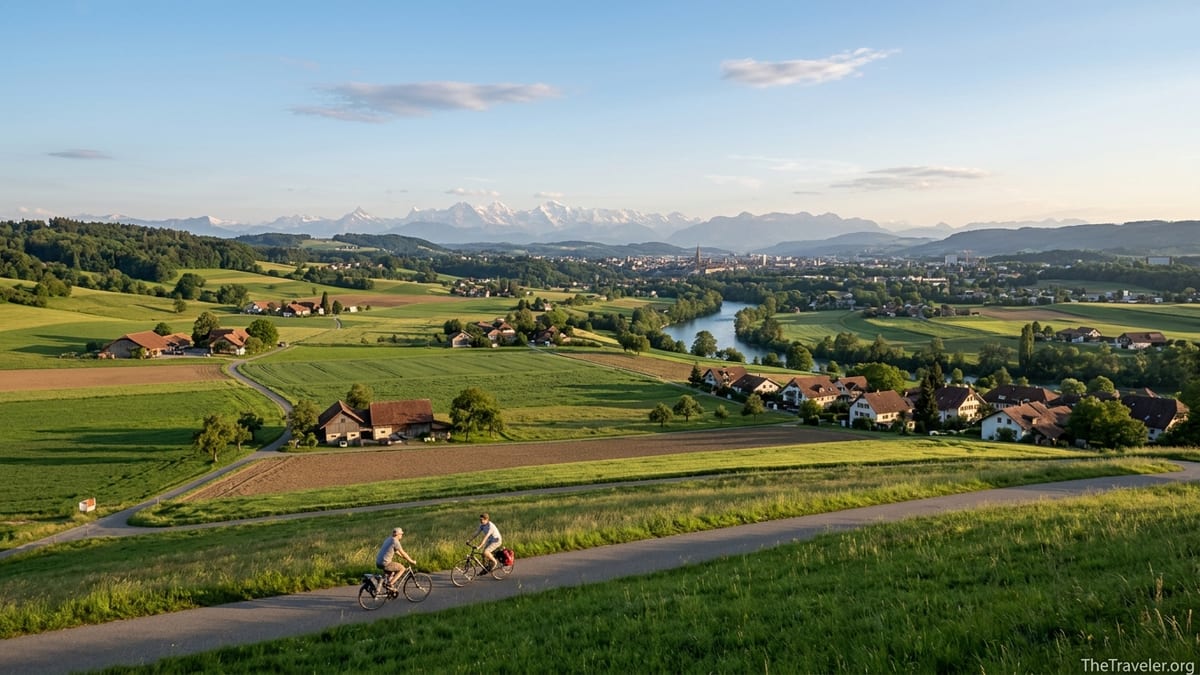
The Swiss Plateau, known locally as the Mittelland, is the broad band of gently rolling land sandwiched between the Alps to the south and the Jura mountains to the north. It stretches from Lake Geneva in the southwest to Lake Constance and St. Gallen in the northeast. Elevations are relatively modest, typically around 400 to 700 meters above sea level, which gives the region a milder climate than the high Alps and makes it comfortable to explore in every season.
This is Switzerland’s most populated and intensively used region, home to major cities such as Zurich, Bern, Lausanne, Geneva, Basel and Lucerne along with many mid-size towns like Fribourg, Solothurn, Aarau and Winterthur. The Plateau is also laced with rivers such as the Aare and Reuss and dotted with large lakes including Lake Geneva, Lake Neuchâtel, Lake Zurich and the western shore of Lake Constance. When you ride an intercity train between Zurich and Geneva or Bern and Lausanne, you are running right along the backbone of the Swiss Plateau, past cow pastures, tidy villages and industrial zones that keep the country humming.
For travelers, understanding the Plateau is important because almost all long-distance train lines, many motorways and most of the country’s economic activity are concentrated here. It is where you will find Switzerland’s busiest airport at Zurich, the political capital in Bern and the main university clusters in Zurich, Lausanne and Basel. Even if your heart is set on alpine panoramas, your trip will probably start and end on the Swiss Plateau, and it is worth making space in your itinerary to appreciate it on its own terms.
Geographically and culturally, the Plateau is also the transition zone between the German, French and, farther east, partly Italian-influenced parts of Switzerland. A single train journey from Geneva to Zurich exposes you to French-speaking Vaud and Fribourg before you cross into German-speaking Bern and onward to the German-language business capital. For a first-time visitor, this gentle gradient in language, architecture and cuisine provides a fascinating introduction to Switzerland’s diversity without needing to cross any borders.
Major Cities and Characterful Towns
Most first-time visitors will base themselves in a Swiss Plateau city for at least part of their trip, whether by design or through necessity. Zurich is the largest city, a financial center wrapped around the northern end of Lake Zurich. Its compact old town, riverside quays and lakeside promenades are very walkable. A typical first-timer day might include a stroll along Bahnhofstrasse, coffee in the Niederdorf quarter, a short cruise on the lake and a trip up Uetliberg by local train for sunset views over the Plateau and towards the Alps.
Bern, located roughly in the middle of the Plateau, is Switzerland’s capital and one of the most atmospheric cities in the country. Its UNESCO-listed old town sits on a loop of the Aare River and is famous for long arcaded streets that protect pedestrians from rain and summer sun. From Bern you are about one hour by train from both Zurich and Lausanne, which makes it an excellent central base. Many travelers choose a three-night stay in Bern to visit the old town, the Paul Klee Center and the Bear Park, then day-trip to nearby Emmental farms or the pre-Alpine Gantrisch Nature Park.
On the western side of the Plateau, Lausanne and Geneva line the northern shore of Lake Geneva. Lausanne climbs steeply from lakeside Ouchy up to its medieval center and cathedral, while Geneva’s core hugs the lakefront and the Rhone river. Both cities offer a blend of international institutions, grand lake views and easy train links into the Plateau interior. A visitor might, for example, stay in Lausanne, spend a day exploring the old town and the Olympic Museum, then take a regional train inland to the medieval town of Romont or the bilingual city of Fribourg for a very different perspective.
Between these headline cities, the Plateau has a necklace of smaller towns that reward a slower, more local style of travel. Solothurn, on the Aare between Basel and Bern, has baroque architecture, riverside cafés and a relaxed small-city feel. Murten (Morat), perched above its lake, retains its complete medieval walls and is within easy reach of Bern and Fribourg. Aarau, Olten and Winterthur are not household names abroad but function as real Swiss towns with lively markets, local museums and good rail connections, ideal for visitors who want to see how people actually live away from the big urban centers.
Countryside, Lakes and Everyday Landscapes
What makes the Swiss Plateau distinctive is not dramatic mountain walls but a pastoral patchwork of fields, hedgerows, orchards and villages. Traveling by regional train between Bern and Zurich, you might see dairy cows in winter barns, maize fields in late summer, and orchards heavy with apples in early autumn. The region is one of the country’s main agricultural zones, especially in the lower western Plateau where fertile soils support crops, vineyards and vegetable farms. Around Lake Biel and Lake Neuchâtel, for instance, gentle vineyard slopes produce Chasselas and Pinot Noir wines that you can taste in small domain cellars.
The Plateau’s broad lakes provide easy-access nature without the logistics of high mountain travel. Lake Zurich has boat services that function like floating buses between lakeside villages, while Lake Murten, Lake Biel and Lake Neuchâtel feel noticeably quieter and more rural. A typical summer day might see locals swimming from grassy lidos, renting pedal boats, or following lakeside walking paths that take you from village to village. On Lake Neuchâtel’s northern shore, the town of Estavayer-le-Lac combines medieval streets with a sandy public beach and a small marina, making it a pleasant stop for families.
Forests break up the farmland and offer easy hiking and cycling. From Bern you can wander directly into the Bremgartenwald, a large riverside forest, while the Gurten and nearby hills provide low-elevation trails with broad Plateau views. Between Zurich and Baden, wooded ridges hold signposted walking routes that local commuters use for weekend exercise. None of these paths require alpine gear, and many are accessible in sneakers from March to November, depending on weather.
The countryside is also where you will encounter farm stays and cheese dairies that give a more hands-on feel for Swiss rural life. Around Emmental, for example, several family farms open their doors with simple guest rooms, breakfast including their own cheese and yogurt, and the chance to watch evening milking. In the Seeland region northwest of Bern, farm shops along minor roads sell seasonal produce directly from the growers, and cycling between them has become a popular local weekend activity.
Getting Around the Swiss Plateau
The Swiss Plateau is one of the easiest regions in Europe to navigate thanks to its exceptionally dense public transport network. Intercity and InterRegio trains link main cities such as Geneva, Lausanne, Bern, Zurich, Basel and St. Gallen at least twice an hour during the day. For example, the fast trains between Geneva Airport and Zurich typically take under three hours, with straightforward transfers in Lausanne or Bern depending on the route. Services are punctual, platforms are clearly signed, and English information is widely available.
Regional trains, trams and buses fill in the gaps. From Bern, frequent regional trains run to smaller towns such as Solothurn, Thun, Fribourg and Burgdorf, often at half-hour intervals. Around Zurich, the S-Bahn network reaches deep into surrounding villages and lakeside communities, making it entirely feasible to stay in an outlying town like Rapperswil or Winterthur and commute into the city center for sightseeing. Tickets can be bought from machines or smartphone apps, and visitors often find that a Swiss Travel Pass or regional day ticket simplifies budgeting because it covers nearly all public transport on the Plateau, including many boats.
Driving can be useful if you want to reach remote farm stays or explore niche wine regions, but for most first-time visitors it is not necessary. Traffic around the big cities can be congested at peak hours, and parking in old towns is often limited or expensive. Rental costs, motorway vignettes and fuel can add up quickly. If you do rent a car, many scenic back roads across the Plateau connect small villages and avoid the main highway corridors. For example, the drive from Murten to Aarau along secondary roads takes you through tobacco fields, vegetable farms and river valleys that you would barely notice from the motorway.
For budget-conscious travelers, buses and trains remain the best value when you factor in reliability and time saved. An advance-purchase Supersaver ticket on a midday intercity link between Zurich and Lausanne can significantly reduce costs compared with buying at the last minute, especially if your dates are fixed. In larger cities, local day tickets often pay off if you make more than two or three tram or bus trips in a single day. As always in Switzerland, checking timetables the evening before helps avoid surprises due to maintenance work or seasonal schedule changes.
Cycling the Plateau: From Gentle Rides to Multi-Day Routes
The gentle terrain of the Swiss Plateau makes it ideal cycling country, and Switzerland has invested heavily in signed bike routes. A standout for first-time visitors is National Cycling Route 5, the Mittelland Route, which broadly follows the Plateau from Lake Geneva towards Lake Constance. Sections of this route run on quiet farm lanes and dedicated bike paths, keeping you away from busy traffic and allowing you to roll through open countryside, river valleys and small towns at a human pace.
Many travelers choose to ride only a short section rather than the full route. For example, a two-day ride from Lausanne to Bern might include an overnight stop in the bilingual town of Fribourg, with time to explore its old bridges and cathedral. Another popular stretch runs between Murten and Solothurn, where the route hugs the Aare River for long, flat kilometers with easy train access at both ends. Bicycles can usually be taken on regional trains for a supplement, so you can ride in one direction and return by rail rather than cycling out-and-back.
E-bikes are widespread on the Plateau and significantly flatten what hills there are, which can be useful if you are not a regular cyclist or are traveling with others of differing fitness levels. Rental shops in cities like Bern, Zurich and Lausanne often offer day or multi-day e-bike hire, including panniers and helmets. On a typical day, you might pick up an e-bike in Bern in the morning, ride 40 to 50 kilometers along the Aare to Biel, enjoy lunch in the old town, then catch a regional train back with the bike loaded into a designated wagon.
For urban cycling, infrastructure quality varies but is generally improving. Zurich and Basel have growing networks of marked bike lanes, while in smaller towns you often share the road with cars but benefit from lower speed limits and respectful driving habits. As always, wearing visible clothing, obeying traffic lights and giving clear hand signals is essential. Helmets are not legally mandatory for adults on regular bikes, but many locals wear them, and they are required for faster e-bikes. If you are unsure about navigation, the national network of red cycling signs is easy to follow, and tourist offices can provide printed maps or point you to digital resources.
Accommodation on the Swiss Plateau
Accommodation on the Swiss Plateau spans everything from international chain hotels near major stations to intimate guesthouses and farm stays in quiet villages. In cities such as Zurich, Geneva and Lausanne, business-oriented hotels are plentiful around the main railway stations and lakefronts, which can work well for short stays and early departures. Prices here tend to be at the higher end, especially on weekdays when conferences and trade fairs fill rooms.
Mid-sized towns like Bern, Fribourg and Solothurn often offer a more relaxed balance of character and cost. In Bern, for example, several mid-range hotels sit within or just outside the old town arcades, giving you atmospheric streets at your doorstep and quick tram access from the main station. In Solothurn, traditional inns face the Aare River and price slightly lower than equivalent places in Zurich, making it possible to find comfortable double rooms at rates that feel more manageable by Swiss standards, particularly outside high summer and major festival weekends.
In the countryside, simple inns and farm-based accommodations provide a quieter alternative. “Sleep in the straw” experiences, where guests bed down on fresh hay in barn lofts fitted with duvets and pillows, are still found on some farms between Lake Constance and Lake Geneva and can be an affordable novelty for families or small groups. More conventional farm stays offer private rooms or small apartments on working farms, often including breakfast with home-produced cheese, meat and jams. These can be especially appealing around Emmental or in the rolling hills north of Lucerne, where you wake to cowbells rather than traffic noise.
Apartment rentals are common in cities and larger towns, sometimes providing better value for multi-night stays or families wanting cooking facilities. However, regulations and registration requirements vary by canton and municipality, so it is wise to book through established platforms and pay attention to cleaning fees and visitor taxes. Wherever you stay on the Plateau, check whether a local guest card is included, as many towns now provide free or discounted local transport and museum entry to overnight guests, which can add significant value over a three- or four-night stay.
Weather, Seasons and When to Visit
The Swiss Plateau has a temperate climate with four distinct seasons, generally milder than the nearby Alps. In winter, typical daytime temperatures in the main cities often hover a few degrees above or below freezing, while summers commonly see highs in the low- to mid-20s Celsius, with occasional hotter spells. Rain is spread across the year, with slightly wetter conditions in summer due to thunderstorms. Morning fog can be frequent in autumn and winter, especially around lakes and low-lying river valleys, sometimes lingering into midday before lifting to reveal blue skies.
Spring on the Plateau usually begins in March and April, when fields green up and trees blossom. This can be an excellent time for city visits and low-level hiking, though you should pack a light jacket and expect changeable conditions, including the possibility of late snowfall at higher nearby elevations. By May, cafe terraces along the Aare in Bern or the Limmat in Zurich are often filled with locals enjoying the first truly warm days of the year, while alpine resorts may still be in late ski season.
Summer, from June to August, is peak travel season, with long daylight hours and comfortable temperatures for swimming in lakes and rivers. For example, in July locals in Bern float down the Aare River in wetsuits or with dry bags, hopping in upstream and exiting at city-center steps. In Zurich, public lake baths and river lidos become social hubs. Visitors during this period should be prepared for higher accommodation prices and busier trains on popular routes, but the Plateau’s extensive transport network helps disperse crowds, and quieter lakes like Murten or Hallwil can feel pleasantly uncrowded even in mid-summer.
Autumn on the Plateau, especially from mid-September to late October, brings grape harvests in the wine regions around Lake Geneva and Lake Biel and rich colors in forests and farmland. Temperatures cool, but many days remain comfortably mild for cycling and hiking in light layers. Tourist numbers decline compared with August, and hotel rates can soften accordingly, making this a favored time for travelers who value space and atmosphere over heat. November is often greyer and foggier, yet city museums, thermal baths and cultural events keep the region appealing even in this less photogenic month.
How to Include the Swiss Plateau in a Switzerland Trip
Even if your main goal is alpine hiking or skiing, it makes sense to plan at least a few days on the Swiss Plateau. One common approach for a first-time visitor is to fly into Zurich or Geneva, spend two or three nights in a Plateau base city such as Bern, Lucerne or Lausanne, then continue into the mountains for the rest of the trip. For instance, you might land in Zurich, spend two nights exploring the old town and Lake Zurich, then travel one hour to Lucerne for lakeside scenery, before heading onwards to Interlaken or the Jungfrau region.
Another strategy is to use a Plateau town as a hub for diverse day trips. Bern works particularly well for this because it sits near the geographic center of the country. From Bern, you can reach Lucerne in about one hour, Lausanne in roughly 70 minutes, Basel or Zurich in around an hour, and Interlaken in under an hour, all by direct train. This allows you to sample mountain excursions, lake cruises and urban culture without changing hotels every night, which many travelers find more relaxing and time-efficient.
If your schedule is short, you can still experience the Plateau in a single well-planned day. For example, from Geneva you could take an early train to Lausanne, walk the lakeside promenade at Ouchy, ride a regional train inland to Fribourg for lunch in the old town, then continue to Bern for an afternoon stroll under the arcades and sunset from the Rosengarten viewpoint, before returning to Geneva in the evening. The entire loop is feasible using standard intercity and regional trains, giving you a cross-section of lake, countryside and city in one day.
Travelers who enjoy slower, experiential journeys might dedicate four to six days entirely to the Plateau. A sample route could start in Zurich, follow the Limmat and Aare valleys by train and bike through Baden and Olten, pause in Solothurn and Bern, detour to lakes Biel and Murten, and finish in Lausanne overlooking Lake Geneva. Along the way, you could mix city hotels with a night in a farm stay or small-town inn, taste regional wines, and visit lesser-known museums such as the Museum of Communication in Bern or the mechanical music museum in Seewen near Basel.
The Takeaway
The Swiss Plateau is more than just the space between the Alpine postcards. It is the everyday Switzerland of commuters, students, farmers and families, framed by gentle hills, broad rivers and well-organized towns. For first-time visitors, it offers an accessible introduction to the country’s languages and lifestyles, with excellent transport, comfortable accommodation and a wealth of low-effort outdoor activities.
By taking time to understand what and where the Plateau is, and by deliberately including its cities, countryside and lakes in your itinerary, you gain context that makes the dramatic peaks and glaciers of the Alps even more meaningful. Whether you are floating down the Aare on a warm July afternoon, cycling through fields between Murten and Solothurn, or sipping coffee under Bern’s arcades on a crisp autumn morning, the Swiss Plateau will quietly shape your impression of Switzerland long after you return home.
FAQ
Q1. Where exactly is the Swiss Plateau in Switzerland?
The Swiss Plateau lies between the Jura mountains and the Alps, stretching from the Lake Geneva region in the southwest to Lake Constance and the St. Gallen area in the northeast, and includes major cities such as Geneva, Lausanne, Bern, Zurich and Basel.
Q2. Is the Swiss Plateau worth visiting if I mainly want to see the Alps?
Yes, because you will almost certainly pass through the Plateau and it offers the best access to transport, culture and everyday Swiss life; even one or two nights in a Plateau city such as Bern or Lucerne can greatly enrich an alpine-focused itinerary.
Q3. Which city on the Swiss Plateau is best for first-time visitors?
Bern is often ideal thanks to its central location, atmospheric old town and excellent train connections, but Zurich, Lausanne, Lucerne and Geneva also work well depending on your arrival airport and interests.
Q4. How many days should I spend on the Swiss Plateau?
For a first trip, plan at least two to three nights in one Plateau base to explore its city and nearby countryside; travelers with more time might spend four to six days combining several towns and a short cycling or lake segment.
Q5. What is the weather like on the Swiss Plateau through the year?
The Plateau has a temperate climate with cold but often manageable winters, warm summers that are comfortable for swimming and outdoor dining, and transitional spring and autumn periods that are well suited to city visits, cycling and low-level hiking.
Q6. Is it easy to get around the Swiss Plateau without a car?
Yes, the region has dense and reliable public transport, including frequent intercity trains between major cities, regional trains and buses to smaller towns, and local trams in bigger urban areas, so most visitors have no practical need for a car.
Q7. Are there good cycling opportunities on the Swiss Plateau for beginners?
The Plateau’s gentle terrain is well suited to beginners, with signed routes such as sections of the national Mittelland cycling route offering largely flat paths on quiet lanes or dedicated tracks, plus widespread e-bike rentals to make hills even more manageable.
Q8. What types of accommodation are common on the Swiss Plateau?
You will find business and chain hotels in the cities, characterful mid-range hotels and inns in towns, as well as farm stays and simple guesthouses in the countryside, plus apartments that suit longer stays or families.
Q9. How can I combine the Swiss Plateau with a mountain destination in one trip?
A practical plan is to start or end your trip with two or three nights in a Plateau city like Zurich, Bern or Lausanne, then travel by train to a mountain base such as Interlaken, Zermatt or the Engadine for hiking or skiing before returning via the Plateau to your departure airport.
Q10. When is the best season to visit the Swiss Plateau?
Late spring and early autumn often provide the best balance of pleasant temperatures, green landscapes and moderate crowd levels, although summer is excellent for swimming and outdoor events and winter offers atmospheric Christmas markets and easy day trips into nearby snowier regions.