


Switzerland’s lakes are strung like blue-green pearls between mountain ridges, and choosing the right waterfront base can shape your entire trip. Whether you want easy train access, safe swimming for children, spa pampering for two, or a village right on the water with boat piers at your doorstep, the differences between Lucerne, Montreux, Lausanne, Interlaken, Thun, Brienz, Lugano and smaller lakeside towns matter. This guide compares the main lake bases to help you match a real place, with real hotels, prices and transport, to the kind of lake holiday you have in mind.
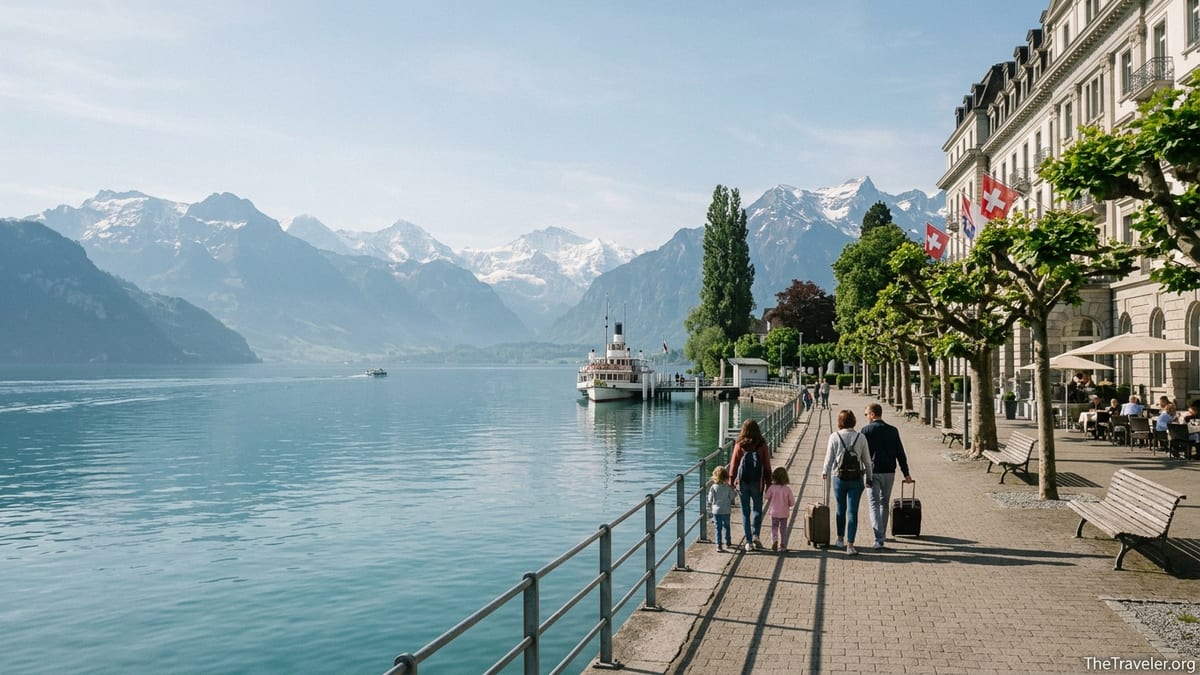
How to Choose Your Swiss Lake Base
Before you compare individual lakes and towns, it helps to be clear about four things: how much you want to move around by train or boat, how important swimming really is, whether your priority is scenery or atmosphere, and what kind of accommodation you prefer. A couple looking for a spa hotel above a quiet bay will be happy in a very different spot than a family who needs playgrounds, lidos and short walks to the station.
On price, lakeside Switzerland covers a wide spectrum. In Lucerne, for example, five-star lakefront hotels such as the historic Hotel Schweizerhof or newer luxury addresses typically start around the mid‑CHF 300s per night for a double in high season, while solid mid-range options along the waterfront can run closer to CHF 180–250 if you book in advance outside festival dates. In smaller places like Brienz or Thun, simple lakeside hotels with a balcony and lake view can often be found for roughly CHF 180–260 per night, especially outside July and August.
Transport is one of the major reasons to stay on a lake. Lucerne, Interlaken and Lausanne are all major train hubs with boats that leave from piers a few minutes’ walk from the station, while on Lake Thun or Lake Brienz you might stay in a village such as Merligen, Spiez or Bönigen and use scheduled boats plus trains to get around. In Ticino, Lugano combines a compact lakeside center with good rail connections south toward Milan and north toward German‑speaking Switzerland, and regular tourist boats link the city with villages that can be hard to reach by road.
Finally, think about seasonality. High summer is best for lidos and swimming platforms, while late spring and early autumn often mean lower rates and quieter paths, with boats and mountain railways still running frequent schedules. In winter, some lakes such as Lucerne and Lake Geneva become atmospheric city bases with Christmas markets and steamship cruises, while swimming and paddleboarding largely give way to spas and snow‑covered excursions.
Lake Lucerne & Lucerne City: Best All-Rounder and Train Hub
If you want a single base that works for couples, families and rail-based sightseeing, Lucerne is often the most practical choice. The city sits at the end of Lake Lucerne with its station a short walk from the Old Town and quays, and it is the starting point for classic railway and boat excursions such as Mount Pilatus and Rigi. Fast trains run from here to Zurich Airport in roughly one hour, which reduces transfer stress for short trips.
For lakefront stays, properties lining Schweizerhofquai and the waterfront promenade offer rooms that look straight across the water to the peaks. A five-star address such as Hotel Schweizerhof Luzern typically charges from about CHF 350 per night for an entry-level double in high season, according to recent tourism and hotel guides, while four-star hotels on or near the waterfront can come in at roughly CHF 220–280 for a standard lake‑view room if booked a few months ahead. Slightly further out, hotels such as the Hermitage or lake resorts in nearby bays often combine direct water access with quieter surroundings and outdoor pools.
Families will find a mix of city and lake amenities. Some lakefront hotels near Lucerne advertise dedicated family rooms around 50–55 square meters with connecting bedrooms and a balcony facing the lake, priced in the region of CHF 400–500 per night for up to five or six people including breakfast. One example on the lakeshore lists a year‑round family room at about CHF 460 per night for up to six, with children under 6 staying free and discounted surcharges for older kids, giving a realistic idea of costs for a larger family in this area.
For train‑based trips, Lucerne works particularly well. The Brünig line links Lucerne directly with the Bernese Oberland via Brienz and Interlaken, so you can wake up on Lake Lucerne, take a panoramic rail journey through valleys and over passes, enjoy a cruise on Lake Brienz, then return the same evening without needing a car. The central station also connects effortlessly to Zurich, Basel and the Gotthard corridor, which is helpful if you are stringing together multiple regions by rail.
Montreux & Lausanne on Lake Geneva: Romantic Promenades and Culture
On Lake Geneva, Montreux and Lausanne are the two main waterfront bases for travelers who want wine terraces, Belle Époque hotels and a slightly milder climate. Montreux has a relaxed resort feel with a palm-lined promenade, while Lausanne adds a more urban, university-city energy, especially around the Ouchy waterfront district.
Montreux is particularly strong for couples. Luxury spa hotels along the lakeside, including historic palace properties, focus on lake views, large spa areas and romantic terraces. One flagship hotel directly on the waterfront features a spa area of around 2,000 square meters with indoor and outdoor pools, saunas and treatment rooms, and it markets itself explicitly to guests wanting a pampering stay on the lake. In summer, Montreux’s hotel rates rise during the famous jazz festival, so couples seeking quieter, better-value stays often target late May, early June or September.
Lausanne, set on a hillside but with its Ouchy quarter right at lake level, can work better for travelers who want more dining, museums and nightlife while still being a short walk from the water. Around Ouchy, you will find international‑brand hotels and independent properties facing the marina and lakeside park, with typical mid‑range rooms often starting around CHF 220–260 outside major events, and upscale lake‑view rooms from roughly CHF 320–380 and up. Both Montreux and Lausanne have frequent trains to Geneva Airport, which makes them practical for shorter breaks or trips combined with the French Alps.
For sightseeing, Lake Geneva’s boats tie the lake towns together. From Montreux, you can ride historic paddle steamers to the Chillon Castle area or cross to French lakeside villages, while from Lausanne you can combine a boat trip with a stroll through the Lavaux vineyard terraces above the water. Swimming is mostly from lidos and designated beaches along the shore, with floating platforms and roped swimming areas that make it comfortable for both adults and older children in summer.
Interlaken, Lake Thun & Lake Brienz: For Scenic Lakes and Jungfrau Trips
Interlaken does not sit directly on a lake, but on the flat “Bödeli” between Lake Thun and Lake Brienz, linked by the Aare River. That geography makes it one of Switzerland’s best hubs for train‑based mountain excursions while still giving you two very different lakes within a short boat or bus ride. Trains from Interlaken Ost head into the Jungfrau region toward Grindelwald, Lauterbrunnen and Kleine Scheidegg as well as over the Brünig Pass toward Lucerne, while boats on both lakes connect to small villages and lidos.
For accommodation, Interlaken town itself offers the broadest range, from hostels up to grand historic hotels set near the Aare. A long‑established luxury hotel on the riverside, positioned between the two lakes, markets itself as a place where “tradition and contemporary style” meet and typically prices entry-level rooms in the mid‑CHF 300s and up in summer, though it is wise to check current offers. At the same time, there are mid‑range three and four‑star properties within walking distance of Interlaken West and Ost stations where doubles can start under CHF 220 outside peak dates.
Lake Thun and Lake Brienz each have their own character. Recent regional guides and local discussions emphasize that Lake Thun tends to feel a bit warmer with more classic resort towns such as Thun and Spiez, plus several hotels with private lakeside parks, beaches and spa facilities. One wellness hotel in Merligen, on the sunny side of Lake Thun, stands directly on the water with a small sandy beach, lakeside lawn and an outdoor saltwater pool heated to around 35 degrees Celsius, set to blend visually into the lake. Lake Brienz, by contrast, is narrower and more intensely turquoise, with steep ridges rising straight from the shore and quiet villages such as Bönigen and Iseltwald.
Swimming is a key strength of this region. The Interlaken area tourism board highlights a network of lakeside lidos and open‑air pools, noting that unless signs state otherwise, bathing is generally allowed at many points on both Lake Thun and Lake Brienz. Larger lidos such as Bönigen, Neuhaus, Spiez or Brienz usually offer grassy lawns, lake access via steps or gravel beaches, changing rooms and sometimes slides or children’s pools. For families, staying in or near a village with its own lido can be more convenient than staying in central Interlaken, because you can walk to the water without relying on buses.
If you prefer quieter waterfront bases, consider staying directly on a lake rather than in Interlaken. On Lake Thun, places like Thun town, Spiez or Merligen give you immediate lake views and boat piers, and several hotels offer half‑board packages that combine breakfast, dinner and spa access. On Lake Brienz, accommodation is more limited but distinctly lakeside. In Brienz village, modest hotels near the pier have rooms facing the lake, often in the CHF 180–260 range, while newer resort-style apartment complexes along the shore at places like Oberried offer serviced apartments with their own lake access and boat docks aimed at guests staying several nights.
Thun, Brienz & Smaller Lakeside Towns: Slower Pace on the Water
While Interlaken is the best-known name between the lakes, some travelers prefer to stay right on Lake Thun or Lake Brienz in smaller towns and commute into Interlaken for excursions. This approach suits visitors who value evenings on a lakeside promenade over nightlife, and who do not mind using boats or regional trains to reach the main rail hub.
On Lake Thun, Thun itself has a compact historic center along the Aare, with cafes and boutiques, and a castle overlooking both the town and lake. Most hotels are a short walk from the station and river, with some properties enjoying partial or full lake views from upper floors rather than being directly on a beach. Down the lake, Spiez sits in a wine-growing bay with a marina, swimming lido and castle; several three and four‑star hotels cluster above the harbor, with rooms that look either toward the marina and Niesen peak or back to the vineyards. Prices are usually a little below Interlaken’s top end, especially if you choose half‑board or mid‑week stays.
On Lake Brienz, Brienz village itself and Bönigen near Interlaken are the main bases. Brienz is known for its woodcarving heritage and lakeside promenade; small family‑run hotels here may have simple rooms with balconies over the water, and one long‑running hotel on the waterfront notes that the local lido, promenade and a smaller railway stop are within about a 10‑minute walk. For longer stays, a new resort on the north shore of Lake Brienz offers around 150 serviced apartments along an 800‑meter stretch of lakeshore, marketed as a lifestyle resort with spa, restaurant and boat dock services.
These smaller bases work well for families or travelers who plan to swim, kayak or simply sit by the water rather than rely on evening entertainment. If you base in Brienz, for instance, you can combine a breakfast on your balcony with a morning cruise to Interlaken, an afternoon ride on the Brienz Rothorn steam railway, and a sunset swim at the village lido. The trade‑off is that evening restaurant choices are more limited than in Interlaken or Lucerne, so half‑board hotel packages can make sense if you prefer predictable costs and shorter walks with children.
In practical terms, access never feels remote. Trains on the lakeshores typically run at least once per hour during the day, and boats in high season serve each major pier several times daily. That means you can treat the lake as part of your transport network: ride by train one way, cruise back by boat, and arrive directly at the pier below your hotel in time for dinner.
Lugano & Lake Lugano: Southern Flair and Easy Rail Connections
Lake Lugano sits in the Italian‑speaking canton of Ticino and immediately feels different: palm trees and camellias along the promenade, a warmer climate, and architecture that mixes Swiss and Italian influences. For couples and families who want a lake holiday with Mediterranean touches while still benefiting from Swiss trains and safety standards, Lugano is a compelling base.
Lugano city curves around a bay with a broad lakeside promenade and several public parks by the water. Lakeside hotels span everything from historic properties along the main promenade to modern towers with rooftop pools. A classic lakeside hotel in the old town, open since the early 20th century, highlights its position directly on the promenade in the heart of the shopping district, with a garden pool, underground parking and rooms facing the lake. Mid‑range doubles in central Lugano typically start somewhere around CHF 200–260 outside peak dates, with premium lake‑view or pool‑access rooms priced higher.
Train access is one of Lugano’s advantages, especially if you are arriving from or continuing to Italy. High‑speed and intercity trains link Lugano with Zurich and Basel through the Gotthard Base Tunnel, and regional trains run south to the border at Chiasso and on toward Milan. Once you arrive, boats operated by the local navigation company connect Lugano to village resorts along the lake, including some communities with very limited road access, which adds a sense of escape for day trips without the need to rent a car.
For swimming and watersports, summer in Lugano revolves around lakeside lidos, floating platforms and hillside hikes to viewpoints such as Monte Brè or Monte San Salvatore, where you can look down over the water before descending to swim. Families appreciate that many hotels in and around Lugano provide free or heavily discounted local transport tickets, which typically cover boats and mountain railways within the region, so parents can move between lake, pool and hilltop playgrounds without navigating parking or narrow lakeside roads.
Matching Bases to Different Types of Trips
Couples planning a romantic break often prioritize atmosphere and spa facilities over pure convenience. In that case, palace hotels in Montreux or Lausanne, lake‑view suites in Lugano, or a spa‑focused resort above Lake Thun or Lake Lucerne will likely feel more special than a practical city hotel near a station. Some high‑end resorts perched above the lakes near Lucerne and Interlaken offer infinity pools, expansive spa zones and dramatic views, but note that these can require a short funicular or shuttle ride to reach the waterfront, so you trade doorstep swimming for the elevated panorama.
Families, by contrast, usually benefit from being either near a station or right beside a lido. In Lucerne, this might mean a family suite in a hotel that is within a 10‑ to 15‑minute walk of both the Old Town and a lakeside bathing area, so older kids can swim while you still manage naps and mealtimes. Around Lake Thun and Lake Brienz, a three‑star hotel in Merligen, Spiez, Bönigen or Brienz with its own small beach or direct access to the local lido can simplify days: breakfast, walk down to the lake for a few hours, lunch on a terrace, then an afternoon boat cruise or short train ride to a nearby castle or viewpoint.
For luxury travelers, the key choice is whether you want discreet lakefront glamor or city‑center convenience. Lucerne, Montreux, Lausanne and Lugano all have five‑star waterfront hotels with large spa facilities and fine‑dining restaurants where dinner can easily cost CHF 120–200 for two with wine. Smaller but equally upscale options exist in quieter spots such as Merligen on Lake Thun or boutique properties along Lake Lucerne’s bays, where rates are often similar but the experience feels more retreat-like.
Travelers relying on trains consistently tend to favor Lucerne, Interlaken and Lausanne as foundational bases, because they sit on major intercity lines and also serve as gateways to scenic branches. From Lucerne you can reach Zurich, Bern, Lugano and Interlaken without changes in many cases; from Interlaken you tap into the Jungfrau rail network and the Brünig line; from Lausanne you have direct services along Lake Geneva toward Geneva Airport, Brig and the Valais. In each case, lakeside hotels within 10–15 minutes’ walk of the station keep transfers simple, especially if you are managing luggage or traveling with children.
The Takeaway
No single Swiss lake base suits every traveler, but some patterns are clear. Lucerne offers the strongest all‑round combination of lake views, Old Town atmosphere and direct rail access to both Zurich Airport and the Bernese Oberland. Montreux and Lausanne shine for couples who want wine terraces, spa hotels and cultural events, with Lake Geneva’s boats tying together castles and vineyard walks. Interlaken and the shores of Lake Thun and Lake Brienz suit visitors focused on mountain excursions and swimming, especially if you choose a village with its own lido rather than staying only in town.
Thun, Brienz and smaller lakeside villages slow the pace and put you closer to the water, while Lugano layers in southern flair and easy connections to Italy. Across all of them, it pays to balance romance against rail convenience, lakeside quiet against dining choice, and your real appetite for swimming versus spa time. Once you match those priorities to a specific lake and town, you will find that the Swiss habit of pairing clear water with precise transport timetables makes almost any base a rewarding one.
FAQ
Q1. Is Lucerne or Interlaken a better base for first-time visitors without a car?
Lucerne usually works better as a first base if you want a mix of lake views, an attractive Old Town and straightforward rail connections to Zurich Airport and other cities, while Interlaken is stronger if your priority is spending multiple days on Jungfrau-region mountain excursions and lake activities, even though the town itself is slightly less atmospheric.
Q2. Which lake is best for swimming with children?
For families, Lake Thun and parts of Lake Geneva often feel most user-friendly because they offer several organized lidos and beaches with gradual entries, lawns, changing rooms and in some cases small children’s pools, while Lake Lucerne and Lake Brienz also have excellent lidos but their water can feel a little cooler, especially early in the season.
Q3. Where should couples stay for a romantic spa-focused lake break?
Couples looking for romance and spa time often choose Montreux or Lausanne on Lake Geneva, Lugano on Lake Lugano, or dedicated spa resorts on Lake Lucerne or Lake Thun that combine lake views, large wellness areas and candlelit dining, accepting slightly higher room rates in return for a quieter, more luxurious setting.
Q4. Are smaller towns like Thun and Brienz too inconvenient without a rental car?
No, Thun and Brienz both work well without a car as long as you are comfortable using hourly trains and seasonal boats, and many travelers base themselves in these towns specifically to enjoy quieter evenings on the water while using Interlaken or Lucerne as day-trip destinations rather than as overnight bases.
Q5. How far in advance should I book lakeside hotels in summer?
For July and August waterfront stays, it is wise to book at least three to six months ahead, and even earlier if you want specific room types such as family suites, balcony rooms directly over the lake, or stays during major festivals like the Montreux Jazz Festival or the Lucerne Festival.
Q6. Is Lugano a good choice if I am combining Switzerland with Italy?
Yes, Lugano is particularly convenient for itineraries that include Milan or northern Italy, because frequent trains through the Gotthard Base Tunnel and across the border make it easy to move between Italian-speaking Ticino and Italian cities while still enjoying Swiss transport reliability and lakeside scenery.
Q7. Are Swiss lakes warm enough for comfortable swimming?
Most large Swiss lakes reach comfortable swimming temperatures in mid-summer, generally from late June through August, though mountain-fed lakes such as Lake Brienz can feel noticeably cooler than broader, lower lakes like Lake Geneva or Lake Thun, so you may appreciate short dips rather than long swims, especially early in the season.
Q8. Which bases work best for a train-only trip focused on scenic railways?
Lucerne, Interlaken and Lausanne are strong choices for train-based itineraries, as they are major rail hubs with easy transfers to scenic lines such as the Brünig route between Lucerne and Interlaken, the Jungfrau-region lines beyond Interlaken, and the main lines along Lake Geneva connecting to the Valais and beyond.
Q9. Can I stay in one lake town and visit others on day trips?
Yes, Swiss rail and boat networks make it realistic to stay in a single lake base like Lucerne, Lausanne or Interlaken and still enjoy day trips to other lakes, though you should expect some journeys of 1.5 to 2.5 hours each way if you are crossing between regions such as Lake Lucerne and Lake Geneva or the Bernese Oberland and Lake Lugano.
Q10. Are there affordable options right on the water, or is everything luxury?
While the most visible properties on Swiss lakes are often luxury hotels, many towns also have mid-range or simple family-run hotels and serviced apartments near the water, where careful booking outside peak dates can secure lake-view rooms from roughly the mid-CHF 100s to mid-CHF 200s per night, especially in smaller places such as Brienz, Bönigen, Merligen or certain neighborhoods around Lugano.