


Stand on Interlaken’s riverside and you face a classic Bernese Oberland dilemma: turquoise Lake Brienz to the east or deep-blue Lake Thun to the west. Both are spectacular, both are easy to reach, and both offer cruises, swimming spots and mountain views. Yet they feel very different in practice, and choosing where to spend more of your limited time can shape your entire trip. This guide compares the two lakes in detail, using concrete examples of cruises, villages, viewpoints and accommodation so you can decide which shore best matches your style of travel.
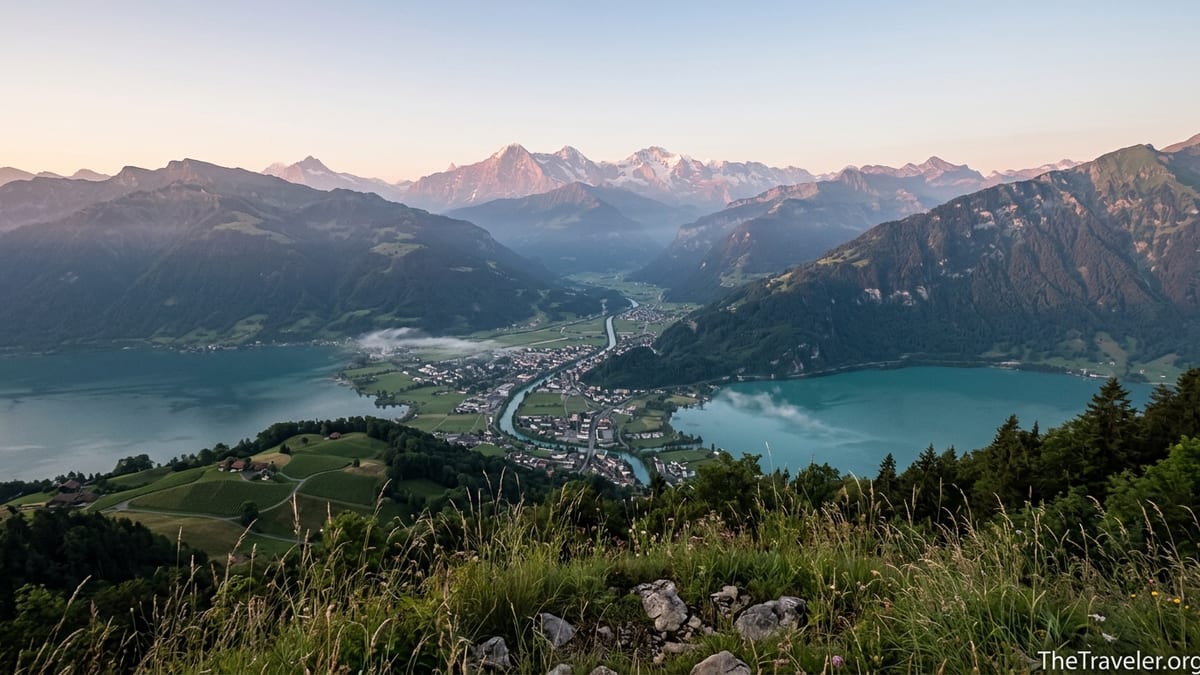
Lake Thun vs Lake Brienz at a Glance
Although they sit just 5 kilometers apart, Lake Thun and Lake Brienz offer distinct moods. Lake Thun is larger, a deep blue-green lake edged with castles, vineyards and mid-sized towns such as Thun and Spiez. Regular boat services connect Thun with Interlaken West in about two hours, passing lidos, camping areas and waterfront promenades. The shore feels lived-in and varied, with everything from upscale lakefront hotels in Thun to relaxed family lidos in Faulensee and Gunten.
Lake Brienz is smaller but visually more dramatic. Its milky turquoise color comes from glacial silt, and steep forested walls drop straight into the water along the south shore. Villages like Iseltwald and Brienz itself are quieter and more intimate, with wooden chalets and boathouses clustered tightly along the waterfront. A full boat trip from Interlaken Ost to Brienz typically takes around 1 hour 15 minutes and feels wilder and more enclosed than the open vistas of Lake Thun.
In practice, this means Lake Thun usually suits travelers who want variety and infrastructure: castles, bigger choice of restaurants, easy rail links and more options if the weather turns. Lake Brienz tends to appeal more to photographers, couples and visitors who prioritize that intense turquoise water, small-village atmosphere and direct access to waterfalls and quieter lakeside paths.
Because Interlaken sits between the two, you do not have to choose only one. With a Swiss Travel Pass or regional pass, many travelers cruise one lake in the morning and the other in the afternoon. Yet when it comes to where you sleep and which shoreline you explore in depth, it helps to be deliberate about which lake matches your priorities.
Color, Scenery and Overall Atmosphere
The most obvious difference is color. On a sunny day, Lake Brienz is a striking turquoise that looks almost unreal in photographs, especially around Iseltwald and along the south shore where cliffs drop straight into the water. That color tends to be strongest on bright afternoons after snowmelt, when glacial rivers feed finely ground rock flour into the lake. Many travelers planning a first-time Bernese Oberland trip choose Brienz specifically because they want that iconic turquoise-lake shot without going to more remote valleys.
Lake Thun’s color is a deeper blue-green, less intense in photos but arguably more versatile in different weather. Around Spiez, for example, vineyards slope down to the water, and the contrast between green slopes, blue lake and white peaks of the Eiger, Mönch and Jungfrau can be spectacular. On hazy or cloudy days when Brienz’s turquoise is less visible, Thun’s broader vistas and castle silhouettes still feel atmospheric and give you more visual interest beyond the water itself.
Atmospherically, Brienz is quieter and more contemplative. Brienz village has a lakeside promenade with wooden carving ateliers and a small lido; evenings tend to be low-key, with a few restaurants, hotel terraces and the sound of the steam train whistle from the Brienzer Rothorn Bahn. Iseltwald is even more tranquil: a small harbor, one main lakeside hotel-restaurant, and a boardwalk that can feel almost like a film set in the early morning.
Lake Thun feels more varied and sociable. Thun itself is a small city with a historic old town and castle, while Spiez combines a harbor, castle and hillside hotels. Around Neuhaus and Leissigen, you find lakeside bars, campgrounds and SUP rental stands. You can still find quiet coves, but you are never far from a bakery, supermarket or train station. If you like a bit of urban energy after a day on the trails, Thun’s lakeside restaurants and riverfront bars may tip the scales.
Castles, Waterfalls and Signature Sights
If castles and historic architecture rank high on your wishlist, Lake Thun wins clearly. In one cruise between Thun and Interlaken West you can see Thun Castle on its hill above the old town, the postcard-perfect castle complex at Spiez on a small peninsula, and the elegant lakeside castles of Hünegg and Oberhofen. Many visitors combine a morning castle visit with an afternoon dip at a nearby lido, for example touring Oberhofen Castle’s lakeside park and then walking five minutes to the Hünegg lido for a swim and snack.
Lake Brienz has fewer castles but compensates with world-class waterfalls. The most famous is Giessbach Falls, a multi-tiered cascade plunging into the lake near the Grandhotel Giessbach. A typical day trip looks like this: take the boat from Interlaken Ost, disembark at “Giessbach See,” ride the historic funicular up to the hotel terrace, then follow the walking paths that cross behind one of the falls. Some travelers continue on the trail to Iseltwald or return by boat to Brienz and ride the Brienzer Rothorn steam railway for sunset views over the lake.
Other notable sights around Lake Brienz include the Aare Gorge near Meiringen, which can be combined with a short train or bus ride from Brienz, and the small moor lake Burgseeli above the north shore. Burgseeli has a natural lido that often warms up faster than the big lakes, making it a popular choice for families when Brienz’s turquoise water still feels glacial.
Lake Thun’s natural highlights lean more toward broad panoramas than single must-see attractions. Many visitors take a short bus ride from Thun to the Beatenbucht funicular and cable car, then ride up to Beatenberg and Niederhorn for sweeping lake views. Another frequent pairing is an afternoon cruise with a visit to St. Beatus Caves, reached by bus or an uphill walk from a lakeside pier. These make Lake Thun particularly attractive if your group includes travelers with differing energy levels, since you can mix gentle sightseeing with more strenuous hikes and still reunite easily by boat.
Lakeside Villages, Cruises and Getting Around
Both lakes are served by BLS-operated passenger boats that integrate with Swiss Rail timetables, which means you can step off a train in Thun or Interlaken and walk directly to the pier. On Lake Thun, the full cruise between Thun and Interlaken West typically takes just under two hours on a regular motor vessel, slightly more if you choose the historic paddle steamer on certain departures. On Lake Brienz, the standard route between Interlaken Ost and Brienz is shorter, usually around 75 minutes with stops in Iseltwald and other small villages.
On Lake Thun, key stops include Thun, Hünibach, Oberhofen, Hilterfingen, Spiez, Faulensee and Gunten. It is realistic to build a full day that combines several: for instance, a morning stroll through Thun’s old town and castle, a mid-day cruise to Spiez for lunch at the harbor, then an afternoon swim at Faulensee lido before continuing by boat or train to Interlaken. Because most villages along Lake Thun also sit on the main rail line between Thun and Interlaken West, you can flexibly switch between boat and train depending on weather and timing.
On Lake Brienz, the feel is more linear and intimate. The boat route touches Bönigen, Iseltwald, Giessbach See and Brienz. Many visitors anchor their day around a few standout stops rather than hopping constantly. A classic itinerary is to start in Interlaken Ost, ride to Giessbach for the falls and funicular, continue to Brienz to wander the woodcarvers’ street and lakeside promenade, and then return to Interlaken by train, which takes around 20 minutes. Iseltwald works well as a half-day destination: stroll the small village, rent a kayak or SUP from the lakeside rental stand in season, then have coffee or lunch at the main hotel terrace overlooking the bay.
From a logistics standpoint, Lake Thun is better connected. The main Bern–Thun–Spiez–Interlaken rail axis serves multiple lakeside villages, and express trains from Bern to Thun run frequently, often under 30 minutes. Lake Brienz’s main rail spine runs along the north shore between Interlaken Ost and Brienz, then over the Brünig Pass toward Lucerne. That makes Brienz an excellent base if you also plan to visit Meiringen, the Aare Gorge or onward to Lucerne, but there are fewer frequent stops and a smaller selection of late-evening connections than on the Thun side.
Swimming, Lidos and Turquoise Dips
Water temperature and access matter if you plan to swim. In general, Lake Thun tends to be marginally warmer than Lake Brienz in summer, especially along shallow bays and lidos on the northern and eastern shores. Around Thun and Gwatt, for example, several lakeside bathing areas offer grassy lawns, platforms and sometimes heated pools that take the edge off the alpine chill. Resorts such as Spiez, Faulensee, Gunten and Merligen all have popular lidos with changing rooms, small restaurants and children’s areas, making them practical choices for families or anyone who wants facilities nearby.
Lake Brienz’s turquoise color comes at a price: it is usually colder, since it receives more direct glacial meltwater. That said, there are excellent designated swimming spots. The lidos at Bönigen, Brienz and Iseltwald provide safe lake access, lawns and sometimes playgrounds or beach volleyball. A common real-world pattern is that families or those who feel the cold start at Burgseeli or another smaller warm-water spot during the morning, then move down to Lake Brienz proper in the afternoon once the sun has had more time to warm the surface.
The Interlaken region also offers numerous open-air pools and riverside dips for days when the lakes feel too bracing. Bödelibad in Interlaken provides indoor and outdoor pools within walking distance of both train stations, and the Aare river between Interlaken and Thun has supervised swimming areas such as the Schwäbis river pool for strong, experienced swimmers. Many locals treat lakeside swimming as an all-day ritual: picnicking at Neuhaus on Lake Thun or at the Brienz lido, alternating between quick plunges, paddleboarding sessions and long breaks in the shade of trees.
If swimming is a top priority and you prefer slightly warmer water with more facilities, Lake Thun generally has the edge. If you care more about immersion in that surreal turquoise and are happy with shorter, colder dips, the lidos and wild beaches of Lake Brienz will deliver a more unique visual experience.
Accommodation, Dining and Interlaken Access
Your choice of lake will also shape where you sleep and eat. Around Lake Thun, the largest accommodation clusters are in Thun, Spiez and along the stretch between Hilterfingen and Oberhofen. In Thun, you find everything from business-style hotels near the station to boutique properties in the old town and classic grand hotels on the waterfront. Spiez offers hillside hotels with lake-view balconies overlooking the harbor and castle, plus several three-star options within five to ten minutes’ walk of the station. Smaller villages like Faulensee and Gunten feature family-run hotels and guesthouses that appeal to travelers seeking quieter evenings but wanting easy boat and bus access.
Dining choices tend to be broader on Lake Thun. Thun has a dense collection of restaurants ranging from simple kebab and pasta places to higher-end Swiss and international cuisine. Spiez’s harborfront has several terraces that fill with both tourists and locals on summer evenings, serving dishes like perch fillets from the lake, rösti, seasonal asparagus and local white wines. Many mid-range hotels include half-board options, which can be attractive for visitors who prefer to stay put in the evenings rather than search for open kitchens in small villages.
On Lake Brienz, accommodation is more concentrated and often more tranquil. Brienz village has a handful of lakeside hotels, some with direct water access and private jetties, as well as apartments and guesthouses on the streets behind the promenade. Iseltwald has a small cluster of hotels and guesthouses, including one main waterfront property whose terrace looks over the harbor and peninsula. Because the supply is smaller, rooms with direct lake views can book out early in July and August, and prices may feel higher for the most photogenic locations compared with less scenic inland villages.
Interlaken itself straddles the two lakes and functions as a transit hub. Interlaken West station connects more directly to Lake Thun via the ship canal and is within walking distance of Neuhaus and some lakeside paths, while Interlaken Ost serves Lake Brienz, the Jungfrau region trains and the Brünig line toward Lucerne. Travelers planning multiple mountain excursions, such as visits to Jungfraujoch, Schynige Platte and First, often find that staying in or near Interlaken with day trips to each lake provides the most efficient use of time, especially if they hold a Swiss Travel Pass or Jungfrau Travel Pass that covers many local trains and boats.
Which Lake Fits Your Trip Style Best?
When travelers sit down with a Bernese Oberland map, their real question is usually not “Which lake is objectively better?” but “Which lake better fits my limited days and my style of travel?” For many first-time visitors who plan several mountain excursions and want flexible dining and nightlife, Lake Thun or Interlaken West often makes sense. From Thun or Spiez you can reach Bern for a half-day city visit, ride the boats, and still be within an easy train ride of Interlaken’s adventure activities such as paragliding or canyoning.
If your focus is quieter stays, photography and scenic stillness, Lake Brienz may suit you more. Couples on a short romantic break often choose Brienz or Iseltwald for two or three nights, building their days around gentle activities: a morning cruise, a walk along the lake promenade, a visit to Giessbach Falls, and perhaps a sunset ride up the Brienzer Rothorn when the last light hits the turquoise surface below. Even when the main boat is busy, it is easy to find quiet corners a short walk away from the piers.
Budget travelers and rail pass holders sometimes split their time: for example, three nights in Thun or Interlaken for castle visits, city access and adventure sports, then two nights in Brienz or Iseltwald for a calmer finale. Others choose a single base such as Interlaken and treat both lakes as day trips, using early-morning or late-evening departures to experience each shoreline when crowds are at their thinnest.
A simple litmus test can help: if you imagine your ideal Bernese Oberland evening as strolling a lively waterfront promenade with several restaurant options and train connections still running late, lean toward Thun or Spiez on Lake Thun. If instead you picture watching the last boat glide past a tiny harbor while the sky glows pink over a turquoise bay, with only a handful of lights across the shore, you are probably a Lake Brienz person.
The Takeaway
Lake Thun and Lake Brienz share the same snow-capped backdrop and are so close that you can cruise both in a single day, yet they reward different priorities. Lake Thun offers variety: multiple castles, a real city in Thun, vineyard slopes, numerous lidos and broader rail connections that make it easy to mix lake time with day trips to Bern, the Jungfrau region and beyond. It works particularly well for families, first-time visitors and anyone who values flexibility if the weather shifts.
Lake Brienz offers intensity: that unforgettable turquoise color, steep forested shores, quieter villages and showpiece sights such as Giessbach Falls and the Brienzer Rothorn steam railway. It is the better fit if your trip emphasizes photography, calm evenings and a sense of being tucked into a dramatic alpine basin. The trade-off is fewer dining options and somewhat cooler water, which matters if you dream of long, lazy swims.
For most travelers with three to five days in the Bernese Oberland, a pragmatic strategy is to choose one primary base on Lake Thun or in Interlaken for logistics, then dedicate one full day to Lake Brienz with a combination of boat, falls and village time. If you have a week or more, consider a split stay: several nights near Lake Thun for castles and connectivity, followed by a couple of nights in Brienz or Iseltwald for a quieter finale by the turquoise water.
Whichever you choose, remember that in Interlaken’s quiet local debate over which shoreline is more attractive, there is no wrong answer. With smart planning and realistic expectations about atmosphere, water temperature and transport times, you can tailor each lake to your own version of the Bernese Oberland ideal.
FAQ
Q1. Is Lake Thun or Lake Brienz better for first-time visitors to the Bernese Oberland?
For a first trip, Lake Thun often works better because it combines a small city in Thun, several castles, many lidos and strong train connections. You can still visit Lake Brienz easily as a day trip by boat or train from Interlaken.
Q2. Which lake has the more impressive color, Thun or Brienz?
Lake Brienz is usually more visually striking, with a milky turquoise color created by glacial silt. Lake Thun is a deeper blue-green that photographs beautifully but feels less extreme than Brienz’s intense turquoise.
Q3. Where is it easier to swim, Lake Thun or Lake Brienz?
Both lakes have designated lidos and natural beaches, but Lake Thun typically offers slightly warmer water and more developed bathing areas. Lake Brienz is colder, though its lidos in places like Bönigen, Brienz and Iseltwald provide excellent access for short, refreshing dips.
Q4. Which side is better for castles and historic buildings?
Lake Thun clearly wins for castles. In one stretch you can visit Thun Castle, Spiez Castle, Oberhofen Castle and the park around Hünegg Castle, many of which are within walking distance of boat piers and bus stops.
Q5. Is Lake Brienz really quieter than Lake Thun?
Yes, in general Lake Brienz’s villages such as Brienz and Iseltwald are smaller and more tranquil, with fewer evening venues and less through-traffic. Lake Thun’s towns, especially Thun and Spiez, feel livelier and more residential.
Q6. Which lake should I choose if I have children?
Families often find Lake Thun easier, thanks to its abundance of lidos with playgrounds, shallow entry points and cafés, as well as quick access to supermarkets and medical services in Thun and Spiez. Lake Brienz can still work well for families who are comfortable with cooler water and quieter evenings.
Q7. Can I visit both lakes in one day from Interlaken?
Yes, it is realistic to take a morning cruise on one lake and an afternoon cruise on the other if you keep stops short. For example, you could cruise Thun to Spiez in the morning, return by train to Interlaken, then ride the boat from Interlaken Ost to Brienz and back later in the day.
Q8. Which lake is better for photography and Instagram-style shots?
Lake Brienz usually has the stronger “wow” factor in photos, especially around Iseltwald, Giessbach Falls and Brienz’s lakeside promenade. The combination of turquoise water and steep mountain walls makes it particularly photogenic in bright weather.
Q9. Where should I stay if I plan several mountain excursions like Jungfraujoch and Schynige Platte?
If multiple mountain trips are your priority, basing yourself in or near Interlaken or on the Lake Thun side often saves the most time. From Interlaken Ost and Interlaken West you have direct access to mountain railways and can still visit both lakes on free afternoons.
Q10. Is it worth changing bases between Lake Thun and Lake Brienz on a short trip?
On stays of three or four nights, it is usually more efficient to pick one base and day-trip to the other lake. If you have a week or more, a split stay can be rewarding, with several nights near Lake Thun for castles and connectivity and a couple of nights in Brienz or Iseltwald for a quieter turquoise-lake experience.