


Planning a trip to Switzerland’s lakes is all about timing. The same stretch of water can feel completely different in June than it does in October: boats run on different schedules, mountain paths open or close, water warms up or cools down, and hotel prices jump or drop accordingly. This month-by-month guide focuses on the big, easily accessed lakes such as Lucerne, Geneva, Zurich, Thun, Brienz and Constance, showing you when to come for swimming, cruises, hiking, clear mountain views, quieter towns and lower prices.
How Swiss lake seasons work
Switzerland’s main lake season runs roughly from May to October, with clear summer peaks in July and August and quieter shoulder periods in spring and autumn. Summer brings the warmest air and water temperatures, the longest daylight and the most frequent boat services, but also the highest hotel rates and the densest crowds in lakeside hotspots like Lucerne, Montreux and Interlaken. Shoulder months such as May, June, September and early October offer a useful compromise: enough warmth for walking and relaxed cruising, more availability in family-run hotels and guesthouses, and a better chance of getting restaurant tables on the lakefront without reserving days ahead.
Winter on the lakes is a very different experience. Scheduled boats continue on the biggest lakes such as Lucerne and Geneva, but at a reduced frequency, and many small lakeside cafés and lidos shut completely in November. In exchange, you get very low visitor numbers, atmospheric mists on Lake Zurich or Lake Constance, and views of snowy peaks towering above still water. If your priority is swimming, though, late June to early September is the realistic window on most lowland lakes, with water temperatures typically becoming comfortable for most swimmers from around mid to late June and dropping again by late September.
Prices follow these seasonal rhythms. In July and August, a standard double in a three-star lakeside hotel in Lucerne or Montreux can easily reach several hundred Swiss francs per night, particularly on weekends. The same room in May or October may cost noticeably less, and you will often find better value in lakeside towns slightly away from the big names, such as Weggis on Lake Lucerne, Vevey on Lake Geneva or Romanshorn on Lake Constance, especially outside school holidays.
March and April: quiet shores and early hikers
By March, snow is retreating from lower hillsides but many mountain paths above the lakes are still under snow or closed, so hiking is best kept to signed lower routes and lakeside promenades. Around Lake Geneva, for example, the flower-lined walkway between Montreux and Château de Chillon is usually walkable in March, with mild days and relatively few tour groups. On Lake Zurich, the gentle path from Rapperswil over the wooden lakeside bridges can be a good early-season walk, with the Alps still white in the background.
If you are primarily interested in boat trips, this is a transitional time. Large navigation companies on lakes such as Lucerne and Geneva keep a winter or spring timetable with fewer sailings. You can still cruise the length of Lake Lucerne from the city to Flüelen, but sailings may be every couple of hours instead of hourly, and many special round-trip excursion routes and evening cruises will not yet be running. The advantage is that you share the decks with commuters and a handful of locals instead of big tour groups, and ticket prices themselves change little throughout the year, so you are effectively getting a more relaxed experience for the same money.
Swimming is not realistic for most visitors in March or early April. Lakes are still cold from winter, and even hardy locals usually limit themselves to very brief dips. However, March and April can be ideal for travelers focused on budget and calm: in many lakeside regions hotels start to reopen, but prices are still well below summer highs and availability is good. Places like Interlaken between lakes Thun and Brienz, or small towns on Lake Constance, feel sleepy, with some restaurants closed midweek, yet this can suit travelers who prize peace and clear views over a wide choice of facilities.
May and June: shoulder season sweet spot and the start of swimming
May is when Switzerland’s lakes really wake up. Boat companies on Lake Lucerne, Lake Geneva and Lake Zurich introduce their spring and then summer schedules, with more frequent crossings and the return of historic paddle steamers on flagship routes. You might, for example, board a restored Belle Époque steamer from Lausanne for a daytime cruise past vineyards and châteaux on Lake Geneva, or take an evening round-trip on Lake Lucerne to see the lights of the city framed by Pilatus and Rigi. Schedules vary year by year, but by late May most of the classic lake cruises are already running daily.
This is also a strong period for hiking. Many mid-altitude paths open as snow melts, especially around lakes that sit at moderate elevations such as Lucerne, Zurich and Thun. Trails along the north side of Lake Thun, connecting villages like Spiez and Faulensee, can be particularly attractive in May with fresh green meadows and wildflowers. On Lake Lucerne, sections of the Waldstätterweg, a multi-day route circling the lake, are already walkable in May, and June is often cited as one of the best months for the full route because services are running yet high-summer storms are less frequent.
For swimming, late May and June mark the beginning of the season, especially in smaller or shallower lakes that warm more quickly. At accessible small lakes near Zurich, such as Türlersee, local operators describe an optimal swimming season from June to September, and by mid to late June water in many lowland lakes reaches temperatures that casual swimmers find comfortable. Public lidos and paid lake baths in cities like Zurich and Lucerne tend to open in May, though at first they may attract more sunbathers than swimmers. Crowds are still moderate compared with July and August, making this a good time to enjoy urban lake baths without queuing.
Hotel rates in May and early June are generally lower than in peak season, especially midweek. You might find a central Lucerne hotel overlooking the lake for a price that in August would only secure you a room a few streets back. In resort towns like Montreux or Interlaken, package tours and events can cause spikes, so flexible travelers should check dates of major music festivals or sporting events and avoid those specific weekends if price matters more than atmosphere.
July and August: peak swimming, cruises and crowds
July and August bring the classic Swiss lake summer. Daytime temperatures at lake level are often in the mid to high 20s Celsius, occasionally higher during heatwaves, and water temperatures in large lakes like Zurich, Geneva and Lucerne typically settle in the low 20s. This is the most reliable time for swimming. On warm afternoons in Zurich, the lakeside baths near Bürkliplatz and the grassy banks at Mythenquai fill with city dwellers, and in Interlaken people sun themselves on the lawns of Neuhaus on Lake Thun before dipping into the blue-green water.
Boat services reach their highest frequency in these months. On Lake Lucerne, for instance, summer timetables offer hourly or better connections on popular routes, including boats timed to connect with cogwheel trains up Mount Rigi or Mount Pilatus. On Lake Geneva, multiple Belle Époque steamers operate daily cruises between Geneva, Lausanne, Vevey and Montreux, turning the lake into an almost continuous procession of white hulls and distant whistles. This density of service makes it easy to improvise: you can hop off in a wine village for lunch and catch another boat an hour later without detailed planning.
The trade-off is crowding and higher prices. July and especially August coincide with many European school holidays, so waterfront promenades in larger towns are busy and restaurant terraces book out quickly in the evenings. A lakeside room in Interlaken, or a balcony room facing the water in Montreux, can be many tens of percent more expensive than in May or October, and minimum-stay requirements are more common, particularly over Swiss public holidays and festival weekends. Travelers seeking space should focus on less touristed lakes such as Sempachersee near Lucerne or quieter corners of Lake Constance, where lakeside campsites and guesthouses attract more Swiss families than tour buses.
If your aim is hiking with panoramic views, July and August offer full access to higher mountain trails above the lakes, as cable cars and rack railways run their long summer days. You can, for example, ride from Weggis up Rigi for a ridge walk overlooking Lake Lucerne, or take the funicular from Thun up to the Niederhorn above Lake Thun for wide views towards the Eiger and Jungfrau. However, summer is also the wettest period in some lake regions, including around Lucerne, so be prepared for afternoon storms and occasional low clouds that can briefly hide the peaks.
September and October: golden light, calmer lakes and better value
For many travelers, September is the ideal month for the Swiss lakes. The air is still comfortably warm, but the fiercer heat of August has often passed. Water temperatures in lower lakes remain pleasant enough for swimming, particularly in the first half of the month, with some lakes like Constance retaining around 20 degrees Celsius into early autumn. Lakefront towns feel more relaxed as family holidaymakers return home, yet summer boat schedules usually continue at or close to full strength until late September.
Hiking conditions in September are excellent. Trails above Lake Lucerne, Lake Thun and Lake Brienz benefit from stable weather and clear air that often makes the mountains stand out sharply. Around Lake Lucerne, long-distance routes such as the Waldstätterweg are widely regarded as at their best in September, when services are still running but crowds and thunderstorm risk are reduced. Vantage points like Rigi Kulm or the Niederhorn offer sweeping lake views that on many mornings are above a layer of mist, a classic late-summer scene.
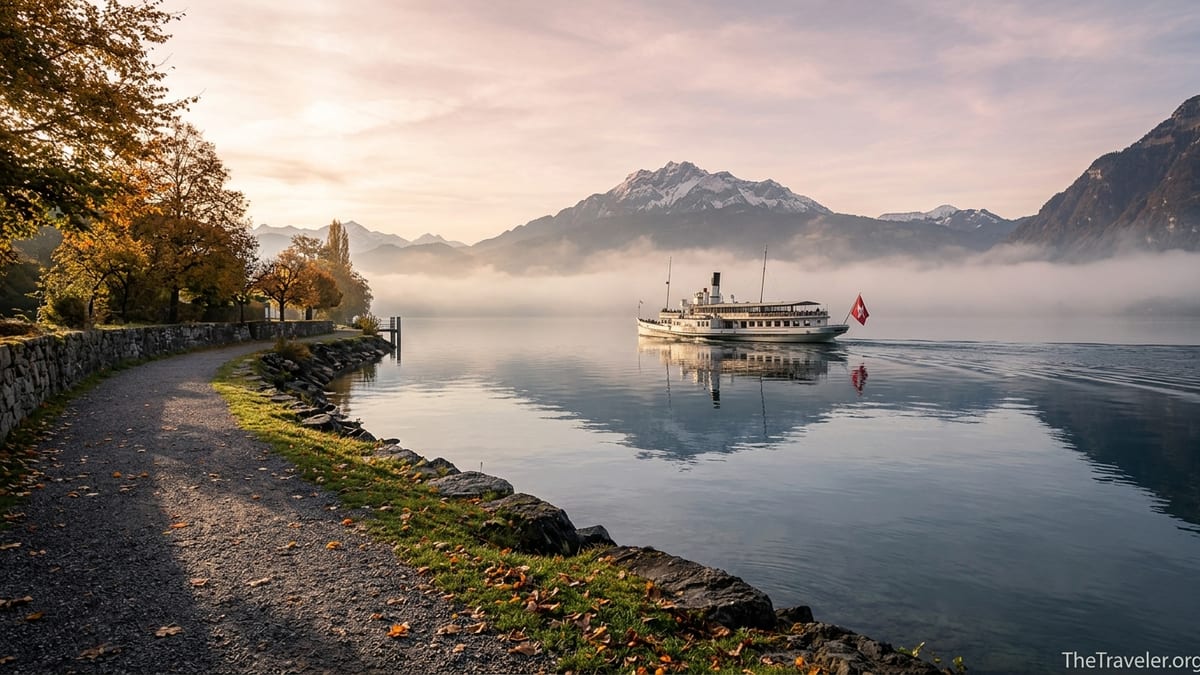
October brings a visible seasonal change. On many lakes, timetables shift to autumn mode in the second half of the month, reducing frequency but still allowing daily cruising. At the same time, deciduous trees along the shores turn yellow and orange, making short walks around places like Weggis, Spiez or the vineyards around Lake Geneva particularly scenic. Swimming becomes more of a niche activity as water cools, though on sunny days locals may still take quick dips well into October. For photography, though, this is one of the most rewarding months, with low, golden light in the mornings and evenings and snow often returning to the high peaks while lower slopes remain autumnal.
In terms of cost and crowds, September after the first week and most of October are among the best-value times to visit the main lakes. Many lake resorts remain fully open, but room rates are generally lower than in July and August, and walk-in availability improves. In smaller lakeside villages that are heavily focused on summer tourism, some hotels and restaurants may start closing in late October, so if you plan to base yourself in quieter places it is worth checking that at least a few dining options will still be operating midweek.
November to February: misty moods, clear deals and winter contrasts
From November to February, the Swiss lakes shift into a distinctly off-season mode. This is when many mountain resort towns close between the summer hiking and winter ski seasons, and the same is partly true for lake resorts: smaller hotels along the shores of Thun, Brienz or Lucerne may shut for several weeks. In larger cities such as Geneva, Zurich and Lucerne itself, however, life and tourism continue year-round. Lakeside promenades are quieter, and you are more likely to share your morning walk with commuters and dog walkers than with tour groups.
Boat schedules on major lakes move to a winter timetable, which typically means a few core routes continuing each day rather than a wide network. On Lake Lucerne, for example, a year-round service connects Lucerne with key lakeside villages, and on Lake Geneva certain cross-lake routes continue for commuters and visitors even in the coldest months. Cruising at this time is less about hopping between multiple stops and more about a single atmospheric journey, perhaps paired with a lakeside lunch or a visit to a museum in a port town.
Swimming is realistically limited to cold-water enthusiasts in these months. Water temperatures drop into the single digits Celsius on many lakes, and even city lidos close or shorten their hours. Instead, winter lake visitors tend to combine crisp lakeside walks with excursions up nearby mountains for snow: for example, basing in Lucerne and riding the cogwheel train up Pilatus, then returning to a quiet evening by the water, or staying near Lake Geneva and riding the funicular up to viewpoints above Montreux while the lake itself lies under a layer of mist.
One strong advantage of this low season is cost. Outside of Christmas, New Year and major winter events, hotel prices in lake cities and larger towns are often significantly lower than in summer, and you can sometimes secure lakeview rooms that would be far beyond budget in July. Dining becomes more local-focused, with lakeside restaurants serving residents and business travelers rather than tour groups, which can make for a more authentic feel. Travelers should simply be prepared for shorter daylight, cold damp conditions near the water and the possibility of persistent fog, especially on the plateau around lakes like Zurich and Constance.
Choosing the right lake for your priorities
Different Swiss lakes shine in different seasons, so matching your destination to your priorities is just as important as picking the right month. If your focus is classic cruises and easy day trips, Lake Lucerne and Lake Geneva are strong choices from May to October. Lucerne combines an atmospheric old town, frequent boat links to villages like Weggis and Vitznau and quick connections to mountains such as Rigi and Pilatus. Lake Geneva offers longer, more open-water cruises between Geneva, Lausanne, Vevey and Montreux, with vine-covered hillsides and castle stops along the way.
For swimming and relaxed lakeside days, consider Lake Zurich, Lake Thun, Lake Brienz and Lake Constance. Zurich’s extensive network of public baths and grassy shores makes lake swimming feel like a part of daily city life in summer, while family-friendly lidos around Thun and Brienz offer lawns, diving platforms and sometimes modest entry fees that give access to changing rooms and cafés. Lake Constance, shared with Germany and Austria, has numerous lakeside beaches and campgrounds that are particularly pleasant in June and September when the water is mild and the mood is laid-back.
Travelers prioritizing hiking with lake views might focus on Lucerne, Thun and Brienz in June, September and early October. The ring of peaks around these lakes creates countless options, from gentle balcony paths above Lake Thun linking villages like Gunten and Merligen to full-day ridge walks above Lake Lucerne. In autumn, the slopes above Lake Geneva’s Lavaux vineyards or the forests around Lake Zurich take on rich colors, rewarding short half-day hikes paired with leisurely lunches in lakeside wine cellars or traditional restaurants.
If lower crowds and prices are your main concern, look beyond the most famous lakes or at least choose less obvious bases. Instead of staying in central Interlaken, for example, you could pick a guesthouse in Spiez on Lake Thun or on the quieter southern shore of Lake Brienz, then travel into Interlaken by train or boat for day trips. Around Lake Geneva, Vevey and La Tour-de-Peilz are typically calmer and sometimes cheaper than Montreux in peak months, yet remain connected by frequent local trains and lakeside promenades.
The Takeaway
The “best” time to visit Switzerland’s lakes depends less on the calendar and more on what you want from the water and mountains. If you imagine daily swims, long evenings on open decks and the widest choice of boat excursions, then July and August are your safest bet, accepting higher prices and busier promenades. If you prefer warm but not hot days, quieter paths, and easier last-minute hotel bookings, late May, June and especially September are the most rewarding months, with reliable cruises, strong hiking conditions and often kinder room rates.
Those drawn to autumn color, softer light and a sense of calm should target late September and October, when lakeside trees turn golden and many summer services still operate at reduced frequency. For travelers on tighter budgets, or those interested in atmospheric mists, city culture and the contrast between still lakes and snowy peaks, winter and early spring around the bigger lakes can be a surprisingly satisfying choice, as long as you are not expecting a swimming holiday.
Rather than asking when Switzerland is “best,” it is more useful to decide when it is best for you. Look at your priorities across swimming, cruising, hiking, photography, crowds and costs, then match them to both a month and a specific lake or town. With that approach, you are far more likely to step off your train or boat and feel that you have arrived not just in a beautiful place, but at exactly the right time.
FAQ
Q1. When is the best month for swimming in Swiss lakes?July and August are the most reliable for warm water and long swimming days, with June and early September also good on lower lakes during warmer years.
Q2. Which months have the fullest boat schedules on lakes like Lucerne and Geneva?From roughly late May through late September you will find the densest timetables, with frequent daytime departures and extra evening or themed cruises in July and August.
Q3. When are hotel prices lowest around the main Swiss lakes?Prices are usually lowest in November, early December, January and March, with better-value shoulder seasons in April, May and October compared with July and August.
Q4. What is the best time to visit for hiking with lake and mountain views?June, September and early October are often ideal, offering mostly snow-free trails around the lakes, stable weather and clear air for long-distance views.
Q5. Can I still take lake cruises in winter?Yes, major lakes such as Lucerne, Geneva, Zurich and Constance run reduced winter timetables, so you can still enjoy at least a few daily cruises even in the coldest months.
Q6. Are Swiss lakes too crowded in July and August?The biggest resorts and promenades are busy in high summer, but you can reduce crowds by traveling early or late in the day, choosing less famous lakes or basing yourself in smaller towns.
Q7. When is the best time for autumn colors around the lakes?Late September through October is usually best, when trees along lakes like Lucerne, Thun, Zurich and Geneva turn yellow and orange while high peaks may already be snow-dusted.
Q8. Is it worth visiting the lakes in March or April?Yes, if you value quiet paths, low hotel rates and clear views from lower-level walks, and you do not mind that higher trails and some seasonal restaurants or lidos may still be closed.
Q9. Which lake is best for a first visit focused on cruises and mountain trips?Lake Lucerne is a strong first choice, combining a compact historic city, frequent boats and easy access to nearby peaks such as Rigi and Pilatus for classic lake-and-mountain days.
Q10. How far in advance should I book lakeside hotels in peak season?For July and August, especially in popular spots like Lucerne, Montreux and Interlaken, booking several months ahead is sensible, while in May, June and September you often have more flexibility.