


Choosing a base in the Swiss Alps can make or break your trip. The scenery is consistently spectacular, but each resort feels very different once you factor in mountain views, hiking and skiing options, and how easy it is to get around by train. This guide compares Zermatt, Grindelwald, Lauterbrunnen, Wengen, Mürren, St. Moritz, Davos and Andermatt so you can match the right village to your style, whether you are planning a romantic escape, a family holiday or a ski week with heavy use of the Swiss rail network.
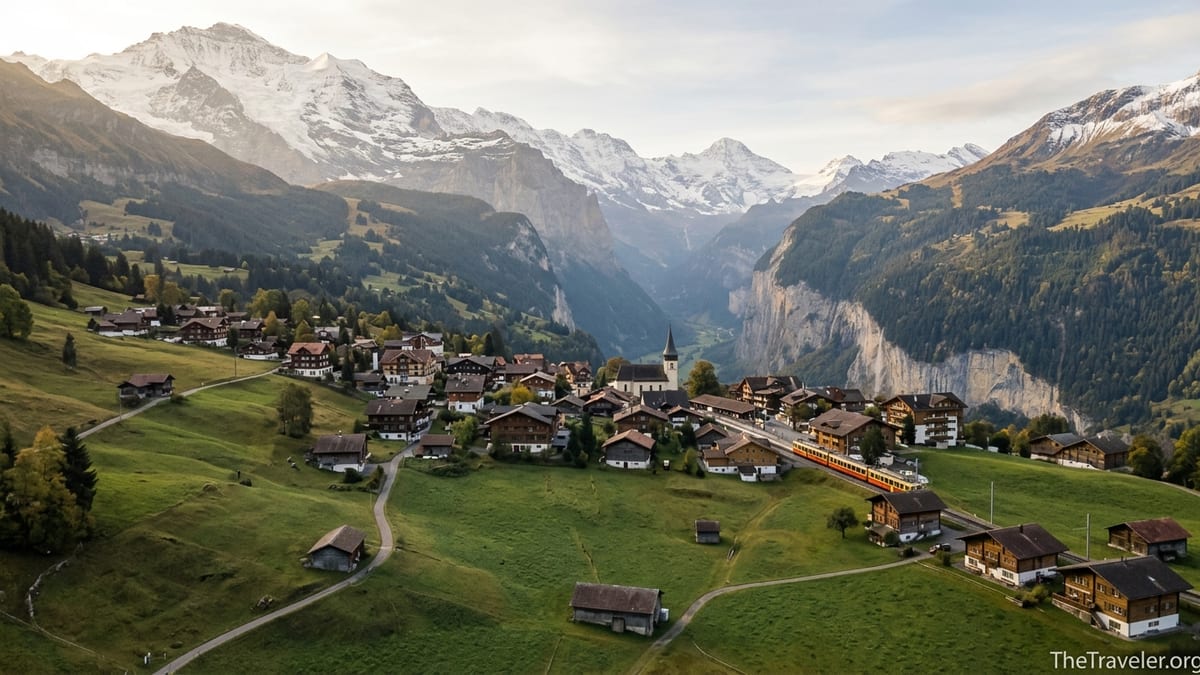
Zermatt: Matterhorn Views and Big-Mountain Skiing
Zermatt is the classic Swiss resort for postcard views. The village is car free, so you arrive by shuttle train from Täsch and roll your luggage through narrow streets of chalets and shops with the Matterhorn rising at the far end of town. The most prized hotel rooms are those with direct Matterhorn views from a balcony, which you will find in areas like the riverfront near the Kirchbrücke bridge or up towards Winkelmatten. Typical midrange doubles in winter often start around the upper mid three-figure range in Swiss francs per night, while four and five star properties with wellness areas and guaranteed Matterhorn views price higher.
Zermatt works especially well for serious skiers and couples. The lift network is vast, with access to the glacier around Klein Matterhorn and cross-border runs into Italy when conditions allow. In practice, that means you can ski all week without repeating many runs, and intermediate to advanced skiers can easily spend full days on the slopes. For summer trips, the Gornergrat cog railway across from the main station takes you to one of the most famous viewpoints in the Alps, with family friendly walking paths and panoramic terraces that do not require any technical hiking.
Train access is straightforward if you are touring Switzerland. Zermatt is a terminus of the Glacier Express, which links it with Andermatt and St. Moritz in a single panoramic rail journey, and there are regular regional trains down the valley to Visp, where you connect to mainline services across the country. Once in the village, you get around on foot, by small electric taxis and hotel shuttles, or on ski buses that fan out to the Sunnegga funicular, Gornergrat railway and Matterhorn Express gondola. For families, that means minimal car logistics but some planning around walking distances with children and luggage.
For most first time visitors, Zermatt is strongest for mountain drama, serious skiing and special occasion stays. It is less ideal if you want cheaper accommodation or fast rail access in multiple directions, because every journey requires the shuttle train in and out of the valley. If you plan to move bases often or focus on day trips by train, one of the other resorts may be more convenient.
Grindelwald: Eiger Views and Flexible Rail Connections
Grindelwald sits in a broad valley beneath the north face of the Eiger, giving the village a wide open feel and big views from many hotels and apartments. The main street around Grindelwald Dorf station has classic Bernese chalets with flower boxes, while the newer Grindelwald Terminal station five minutes down the line links directly to the Eiger Express gondola. Many visitors choose accommodation within walking distance of either station so they can step out of their hotel and onto a train or gondola in a few minutes.
For hikers and skiers who want options, Grindelwald is one of the most versatile bases in the Jungfrau region. In winter, the Eiger Express and Männlichen gondolas take you quickly up to the main skiing area shared with Wengen, and you can ski all the way down to Wengen or Grindelwald before returning by train. In summer, the First gondola on the opposite side of the valley gives access to lake hikes like Bachalpsee and well known attractions such as the First Cliff Walk. You can easily fill three or four days in the immediate area without repeating activities, which makes Grindelwald a good base for travelers who prefer to unpack once.
Grindelwald is also well connected by rail. Trains run roughly every half hour to Interlaken Ost, where you connect to the rest of Switzerland, and the Wengernalpbahn cog railway from Grindelwald or Grindelwald Grund climbs to Kleine Scheidegg, with onward trains to the Jungfraujoch. That makes it simple to plan day trips to Wengen, Lauterbrunnen and even Mürren without changing hotels. Families often appreciate the mix of playgrounds, easy valley walks and village services like supermarkets, rental shops and casual restaurants.
In terms of atmosphere, Grindelwald feels more like a working mountain town than a remote village. If you are seeking complete quiet and car free streets, you might prefer Wengen or Mürren, but if you want views plus flexibility and are comfortable with a little bustle around the main street and stations, Grindelwald is an excellent all round choice.
Lauterbrunnen, Wengen and Mürren: Jungfrau Classics and Car-Free Charm
Lauterbrunnen is the transport hub of the Jungfrau valley. The village sits on the valley floor beneath vertical cliffs and waterfalls, with the main railway station at its heart. From there, trains run to Interlaken, up to Wengen and Kleine Scheidegg, and cable cars and mountain trains link to Mürren and the Schilthorn. A large multi-storey car park near the station serves as the handover point for visitors heading up to the car free resorts, which makes Lauterbrunnen a convenient base if you arrive by car but still want to rely on trains and lifts after parking.
Staying in Lauterbrunnen suits travelers who value connectivity and do not mind a simpler village. Accommodation is a mix of small hotels, guesthouses and apartments, many facing the famous waterfall at the end of the valley. Trains and cable cars start just across the road, so it is easy to reach Wengen for skiing, Mürren for hikes or the Schilthorn for James Bond history and 360 degree views. Daily room rates are often a little lower here than in the car free villages above, which can help with longer stays or family trips on a tighter budget.
Wengen, perched on a sunny terrace above Lauterbrunnen, is car free and reached by cog railway from the valley. The village has a long tradition as a winter sports resort and hosts the Lauberhorn World Cup ski race. Many hotels line the ridge with uninterrupted views towards the Jungfrau and down into the valley, and walking from the station to your accommodation typically takes only a few minutes. In winter, you can ski from the slopes above Kleine Scheidegg back into the heart of the village, while in summer the same lifts give access to high level hiking paths.
Mürren sits on the opposite side of the valley and feels even more secluded. You reach it either by cable car and a short mountain train from Lauterbrunnen or by bus to Stechelberg and a series of cable cars up the cliffs. Once in the village, the views of the Eiger, Mönch and Jungfrau are as dramatic as any in the Bernese Oberland, yet the atmosphere remains relaxed and small scale, with traditional wooden chalets lining narrow lanes. For hikers and skiers, lifts to the Schilthorn and surrounding slopes are close at hand, and at night the day trippers disappear, leaving the village quiet.
St. Moritz and Davos: Engadin Glamour or Sporty Energy
St. Moritz and Davos are two of the most famous resorts in the eastern Swiss Alps, both accessible by train and both offering extensive ski areas. St. Moritz sits beside a lake in the high Engadin valley and has a reputation for luxury. The town spreads across two main areas, St. Moritz Dorf on the hillside and St. Moritz Bad along the lake shore. Five star hotels with lake or mountain views cluster around the upper village, while more modest options lie slightly further away or down by the lake. The surrounding mountains host several separate ski sectors, connected by buses and lifts, and in summer the Engadin offers a network of hiking and biking trails between villages like Sils, Silvaplana and Pontresina.
For many travelers, the appeal of St. Moritz is a combination of prestige, architecture and rail access. It is one end of the Glacier Express route to Andermatt and Zermatt, and also a stopping point for the Bernina line toward Italy. That makes it a useful overnight base on a long rail journey. The town itself caters strongly to high end visitors with designer boutiques, smart bars and upscale mountain restaurants, though families and midrange travelers can still find apartments and three star hotels in the wider area if they book early, especially for peak winter months and late January events.
Davos, a little further north, feels more like a long valley town than a single compact village. It has two main train stations, Davos Platz and Davos Dorf, both within walking distance of lifts up the surrounding mountains. The focus here is squarely on sport: multiple ski areas, cross country trails, mountain biking and hiking routes fan out from the town, and outside the peak winter holiday weeks it can feel less polished and more everyday than St. Moritz. That mood appeals to many skiers and snowboarders who are happy to trade some glamour for a practical base with in town rail stations and a broad range of hotel prices.
For couples seeking romance, lake views and design hotels, St. Moritz often wins. For groups prioritising varied skiing at slightly more accessible prices and straightforward rail access from Zurich, Davos may be the better choice. Both are strong winter bases and pleasant in summer, but if your primary goal is to ride the famous panoramic trains, St. Moritz has a slight edge because of its position on both Glacier Express and Bernina routes.
Andermatt: Compact Hub With Growing Ski Area
Andermatt has transformed over the past decade from a quiet garrison village into a modern ski and hiking hub that still feels compact and easy to navigate. The village sits at the meeting point of several passes, with the narrow valley opening slightly where the train line and river pass through. The old core is a cluster of traditional houses around the main street, while a newer district of hotels and apartments has grown up near the station and the base of the Gütsch and Gemsstock lifts.
For skiers, Andermatt offers two distinct experiences. Gemsstock is the higher, steeper mountain, attracting advanced skiers for its off piste and long descents, while the linked SkiArena Andermatt-Sedrun area provides more intermediate terrain spread across multiple peaks. In recent years the lift network has been expanded and modernised, so you can now ride from Andermatt toward Sedrun with relative ease in good conditions. In summer, the same lifts and passes open up hiking routes with views over the Urseren valley and down towards the Reuss.
Train access is one of Andermatt’s quiet strengths. The village station is only a short walk from most accommodation and sits on the route between central Switzerland and the Oberalp Pass. It is also a key stop on the Glacier Express between Zermatt and St. Moritz, which means many travelers pass through even if they are not staying overnight. From Zurich, you can reach Andermatt in roughly a couple of hours with one or two changes, and from here it is feasible to plan day trips by train further along the valley.
Because Andermatt is smaller than the big name resorts, it can feel more intimate and less crowded outside major holiday weeks. That suits travelers who want a serious ski area but prefer a village they can cross on foot in ten minutes. It is a good match for couples or small groups with mixed ski abilities and an interest in combining resort time with scenic train journeys.
Choosing the Right Base for Views, Hiking, Skiing and Trains
If your top priority is iconic mountain views, Zermatt and the Jungfrau villages stand out. Zermatt delivers the textbook Matterhorn vista from many hotel balconies and viewpoints like Gornergrat, while Wengen and Mürren look straight at the Eiger, Mönch and Jungfrau from sunny terraces. Grindelwald’s Eiger north face backdrop is equally impressive, though the village is more spread out, so views vary more by address. St. Moritz’s lake and broad valley scenery is subtler but still beautiful, especially in winter when the lake freezes and in autumn when the larch forests turn golden.
For hiking, Grindelwald, Wengen, Mürren and Andermatt all make strong bases in summer. From Grindelwald, easy gondola rides lead to routes like the walk to Bachalpsee. Wengen and Mürren sit in the middle of a web of signposted paths that range from gentle balcony walks to full day high level routes across pastures and ridges. Around Andermatt, the passes and valleys offer less crowded trails that feel more remote once you leave the immediate resort. Zermatt and St. Moritz also have abundant hiking options, but they are sometimes busier on flagship routes, especially during peak holiday weeks.
When it comes to skiing, the choice depends on how much terrain and variety you want. Zermatt offers one of the largest and highest lift networks in Switzerland, with glacier skiing and cross border runs. The Jungfrau region around Grindelwald and Wengen has extensive intermediate friendly pistes with famous runs like the Lauberhorn. St. Moritz and Davos both provide multiple sectors and a strong focus on snow sports infrastructure. Andermatt punches above its size for advanced skiing, thanks to Gemsstock, while still offering gentler terrain in the linked area for intermediates and families.
Train access can be the deciding factor if you plan to use Swiss public transport heavily. Lauterbrunnen is the most efficient hub for the Jungfrau valley because all local trains and cable cars converge near the main station and car park. Grindelwald, Wengen and Mürren are well connected but require one extra mountain railway or cable car leg. Zermatt, St. Moritz and Andermatt sit on scenic long distance routes like the Glacier Express, which is ideal if you want to combine a resort stay with a famous panoramic journey. Davos offers simple connections to Zurich and other Swiss cities via its two in town stations, making it practical for shorter stays where you want to minimise transfers.
Matching Resorts to Couples, Families and Luxury Seekers
For couples, the most popular choices are Zermatt, Wengen, Mürren and St. Moritz. Zermatt and St. Moritz are the obvious picks for stylish hotels, fine dining and spa facilities, perfect for anniversaries or winter honeymoons. Wengen and Mürren offer a quieter, more local charm with car free streets, traditional chalets and dramatic views, well suited to slower paced trips focused on walks, long lunches on mountain terraces and evenings in small village restaurants.
Families often gravitate toward Grindelwald, Lauterbrunnen and Davos. Grindelwald combines playgrounds, beginner areas, an adventure focus on attractions like the First Cliff Walk and straightforward logistics between village and lifts. Lauterbrunnen provides simple, level access to trains and cable cars, which matters when moving strollers or skiing equipment. Davos, with its multiple ski areas and broad choice of apartments and hotels, can work well for larger family groups who want plenty of sport options and do not need an overly quaint setting.
If luxury is a priority, Zermatt and St. Moritz sit at the top of the list, with a dense concentration of five star hotels, private transfer services and high end dining. Many properties have their own shuttle to the stations or lifts, large spa complexes and concierge teams that can arrange everything from private ski instructors to sunrise mountain breakfasts. Andermatt’s newer hotel district also includes several upscale properties with full service spas and ski concierges, offering a modern alternative that is more compact than the older grand resorts.
Travelers on a more moderate budget might find better value in Lauterbrunnen, Wengen, Mürren and Davos, where you can still enjoy excellent scenery and access to major ski and hiking areas while booking simpler hotels or self catering apartments. In these places, especially outside the absolute peak winter and summer weeks, it is often possible to find well located rooms at lower prices than in Zermatt or St. Moritz.
The Takeaway
All eight of these Swiss Alpine bases offer world class landscapes and access to memorable mountain experiences. The right choice depends less on which village is objectively best and more on how you want to spend your days. Zermatt and St. Moritz are ideal for big mountain drama, long ski days and high comfort stays. Grindelwald, Lauterbrunnen, Wengen and Mürren form a cluster of Jungfrau region bases that combine flexible rail access with some of the country’s most photogenic peaks. Davos and Andermatt add strong ski credentials and straightforward train connections from major cities.
When planning, start by deciding whether you prefer a car free, compact village or a larger town with more services. Then consider how you will arrive and how often you intend to move around by train. If your trip includes a ride on the Glacier Express or other panoramic routes, building in a night or two in Zermatt, St. Moritz or Andermatt can simplify logistics. If you want to hike and ski in the Jungfrau region for several days, choosing any one of Grindelwald, Lauterbrunnen, Wengen or Mürren as a base will work, with subtle differences in atmosphere and convenience.
Whichever resort you choose, booking accommodation within an easy walk of the main station or primary lift will make daily life smoother, especially in winter or when traveling with children. That way, you spend more time on mountain trails, viewpoints and pistes and less time carrying gear through the snow. With a little planning, your chosen base will feel like a natural fit for your style of travel, allowing the best of the Swiss Alps to unfold just beyond your front door.
FAQ
Q1. Which Swiss Alps base is best if I want to rely entirely on trains?
Lauterbrunnen is one of the easiest if you want to use only trains and cable cars, because the railway station, valley buses, cable cars to Mürren and trains to Wengen all meet in a compact area. Zermatt, St. Moritz, Davos and Andermatt also work very well without a car, but they involve slightly longer journeys to reach from the main Swiss rail hubs.
Q2. Where should I stay for the best chance of a room with a famous mountain view?
For the Matterhorn, choose Zermatt and look for rooms described as having direct Matterhorn views, often near the river or in the Winkelmatten area. For the Eiger, Mönch and Jungfrau, Wengen and Mürren offer some of the most dramatic hotel terraces and balconies facing the trio of peaks, while many Grindelwald properties look straight at the Eiger’s north face.
Q3. Which resort is most suitable for a first time family ski trip?
Grindelwald and Davos are strong options for a first family ski trip, thanks to their mix of beginner slopes, ski schools, off slope activities and village services like supermarkets and casual dining. Lauterbrunnen also works well for families who prefer to stay on the valley floor and ride up to the slopes in nearby Wengen or Mürren each day.
Q4. Is Zermatt too complicated for a short three night stay?
Zermatt can work for a three night stay, but you need to factor in the shuttle train from Täsch at the start and end of your trip. If you have limited time and want to minimise transfers, a base like Grindelwald, Lauterbrunnen, Davos or Andermatt may feel more straightforward, because the journey from major Swiss cities involves fewer steps.
Q5. Which village is the quietest for a romantic, low key trip?
Mürren and Wengen are among the quietest, with car free streets, small village centres and evenings that slow down once day visitors leave. Andermatt outside peak holiday weeks can also feel calm and intimate, especially if you stay in the traditional old village rather than directly beside the busier station area.
Q6. Where should I stay if I want to ride the Glacier Express and also ski?
Zermatt, St. Moritz and Andermatt are all on the Glacier Express route and have significant ski areas. A practical approach is to start or end your rail journey with several nights in one of these resorts, so you can ski locally and then board the panoramic train without changing bases again.
Q7. Are car free villages difficult to manage with luggage and ski gear?
Car free villages like Zermatt, Wengen and Mürren require a bit more planning on arrival and departure days, because you move everything by train, cable car or on foot. Many hotels offer luggage carts or electric shuttles from the station, and distances within the villages are usually short, so for most travelers the trade off is worthwhile for the quieter atmosphere once you settle in.
Q8. Which base is best if I want both hiking and easy day trips to other regions?
Grindelwald and Lauterbrunnen are ideal if you want strong local hiking plus easy day trips by train to places like Interlaken, Lake Brienz or other Jungfrau villages. Davos and Andermatt also offer good hiking and simple rail links to nearby valleys, making them flexible bases for summer trips that combine walking with scenic train travel.
Q9. How far in advance should I book accommodation in these resorts?
For peak winter weeks, New Year, February school holidays and high summer in July and August, it is wise to book several months ahead, especially in Zermatt, St. Moritz and the smaller car free villages. Shoulder seasons in spring and autumn are usually more forgiving, and you may find better rates and last minute availability then, though some lifts and hotels may be closed.
Q10. Is it realistic to visit several of these bases in one week?
It is possible to combine two bases in one week, for example three nights in Zermatt and three nights in Grindelwald or Lauterbrunnen, but moving more often can eat into your time on the mountains. If your priority is to relax and explore one area in depth, choose a single base and use the train network for day trips rather than switching hotels every night.