


Few travel decisions in Switzerland are as expensive, spectacular and confusing as choosing which mountain excursions to book. Between Jungfraujoch, Gornergrat, Matterhorn Glacier Paradise, Schilthorn and Grindelwald First, a couple can easily spend several hundred Swiss francs in a single day. This guide compares the major Swiss Alps summit trips side by side, using current routes, timetables and 2026 price ranges, so you can decide which experiences are truly worth booking for your itinerary and budget.
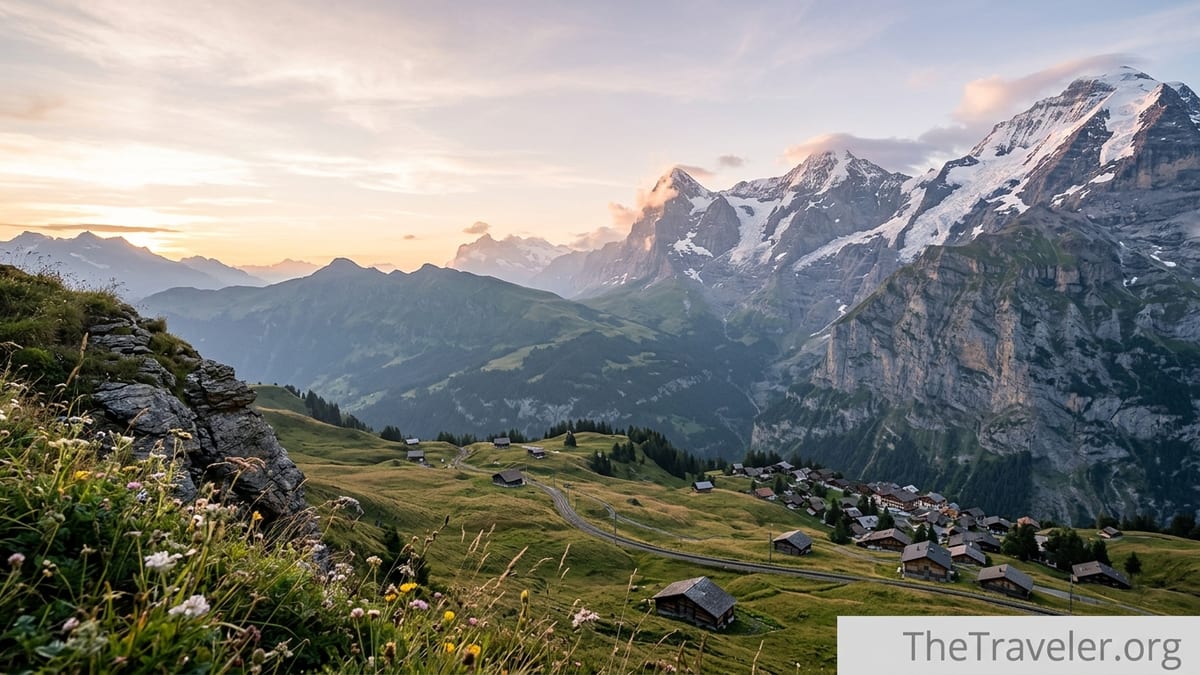
How Swiss mountain excursions work in practice
Nearly all of the famous Swiss Alps viewpoints are reached by a combination of regular trains, mountain railways and cable cars. In most cases you will first travel on a standard Swiss Federal Railways or regional train to a valley town such as Interlaken, Grindelwald or Zermatt, then change to a dedicated cogwheel railway or gondola for the final stretch to the high-altitude viewpoint.
Tickets are usually sold as a single "excursion" ticket that covers every segment from a designated starting point. For example, a typical Jungfraujoch ticket from Interlaken Ost in summer 2026 includes the train to Grindelwald or Lauterbrunnen, the connecting mountain railway to Kleine Scheidegg and the final section through the tunnel to Jungfraujoch. Similarly, a Matterhorn Glacier Paradise ticket from Zermatt covers the full chain of gondolas via Furi and Trockener Steg to the Klein Matterhorn viewing platform.
Most visitors combine national rail passes such as the Swiss Travel Pass or Half Fare Card with individual tickets for the most expensive high-altitude stretches. In 2026, Jungfraujoch still offers only a 50 percent discount for Half Fare Card holders, while passholders with a Swiss Travel Pass or Berner Oberland Pass receive varying reductions on the top sections but not a free trip. By contrast, Gornergrat and some Zermatt lifts are often discounted more generously, especially outside peak dates.
Weather is the other crucial factor. These journeys are long and pricey, and there are no refunds for cloudy days unless the railway officially suspends operations. It is common for travelers staying several nights in the Jungfrau or Zermatt regions to buy flexible tickets locally once a clear day appears, rather than committing months in advance to a specific date.
Jungfraujoch: Top of Europe at a premium
Jungfraujoch markets itself as the "Top of Europe" and remains one of Switzerland’s most in-demand single attractions. The saddle station sits at about 3,454 meters between the Jungfrau and Mönch peaks, reached by a historic cogwheel railway that tunnels through the Eiger and offers indoor attractions such as the Ice Palace and an observation deck over the Aletsch Glacier. The experience is polished and family friendly, but also crowded and expensive, especially in high summer.
From May to October 2026, a typical round-trip ticket from Interlaken Ost to Jungfraujoch without any discount runs in the high 200s to low 300s in Swiss francs equivalent, with slightly reduced prices in November and early December. On top of the basic fare, a mandatory seat reservation fee of around 10 francs per person applies in peak season, which must be added to your ticket or pass. This has been introduced because trains in July and August are frequently full, with queues building at Grindelwald Terminal and Kleine Scheidegg if you arrive after mid-morning.
Allow at least eight hours for a Jungfraujoch excursion from Interlaken, including connections. A realistic schedule for a summer visit might be the 08:00 departure from Interlaken Ost, arrival at the top shortly after 10:00 and a descent starting around 13:30, with arrival back in town by mid or late afternoon. Travelers based in Grindelwald or Wengen can shave roughly an hour off the total time. Because of the 3,454 meter altitude, some visitors experience mild headaches or shortness of breath, so a slower pace and frequent indoor breaks are wise.
Jungfraujoch is worth booking if you want the classic high-altitude glacier experience with extensive visitor infrastructure: tunnels, exhibitions, indoor restaurants and smooth paths underfoot. It is less ideal if you prefer open-air hiking or quiet viewpoints. In poor weather, much of the appeal disappears into cloud, and in that case a cheaper mid-station option such as Kleine Scheidegg or Männlichen often offers a better value day out.
Gornergrat: Classic Matterhorn panorama with flexible timing
Gornergrat, above Zermatt, is a broad ridge at about 3,089 meters with one of Switzerland’s most impressive panoramas. The cogwheel Gornergrat Railway climbs from Zermatt village in just over 30 minutes, past larch forests and several intermediate stations, to a summit terrace with wide-open views of the Matterhorn pyramid and more than two dozen 4,000 meter peaks. The experience feels more spacious and less commercial than some other summit complexes, with plenty of room to wander and several hiking trails down to lower stops.
Standard adult return tickets on the Gornergratbahn in 2026 are typically in the 120 to 150 franc range from Zermatt, depending on season and promotions. Half Fare Card or Swiss Travel Pass discounts commonly reduce this by around 50 percent, and there are often early-morning or late-afternoon saver offers which make it one of the better-value big panoramas in the Alps. Because trains run roughly every 20 to 30 minutes throughout the day according to the latest timetable, you can decide spontaneously based on the weather rather than committing to a fixed departure.
In terms of time, Gornergrat is much easier to fit into a flexible schedule than Jungfraujoch. From central Zermatt, you can ride to the top, enjoy the terrace and short walks, and return in three to four hours without feeling rushed. Many travelers pair a morning trip to Gornergrat with an afternoon stroll to the Gorner Gorge or a wander through Zermatt’s old village. At just over 3,000 meters, altitude effects are usually milder than at Jungfraujoch or Matterhorn Glacier Paradise, though sensitive visitors should still move slowly.
Gornergrat is particularly worthwhile for photographers and hikers who want a classic Matterhorn view framed by lakes and rocky ridges. On a clear day, the early trains shortly after sunrise can be magical and often quieter. Compared with the very top of Klein Matterhorn, Gornergrat feels more relaxed and is often better for actually seeing the Matterhorn rather than standing almost level with it.
Matterhorn Glacier Paradise: highest lift station in Europe
Matterhorn Glacier Paradise, located on the Klein Matterhorn above Zermatt, claims the title of the highest cable car station in Europe at about 3,883 meters. A chain of modern gondolas and cable cars climbs from Zermatt via Furi and Trockener Steg to the upper station, where you can access an indoor glacier palace, a viewing platform and in most years year-round skiing on the adjacent glacier. The setting feels distinctly high alpine, with permanent snow and ice underfoot even in midsummer.
Because of the highly engineered lifts and the international Matterhorn Alpine Crossing to Cervinia in Italy, tickets to Matterhorn Glacier Paradise are among the costlier excursions in Switzerland. Official 2026 brochures for the alpine crossing show one-way Zermatt to Cervinia fares for adults between roughly 125 and 165 francs depending on season, with round trips priced higher. Standard return tickets from Zermatt just to Matterhorn Glacier Paradise without crossing the border are cheaper, and rail pass discounts are common, but visitors should still budget well over 100 francs per adult for a full-price round trip in peak summer.
Travel time from Zermatt to the top is about 45 minutes to one hour each way, depending on connections and queueing at Trockener Steg. The altitude is almost 4000 meters, so even fit travelers can feel breathless after climbing stairs or walking around the viewing platform. It is sensible to limit your stay at the very top to an hour or so and then descend to a mid-station such as Trockener Steg or Schwarzsee for longer walks and lunch. Many visitors spend a total of five to six hours on this excursion from Zermatt including breaks and short hikes.
Matterhorn Glacier Paradise is worth booking if you are excited by the idea of stepping into a world of snow and ice in shorts and a T-shirt in July, or if you want to experience the high-tech side of Swiss mountain engineering. It is less ideal if you prefer green meadows and lake reflections, or if you are particularly sensitive to altitude. For many travelers, a combination of Gornergrat for the classic panorama and a mid-level Zermatt hike offers a better balance of cost, comfort and scenery than paying separately for both Gornergrat and Klein Matterhorn.
Schilthorn and Grindelwald First: action, views and better value
Schilthorn, above Mürren in the Bernese Oberland, sits at about 2,970 meters and is famous for its James Bond connection and revolving Piz Gloria restaurant. A sequence of cable cars from Stechelberg in the Lauterbrunnen Valley or from Mürren village reaches the summit in roughly 30 minutes of actual riding time, not counting transfers. The modernized cableway system being introduced between 2024 and 2026 reduces waiting times and improves comfort compared with the older cabins.
Public return fares from Stechelberg to the Schilthorn summit for adults in 2026 are typically a bit above 100 francs at the ticket window, before any discounts. Several rail passes, including the Swiss Travel Pass and regional passes, offer substantial reductions. Because the journey is relatively fast and flexible, travelers often watch the live webcams in the morning and then buy tickets only if the famous Eiger, Mönch and Jungfrau peaks are visible. On partly cloudy days, spending more time at the intermediate station Birg, with its skywalk and cliff walk platforms, can give better photos than the very top.
Grindelwald First, on the opposite side of the valley from Schilthorn, is a mid-altitude plateau above Grindelwald reached by a long gondola ride. The summit station sits at about 2,168 meters, with a cliff walk, short hikes to Bachalpsee and a range of adventure activities including suspension bridges, zip lines and mountain carts. Full-price return gondola tickets for adults are generally in the 60 to 80 franc range depending on season, with generous discounts for Half Fare Card and some regional passes, making it significantly cheaper than Jungfraujoch for a half-day of mountain scenery.
Both Schilthorn and First work especially well as flexible, weather-dependent outings if you are staying in the Jungfrau region for several nights. You can ride up for a few hours in the late morning or early afternoon, enjoy the cliff walks and short hikes, and still be back in your village in time for dinner. For many travelers who do not feel the need to stand at 3,500 meters, these medium- and high-altitude trips provide iconic views of the same big peaks at a lower price and with more chances to be active outdoors.
Comparing key facts: altitude, time and cost
When choosing between Swiss summit excursions, it helps to view the main options side by side. Jungfraujoch is the highest of the classic Bernese Oberland trips at about 3,454 meters, with a full-day time commitment from Interlaken and some of the highest ticket prices in the country. Matterhorn Glacier Paradise goes even higher to around 3,883 meters above Zermatt, but with a shorter ride time from the village if queues are light. Gornergrat’s 3,089 meter ridge feels more accessible, while Schilthorn at 2,970 meters and Grindelwald First at just over 2,100 meters are easier on the body for those unused to altitude.
In budget terms, solo travelers without rail passes should expect to spend roughly in the following order from costliest to more affordable: Matterhorn Glacier Paradise and Jungfraujoch at the top end, then Gornergrat and Schilthorn, and finally Grindelwald First. As a concrete real-world example, a couple visiting in August 2026 with Half Fare Cards might pay around 180 to 200 francs total for Gornergrat tickets, compared with 300 francs or more for Jungfraujoch plus reservation fees. By contrast, two Half Fare Card tickets for Grindelwald First or Männlichen on a sunny afternoon could come in closer to 80 to 120 francs.
Time is equally important. If you have only two nights in Zermatt, it can be ambitious to try both Gornergrat and Matterhorn Glacier Paradise, especially if you also want to hike and explore the town. In that case, many travelers choose Gornergrat as their primary viewpoint and keep Glacier Paradise as a backup if they wake to flawless blue skies. In the Jungfrau region, visitors who only have one full day in Interlaken may find that Jungfraujoch dominates the schedule, leaving little time for lakes or villages, whereas Schilthorn or First can slot into a half-day, leaving hours for a boat trip on Lake Thun or a stroll in Lauterbrunnen.
Weather patterns and season add another layer. Jungfraujoch is relatively weather-resistant thanks to its indoor attractions, so a visit in November or March can still feel worthwhile even if the views are partially clouded. Matterhorn Glacier Paradise and Gornergrat are more exposed, and the Matterhorn is notorious for wearing a cloud cap in the afternoon, making early departures the safer bet. Schilthorn and First are more about the overall valley panorama and activities, so thin high cloud is less of a problem as long as the main peaks remain visible.
Which excursions are worth booking for your trip type
For first-time visitors on a classic one-week Switzerland itinerary that includes both Interlaken and Zermatt, a practical strategy is to choose one flagship high-altitude experience and one or two lower-cost, more flexible outings. For example, you might commit to Jungfraujoch as your main splurge in the Jungfrau region, then plan to do Gornergrat in Zermatt only if the weather is excellent. Alternatively, you might skip Jungfraujoch altogether, focusing instead on Schilthorn, First and Gornergrat, which collectively cost less and involve more hiking and outdoor time.
Families with children often get better value from mid-altitude areas like Grindelwald First, Männlichen or Sunnegga, where playgrounds, easy walks and adventure activities combine with scenic views. A real-world scenario: a family of four with a Swiss Family Card might spend a full day at First, riding the gondola, hiking to Bachalpsee, trying the zip lines and mountain carts, and still spend less in total than a half-day at Jungfraujoch would have cost once seat reservations and expensive summit meals are included.
For photographers and mountain enthusiasts, the combination of Gornergrat and Matterhorn Glacier Paradise in Zermatt can be compelling, but it is wise to spread them over two separate clear days rather than back-to-back in hazy conditions. Sunrises on Gornergrat and late-afternoon light on the Matterhorn from lower viewpoints such as Riffelsee or Stellisee often produce more memorable images than a quick visit to the very highest platforms at midday.
Travelers on tighter budgets or short stays might deliberately avoid the flagship excursions and instead use regional passes to ride cheaper lifts and mountain trains. Examples include taking the cable car from Wengen to Männlichen and walking the easy ridge path towards Kleine Scheidegg, or riding from Zermatt to Sunnegga and then hiking towards Findeln for views of the Matterhorn above traditional wooden barns. These outings can cost less than half the price of a Jungfraujoch or Glacier Paradise ticket and still deliver the sense of being surrounded by towering 4,000 meter peaks.
Practical booking tips and timing strategies
When planning 2026 travel, it is important to check not only prices but also seasonal operating calendars and construction closures. For instance, official summer 2026 timetables for the Zermatt lifts note periods in September and October when sections of the Matterhorn Alpine Crossing are closed for maintenance, reducing options for border crossings to Cervinia. Similarly, some Jungfrau region railways schedule short off-season closures in November for track work, which can interrupt certain routes for a week or two at a time.
Seat reservations are a growing consideration. For Jungfraujoch, reservations between May and October 2026 are compulsory on many departures and carry a modest additional fee, but they significantly reduce queueing at the boarding platforms. Other excursions, like Gornergrat and Schilthorn, currently do not require reservations for standard visits, although special sunrise or dining packages may include fixed times. In practice, this means you can keep Gornergrat or First as weather-dependent back-up options and only purchase tickets the evening before or morning of your trip.
Rail passes remain one of the most effective ways to reduce costs on these excursions. A Swiss Half Fare Card quickly pays for itself if you plan two or three big mountain trips plus intercity train travel, since almost all of the railways and lifts mentioned here offer 50 percent discounts on at least part of the route. The Swiss Travel Pass and regional passes, such as the Berner Oberland Pass, sometimes include full coverage up to mid-stations and discounted add-on tickets for the top sections, which can reduce a Jungfraujoch or Schilthorn excursion by dozens of francs per person compared with full fare.
Finally, aim to ride early. On sunny days in July and August, the first trains to Jungfraujoch and early gondolas to Matterhorn Glacier Paradise and Gornergrat are usually less crowded, with clearer air and more stable weather. Planning a 07:30 or 08:00 departure from your base may mean setting an early alarm, but it often delivers the best combination of views, quieter platforms and time to descend to a mid-altitude terrace for a late lunch as afternoon clouds build.
The Takeaway
Choosing between Jungfraujoch, Gornergrat, Matterhorn Glacier Paradise, Schilthorn and Grindelwald First is ultimately about matching altitude, cost and time commitment to your personal travel style. Jungfraujoch and Matterhorn Glacier Paradise sit at the top of the price and altitude scale, offering dramatic engineering and guaranteed snow but demanding full days and tolerance for thin air. Gornergrat, Schilthorn and First provide slightly gentler, more flexible experiences with equally memorable views, especially for those who enjoy walking rather than staying indoors.
If your budget allows one major splurge, think about where you are based longest and which skyline excites you more: the Jungfrau massif from the Bernese Oberland, or the Matterhorn and its ring of 4,000 meter peaks from Zermatt. Then build a supporting cast of lower-cost lifts and hikes that let you experience different angles of the mountains without buying every premium ticket on the map. With realistic expectations about prices, weather and timing, the Swiss Alps can deliver several unforgettable summit days without overwhelming either your schedule or your wallet.
FAQ
Q1. Is Jungfraujoch worth the high ticket price? For many first-time visitors, Jungfraujoch is worth it if you value indoor attractions and the experience of standing on a glacier at around 3,454 meters, especially in good weather. However, if you prefer open-air hiking and quieter viewpoints, you may find better value in Schilthorn, Grindelwald First or mid-altitude hikes like Männlichen to Kleine Scheidegg.
Q2. Should I visit Gornergrat or Matterhorn Glacier Paradise if I only have time for one? If you must choose, Gornergrat usually offers the more iconic Matterhorn panorama with easier altitude and more flexible timing, making it the better single choice for most travelers. Matterhorn Glacier Paradise is best if you specifically want to step into snow and ice at nearly 3,900 meters or are interested in the international crossing to Italy.
Q3. How much time do I need for a Jungfraujoch excursion from Interlaken? Plan for a full day, typically around eight hours door to door, including train changes, time at the summit and short photo or snack breaks. Starting with an early train around 08:00 helps avoid the worst crowds and gives you more time to adjust to the altitude.
Q4. Are rail passes like the Swiss Travel Pass or Half Fare Card really worth it for mountain trips? If you plan to take two or more major mountain excursions plus several intercity train rides, a Half Fare Card or Swiss Travel Pass usually saves a significant amount compared with buying full-price tickets. The exact benefit depends on your itinerary, but most high-altitude trips offer at least a partial discount to passholders.
Q5. What is the best Swiss mountain excursion for families with children? Grindelwald First is a strong all-round choice for families thanks to its manageable altitude, cliff walk, easy hike to Bachalpsee and adventure activities like zip lines and mountain carts. Mid-level areas such as Männlichen or Sunnegga in Zermatt also work very well for children, with playgrounds and gentle paths combined with big-mountain views.
Q6. How do I avoid wasting money on a summit trip in bad weather? The best strategy is to stay at least two or three nights in a base such as Interlaken, Grindelwald or Zermatt and delay buying expensive summit tickets until you have checked the latest webcam images and forecasts. Prioritize flexible excursions like Gornergrat, Schilthorn or First on days with variable weather and keep the costliest trips for when skies are clearly forecast to be bright.
Q7. Will I get altitude sickness on Jungfraujoch or Matterhorn Glacier Paradise? Most healthy visitors experience only mild symptoms such as shortness of breath or a slight headache at these altitudes, which usually ease after moving slowly and drinking water. If you have known heart or lung conditions or have reacted badly to altitude in the past, consult a doctor before your trip and consider focusing on lower summits such as Gornergrat, Schilthorn or Grindelwald First.
Q8. Can I book Swiss mountain excursions on the same day? Yes, many travelers buy tickets the same day for Gornergrat, Schilthorn, First and some Zermatt lifts, especially outside peak hours. Jungfraujoch in summer 2026 is more structured due to mandatory seat reservations, so securing tickets at least a day or two in advance is safer during July and August.
Q9. Are there good alternatives if I cannot afford Jungfraujoch? Cheaper options include riding the cable car from Wengen or Grindelwald to Männlichen, taking the gondola to Grindelwald First or visiting Schilthorn from Stechelberg with a discounted pass. These outings still deliver superb views of the Eiger, Mönch and Jungfrau or the surrounding valleys at a fraction of the price of a full Jungfraujoch ticket.
Q10. What should I wear for high-altitude excursions in summer? Even in July and August, temperatures at 3,000 meters and above can feel close to freezing in wind or cloud, so bring a warm layer, hat, gloves and a windproof jacket. Sturdy footwear with good grip is important, particularly on snowy or icy surfaces at Jungfraujoch and Matterhorn Glacier Paradise, while sunglasses and sunscreen are essential due to strong UV reflection from snow.