


Choosing where to stay in Switzerland often feels harder than booking the flight. The country is compact and brilliantly connected by trains, but each base offers a very different experience: city buzz or quiet valleys, big ski domains or gentle lake promenades, once-in-a-lifetime Matterhorn views or easy family logistics. This guide compares Switzerland’s most popular hubs for first-time trips and train-based itineraries: Zurich, Lucerne, Interlaken, Grindelwald, Lauterbrunnen, Zermatt, Montreux and St. Moritz.
How to Choose Your Swiss Base
The starting point is to decide what you want most from your base: iconic mountain scenery, lakeside relaxation, easy skiing, or efficient rail connections. In practice, most first-time visitors split a week between one city or lakeside town and one high-mountain base. A common pattern is three nights in Lucerne or Montreux, then three or four nights in the Alps such as Grindelwald or Zermatt, using the fast and frequent train network rather than a rental car.
Budget also plays a big role. Central Zurich and St. Moritz are among the most expensive places to sleep, while Interlaken and Lauterbrunnen often have simpler hotels and apartments at lower rates. As a rough 2026 snapshot, a midrange double room in Zurich or Zermatt usually runs from about 230 to 350 Swiss francs per night in high season, while in Interlaken or Grindelwald you can still find honest three-star rooms from around 180 to 260 francs if you book early. Lake Geneva towns like Montreux often sit in the middle of that range.
Finally, consider how much you want to pack and unpack. Because trains are so efficient, you do not need a new hotel every night. Many travelers now choose two or three strategic hubs and day trip out, for example staying only in Lucerne and Interlaken for a week and visiting Bern, Pilatus, Rigi, Grindelwald and Lauterbrunnen on simple out-and-back train journeys. This cuts down on check-in time and lets you get to know each region more deeply.
Zurich vs Lucerne: Best City Bases for First-Timers
Zurich is Switzerland’s largest city and main international gateway. Staying here is practical if you land late or fly out early, because hotels around Zurich Hauptbahnhof and the river are just 10 to 15 minutes by train from the airport. The city works well for a short urban stay, with lakefront walks, the Old Town lanes of Niederdorf, and day trips to Rhine Falls or nearby Uetliberg. Hotels such as 25hours Langstrasse or citizenM in the center target design-conscious travelers, while large chains like Marriott and Hyatt sit close to the station for easy onward travel.
Lucerne, by contrast, is smaller, prettier and more overtly geared toward visitors. Historic hotels line the lakeshore near the Chapel Bridge, and the compact Old Town makes it easy to wander on foot. For many visitors, Lucerne is a better first base than Zurich because you can combine city ambience with big mountain excursions. From Lucerne station you can be on the Pilatus cog railway or Rigi railway within about an hour, or take the scenic Brunig line toward Interlaken. Central three-star hotels here often start around 200 to 260 francs per night in summer, while grand lakefront properties like the Hotel National or similar classic-era palaces typically command 350 francs and up.
If your trip is mainly about lakes and mountains rather than business or nightlife, Lucerne usually edges out Zurich as a base. It offers more immediate scenery, easier access to boat trips, and shorter day-trip times to the Bernese Oberland. Zurich still makes sense if you want a big-city restaurant scene, museums, or need to be very close to the airport on a short trip.
Interlaken, Grindelwald or Lauterbrunnen: Jungfrau Region Bases
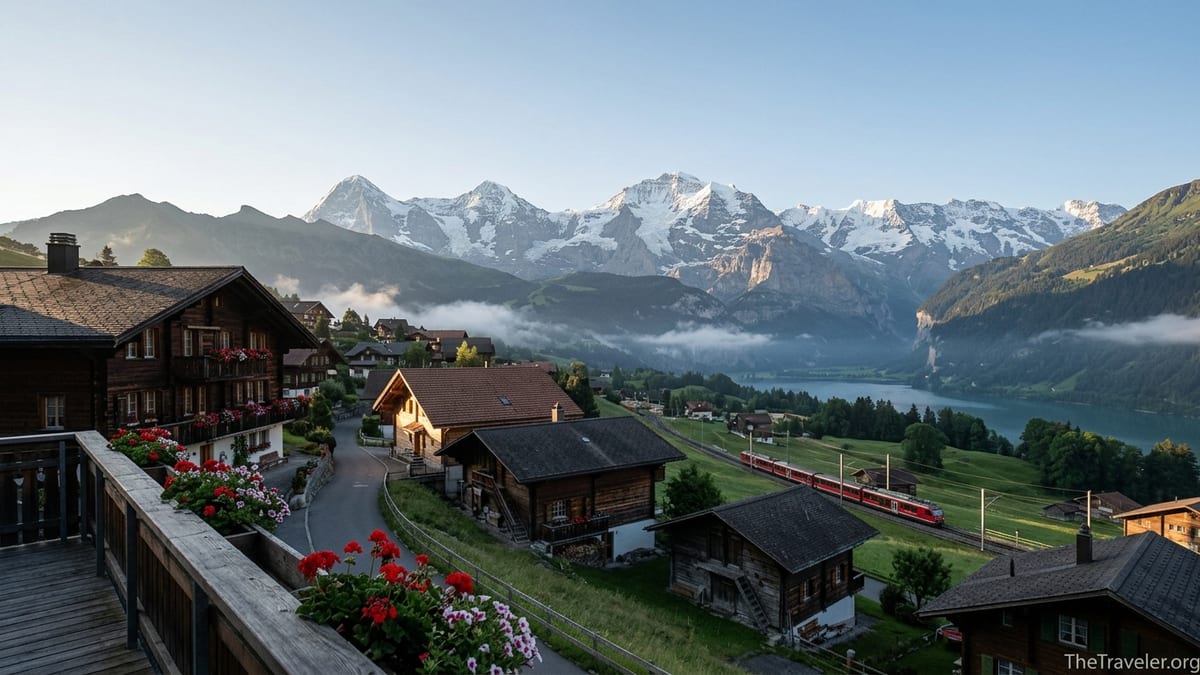
The Jungfrau region around Interlaken, Grindelwald and Lauterbrunnen is often the centerpiece of a first Swiss itinerary. Interlaken itself is a flat resort town between two lakes rather than a dramatic alpine village. Its main advantage is logistics: from Interlaken Ost station, you have trains heading directly to Grindelwald, Lauterbrunnen and on to the Jungfraujoch. This makes it an efficient hub if you want to sample several valleys. The town has a wide spread of accommodation, from basic hostels around 60 to 80 francs per person to midrange hotels on or near the Höheweg promenade from around 170 to 230 francs a night.
Grindelwald is better if you want to wake up already in the mountains. The village sits beneath the north face of the Eiger, and many hotels and apartments are oriented toward that view. Since the opening of the Eiger Express gondola from Grindelwald Grund, getting up to the Jungfraujoch and main ski areas has become significantly faster, which is a real advantage for both skiers and summer visitors heading for glacier viewpoints. Stays here tend to cost a bit more than Interlaken, especially for rooms or chalets with Eiger views, but you save 30 to 40 minutes of commuting each day compared with basing in Interlaken.
Lauterbrunnen offers a different kind of magic. The village sits on the floor of a deep U-shaped valley with vertical cliffs and waterfalls, including the famous Staubbach Falls. It is quieter than Interlaken and often chosen by hikers and families who want a gentler atmosphere. From here you can ride up to car-free Wengen or Mürren, then continue to the Schilthorn or Jungfraujoch. Accommodation ranges from simple valley-floor hotels to self-catering apartments that suit longer stays; prices are similar to Grindelwald but you exchange the Eiger wall for sheer cliffs and easy access to cliff-top villages.
Zermatt and St. Moritz: Destination Resorts for Views and Skiing
Zermatt is a classic “destination resort” rather than a hub. It sits at the end of a car-free valley beneath the Matterhorn, which means getting there requires a dedicated rail journey from Visp or Brig. Most travelers stay at least three nights, both to justify the travel time and to allow for clear-weather windows to see the Matterhorn at its best. In winter, Zermatt’s linked ski area reaches into Italy, while in summer, viewpoints like Gornergrat and Rothorn offer sweeping glacier panoramas and high-level hiking.
Accommodation in Zermatt reflects its status. Even in shoulder seasons, expect many three-star hotels to start around 230 to 260 francs for a double, with chalets and upscale properties like The Omnia or historic palaces easily moving into the 500 francs per night bracket at busy times. Families and beginners are increasingly well catered for, with dedicated learning areas such as Wolli’s Park at Sunnegga and a wide range of ski schools and rental shops concentrated around the station and main street. Staying within a 5 to 10 minute walk of the Gornergrat railway or main lifts can save you time and energy each day, especially with kids and ski gear.
St. Moritz occupies a similar place in the Swiss imagination but feels different on the ground. It overlooks a high valley lake in the Engadine and is surrounded by several ski areas, notably Corviglia directly above town and Corvatsch nearby. The atmosphere is the most overtly glamorous of the bases covered here, with luxury hotels, high-end boutiques and a winter calendar that includes polo and horse races on the frozen lake. Prices in peak season often match or exceed Zermatt, especially at landmark hotels like Badrutt’s Palace or Kulm where suites can climb into four-figure nightly rates, though smaller guesthouses and apartments in the wider valley offer more moderate options.
For most first-timers focused on scenery rather than status, Zermatt is the stronger choice between the two. The Matterhorn is instantly recognizable and the town is more compact. St. Moritz comes into its own for repeat visitors who want long ski days across multiple areas, or for itineraries built around the Glacier Express or Bernina line, which connect St. Moritz with Zermatt and Tirano.
Montreux and the Lake Geneva Shore
Montreux, on Lake Geneva, works beautifully as a soft-landing base for those who like gentle walks, vineyards and castles as much as big mountains. The promenade between Montreux and Chillon Castle is one of the most attractive urban lakeside walks in Switzerland, with flower beds, sculpture and views across to the jagged French Alps. Many hotels stretch along this waterfront, including classic-era properties with Belle Époque dining rooms and balconies that catch the evening light over the water.
The town is also a strong choice for rail-based itineraries. From Montreux station you can ride the GoldenPass panoramic line toward Zweisimmen and Interlaken, or head to Lausanne, Geneva and the Lavaux vineyard terraces. With a Swiss Travel Pass, regional trains, lake boats and many museum entries are included or discounted, which makes a week based here with day trips to Vevey, Lausanne, Gruyères or Rochers-de-Naye both easy and good value in Swiss terms. Midrange rooms typically start around 200 to 260 francs per night outside the Montreux Jazz Festival and busy summer weekends.
For couples, Montreux often competes with Lucerne as a romantic lakeside base. Lucerne offers closer access to central Switzerland’s iconic peaks, while Montreux delivers vineyards, wine tastings and a softer climate. With children, Montreux pairs well with a second base in the Alps, for example three nights by the lake followed by three or four in Grindelwald or Zermatt to balance relaxed days with high-mountain adventures.
Best Bases for Families, Couples and Skiers
For families, the best bases balance simple logistics, outdoor space and age-appropriate activities. In the Jungfrau region, Grindelwald and Wengen work well because you can reach playgrounds, easy hikes and cable cars without multiple train changes. Zermatt is also highly family-friendly, provided you plan for the higher accommodation costs. Facilities like gentle beginner areas, sledging runs and winter walking trails mean non-skiing family members can still enjoy being up on the mountain without committing to steep runs. Apartments with kitchenettes, which are abundant in Grindelwald and Zermatt, help keep dining costs under control for larger groups.
Couples often gravitate toward bases with strong atmosphere and views from the room itself. Lucerne’s lakefront hotels, Lauterbrunnen’s waterfall backdrop and Montreux’s sunset light all lend themselves to slower stays. For something more secluded, a chalet-style hotel in Grindelwald with an Eiger-facing balcony or a boutique property in Zermatt’s upper streets can turn a standard trip into a trip with a “wow” factor when you open the curtains in the morning. In shoulder seasons like May and October, these romantic stays can be significantly cheaper than in high summer or over Christmas and New Year.
Skiers should think about lift access as much as postcard views. In Grindelwald, staying near Grindelwald Terminal or Grindelwald Grund cuts the commute to the Eiger Express gondola. In Zermatt, properties close to the Sunnegga funicular or Gornergrat railway mean you step from breakfast to the slopes quickly. St. Moritz skiers might prefer hotels near the Corviglia valley station for efficient daily laps. Expect day ski passes in major areas to run well over 80 francs in 2026, with dynamic pricing and discounts often available for multi-day or pre-booked passes, so build that into your accommodation budget when comparing resorts.
Train-Based Itineraries and Passes
Switzerland’s rail network lets you design entire trips without a car. Many visitors use the Swiss Travel Pass, which gives unlimited travel on most trains, buses and boats for set periods, plus free entry to many museums and discounts on mountain railways. It is especially good value for itineraries that include multiple long train days, such as Zurich to Lucerne, Lucerne to Interlaken, Interlaken to Zermatt, then onto Montreux or St. Moritz on scenic lines like the GoldenPass or Glacier Express routes.
When choosing bases with train travel in mind, focus on how many times you need to change trains and how early you want to start your days. Lucerne and Interlaken Ost are major nodes that allow straightforward out-and-back trips. For example, from Lucerne you can be in Interlaken in about two hours, making it realistic to stay in Lucerne and visit the Bernese Oberland on a long day trip if you do not want to change hotels. Interlaken, in turn, pushes you deeper into the mountains and shortens the trips to Grindelwald, Lauterbrunnen and the Jungfraujoch, which suits those planning multiple high-alpine days.
Scenic rail segments can double as transfers and sightseeing. Many travelers now route from Lucerne to Montreux via the full Brunig and GoldenPass line, treating the journey itself as a highlight. Similarly, connecting Zermatt and St. Moritz via the Glacier Express turns what would otherwise be a long transit day into a slow, panoramic crossing of the Alps. In each case, it makes sense to spend at least two or three nights at each end of such a scenic leg so you are not constantly moving on.
The Takeaway
There is no single “best” place to stay in Switzerland, only the best base for your priorities. Zurich and Lucerne anchor the central lakes and cities, with Lucerne usually the more rewarding choice for visitors focused on scenery. Interlaken, Grindelwald and Lauterbrunnen form the classic Jungfrau trio, from practical hub to cliff-lined valley, and work well as the mountain half of a first itinerary. Zermatt and St. Moritz are destination resorts where the journey is part of the experience, while Montreux brings a gentler, wine-and-waterfront rhythm on Lake Geneva.
As a planning shortcut, many first-timers do three nights in Lucerne, three in the Jungfrau region and three in Zermatt or Montreux, joined by scenic train routes and covered by a national rail pass. Families might trade one high-end resort for an apartment in Grindelwald, while couples may invest in a lakefront balcony or mountain-view suite for part of the trip. With thoughtful choices and realistic expectations about prices and travel times, your Swiss bases will not just be places to sleep, but highlights in their own right.
FAQ
Q1. Where should I stay in Switzerland for my first trip if I only have one base?
Lucerne is often the most balanced single base for a first trip. You get a walkable historic center, lake cruises, easy access to mountains like Pilatus and Rigi, and straightforward train connections to Zurich, Bern and the Jungfrau region for day trips.
Q2. Is Interlaken or Grindelwald better as a base for the Jungfrau region?
Interlaken is more practical if you want to visit several valleys and rely on frequent train connections, while Grindelwald is better if you value waking up in the mountains and having faster access to lifts and hiking from your door. Many travelers now choose Grindelwald for a more alpine feel.
Q3. How many nights do I need in Zermatt to see the Matterhorn properly?
Plan for at least two, ideally three nights in Zermatt. Weather in the high Alps is changeable, so a multi-night stay increases your chances of clear early-morning views from Gornergrat or Rothorn and gives time for both hiking or skiing and a village day.
Q4. Is Zurich worth staying in, or should I go straight to the mountains?
Zurich is worth one or two nights if you enjoy urban waterfront walks, museums and dining, or if flight times make an airport-near stay sensible. If your focus is purely on lakes and mountains and your flight schedule allows, it is perfectly reasonable to head directly to Lucerne, Interlaken or Montreux instead.
Q5. Which Swiss base is best for families with young children?
Grindelwald, Wengen, Zermatt and Montreux all work well for families. They combine safe, compact centers, easy access to gentle walks or playgrounds, and good public transport. Apartments and family rooms are common, and in winter these bases offer beginner-friendly snow areas and sledging as well as more advanced skiing.
Q6. Where should couples stay for a romantic Swiss getaway?
Couples often favor Lucerne for lakeside charm, Montreux for vineyard views and sunsets, Lauterbrunnen for its dramatic valley setting, or Zermatt for Matterhorn-facing balconies. Splurging on a lake- or mountain-view room for at least part of the trip can transform the feel of a romantic stay.
Q7. Is St. Moritz worth including on a first-time itinerary?
St. Moritz is most rewarding if you are keen skiers, interested in the Glacier Express or Bernina line, or curious about its high-end resort culture. For a shorter first trip focused on classic scenery, many visitors prioritize Lucerne, the Jungfrau region and Zermatt or Montreux before adding St. Moritz on a future visit.
Q8. Can I see Switzerland without renting a car?
Yes. The vast majority of visitors rely solely on trains, buses, boats and cable cars. Bases like Zurich, Lucerne, Interlaken, Zermatt, Montreux and St. Moritz are designed around public transport, and national passes can make multi-day rail travel both simpler and better value.
Q9. How should I split a 7-day trip between lakes and mountains?
A balanced 7-day plan is to spend three nights in a lakeside or city base such as Lucerne or Montreux and four nights in a mountain base like Grindelwald, Lauterbrunnen or Zermatt. This gives you time for at least one big mountain excursion, one or two lake days and some flex for weather.
Q10. When are hotel prices lowest in Swiss resort towns?
Prices are generally lowest in shoulder seasons such as late April, May, late September and October, outside school holidays and major events. Ski resorts like Zermatt and St. Moritz are at their most expensive around Christmas, New Year and peak winter weeks, and lakeside towns peak in July and August.