


Few countries make it as easy and rewarding to travel by train as Switzerland. Steel ribbons climb to glaciers, sweep along turquoise lakes and link medieval old towns with car-free alpine resorts. Yet the abundance of tickets, rail passes, scenic trains and mountain railways can be confusing when you are trying to build a realistic itinerary and budget. This guide walks you step by step through planning a Switzerland-by-train trip, with concrete examples of when to choose passes, how to connect to mountain railways and what to expect at stations and on board.
Understanding the Swiss Rail Network
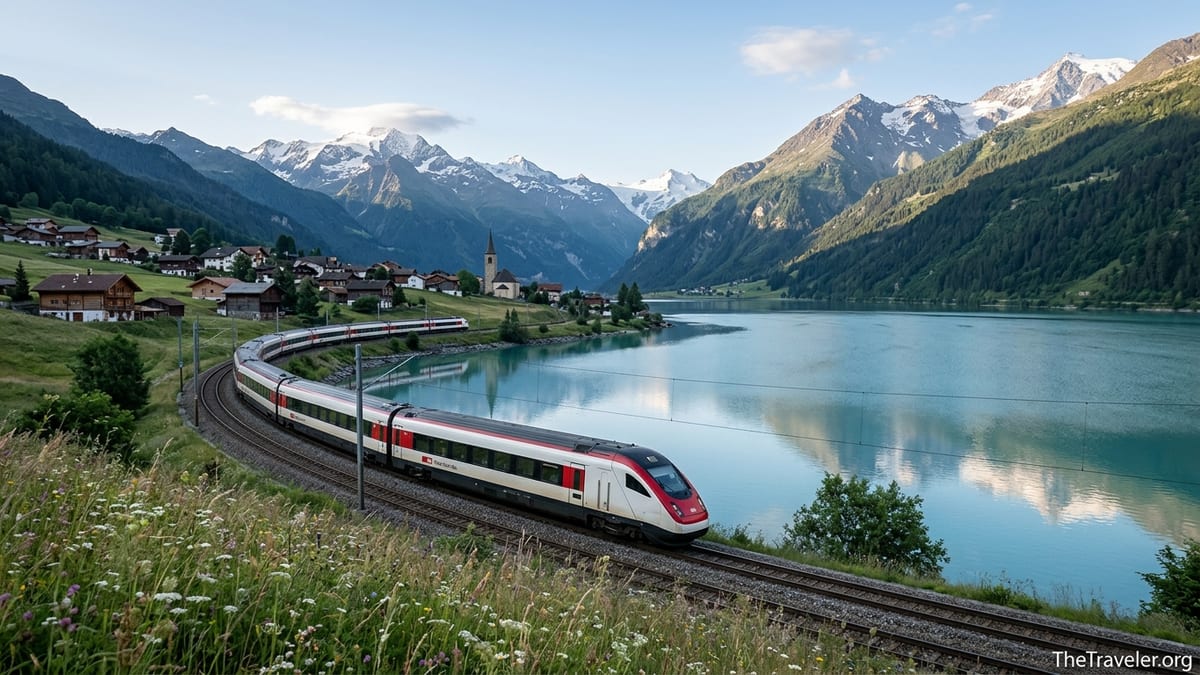
Switzerland’s rail system is a dense mesh of mainline intercity routes, regional trains and private mountain railways that share one integrated timetable. The national operator SBB, also known by its French and Italian acronyms CFF and FFS, runs most intercity and interregional trains, while companies such as Rhaetian Railway in Graubünden and the Zentralbahn in central Switzerland handle key scenic and regional lines. For the traveler, almost everything appears in a single timetable and is ticketed through the same channels, which makes even complex journeys surprisingly straightforward to plan.
Major cities are linked by fast InterCity trains that usually run every 30 or 60 minutes. For example, Zurich to Geneva typically takes around 2 hours 45 minutes with at least one direct train per hour, while Zurich to Lucerne takes about 45 to 50 minutes with departures roughly every 30 minutes. These mainline routes are rarely sold out, and reservations are usually not required or even offered in second class, so you can turn up and go, especially outside peak commuter times.
Beyond the main lines, regional trains fill in the gaps. From Interlaken Ost, for instance, a regional train brings you to Lauterbrunnen in about 20 minutes, while another continues to Grindelwald. In Graubünden, Rhaetian Railway trains link Chur, St Moritz and Davos and provide access to the Bernina and Albula lines that many travelers know from the Bernina Express and Glacier Express panoramic services. These “normal” regional trains often run along the same tracks as the famous scenic trains but cost less and are more flexible.
Layered on top of this regular network are private mountain railways and cable cars that climb to viewpoints such as Gornergrat above Zermatt or Jungfraujoch, often branded as “Top of Europe.” These lines have their own pricing and conditions but are usually partially covered or discounted by major passes. When planning, think of your journey in two pieces: the public-transport backbone that gets you between cities and valleys, and the mountain lifts and cog railways that turn the trip into an alpine experience.
Rail Passes vs Point-to-Point Tickets
The key financial decision for most visitors is whether to buy a rail pass or pay for individual tickets. The most widely used product for visitors is the Swiss Travel Pass, which offers unlimited travel on consecutive days across almost all regular trains, most boats and many mountain cable cars at either full coverage or a discount. Recent adult prices for a 2nd class Swiss Travel Pass are roughly in the low 200s Swiss francs for 3 days and around the high 300s for 6 days, with youth and flex versions priced differently, so always verify current figures before purchase.
Point-to-point tickets work best for travelers with just a few long rail days. As a rough example, a standard second-class fare from Zurich Airport to Interlaken via Bern might be in the range of 60 to 80 Swiss francs, depending on route and offers. Zurich to Zermatt or St Moritz is usually somewhere above 100 francs at full fare. If your entire itinerary is, for example, Zurich to Lucerne, one day trip to Mount Rigi, and then Lucerne back to Zurich, buying individual tickets and a separate mountain railway ticket may cost less than even the shortest nationwide pass.
A middle option is the Swiss Half Fare Card, which gives roughly 50 percent off almost all trains, buses, boats and many mountain railways for one month. For travelers planning several long trips plus expensive mountain excursions such as Jungfraujoch or Gornergrat, this combination often undercuts both point-to-point tickets at full price and a Swiss Travel Pass. Another widely used product within Switzerland is the Saver Day Pass, which acts like a 1-day unlimited ticket and can be excellent value if booked early for days with big mileage, such as Zurich to Zermatt and back in one long day.
To decide, sketch your itinerary and look up approximate full fares for the main journeys on the SBB booking site or app without actually buying. Add the mountain railway prices from operators such as Jungfrau Railways or the Gornergrat Bahn. Then compare that total with the cost of a Swiss Travel Pass plus any surcharges or reservations, and with the price of a Half Fare Card plus discounted tickets. For example, if you plan Zurich to Luzern, Luzern to Interlaken, several days shuttling between Interlaken and Lauterbrunnen or Grindelwald, and one long day to Zermatt, you might find that a 6-day Swiss Travel Pass offers convenience, but a Half Fare Card plus Saver Day Passes on the long days and half-price tickets on the short hops comes out cheaper.
How Tickets, Reservations and Classes Work
Most Swiss trains operate on a simple system: you buy a ticket for the route, not for a specific seat. On intercity trains between major cities there is typically no mandatory reservation, and you may board any train valid for your ticket on that day and route. Even during busy times, you can usually find space by walking down the platform to less crowded coaches or choosing a departure slightly outside peak commuting hours. Reservations are optional on some long-distance trains but are rarely necessary within Switzerland alone.
Panoramic tourist trains are the big exception. Services such as the Glacier Express between Zermatt and St Moritz, the Bernina Express between Chur and Tirano, and the Gotthard Panorama Express between central Switzerland and Ticino require paid seat reservations in addition to a valid ticket or rail pass. The reservation fee can be substantial relative to a normal ticket, especially in high season, and is capacity controlled, so it makes sense to secure seats weeks ahead if these services are a highlight of your trip.
Switzerland offers both 1st and 2nd class on most mainline trains. Second class is perfectly comfortable, with 2+2 seating, large windows and luggage racks. First class adds wider seats, a quieter ambience and sometimes less crowded carriages, typically with 2+1 seating. The price difference can be significant: a first-class Swiss Travel Pass usually costs well over a hundred francs more than the equivalent second-class version for the same number of days. Many travelers choose second class for value and use the savings on mountain excursions or special meals instead.
Tickets can be purchased at station ticket machines, staffed counters or through the SBB Mobile app and website. The app is especially useful for visitors, since it displays real-time platform information, useful for tight transfers. Inspectors commonly check tickets on board, and fines for traveling without a valid ticket are high, so always validate that your pass is activated for the correct day or that your Saver Day Pass or day ticket is valid before boarding.
Planning Scenic Routes and Panoramic Trains
Switzerland’s named scenic trains are the stars of many itineraries, but you do not need to ride all of them to enjoy spectacular scenery. The Glacier Express is the most famous, connecting Zermatt and St Moritz in about eight hours through the Oberalp Pass and the Rhine Gorge. The Bernina Express runs between Chur or St Moritz and Tirano in Italy across the Bernina Pass, with views of glaciers and the UNESCO-listed Rhaetian Railway landscape. Both trains use special panoramic coaches and serve meals at your seat, creating more of a rolling sightseeing tour than simple transportation.
Other routes can be woven more flexibly into a broader trip. The GoldenPass Express links Montreux on Lake Geneva with Interlaken via Zweisimmen, combining vineyards, lakes and the Bernese Alps in one journey. The Lucerne–Interlaken Express crosses central Switzerland’s lake-and-mountain heartland, and the Gotthard Panorama Express ties Lucerne to Ticino via a boat journey on Lake Lucerne and a train over the historic Gotthard mountain route. Many of these lines also have regular regional trains that travel the same tracks without the panorama branding, often with fewer surcharges and no reservations.
When planning, decide whether you want the full panorama-train experience with onboard commentary and catering, or whether you are happy to ride normal trains on the same line. For instance, if your schedule is tight but you want the Bernina scenery, you could travel between Chur and Tirano on regular Rhaetian Railway regional services, sit at the window and hop off at a station like Alp Grüm for photos. The timetable still delivers the same curves and viaducts, just without compulsory reservations or set meal times.
Build scenic sections into logical transfers between bases instead of as day trips that double back. A traveler moving from Zurich to Zermatt could go via Chur, onto the Glacier Express or standard trains to Disentis and Brig, and onward to Zermatt, turning a relocation day into a highlight. Someone going from Lucerne to Lugano might use the Gotthard Panorama Express or its regular-train equivalent over the classic mountain line rather than the quicker base tunnel, trading an extra hour of travel for spirals, stone bridges and dramatic valleys.
Mountain Railways, Cable Cars and Pass Coverage
Mountain railways are often the most expensive individual tickets on a Switzerland itinerary and can make or break the value of a rail pass. Jungfraujoch, branded “Top of Europe,” typically involves a journey from Interlaken Ost via Grindelwald or Lauterbrunnen and Kleine Scheidegg to the high-altitude station near 3454 meters. Gornergrat, above Zermatt, uses a cog railway to climb to a ridge with sweeping views of the Matterhorn and surrounding 4000-meter peaks. Prices for these trips often run into three figures per person at full fare, especially in summer.
Major visitor passes usually include only partial coverage on these signature routes. A Swiss Travel Pass, for example, generally offers free travel up to certain points such as Wengen or Grindelwald and then a 25 or 50 percent discount on the final mountain section, subject to current terms. Regional passes such as the Jungfrau Travel Pass cover extensive mountain networks around Interlaken, including routes like Grindelwald to First or the Schynige Platte Railway, with a supplement needed for the final stretch to Jungfraujoch. Because offers change by season and year, always check the latest validity maps or tables from the mountain railway operator before you buy any pass on the assumption of a certain discount.
In practice, this means you should list the exact mountain excursions you care about and test them against various pass options. For instance, if you plan two long days in the Jungfrau Region, one trip to Gornergrat and otherwise modest intercity travel, a national pass may be less useful than buying a Half Fare Card plus a Jungfrau regional pass and discounted Gornergrat tickets. Conversely, if you are taking multiple panorama trains and bouncing between Zurich, Lucerne, Interlaken, Montreux and Zermatt over a week with several smaller cable cars, the wide coverage of a Swiss Travel Pass can simplify decisions even if it is not the absolute cheapest choice.
Mountain railways are more sensitive to weather than normal trains. If you buy nonrefundable advance tickets for a fixed date to Jungfraujoch or Gornergrat and wake up to fog and rain, you may have a very expensive day inside the clouds. Pass-based discounts give you more flexibility to watch the weather forecast and choose the clearest day within your stay. When using passes, you generally still need to obtain a separate mountain railway ticket at the station or online, but the price you pay at checkout is reduced according to your pass benefits.
Station Transfers, Luggage and Onboard Practicalities
Swiss timetables often show tight connections of 5 to 8 minutes between trains. This is normal and usually reliable thanks to punctual operations and compact station layouts. Platforms are clearly numbered, and digital boards list upcoming departures with platform numbers. In Zurich HB, for example, transferring from an InterCity from the airport to a train for Lucerne often involves simply walking across the same island platform. In smaller stations like Spiez or Arth-Goldau, you may only need to cross the platform or go down a single flight of stairs.
Travelers with heavy luggage can still manage these transfers, but it helps to pack into one medium-sized suitcase rather than multiple small bags. All mainline trains have overhead racks for backpacks and small suitcases, and larger racks at coach ends for big luggage. Keep valuables near you and label your bags with a phone number. If you prefer not to handle bags on and off trains, SBB luggage services offer station-to-station or door-to-door transfers within Switzerland for a fee, allowing you to travel with only a daypack while your suitcase follows separately.
Food and drink are easy to arrange along the way. Many InterCity trains include a dining car or at least a bistro counter serving snacks, drinks and simple hot meals. On regional and panoramic trains without full catering, it is completely normal to bring your own picnic. Supermarkets in or near stations, such as the common chains you see in Swiss cities, sell sandwiches, salads, pastries and drinks ideal for train journeys. Tap water in Switzerland is generally safe to drink, and many trains have onboard toilets with running water.
Seasonality also affects how you experience the network. Summer and early autumn bring the most frequent mountain services and the highest demand on scenic trains, which can feel busy unless you reserve well in advance. Winter can be magical, especially around ski resorts, but some mountain railways and cable cars operate reduced schedules or close for maintenance between seasons. Always check the operating calendar of specific lifts such as those in the Jungfrau Region or around Zermatt for your exact travel dates, particularly in April, May, late October and November.
Sample Itineraries and When Each Ticket Strategy Wins
To see how the different ticket options play out, consider a typical one-week first-time itinerary: arrival in Zurich, one night in Lucerne, three nights in the Interlaken area and two nights in Zermatt before returning to Zurich. Major rail days might include Zurich Airport to Lucerne, Lucerne to Interlaken, a day from Interlaken up to Jungfraujoch and back, Interlaken to Zermatt via Spiez and Visp, a day trip up the Gornergrat Railway, and finally Zermatt to Zurich Airport. On top of this, you might add short hops to lake cruises or minor cable cars.
On this route, a 6-day Swiss Travel Pass provides unlimited city-to-city travel, boat rides on Lakes Lucerne, Thun or Brienz and free transport up to certain mountain towns, plus partial discounts on Jungfraujoch and Gornergrat. You would still pay a supplement for the final high-altitude sections, but the pass keeps ticket-buying simple and encourages spontaneous side trips, such as hopping on a boat from Interlaken to Brienz on a sunny afternoon without worrying about the extra fare.
Now imagine a different plan: three nights in Zurich with one day trip to Lucerne, two nights in Lugano, two nights in Bern and one night in Geneva, with no mountain railways. Your big rail days are Zurich to Lucerne and back, Zurich to Lugano, Lugano to Bern and Bern to Geneva. In this case, a Half Fare Card plus discounted tickets or a combination of Saver Day Passes on the longest transfers and point-to-point fares on the shorter legs could easily cost less than a consecutive Swiss Travel Pass, since you are using relatively few days of heavy travel.
For a rail enthusiast focused on scenic lines, a “Grand Train Tour” style route might include Zurich to Lucerne, the Lucerne–Interlaken Express, GoldenPass Express to Montreux, InterRegio or Regional trains along Lake Geneva to Brig, Glacier Express or equivalent regional trains to Chur, the Bernina route to Tirano and then back to Zurich via the classic Gotthard line. Because almost every day involves long scenic rides, a national pass or a Eurail/Interrail pass that covers Switzerland can offer strong value, especially if you book the compulsory seat reservations for the Glacier Express, Bernina Express and Gotthard Panorama Express well in advance.
The Takeaway
Planning Switzerland by train is less about memorizing every product and more about matching a few core tools to your actual itinerary. The integrated SBB timetable means you can treat the whole country as one coherent network, hopping from high-speed intercity trains to lakeside local services and on to mountain railways with only short platform changes. Most of the time, you are choosing between a Swiss Travel Pass, a Half Fare Card with Saver Day Passes and point-to-point tickets, then layering on mountain railway excursions and scenic trains as your interests and budget allow.
Start by mapping out your bases and big transfer days, then price out rough full fares using official booking channels. Add in your must-do mountain trips such as Jungfraujoch, Gornergrat or Pilatus and see how those prices change with a pass. Decide whether you want the full panoramic-train experience on routes like the Glacier Express or whether regular trains on the same lines are sufficient for your needs. With these decisions made, you can lock in seat reservations where needed, pack reasonably light, and arrive in Switzerland confident that the rails beneath your feet will carry you smoothly from city cafés to cliff-edge viewpoints.
FAQ
Q1. Do I need seat reservations on Swiss trains?
For most intercity and regional trains within Switzerland, reservations are not required and often not even possible. They are mandatory on certain panoramic tourist services such as the Glacier Express, Bernina Express and Gotthard Panorama Express, where you pay a separate reservation fee in addition to your ticket or rail pass.
Q2. Is the Swiss Travel Pass worth it for a short visit?
The Swiss Travel Pass can be good value if you have several long train days plus lake boats and a few mountain lifts within a short period. For a trip with just one or two intercity rides and limited sightseeing, individual tickets or a Half Fare Card with Saver Day Passes often work out cheaper.
Q3. What is the difference between 1st and 2nd class on Swiss trains?
Second class offers comfortable 2+2 seating and is what most locals use. First class has wider seats, more legroom and a quieter atmosphere with 2+1 seating on many trains, but costs significantly more. For most travelers, second class provides all the comfort they need.
Q4. How early should I book scenic trains like the Glacier Express?
For popular dates from late spring through early autumn, it is wise to book panoramic trains several weeks ahead, especially if you want specific seats or are traveling in a group. Outside peak periods, you may find availability closer to departure, but relying on last-minute space during busy seasons can be risky.
Q5. Are mountain railways included in rail passes?
Most nationwide passes fully cover the approach to many mountain villages but only discount the final high-alpine sections. For example, travel to towns such as Wengen or Mürren may be included, while the last segment to Jungfraujoch or up to Gornergrat is offered at a reduced price. Always check current validity charts for your pass and target mountain line.
Q6. What is the Saver Day Pass and when should I use it?
The Saver Day Pass is a one-day ticket that gives almost unlimited travel on most public transport in Switzerland for the chosen date. It is sold on a yield basis, meaning prices are lower if you buy early. It is best used on days with long-distance travel or multiple legs, such as a cross-country transfer combined with regional sightseeing.
Q7. Can I store luggage at Swiss train stations?
Yes, most major stations have self-service lockers or staffed luggage offices where you can store bags for several hours or overnight. This is useful if, for example, you want to explore Lucerne for a few hours between an early arrival from Zurich and an afternoon departure for Interlaken.
Q8. How tight are station transfers and are they realistic?
Connections of 5 to 8 minutes are common and usually realistic because Swiss stations are compact and timetables are designed for smooth transfers. If you are traveling with small children, limited mobility or very heavy luggage, you may want to choose itineraries with slightly longer transfer times, which you can manually adjust when searching in the timetable.
Q9. Do trains run if the weather is bad in the mountains?
Regular trains almost always run in all weather, but visibility can be poor on scenic and mountain routes during storms, heavy cloud or fog. Mountain railways and cable cars can suspend operations in very strong winds or for safety, so it is wise to check live information on the morning of a high-altitude excursion and have a backup plan at lower elevation.
Q10. What is the best way to buy tickets as a visitor?
Most visitors use a combination of the official national rail app, website and station ticket machines. The app is particularly convenient for checking real-time departures, platform numbers and disruptions. If you are unsure about passes, staff at larger stations can help compare options based on your provisional itinerary before you commit.