


Switzerland has a reputation as one of Europe’s most expensive destinations, but with realistic planning it does not have to destroy your budget. This guide breaks down what a trip to Switzerland is likely to cost in 2026, from hotel nights in Zurich and lakeside towns to Swiss Travel Passes, iconic mountain railways like Jungfraujoch and Gornergrat, everyday restaurant meals, car rentals and guided tours. All prices are approximate and can change, but they will give you a solid starting point for designing a budget, mid-range or luxury Swiss itinerary.
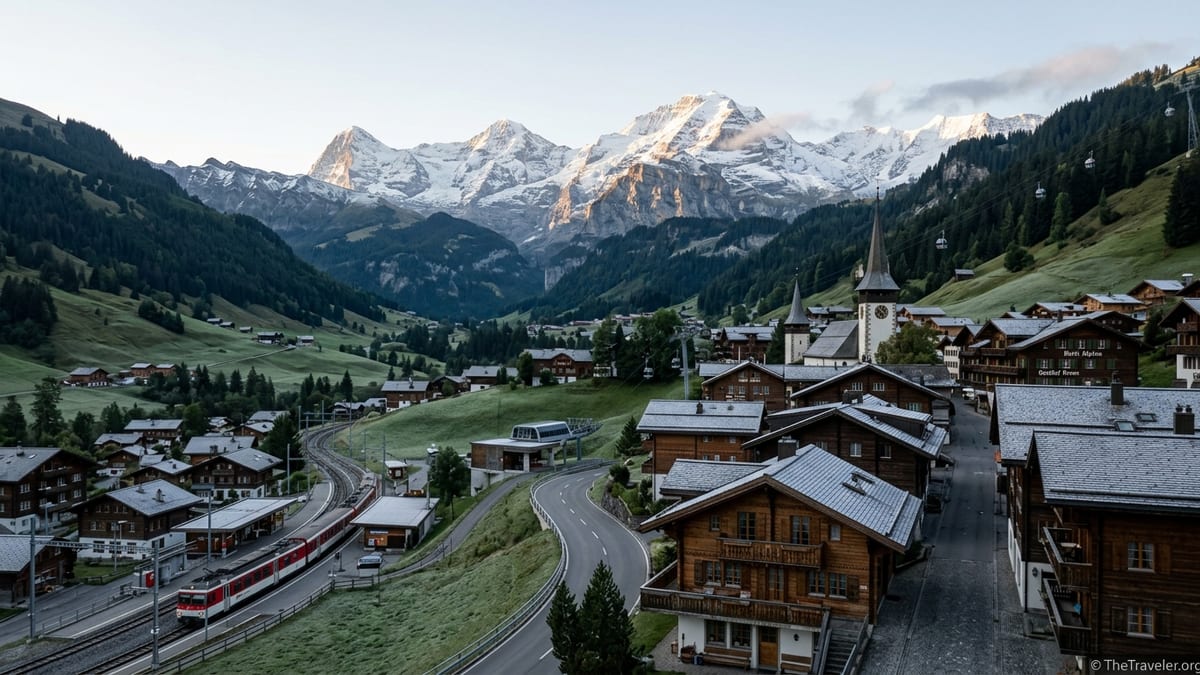
How Much Does a Trip to Switzerland Really Cost?
On a typical 7 to 10 day trip, most visitors will spend the bulk of their budget on accommodation and transportation. Switzerland’s excellent public transport system makes it easy to move between cities like Zurich, Lucerne and Geneva and alpine bases such as Interlaken, Zermatt and Grindelwald. The trade-off is that both hotel rates and train fares are higher than in many neighboring countries. In 2026, many travelers find that a realistic daily budget excluding flights starts at roughly 130 to 170 CHF per person for budget-conscious trips, 220 to 320 CHF for comfortable mid-range travel, and 400 CHF or more for a higher-end experience.
Season and location matter. A simple guesthouse in a small village outside Interlaken might be under 150 CHF in late October, while a similar-quality room in central Zurich in June can easily double that. Mountain resorts such as Zermatt see higher prices in winter ski season and in high summer. Rail passes like the Swiss Travel Pass can flatten out costs if you are riding trains most days, while half-fare cards and saver day passes can cut prices for travelers willing to plan a bit.
To make sense of the numbers, it helps to think in concrete daily scenarios. A budget traveler staying in a hostel in Zurich, using a Swiss Travel Pass for transport and cooking some meals might spend around 140 CHF per day. A mid-range couple staying in a three-star hotel in Lucerne, riding a mix of regular tickets and regional passes, eating one sit-down restaurant meal a day and adding a big mountain excursion could see average daily costs closer to 260 to 320 CHF per person over a week.
What follows is a detailed look at each major spending category and how it affects the bottom line, including specific price points for well-known services such as the Swiss Travel Pass, Jungfraujoch and Gornergrat, plus realistic hotel and restaurant ranges in popular destinations.
Hotels and Accommodation: What You Get for Your Money
Accommodation is usually the single biggest line item in a Swiss travel budget. Recent pricing analyses for Zurich hotels show an average nightly rate around 260 US dollars, with a median closer to 210 dollars, which currently translates to roughly 190 to 240 CHF per night depending on exchange rates. In practical terms, that means many central three-star hotels in Zurich or Geneva often sit in the 180 to 280 CHF range for a standard double room with private bathroom and breakfast in 2026, especially in high season.
Across the country, a common mid-range benchmark is 150 to 300 CHF per night for a double room in a three-star or simple four-star hotel. At around 160 CHF you might find a small family-run hotel in a secondary neighborhood in Bern or Basel, while 230 to 260 CHF could secure a centrally located three-star in Lucerne with lake views and breakfast buffet. In high-demand alpine towns such as Zermatt or Grindelwald, that same quality of room can easily push up to 280 or 300 CHF in peak summer or during winter ski weeks.
Budget travelers willing to compromise on location, privacy or both can get by for much less. Dorm beds in well-rated hostels in cities like Zurich or Interlaken often fall in the 40 to 70 CHF range per night, with private hostel rooms starting around 100 to 130 CHF. In smaller towns, simple guesthouses and bed-and-breakfasts may offer doubles from 110 to 150 CHF outside peak periods. Apartments and holiday rentals can be good value for groups or families, especially in resorts like Zermatt or Verbier, but cleaning fees and minimum stays need to be factored into the total cost.
Luxury options in Switzerland quickly climb into the 400 to 800 CHF per night bracket and beyond. A lakeside five-star hotel in Montreux, a historic palace property in St. Moritz or a design hotel in central Zurich routinely prices standard rooms somewhere between 450 and 700 CHF per night in busy months. For high-end travelers, it is realistic to allocate at least 350 to 450 CHF per room per night even when mixing a few less expensive nights in smaller towns with landmark stays at hotels such as the Baur au Lac in Zurich or the Beau-Rivage in Geneva.
Trains, Rail Passes and Everyday Transport
Switzerland’s trains, buses and boats are famously efficient and also a significant part of the travel experience. For visitors, the key decision is whether to rely on regular point-to-point tickets, buy a Swiss Travel Pass, or combine regional passes and half-fare cards. As of mid 2026, Swiss Travel Pass prices for adults in second class sit at roughly 250 CHF for 3 days, around 295 CHF for 4 days, 379 CHF for 6 days and 439 CHF for 8 days, with validity until at least the end of 2026 according to the Swiss rail operator. These passes cover almost all regular trains, boats and many mountain railways, plus city trams and buses, and include museum entry in many places.
For a concrete example, consider an 8-day itinerary landing in Zurich, traveling to Lucerne, then Interlaken and finally Geneva with a few day trips in between. Without a pass, individual second-class tickets for Zurich Airport to Lucerne, Lucerne to Interlaken, Interlaken to Geneva and Geneva back to Zurich Airport can quickly reach 250 CHF or more, and that does not include local trams or most lake boats. With an 8-day Swiss Travel Pass at about 439 CHF, you would pay a flat rate that covers all these journeys plus local transport in cities and unlimited rides on many scenic lines and ferries, with substantial discounts on mountain railways.
Travelers who want flexibility but are not riding trains every single day can look at the Swiss Travel Pass Flex, which spreads a smaller number of travel days over a month, as well as the Swiss Half Fare Card. The Half Fare Card costs around 120 CHF for a month and cuts most tickets and many mountain railways to 50 percent of the regular adult price. Paired with advance-purchase Saver Day Passes available from the national rail company, this can reduce daily transport costs to well under 60 CHF on days with long train rides if you secure the cheapest saver fares early. The trade-off is the need for more advance planning and checking of specific departure times.
Urban transport is a smaller but still important line item. A 24 hour ticket for Zone 110 in Zurich, covering the city’s trams, buses and suburban trains, is typically a bit under 10 CHF. Similar prices apply in cities like Basel or Bern. Over a week, a traveler who rides public transport heavily in one city could easily spend 50 to 70 CHF, so having a rail pass that includes local transit can save both money and time at ticket machines.
Cable Cars, Mountain Railways and Big Ticket Excursions
Iconic mountain trips are where many travelers feel the true cost of Switzerland. A day excursion to Jungfraujoch from the Bernese Oberland or a ride up Gornergrat above Zermatt can cost almost as much as a day of accommodation and food combined. As of 2025 and 2026, published fares and sales materials indicate that a full-price return ticket on the Gornergrat Railway between Zermatt and Gornergrat is in the region of 96 CHF in regular second class, with discounted rates around 76 to 81 CHF for holders of Swiss Travel Passes or half-fare cards in certain seasons.
Jungfraujoch pricing varies by starting point and season, but travelers should expect a return trip from Grindelwald Terminal using the Eiger Express cable car and connecting mountain trains to run close to 200 CHF at full adult price. Holders of the Swiss Travel Pass, Jungfrau Travel Pass or other regional products usually receive significant reductions, and online discussions in 2024 and 2025 commonly reference prices in the 140 to 160 CHF range with certain passes. It is important to budget this as a separate line item: a couple staying three nights in Grindelwald and planning both Jungfraujoch and a Schilthorn excursion can easily spend 600 to 700 CHF just on mountain tickets.
Other major alpine destinations follow similar patterns. A cable car to Mount Titlis above Engelberg typically costs over 100 CHF for a return adult ticket, while Mount Pilatus from Lucerne using the cogwheel railway and cable car combination often lands in the 80 to 120 CHF band depending on route and discounts. Regional passes like the Tell-Pass in central Switzerland or the Berner Oberland Pass can be good value if you plan multiple big excursions in one area, but they are substantial purchases in their own right and can cost more than 250 CHF for several days of coverage.
Because of these prices, mountain excursions are the category where travelers most frequently underestimate costs. When planning, it is wise to list each major summit and scenic ride you hope to take and assign a conservative estimate. For a 7 day trip splitting time between Lucerne and the Bernese Oberland, one realistic scenario could be one high mountain excursion at around 120 to 200 CHF, two mid-priced cable car or gondola rides at 60 to 90 CHF each, and one or two smaller lifts at 30 to 40 CHF. For two people, this alone can reach 500 to 700 CHF even before considering discounts from passes.
Daily Food, Drink and Typical On-the-Ground Expenses
Food costs in Switzerland catch many visitors by surprise. A simple sit-down lunch of pasta or a burger in Zurich or Geneva with a soft drink can easily reach 25 to 35 CHF per person, and a main course at a standard mid-range restaurant at dinner often starts around 28 to 35 CHF. Adding a starter and a glass of wine pushes a restaurant dinner for two into the 80 to 120 CHF range very quickly. In popular mountain towns, menus are often slightly more expensive than in average city neighborhoods.
Budget-conscious travelers can keep daily food costs lower by leaning on supermarkets and bakeries. Chains such as Coop and Migros sell pre-made sandwiches, salads and hot buffet items that can form a filling lunch for roughly 10 to 15 CHF, while a takeaway pizza or kebab from a small outlet might be around 15 to 18 CHF. A basic coffee can start at 4 to 5 CHF, and a beer in a bar is more typically 7 to 9 CHF. Over a full day, a traveler who self-caters breakfast, buys a supermarket picnic lunch and chooses a casual restaurant for dinner might spend 35 to 55 CHF on food and non-alcoholic drinks.
For a mid-range budget, it is realistic to plan 60 to 90 CHF per person per day for food, including one full sit-down restaurant meal and one simpler meal from a café or supermarket, plus coffee and perhaps a drink in the evening. High-end dining can of course cost much more, with gourmet tasting menus at top restaurants in Zurich, Basel or Lausanne easily running 150 to 250 CHF per person before wine.
Do not forget smaller daily costs. Museum entrance fees in cities like Zurich and Bern commonly fall between 10 and 25 CHF per adult, though the Swiss Travel Pass includes many museums at no extra charge. A short public restroom stop can cost 1 to 2 CHF in stations. Laundry at a hotel may cost 5 to 8 CHF per item, while a self-service laundromat wash can run roughly 6 to 8 CHF per load. Over a 10 day trip, these seemingly minor expenses can add up to 100 CHF or more per person if not anticipated.
Rental Cars, Fuel and Parking Compared to Trains
Many visitors instinctively think of renting a car for flexibility, especially if they plan to explore rural villages or travel as a family. In Switzerland, renting a car can make sense for certain itineraries but is rarely cheaper than using trains, especially once you add fuel, tolls and parking. A compact rental car booked with a major international company in summer often costs from 60 to 90 CHF per day for basic insurance, with higher rates for automatic transmissions or one-way rentals from Zurich to Geneva or across borders.
Fuel prices in Switzerland tend to be high by global standards. Depending on oil markets and the franc exchange rate, a liter of petrol has often hovered at the equivalent of roughly 1.80 to 2.10 CHF in recent years, which means filling a typical compact car’s tank can easily cost 80 to 100 CHF. Over a week of long drives through the Alps, you may spend 150 to 250 CHF on fuel alone. In addition, Switzerland requires all vehicles on motorways to display a vignette, a toll sticker that many rental cars already have included in the price, though this is less of a concern for visitors who pick up cars at Swiss airports or major stations.
Parking is where costs can really mount in cities and ski resorts. In central Zurich or Geneva, public car parks often charge 3 to 5 CHF per hour or 30 to 50 CHF per day. Hotels with garages may charge 25 to 40 CHF per night to park, and in small resort towns like Zermatt that are car-free, you must leave your vehicle in a parking structure in the nearby village of Täsch and then take a shuttle train, adding both parking and rail costs. For a couple traveling together, a realistic weekly budget for a rental car including base rate, fuel and parking often falls in the 650 to 1,000 CHF range, which frequently exceeds the cost of equivalent second-class train travel with passes and advance fares.
For these reasons, many itineraries are cheaper and less stressful by rail, especially those that string together well-served hubs such as Zurich, Lucerne, Interlaken, Montreux and Zermatt. A car can make sense for exploring off-the-beaten-path valleys in Graubünden, hopping between small vineyards above Lake Geneva or staying in rentals outside towns, but even then a combination of car and occasional trains may be ideal. When comparing, be sure to line up all the numbers for your specific route rather than assuming that driving is always more economical.
Sample Daily Budgets: Budget, Mid-Range and Luxury
Putting all categories together, it becomes easier to estimate total daily spending for different travel styles. For a budget traveler staying in hostel dorms, using a combination of Swiss Half Fare Card and saver day passes, and mostly self-catering food, a reasonable daily budget in 2026 often lands in the 130 to 170 CHF range. An example might be 50 CHF for a dorm bed, 40 to 60 CHF for train and local transport depending on the itinerary, 30 to 40 CHF for food, and 10 to 20 CHF for occasional museum entries or a small cable car. Big-ticket mountain excursions could push individual days higher, so many budget travelers cluster those into just one or two days and spend more modestly on others.
For a typical mid-range couple sharing a comfortable three-star hotel room, taking a Swiss Travel Pass, eating one restaurant meal per day and adding one or two mountain excursions, average daily costs per person over a week often run between 220 and 320 CHF. A sample breakdown might be 120 to 160 CHF per night per person for accommodation based on a 240 to 320 CHF room, 50 to 70 CHF per day averaged out for a rail pass, 60 to 80 CHF for food and drinks, and a further 20 to 40 CHF per day when averaged across the trip for excursions, museums and local activities.
Luxury travelers staying in four and five-star hotels, buying first-class rail passes or private transfers, taking multiple premium mountain excursions and dining at upscale restaurants should plan for at least 400 to 600 CHF per person per day. A five-star hotel in Zurich at 600 CHF per night shared by two people already creates a base of 300 CHF per person, and adding a first-class Swiss Travel Pass at an effective 70 to 80 CHF per day, 90 to 120 CHF for food and wine, plus frequent lift tickets and activities can drive daily costs much higher.
One practical approach for any budget level is to alternate expensive and less-expensive days. For example, you might schedule a high-cost day with Jungfraujoch or Gornergrat and nicer meals, followed by a low-cost day of hiking on free trails around Grindelwald or Zermatt, using only local trains covered by a pass and eating supermarket meals. Over a week, this pattern keeps average costs in check while still allowing those iconic experiences.
The Takeaway
Switzerland rewards those who plan with realistic numbers. Hotel rooms often start around 150 CHF for mid-range comfort and climb steeply in major cities and alpine resorts, while hostels and simple guesthouses bring costs down for those comfortable with fewer amenities. Swiss Travel Passes and half-fare options are expensive up front but can quickly pay off on itineraries with frequent train travel, especially when combined with big scenic routes and lake boats.
Mountain excursions like Jungfraujoch, Gornergrat, Titlis and Pilatus are unforgettable but can cost 100 to 200 CHF each, so they belong as distinct line items in any trip budget rather than last-minute add-ons. Daily food costs can be controlled by using supermarkets and casual spots for one meal and reserving restaurants for another, with most travelers landing somewhere between 40 and 90 CHF per day on meals.
Ultimately, a realistic 2026 budget for a week in Switzerland might be around 1,000 to 1,200 CHF per person for very frugal travelers focusing on hostels, around 1,600 to 2,200 CHF per person for comfortable mid-range trips, and well above 3,000 CHF per person for those seeking luxury hotels and frequent paid excursions. With clear expectations and a bit of strategic planning around passes, accommodation choices and mountain days, Switzerland can feel more like a carefully managed investment in memorable experiences than a shock to the wallet.
FAQ
Q1. How much should I budget per day for a trip to Switzerland in 2026?
Most travelers should expect to spend approximately 130 to 170 CHF per person per day on a strict budget, 220 to 320 CHF for comfortable mid-range travel and 400 CHF or more for a higher-end experience, excluding international flights.
Q2. Is the Swiss Travel Pass worth it compared with buying single tickets?
The Swiss Travel Pass is usually good value if you plan to take several intercity trains, boats and local transport most days, or to use expensive scenic routes. For short stays with limited long-distance travel, point-to-point tickets or a Half Fare Card plus saver day passes can be cheaper.
Q3. How much do hotels in Switzerland typically cost per night?
Hostel dorm beds usually cost 40 to 70 CHF per night, simple guesthouses and budget hotels often start around 110 to 150 CHF for a double room, standard mid-range hotels commonly fall between 150 and 300 CHF, and luxury hotels in popular cities or resorts often run 400 to 800 CHF or more.
Q4. What does a Swiss Travel Pass cost in 2026?
Adult Swiss Travel Pass prices in second class are roughly 250 CHF for 3 days, around 295 CHF for 4 days, 379 CHF for 6 days and 439 CHF for 8 days, with validity currently listed through the end of 2026. First class versions cost more but provide wider seats and quieter carriages.
Q5. How expensive are mountain excursions like Jungfraujoch and Gornergrat?
A return trip from Zermatt to Gornergrat often costs close to 96 CHF at full price, with many passes giving about 50 percent discounts. Jungfraujoch from the Grindelwald area can approach 200 CHF at full adult fare, with common discounted prices in the 140 to 160 CHF range when using certain travel passes.
Q6. Can I visit Switzerland on a tight budget?
Yes, but it requires discipline. Staying in hostel dorms or simple guesthouses, cooking or using supermarkets for most meals, choosing one major mountain excursion instead of several and strategically using a Half Fare Card with saver day passes can keep daily spending close to 130 CHF.
Q7. Are rental cars cheaper than trains in Switzerland?
For most classic tourist routes, rental cars are not cheaper once you include the daily rental rate, fuel at roughly 1.80 to 2.10 CHF per liter, parking fees that can reach 30 to 50 CHF per day in cities and resort charges. Trains are usually more economical and more convenient for point-to-point itineraries.
Q8. How much should I plan for food costs each day?
Travelers who rely on supermarkets and casual takeaway can often spend around 35 to 55 CHF per day on food, while those who eat one full restaurant meal plus a lighter second meal and drinks should expect closer to 60 to 90 CHF. Fine dining can cost significantly more.
Q9. Do I need to book train tickets and mountain excursions in advance?
Regular intercity trains in Switzerland generally do not require advance booking, although reservations can help on some panoramic routes. Mountain excursions like Jungfraujoch and Gornergrat typically have fixed prices and do not sell out on normal days, but checking weather forecasts and buying a day or two in advance can be sensible in busy periods.
Q10. How can I keep my Switzerland trip costs under control without missing the highlights?
Focus your spending on a few key highlights such as one or two major mountain excursions, use rail passes or half-fare options to reduce transport costs, mix supermarket and restaurant meals, choose mid-range or budget-friendly accommodations in slightly less central areas, and alternate expensive activity days with low-cost hiking or sightseeing days to balance the overall budget.