


Switzerland is compact, efficient, and almost impossibly scenic, which makes it an ideal first-time destination. Snow-dusted peaks rise above turquoise lakes, historic old towns sit a short train ride from high Alpine trails, and nearly every journey runs on time. This guide walks you through the country’s key regions, how to move between them, what things really cost, and how to plan a realistic first trip built around Zurich, Lucerne, Interlaken and the Jungfrau Region, Zermatt, Geneva, Montreux, Bern, and the wider Swiss Alps.
Understanding Switzerland for a First Visit
Switzerland is roughly the size of the US state of Maryland, yet it packs in German-, French-, Italian-, and Romansh-speaking regions, each with its own character. Zurich, Lucerne, and the Jungfrau Region sit in the German-speaking part, while Geneva and Montreux are in French-speaking Romandy, and Zermatt and parts of Valais bridge language and cultural zones. Public transport connects these areas so efficiently that you can wake up in lakeside Lucerne, spend the middle of the day on a glacier viewpoint, and finish with dinner in Bern, all without renting a car.
First-time visitors typically have 7 to 12 days. With about a week, a practical plan might be Zurich or Geneva for arrival, Lucerne for lakes and gentle mountains, and either the Jungfrau Region around Interlaken or Zermatt for a deeper Alps experience. With 10 to 12 days you can add both Interlaken and Zermatt, plus a night in Bern or Montreux. Trying to “see it all” in one trip often leads to rushing between train platforms instead of sitting on a sunny terrace in Mürren or watching the light change on the Matterhorn.
Season shapes your trip as much as geography. A first visit in June or September balances long days, mostly open mountain lifts, and fewer crowds than peak July and August. January to March focuses on skiing and winter landscapes, while late October and November can be quieter and gray at lower elevations, though still rewarding if you lean into cities, spas, and train journeys rather than high trails.
For a first trip, it helps to think in “bases” rather than one-night stops. A classic pattern is two nights in a city such as Zurich or Geneva to recover from the flight, three or four nights in a mountain base like Wengen, Grindelwald, or Zermatt, and two or three nights in a second region such as Lucerne or Montreux. This rhythm keeps packing and unpacking to a minimum while still letting you ride iconic trains, visit viewpoints like Jungfraujoch or Gornergrat, and explore old towns on foot.
Key Cities: Zurich, Geneva, Bern, and Lucerne
Zurich is Switzerland’s largest city and a common entry point, with nonstop flights from major North American and European hubs. Rather than treating it only as an airport, give it at least one night. Stroll along Bahnhofstrasse and the Limmat river, wander the cobbled lanes of the Niederdorf, and ride a short funicular or tram up to viewpoints like Lindenhof or Zürichberg for lake and Alps vistas. A typical midrange hotel near the main station might run the equivalent of around 140 to 220 US dollars per night depending on season, while a takeaway lunch of a sandwich and drink will likely cost about 12 to 18 dollars.
Geneva, on the far western tip of Lake Geneva, feels more international, with the United Nations offices, diplomatic missions, and a cosmopolitan dining scene. First-time visitors often pair Geneva with nearby Montreux rather than crossing the whole country on day one. You can easily spend a day walking the lakeside promenade past the Jet d’Eau fountain, visiting the Red Cross Museum, or taking a short boat ride across the lake. Geneva works well as a soft landing or final night if you are flying out of its airport and have already seen mountain regions elsewhere.
Bern, the country’s capital, is smaller and more relaxed than Zurich or Geneva, and many first-time travelers are surprised by how much they like it. The UNESCO-listed old town sits on a loop of the Aare River, with arcaded streets, clock towers, and views from the Rosengarten park. A practical example: if you are traveling by train between Interlaken and Geneva or Zurich, Bern makes an ideal lunch stop. You can leave your larger bags in station lockers, walk ten minutes into the old town for a simple plate of rösti at a traditional restaurant, and be back on a later train in under three hours total.
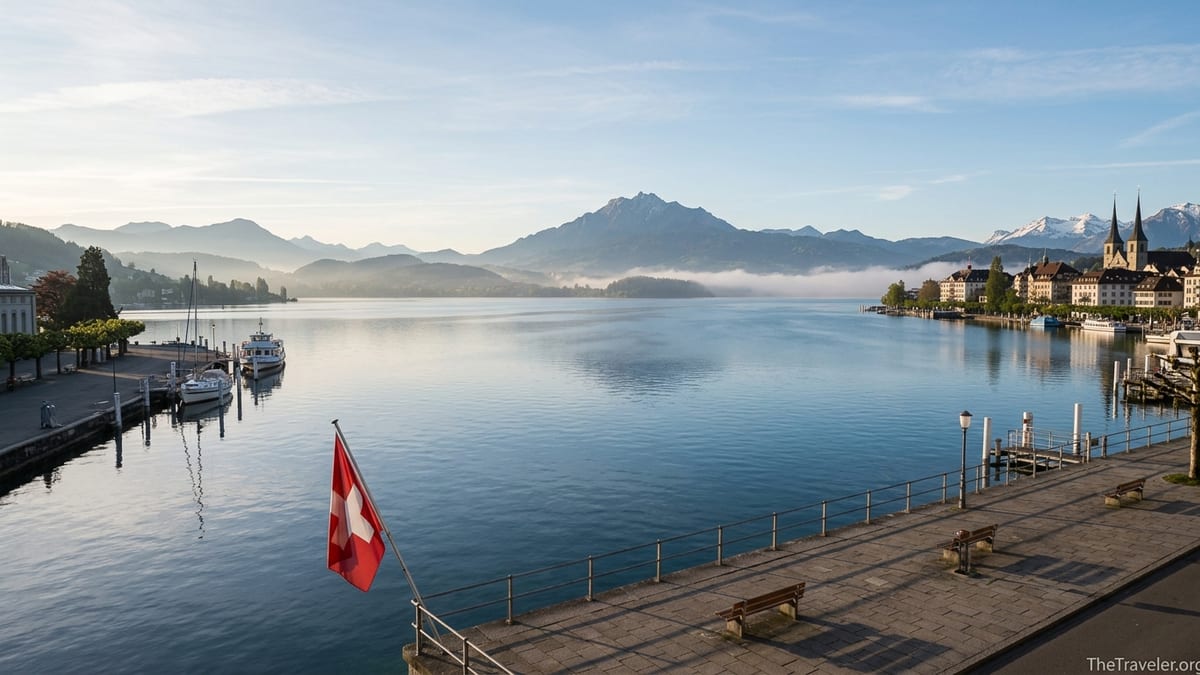
Lucerne is often the most popular city base for first-time visitors because it combines a walkable medieval core with easy access to mountains. You can spend a morning exploring the Chapel Bridge and city walls, then take a boat and cogwheel train up Mount Rigi or the cable car to Mount Pilatus in the afternoon. Many travelers choose a hotel within a ten-minute walk of Luzern station so they can step off the train from Zurich airport and be on a lake cruise within an hour. Prices vary, but a midrange lakeside hotel might cost in the region of 200 to 260 US dollars in summer, with lower rates if you stay a few blocks back or visit in shoulder season.
Interlaken and the Jungfrau Region
Interlaken itself is a transport hub between Lakes Thun and Brienz, rather than a traditional Alpine village. Its real value for first-time visitors lies in how effortlessly it connects you to the Jungfrau Region. From Interlaken Ost station you can ride mountain railways and cable cars to Grindelwald, Lauterbrunnen, Wengen, Mürren, and up toward famous viewpoints such as Jungfraujoch or Schilthorn. Many people stay in Interlaken for convenience, but if your priority is scenery over shops and hostels, consider basing in a car-free village higher up, such as Wengen or Mürren.
Grindelwald and Wengen offer classic green-meadow-and-cliff Swiss views with the Eiger, Mönch, and Jungfrau peaks looming overhead. From Grindelwald, for instance, you can ride the Eiger Express gondola to Eigergletscher and connect to the train for Jungfraujoch, often called the “Top of Europe.” A round-trip excursion to Jungfraujoch from Grindelwald or Wengen can run to several hundred Swiss francs for adults at full fare, which is why many visitors either use a pass with a discount or choose one major mountain excursion instead of several.
For a lower-cost yet dramatic day, you might take the train from Lauterbrunnen to Wengen, walk the easy panorama trail toward Kleine Scheidegg for an hour or two, and then ride the train down toward Grindelwald, stopping for coffee and cake on a sun terrace. Another option is the Schynige Platte railway from Wilderswil near Interlaken, a nostalgic cogwheel line that brings you to a high ridge with views over Lakes Thun and Brienz and the Jungfrau massif. These types of outings give you the Alpine atmosphere without the higher price tag of all the premium lifts.
Weather varies sharply with elevation. On a July day when Interlaken feels warm in a T-shirt, you could still need a fleece and windproof layer at Jungfraujoch, where temperatures hover near or below freezing even in summer. Cloud cover is common, so many first-timers keep their plans flexible: for example, staying four nights in Wengen and buying a Jungfrau excursion on the clearest-looking day instead of prebooking months in advance. Local webcams and the official Jungfrau Region website offer up-to-date visibility information so you can avoid paying for a summit visit only to stare into fog.
Zermatt, the Matterhorn, and the High Alps
Zermatt, at the end of a long valley in the canton of Valais, is one of Switzerland’s quintessential Alpine resorts. It is car-free, so you arrive by train to Zermatt station and walk or take small electric taxis to your accommodation. The town sits beneath the pyramid of the Matterhorn, which often appears on chocolate boxes and tourism posters. For a first trip, it is common to spend two or three nights here to allow for at least one clear day, since clouds can hide the peak for stretches of time.
The Gornergrat railway is one of the most popular excursions for first-time visitors. This cogwheel train climbs from Zermatt up to a high ridge with sweeping views of the Matterhorn and surrounding glaciers. A round-trip ticket for an adult at full price typically costs the equivalent of a substantial day’s travel budget, so many visitors time it for a clear morning and pack snacks to enjoy on a bench at the top rather than paying extra for a full sit-down meal there. Another well-known option is the series of cable cars to the Klein Matterhorn and the Matterhorn Glacier Paradise, which reaches over 3,800 meters and offers year-round snow.
Hiking in Zermatt ranges from short strolls to full-day routes. A concrete, achievable example is the Five Lakes Walk, which you can reach by gondola from the village. It loops past a series of small lakes, some with postcard reflections of the Matterhorn on calm days. This kind of moderate walk is manageable for many first-time hikers who are comfortable on uneven ground, and it gives a taste of high-Alpine landscapes without technical terrain. Good footwear, sun protection, and a refillable water bottle are more important here than specialized gear.
Zermatt can be one of the more expensive places in Switzerland, especially in high summer and ski season. A basic double room in a simple hotel can easily run to around 200 US dollars per night or more, and dinner in a midrange restaurant might cost 35 to 50 dollars per person for a main course and a drink. To manage costs, first-time visitors often mix one splurge night in a hotel with a Matterhorn view with one or two nights in a simpler guesthouse or serviced apartment, cooking breakfast themselves and choosing picnic lunches bought at local supermarkets.
Montreux, Lake Geneva, and Scenic Rail Journeys
Montreux sits on the northeastern shore of Lake Geneva, framed by steep vineyards and snowy peaks in the distance. For first-time visitors, it works well as a gentler counterpoint to the high Alps. You might arrive after several days of mountain hiking and spend your time wandering the flower-lined lakeside promenade, visiting the medieval lakeside fortress at Chillon, or taking a short train ride up to the vineyard terraces of Lavaux for a glass of local white wine as the sun sets over the lake.
The region around Lake Geneva is also where many travelers experience their first Swiss scenic train. The line between Montreux and Interlaken, often operated with panoramic cars, climbs through vineyards, passes high meadows and small villages, and then descends toward the lakes and valleys around the Bernese Oberland. Booking a leg such as Montreux to Zweisimmen or Zweisimmen to Interlaken on a clear day lets you treat the journey as a sightseeing experience in itself, rather than just transport between bases.
Geneva and Lausanne, further along the lake, offer a more urban feel, with museums, lakeside swimming areas, and international restaurants. For example, on a summer afternoon in Lausanne, locals swim from lakeside platforms and then picnic in the nearby parks, and visitors can join in with a simple takeaway dinner from a supermarket instead of a full restaurant meal. This is a practical way for first-timers to enjoy the high local standard of living without inflating their daily budget.
Weather around Lake Geneva tends to be milder than in the high Alps. In July and August, afternoon temperatures can feel summery, and lakeside storms occasionally roll in, clearing the air. In winter, the lake region often remains snow-free at shore level, so you might commute by train from a lakeside base like Montreux up to nearby ski areas or snowshoe trails and return in the evening to walk a clear promenade under streetlights and holiday decorations.
Swiss Trains, Passes, and How to Get Around
For most first-time visitors, trains and buses are the backbone of a Swiss trip. The national railway company runs an integrated timetable that links long-distance trains, regional lines, buses, boats, funiculars, and many mountain railways. In practical terms, this means you can look up a route from Zurich airport to Mürren in a single search and see every connection, from the mainline train to Interlaken to the small mountain cable car that takes you up the final stretch.
Deciding between point-to-point tickets and passes is one of the most common planning questions. A Swiss Travel Pass, available for a fixed number of consecutive days, offers unlimited travel on most trains, buses, and boats within its validity, plus free or discounted entry to many museums and reduced fares on many mountain railways. As of mid-2026, prices for a 2nd-class Swiss Travel Pass for adults typically run in the low to mid hundreds of Swiss francs for 3 to 8 days, with youth discounts and special family offers where children can travel free with a parent. Many first-time visitors find that the pass is worthwhile if they plan several long train days plus at least one or two major excursions.
Others prefer to combine a one-month Half Fare Card, which gives 50 percent off most regular tickets, with regional passes or saver day tickets. As an example, a traveler spending a full week in the Jungfrau Region might buy a Half Fare Card and a regional mountain pass rather than a national pass, which can work out cheaper for a trip focused mostly in one area. On the other hand, someone planning to crisscross the country from Zurich to Zermatt, then to Interlaken, Montreux, and back to Geneva, may value the convenience and predictability of a national pass even if the strict math is close.
First-time visitors sometimes underestimate how easy the system is to use once you are on the ground. Trains are generally well signed in multiple languages, and large stations such as Zurich, Geneva, and Bern have staffed ticket counters alongside machines that accept major credit cards. Many travelers rely on the national rail app to show real-time platforms, delays, and even which section of the platform to wait on for the right carriage. On a typical journey, you simply board, sit down, and have your ticket or pass ready on your phone or printed out when the conductor comes by.
It is rarely necessary to rent a car for the destinations covered in this guide. Parking can be expensive in cities, and resorts such as Zermatt and Wengen are car-free. That said, some visitors who want to reach small villages or trailheads off the main transport routes choose to rent a car for a few days in the middle of a longer trip. If you do this, be aware of parking rules and overnight costs, and factor in additional fees for driving over certain high passes or through specific tunnels. For most first-time itineraries that stick to Zurich, Lucerne, Interlaken, the Jungfrau Region, Zermatt, Geneva, Montreux, and Bern, trains and buses will be not only sufficient but enjoyable.
Typical Costs, Weather, and First-Time Planning Tips
Switzerland is often perceived as expensive, but costs vary widely based on choices. As a rough guide, a budget traveler staying in hostel dorms or basic guesthouses, cooking some meals, and sticking mostly to low-cost hikes and city walks might aim for about 90 to 130 US dollars per person per day, not counting long-haul flights. A midrange traveler staying in three-star hotels, eating one sit-down meal per day and one simpler or supermarket meal, and including a few major mountain lifts might budget 180 to 280 dollars per day. High-end stays in four- or five-star hotels, fine dining, and frequent premium excursions can easily run much higher.
Concrete examples help. A simple takeaway lunch in a city such as Zurich or Geneva, perhaps a sandwich, drink, and small dessert from a bakery, will often total around 15 to 20 US dollars. A main dish in a casual restaurant may range from the equivalent of 25 to 40 dollars. A short city tram ride on a single ticket could cost a few dollars, whereas a full-price long-distance train from Zurich to Zermatt booked last minute might be well over 70 dollars per adult in 2nd class. Day passes, cards, and advance-purchase saver fares can reduce these costs significantly if you plan around them.
Weather depends heavily on both season and elevation. In July, cities such as Zurich, Bern, and Geneva can see comfortable to warm days, and heat waves are possible. At the same time, high-Alpine areas like Jungfraujoch or the Matterhorn Glacier Paradise remain cold, often below freezing even in midsummer. In January, snow is likely in mountain areas, and ski resorts run at full speed, but some lower valleys may have bare ground and short days. Spring and autumn can be beautiful, with wildflowers in May and June and autumn colors in late September and October, though some high lifts close for maintenance in May or November, so it is worth checking operating dates before building your itinerary around a specific cable car.
For first-time planning, it helps to anchor your trip around two or three clear priorities rather than a long checklist of sights. For example, you might decide that your non-negotiables are riding at least one famous mountain railway, walking a lakeside promenade at sunset, and spending a half day in a historic old town. From there, you can sketch a route such as Zurich to Lucerne, then to Wengen, then to Montreux, making sure you allow for at least two full days in each base. Leaving a “buffer” afternoon without firm plans near the start also gives you flexibility if a flight delay or missed connection eats into your schedule.
Finally, pack with layers and practicality in mind. Even in summer, include a light insulated jacket, a waterproof shell, and footwear suitable for wet trails or cobblestones. Many hotels provide free or discounted local transport cards for buses and trams, and some offer simple extras like umbrellas or daypacks to borrow. Buying a reusable water bottle and refilling it from fountains, which are widely available and usually labeled if the water is not drinkable, saves both money and plastic while you explore.
The Takeaway
For a first-time visitor, Switzerland combines ease and adventure in a way few destinations can match. The same trains that whisk commuters between Zurich and Bern also carry travelers to mountain valleys, glacier viewpoints, and lakeside towns in a matter of hours. By choosing a handful of well-connected bases such as Lucerne, Wengen or Grindelwald, Zermatt, and Montreux or Geneva, you can experience both city culture and high-Alpine drama without constant packing.
Being realistic about distances, costs, and weather pays off. A well-chosen mountain excursion at the right moment in clear conditions can be more memorable than trying to fit in every famous viewpoint. Combining passes and point-to-point tickets, mixing restaurant meals with picnics, and traveling slightly outside peak season all help stretch your budget while keeping the quality of your experience high.
If you arrive with flexible expectations, a few core priorities, and the willingness to let trains and cable cars set the rhythm of your days, Switzerland is a destination where even the journey between places becomes part of the highlight reel. For many travelers, that first ride into a mountain village or the first glimpse of the Matterhorn across a valley is enough to ensure that their “once in a lifetime” Swiss trip will not be their last.
FAQ
Q1. How many days should a first-time visitor spend in Switzerland?
For a first trip, 7 to 10 days works well. That gives time for one arrival city such as Zurich or Geneva, plus two bases like Lucerne and a mountain area such as the Jungfrau Region or Zermatt without rushing constantly.
Q2. Is the Swiss Travel Pass worth it for a first-time trip?
It can be, especially if you plan several long train days and at least one or two major excursions. If your itinerary is concentrated in one region, combining a Half Fare Card with regional passes or saver tickets may work out cheaper. It is worth sketching your likely routes and comparing costs before you buy.
Q3. When is the best time of year to visit Switzerland for a first trip?
Late May through June and September into early October are often ideal, with mostly open mountain lifts, milder temperatures, and fewer crowds than peak July and August. Winter from January to March is excellent if your focus is skiing and snow, while November can be quieter with some high lifts closed.
Q4. Do I need to rent a car to visit places like Interlaken, Jungfraujoch, and Zermatt?
No. Trains, buses, and cable cars connect all the destinations in this guide. Zermatt and several Jungfrau Region villages are car-free, so you would leave a rental car in a valley garage anyway. For most first-time itineraries that stick to the main highlights, public transport is the easiest and most scenic option.
Q5. How expensive is Switzerland compared with other European countries?
In general, everyday costs such as meals and accommodation are higher than in many neighboring countries. A casual restaurant main course can easily cost more than in France or Italy, and hotel prices in popular areas reflect strong demand. Careful choices such as using supermarket meals, passes, and travel in shoulder season help manage the budget.
Q6. Can I see both the Jungfrau Region and Zermatt on one trip?
Yes, if you have at least 9 to 10 days. A common pattern is to arrive in Zurich, spend one or two nights there or in Lucerne, then spend three or four nights around Interlaken or Wengen, followed by two or three nights in Zermatt, and finally end at Lake Geneva or back in Zurich or Geneva for departure.
Q7. What should I pack for a summer trip to the Swiss Alps?
Bring layers rather than heavy items: a light insulated jacket, waterproof shell, comfortable walking shoes with grip, sun hat, sunglasses, and a reusable water bottle. Even in July, higher viewpoints can feel wintery, so gloves and a warm hat are useful if you plan to visit places such as Jungfraujoch or glacier viewpoints.
Q8. Is English widely spoken in Switzerland?
Yes, especially in cities, major resorts, and on transport networks. Staff at hotels, train stations, and tourist offices usually speak English. Learning a few basic phrases in German or French is appreciated but not essential for navigating the destinations covered here.
Q9. Do I need to book trains and mountain excursions in advance?
Regular intercity trains usually do not require seat reservations, so you can often just board with a valid ticket or pass. Popular scenic trains and some premium mountain excursions may require or strongly recommend advance reservations, especially in high season, so it is wise to check once you have fixed dates.
Q10. Is Switzerland a good destination for families on a first international trip?
Yes. The transport system is easy to use with children, many hotels offer family rooms, and mountains and lakes provide built-in entertainment. Options such as family travel cards that let children ride free with a parent, playgrounds near many viewpoints, and gentle walks make it manageable and rewarding for a range of ages.