


Switzerland’s famous scenic trains turn ordinary rail journeys into once‑in‑a‑lifetime Alpine experiences. Yet with multiple “must‑do” routes, different classes, reservation rules and seasonal prices, it can be hard to know which train is worth your time and money. This guide compares the Glacier Express, Bernina Express, GoldenPass Express, Gotthard Panorama Express and Lucerne–Interlaken Express so you can confidently choose the journey that matches your itinerary, budget and travel style.
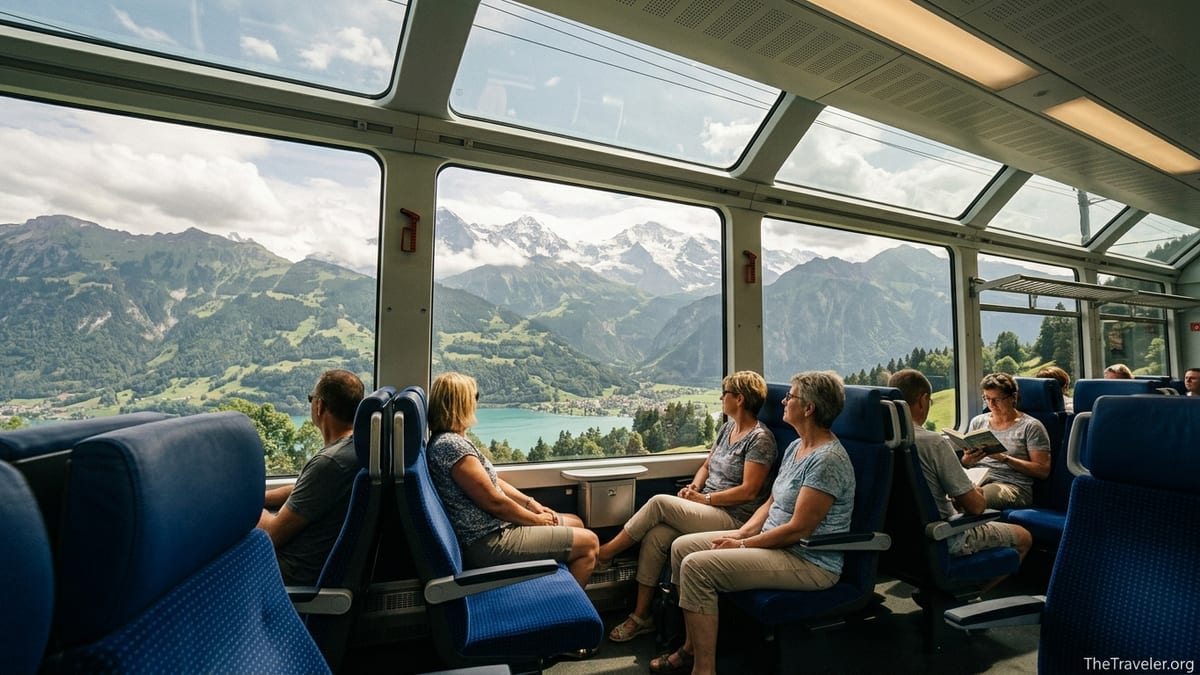
Overview: How Swiss Scenic Trains Work
All five trains in this guide are regular public transport services with an added layer of tourism: panoramic windows, commentary, at‑seat service and optional or mandatory reservations. You pay for two things. First, a valid ticket or pass for the route and class, such as a point‑to‑point ticket, Swiss Travel Pass, Interrail or Eurail. Second, on most scenic trains, a separate seat reservation or surcharge for the panoramic coaches. For example, on the Glacier Express you might use a Swiss Travel Pass to cover the base fare and then pay only the seat reservation for that specific train.
Travel times are long but scenic. The Glacier Express takes around eight hours from Zermatt to St. Moritz. The Bernina Express from Chur to Tirano is about four hours. The GoldenPass Express runs roughly 3.5 hours between Montreux and Interlaken. The Gotthard Panorama Express between Lucerne and Lugano is about 5.5 hours including the lake boat segment. The Lucerne–Interlaken Express is shorter at just over two hours, but many travelers pair it with other panoramic routes on the same day.
Because these are prestige trains, you have fewer departures per day compared with standard intercity services. On dates in high season such as late June or early September, popular departures can sell out their panoramic cars days or weeks ahead. If you are traveling with a family or relying on a rail pass, it is worth planning your scenic day trips at least several weeks in advance, especially for Glacier Express, Bernina Express and GoldenPass Express prestige seating.
From a practical standpoint, think of these trains as curated versions of regular Swiss rail routes. Regional trains often run on the same tracks without reservation fees and with slightly smaller windows. Many travelers choose to ride one or two “headline” scenic trains and then use normal services on adjacent days to keep costs down while still seeing similar landscapes.
Glacier Express: Switzerland’s Iconic All‑Day Panorama
The Glacier Express markets itself as “the slowest express train in the world,” running between Zermatt and St. Moritz or Davos along a spectacular high‑Alpine route. It crosses 291 bridges, passes through 91 tunnels and climbs to 2,033 meters at the Oberalp Pass. Typical travel time for the full Zermatt to St. Moritz stretch is about eight hours, which makes it a true all‑day experience rather than a simple transfer between resorts.
All Glacier Express departures use modern panoramic coaches in both 1st and 2nd class. Large floor‑to‑ceiling windows extend into the roofline, and at‑seat audio commentary explains landmarks in multiple languages. Onboard dining ranges from a two or three‑course lunch to snacks and drinks prepared in the kitchen car. Many travelers treat the day as a rolling restaurant: for example, ordering a set lunch between Andermatt and Chur while watching the Rhine Gorge glide by.
Reservations on the Glacier Express are compulsory in any class. You need a ticket or rail pass plus a seat reservation for the specific train and date. Recent price examples for the full route in 2nd class show a seat reservation around 50 to 55 Swiss francs per person, on top of a base fare that can reach roughly 150 to 160 francs if you do not have a pass. First class tickets are more expensive, but the reservation amount is broadly similar. Premium Excellence Class requires a valid 1st‑class ticket plus a much higher reservation that includes a gourmet multi‑course menu and a guaranteed single window seat.
Choose the Glacier Express if you want a classic “bucket list” train with a strong onboard service component and do not mind dedicating an entire day. It works well if you are already staying in Zermatt and plan to move on to St. Moritz, Davos or Chur, or if you have a Swiss Travel Pass and want to maximize scenic value. If your schedule is tight or you prefer frequent photo stops, consider instead combining shorter legs on regional trains along parts of the same route, such as Chur to Andermatt and Andermatt to Brig.
Bernina Express: Wild Mountain Drama into Italy
The Bernina Express runs from Chur or St. Moritz across the UNESCO‑listed Bernina line to Tirano in northern Italy. Compared with the Glacier Express, the scenery feels wilder and more dramatic over a shorter distance. Highlights include the spiral viaduct at Brusio, the crossing of the 2,253‑meter Bernina Pass and close‑up views of glaciers near Ospizio Bernina and Alp Grüm.
Like the Glacier Express, the Bernina Express has panoramic coaches in both 1st and 2nd class, with large windows and a uniform tourist‑train feel. The route is also operated by regular regional trains, which share the same track but have more conventional windows and no reservation surcharge. Some travelers choose the panoramic coaches in one direction and return on a regional train to allow for flexible photo stops and café breaks along the line.
Reservations on the Bernina Express panoramic cars are mandatory, and again you need both a valid ticket or pass and a separate seat reservation. Pricing varies by season, but the supplement for the panoramic cars typically falls in the modest range compared with the Glacier Express, which makes it attractive for pass holders. For example, if you are traveling with a Swiss Travel Pass or an Interrail Global Pass, you pay only the reservation amount and not a separate full‑fare ticket for the route.
Choose the Bernina Express if you are interested in a high‑impact scenic journey without giving up an entire day. It pairs well with stays in Chur, St. Moritz or Tirano, and it is one of the best choices if you want to cross into Italy by train. If cost is a concern or reservations are sold out, you can still experience almost identical scenery on regular regional trains, which depart more frequently and allow you to hop off at viewpoints such as Alp Grüm and Morteratsch.
GoldenPass Express: Lakes, Vineyards and Prestige Class Comfort
The GoldenPass Express links Montreux on Lake Geneva with Interlaken in the Bernese Oberland, running via Zweisimmen and Spiez. This is the only direct panoramic service on the historic GoldenPass route, and it handles an unusual technical challenge: variable‑gauge bogies that change track width at Zweisimmen so the same train can continue without passengers changing carriage. The landscapes shift from terraced vineyards above Lake Geneva to pastoral valleys and, later, mountains around the lakes of Thun and Brienz.
The train offers 2nd class, standard 1st class and a premium Prestige Class. In Prestige, seats are elevated and arranged in spacious pairs along one side of the carriage, facing the direction of travel with wide panoramic windows. The emphasis is on comfort and views rather than formality; you can, for instance, enjoy coffee or a glass of local wine served at your seat as you wind above the town of Montreux and descend toward Gstaad.
Seat reservations on the GoldenPass Express are mandatory in Prestige Class and strongly recommended in 1st and 2nd class, especially in high season and for morning departures from Montreux or Interlaken. If you hold a rail pass that covers the base fare, you pay only the reservation or supplement for your chosen class. In practical terms, that means a traveler with a Swiss Travel Pass can often upgrade to Prestige Class for a relatively contained extra cost to enjoy the most comfortable seats and the best photo angles.
Choose the GoldenPass Express if you are connecting the Lake Geneva region with Interlaken or Lauterbrunnen and want a scenic, mid‑length journey that feels special without the formality of the Glacier Express. It is particularly appealing for couples and small groups who value lake and village scenery, and for itineraries that combine Montreux or Vevey with the Bernese Oberland.
Gotthard Panorama Express: Classic Route to the Italian‑Speaking South
The Gotthard Panorama Express combines a historic lake steamer on Lake Lucerne with a first‑class‑only panoramic train along the old Gotthard mountain route between Flüelen and the Italian‑speaking Ticino region. Southbound, a typical day involves boarding a paddle steamer or modern lake boat in Lucerne in the morning, gliding past fjord‑like bays and the Rütli meadow, then changing to the panoramic train at Flüelen for the climb through the spiral tunnels to Göschenen and the descent via Bellinzona to Lugano.
All seats in the Gotthard Panorama Express panoramic coaches are 1st class. If you have a 1st‑class rail pass such as a 1st‑class Swiss Travel Pass, you pay only the reservation and panorama surcharge. If you hold only 2nd‑class coverage, you must pay the class upgrade plus the supplement. The price for this journey, therefore, depends heavily on what pass or ticket combination you already have. For example, a couple with 2nd‑class Swiss Travel Passes may decide that paying both an upgrade and a surcharge is too much, and instead ride regular InterRegio trains over the same historic mountain route without the panorama coaches.
Reservations are required and departures are limited, usually one train in each direction per operating day during the main season. Compared with the Glacier or Bernina routes, the Gotthard scenery is more about a mix of lake, valley and historic engineering than extreme high‑Alpine views. You pass the old Gotthard tunnel entrance, baroque churches and fortress‑like stations while onboard commentary explains the tunnel’s role in Swiss history.
Choose the Gotthard Panorama Express if you want a relaxed, full‑day journey that combines a scenic cruise with a comfortable panoramic train into Ticino. It works particularly well at the beginning or end of a trip, for example traveling from Lucerne to Lugano to continue by train into Italy, or in reverse when returning to central Switzerland from the south.
Lucerne–Interlaken Express: Flexible Scenic Link Between Lakes
The Lucerne–Interlaken Express is a modern panoramic train operated by Zentralbahn between Lucerne and Interlaken Ost. It forms part of the broader GoldenPass route and runs roughly once per hour for most of the day, from early morning to evening. The line threads its way along Lake Lucerne, climbs through the Brünig Pass and then descends along lakes Lungern and Brienz.
The train offers both 1st and 2nd class, with large windows and luggage areas sized for tourists. A rolling bistro car serves snacks, coffee and simple meals. Importantly, this is both a scenic and a practical line, used by locals as well as visitors. Many travelers arriving at Zurich Airport take a standard train to Lucerne and then board the Lucerne–Interlaken Express the same morning on their way to the Bernese Oberland.
Seat reservations are optional but increasingly recommended in high season for groups and for travelers who want a guaranteed window seat. Recent information from the operator indicates a modest fee per person that changes slightly between winter and summer seasons, with higher supplements in the peak period from roughly May to October. If you hold a Swiss Travel Pass, a point‑to‑point ticket or an Interrail/Eurail pass valid in Switzerland, the base fare is covered and you can add a reservation if you wish; otherwise you can simply board and look for available seats, especially on shoulder‑season weekdays.
Choose the Lucerne–Interlaken Express if you are looking for a scenic, flexible and relatively affordable way to move between central Switzerland and the Bernese Oberland. It is one of the best first‑day rail journeys for travelers who land in Zurich in the morning, want to see classic lakes and villages by mid‑afternoon and prefer to keep costs moderate compared with the long‑haul tourist trains.
Classes, Reservations and Typical Costs: What to Expect
Across these five trains, the pattern is broadly similar. You select 2nd class for value or 1st class for more space and quieter coaches. On the GoldenPass Express you can add Prestige Class for an extra comfort tier, while on the Gotthard Panorama Express all seats are automatically 1st class. Glacier Express and Bernina Express both offer 1st and 2nd class panoramic cars, and Glacier adds Excellence Class at the very top end with inclusive fine dining.
Reservations are mandatory on Glacier Express, Bernina Express, GoldenPass Express Prestige and Gotthard Panorama Express, and strongly advised on the other classes and on the Lucerne–Interlaken Express during high season. As a rough orientation for a peak‑season day, a traveler with a Swiss Travel Pass might expect to pay a panoramic reservation in the range of a few dozen francs each for Glacier or Bernina, somewhat less for GoldenPass Express and Lucerne–Interlaken Express, and a combined upgrade and supplement if using the Gotthard Panorama Express from a 2nd‑class pass.
Concrete examples help clarify budgeting. A pair of travelers with 2nd‑class Swiss Travel Passes who want one “big” scenic day might allocate most of their supplement budget to the Glacier Express, accepting a higher reservation cost for the full eight‑hour journey and choosing 2nd class to keep overall expenses reasonable. Another couple staying in Montreux and Interlaken might skip Glacier entirely, ride the GoldenPass Express in Prestige for a more moderate supplement and then use regular trains to reach Lucerne or Zermatt on other days without any reservation surcharges.
If you are traveling with children or in a group, factor in not only the supplementary charges but also the benefit of reserved nearby seats. On busy summer departures of Glacier Express or Bernina Express, a family of four with advance reservations knows they will sit together by the windows. On the Lucerne–Interlaken Express or regular regional trains, by contrast, you may need to split up or move quickly when boarding to secure window seating.
Which Scenic Train Should You Choose?
The best panoramic train for you depends on your route, time and expectations. If you want the most “iconic” Swiss train and do not mind paying for the experience, the Glacier Express is the natural choice. It is ideal when you are already staying in Zermatt or planning to connect two high‑end Alpine resorts. Expect an all‑day commitment, a structured onboard service and a classic special‑occasion feel.
If you prefer raw mountain drama in a shorter timeframe and like the idea of crossing into Italy, choose the Bernina Express. It delivers some of Switzerland’s most memorable rail views in about half a day and works very well with flexible itineraries that combine St. Moritz, Chur and Tirano. Cost‑conscious travelers can mix panoramic and regional trains, using reservations only in one direction.
For travelers anchored in the Lake Geneva region who want to reach Interlaken or Lauterbrunnen without backtracking, the GoldenPass Express is the strategic option. Opt for Prestige Class if you value comfort and are happy to pay a bit more; otherwise 1st or even 2nd class still provides excellent views of vineyards, cows and lakeside villages. If your priority is to reach the Italian‑speaking south while enjoying history and a lake cruise, the Gotthard Panorama Express is the right match, particularly if you already have or are willing to buy 1st‑class coverage.
Finally, if your budget is tighter or your schedule is packed, the Lucerne–Interlaken Express gives you a quintessential Swiss rail experience without the higher surcharges of the flagship tourist trains. Many travelers are satisfied doing just this route plus one additional “big” scenic train such as Bernina or GoldenPass. When planning, decide which scenery type excites you most: glaciers and gorges (Glacier Express), high passes and viaducts (Bernina), lakes and vineyards (GoldenPass), history and lake cruise (Gotthard) or lakes and villages with easy connections (Lucerne–Interlaken).
The Takeaway
All five Swiss scenic trains in this guide offer superb views and efficient connections, but they differ in length, atmosphere, reservation rules and cost. Rather than trying to ride them all, build your trip around one or two that fit naturally into your route and budget. Use rail passes or saver tickets to cover base fares where possible and add panoramic reservations selectively for the days you want something special.
In practice, many travelers are happiest with a combination such as Glacier Express plus Lucerne–Interlaken Express, or Bernina Express plus GoldenPass Express, with the Gotthard Panorama Express reserved for itineraries that include Ticino. By thinking through where you will already be staying and how much time you want to spend on board in a single day, you can turn Switzerland’s scenic rail network into the backbone of a memorable and well‑planned journey.
FAQ
Q1. Do I need a Swiss Travel Pass to ride these scenic trains?
Not necessarily. You can buy regular point‑to‑point tickets for any of these routes, but a Swiss Travel Pass or rail pass can cover the base fare and leave you paying only the panoramic reservation or supplement. Passes tend to be most valuable if you are taking multiple long‑distance trips within a week or more, including at least one or two of the flagship scenic trains.
Q2. How far in advance should I book seat reservations?
For peak summer and autumn dates, aim to reserve Glacier Express, Bernina Express and GoldenPass Express Prestige seats at least a few weeks ahead, especially if you are traveling in a group or prefer specific departures. For Lucerne–Interlaken Express and standard classes on GoldenPass, a few days is often enough outside school holidays, though last‑minute bookings can still work on less busy trains.
Q3. Is 1st class worth the extra cost on Swiss scenic trains?
It depends on your priorities. First class usually offers wider seats, more legroom and a quieter atmosphere, but 2nd class has identical views through the same panoramic windows. On a short Lucerne–Interlaken Express segment, many travelers are content with 2nd class, while on an eight‑hour Glacier Express journey, upgrading to 1st class can make a noticeable difference in comfort.
Q4. Can I hop on and off along the route to explore towns?
On regular regional trains that share these routes, yes; you can break your journey in towns like Andermatt or Alp Grüm and continue later. On the branded panoramic trains such as Glacier Express and Bernina Express, you reserve specific seats on a specific departure, so spontaneous hop‑off stops are not practical unless you are prepared to give up your reservation and continue on a later regional train instead.
Q5. What happens if I miss my reserved train?
If you miss a train with a compulsory reservation, your base ticket or pass is usually still valid later that day, but your seat reservation is tied to the original departure and may not be transferable. Staff may allow you to board later trains if space permits, but you could be moved or asked to pay for a new reservation. Allow generous connection times, especially when changing from long‑haul flights or buses.
Q6. Are these trains suitable for travelers with large luggage?
Yes, but pack as lightly as practical. All trains discussed here offer overhead racks and designated luggage areas near doors, yet space can be tight on fully booked departures. A medium suitcase or travel backpack is much easier to handle than multiple large cases, particularly when boarding quickly, moving through narrow aisles or changing between boat and train on the Gotthard Panorama Express.
Q7. Can I bring my own food and drinks on board?
In general, yes. Swiss trains allow you to bring your own snacks and drinks, and this custom extends to most scenic routes. However, many travelers choose to purchase at least a drink or light meal on board, especially on Glacier Express and GoldenPass Express where the catering is part of the experience. Avoid strong‑smelling foods and dispose of trash carefully to keep the shared space pleasant.
Q8. Which scenic train is best for children?
Children often enjoy shorter journeys with more variety, so the Lucerne–Interlaken Express and GoldenPass Express are strong options. They provide lakes, tunnels and frequent scenery changes without an entire day on board. Families who want a more ambitious trip might choose the Bernina Express, breaking the journey with a lunch stop or gelato in Tirano before returning.
Q9. Are there big differences in scenery between these routes?
Yes. Glacier Express emphasizes long‑form Alpine scenery with gorges and high passes, Bernina Express focuses on dramatic mountain crossings and viaducts, GoldenPass Express showcases lakes and vineyards, Gotthard Panorama Express blends a lake cruise with historic mountain engineering, and Lucerne–Interlaken Express offers a compact mix of lakes, waterfalls and villages. Your personal preference for certain landscapes should influence your choice.
Q10. If I can only do one scenic train, which should I pick?
If you want the classic, all‑day “Swiss Alps by rail” experience and can afford the time and reservation costs, choose the Glacier Express. If your schedule is tighter or you prefer a slightly wilder feel with a cross‑border element, pick the Bernina Express. Travelers already based near Lake Geneva or Lucerne who value flexibility and moderate costs may be happiest with the GoldenPass Express or Lucerne–Interlaken Express as their single flagship journey.