


The Swiss Plateau is where most Swiss people actually live: a band of lakeside cities, medieval old towns and rolling countryside stretching between Geneva and St. Gallen. It is also where many visitors spend the bulk of their time, hopping between Zurich, Bern, Lucerne, Lausanne and smaller towns on Switzerland’s famously efficient trains. This guide looks specifically at what a realistic trip on the Swiss Plateau costs today, from hotels and rail passes to cycling, car hire, thermal baths and daily food budgets for 3, 5 and 7 day itineraries.
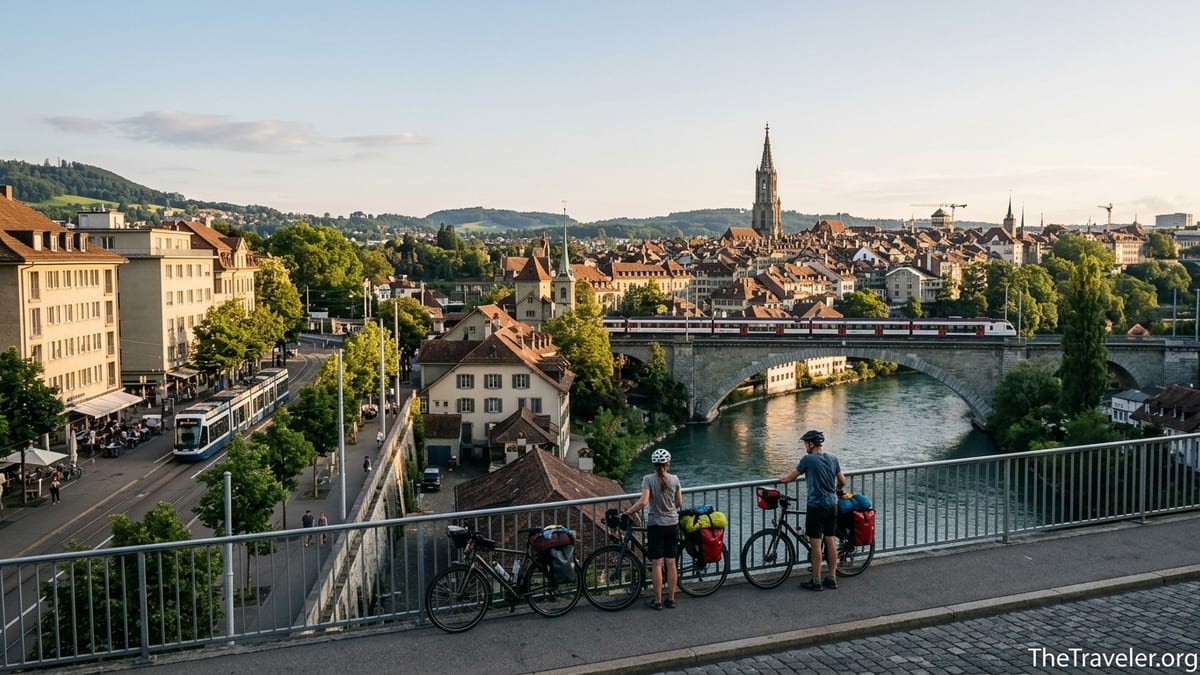
What Counts as the Swiss Plateau and Why Costs Feel High
The Swiss Plateau sits between the Jura mountains and the Alps and includes major hubs such as Geneva, Lausanne, Fribourg, Bern, Thun, Lucerne, Zug, Zurich, Winterthur and St. Gallen, plus dozens of smaller lakeside and market towns. For visitors this region often forms the backbone of a Switzerland itinerary because it combines good weather, dense public transport and easy day trips into the Alps.
Switzerland consistently ranks among the most expensive countries in the world for residents and visitors, and that reality is evident across the plateau. A basic restaurant main course in Bern or Zurich typically starts around 22 to 25 Swiss francs, with a three course meal for two in a mid range restaurant often landing around 90 to 120 francs before drinks. Hotel rates around large stations in Zurich or Geneva often start near 170 to 220 francs per night for a standard double in a central three star hotel in high season, while four star business hotels commonly run 250 francs and above.
On the other hand, the plateau is also where you can get the best value out of Switzerland’s integrated transport network. Regional passes, the national Swiss Travel Pass and SBB Saver Day Passes can significantly reduce the cost per journey compared to buying full price point to point tickets. With some planning, a couple using a second class Swiss Travel Pass and staying in mid range hotels can keep total daily spending around 220 to 320 francs, depending on how often they dine out and visit paid attractions.
Throughout this guide, prices are quoted in Swiss francs and should be treated as approximate: Switzerland updates public transport tariffs periodically and hotel and restaurant prices fluctuate by season and city. Treat the numbers here as realistic ranges, not fixed quotes.
Hotel Costs on the Swiss Plateau
Across plateau cities, accommodation costs are driven more by city and season than by proximity to the Alps. Zurich, Geneva and Lausanne tend to be the most expensive plateau bases, with Lucerne, Bern and St. Gallen typically a little softer. In summer and during major events such as Art Basel or the Zurich Street Parade, tariffs in the biggest cities can spike well above averages.
In Zurich, it is common to see centrally located three star hotels within walking distance of Zurich Hauptbahnhof priced around 190 to 260 francs per night for a standard double in summer. Business oriented four star properties along the Limmatquai or near Paradeplatz frequently fall between 260 and 350 francs. At the budget end, older two star hotels or simple guesthouses in districts 3, 4 or 5 may land closer to 130 to 170 francs, though rooms will be small and often without air conditioning.
Bern and Lucerne usually come in slightly lower. A modern three star hotel near Bern station, or just across the river in the old town, is often found in the 160 to 220 franc range for a double. Similar properties in Lucerne, a popular plateau base with fast rail links, hover in the same bracket, with lakeside or boutique addresses pushing higher. In smaller plateau towns such as Fribourg or Olten, comfortable three star hotels can still be found around 140 to 190 francs outside peak trade fairs or festival weekends.
Apartment style stays via local agencies can work well for families staying five to seven nights in one city. A one bedroom serviced apartment in Lausanne or Lucerne might cost 170 to 230 francs per night for week long stays, often including a small kitchen and laundry facilities. Cooking some meals in can noticeably cut a plateau budget, especially for groups of three or more.
Trains, Passes and Rental Cars: What You Will Really Pay
On the Swiss Plateau, trains, trams and buses form an integrated network that usually makes renting a car unnecessary for city to city travel. Most visitors choose between buying individual tickets, using regional tickets in local tariff zones, taking advantage of Saver Day Passes, or purchasing a Swiss Travel Pass for unlimited nationwide rail and bus travel for a fixed period.
As of 2026, a standard adult second class Swiss Travel Pass purchased directly from official channels costs roughly 254 francs for three consecutive days, 339 francs for five days and 439 francs for eight days, which covers most plateau itineraries. The pass includes unlimited travel on standard trains, most postbuses, many lake boats and city trams, plus free admission to numerous museums in cities such as Zurich, Bern and Basel. If you intend to travel between plateau cities every day and add side trips to mountain foothills or lakes, the effective daily cost of roughly 45 to 85 francs per person can compare favorably with full fare point to point tickets.
For travelers who prefer flexibility, the SBB Saver Day Pass is another useful tool. Bought well in advance on the national railway site or app, a full fare second class Saver Day Pass can sometimes be found around 52 to 70 francs, granting unlimited nationwide standard class travel for a day, including most plateau routes. Prices rise dynamically closer to the travel date, so planning your long intercity travel days early often yields the best deal. Pairing two or three Saver Day Pass days with shorter, cheaper local journeys purchased separately can work well for a five or seven day plateau trip.
Rental cars tend to be less cost effective on the plateau unless you are a family or small group planning to base yourselves in rural areas between cities. A compact automatic car hired from a major brand at Zurich airport or main station commonly starts around 70 to 110 francs per day before fuel, Swiss motorway vignette fees and parking. City center parking is typically 2 to 4 francs per hour or more, and multistory garages in Zurich, Geneva or Lucerne often charge 30 to 45 francs for 24 hours. With trains running every 30 minutes or less between many plateau cities and journey times such as Zurich to Bern or Lucerne to Basel around 60 minutes, rail remains the logical default.
Restaurants, Cafes and Everyday Food Costs
Food is where many visitors feel the reality of the Swiss price level, especially along the plateau where salaries and commercial rents are high. In Bern, Zurich or Lausanne, a sit down meal at a simple but pleasant mid range restaurant typically begins around 25 to 35 francs for a main course such as rösti, pasta or a seasonal plate, and quickly reaches 40 to 50 francs for meat or fish. A three course dinner for two with a shared starter, mains and a modest bottle of wine often comes to between 100 and 150 francs.
Cafes and bakery chains such as Confiserie Sprüngli in Zurich or local bakeries around Bern offer more affordable lunches. A filled baguette or sandwich commonly costs 7 to 10 francs, while a coffee and pastry might total 7 to 9 francs. Supermarket chains such as Migros and Coop stock prepared salads, hot food counters and picnic style meals: a takeaway lunch of salad box, bread, fruit and a drink from a supermarket typically runs 10 to 16 francs per person, and is a key strategy for keeping plateau food budgets under control.
Fast food remains expensive relative to many countries but cheaper than table service restaurants. A basic burger menu at a major international chain usually costs around 14 to 16 francs in plateau cities, while local kebab or takeaway pizza stands often charge 10 to 15 francs per portion. For drinks, expect to pay around 5 francs for a cappuccino in a city center cafe and 6 to 8 francs for a draft beer in a bar in Bern or Lucerne.
One budget friendly solution common on the plateau is to book accommodation that includes breakfast, rely on supermarket or bakery lunches on sightseeing days, and then select one restaurant dinner each day. For couples following this pattern, daily food spend might settle around 70 to 110 francs depending on choices, compared with 120 francs or more if eating all meals in restaurants.
Attractions, Cycling and Spa Costs Across the Plateau
Attractions on the Swiss Plateau are a mix of free old towns and paid museums, towers, lake cruises and nearby mountains. City museums in Bern, Zurich or Lausanne generally charge between 12 and 25 francs for adult admission, though holders of the Swiss Travel Pass often enjoy free or discounted entry. For example, a visitor spending a day in Bern might pay separate entry at the Einstein House, the Museum of Fine Arts and the Zentrum Paul Klee, each in the 12 to 25 franc bracket, or see some of them included with a pass.
Short lake cruises on plateau waters such as Lake Zurich, Lake Thun, Lake Biel or Lake Lucerne range widely in cost. A simple one to two hour round trip boat excursion is often priced around 25 to 40 francs for adults at full fare. Many of these boats are included in or discounted by the Swiss Travel Pass, turning them into low marginal cost excursions for pass holders. Belltower climbs, panoramic platforms or funiculars up local hills such as Gurten near Bern or Uetliberg near Zurich often cost between 10 and 25 francs one way or return, again sometimes reduced with passes.
Cycling is an excellent way to experience the plateau’s rolling countryside and riverside paths. City bike sharing schemes in Zurich, Bern and other plateau cities typically offer the first short interval for free or a low flat rate, with subsequent half hours charged a few francs. For a full day ride along the Aare River or Lake Zurich, renting a touring or e bike from a station based shop usually costs 35 to 60 francs per day, with e bikes at the upper end. Helmet and lock are typically included, and many shops along the plateau allow one way rentals along popular routes for a small supplement.
Thermal baths and spas are a significant draw and should be budgeted like an attraction rather than a simple shower at a hotel. The plateau hosts several well known facilities such as the thermal baths at Baden near Zurich or the mineral baths at Lucerne and Bern’s region. Admission for a two to three hour visit to a modern thermal complex commonly runs between 40 and 55 francs per adult, with weekend evenings sometimes slightly higher. Add another 20 to 40 francs if you opt for a massage or special wellness ritual. For a couple planning one spa session on a five day plateau stay, setting aside 120 to 170 francs in total is realistic.
Realistic Daily Budgets for 3, 5 and 7 Day Trips
Bringing these components together, it becomes easier to sketch realistic daily budgets for short Swiss Plateau trips. The following examples assume travel in 2026 Swiss francs and aim to illustrate typical patterns rather than hard ceilings. They are based on two adults sharing a room and traveling primarily by train, with reasonably careful but not extreme budgeting.
For a three day plateau city break based entirely in one city such as Zurich or Bern, staying in a solid three star hotel at 200 francs per night and using local transport only, a couple might face fixed costs of around 300 francs for accommodation and perhaps 60 francs for local trams and city buses. Adding two mid priced restaurant dinners, one more casual dinner, mostly supermarket lunches, coffee breaks and a couple of museum entries, daily variable spend might reach around 140 to 200 francs. Overall, a three day, two night plateau break for two can often be done for roughly 620 to 800 francs in total if long intercity journeys and mountain excursions are not included.
A five day plateau itinerary that visits multiple cities, such as Zurich, Lucerne and Bern, benefits from a rail pass. A five day Swiss Travel Pass for two adults in second class would come to roughly 678 francs combined, covering most trains, boats and city trams across those days. If the same couple books three star hotels in the 180 to 220 franc bracket for four nights, total accommodation might run 720 to 880 francs. Daily food and small attractions at around 150 to 220 francs bring the whole five day plateau trip into a ballpark of 1,900 to 2,500 francs for two, depending largely on restaurant choices and whether premium spa sessions or special excursions are added.
For a week long seven day journey taking in Geneva, Lausanne, Bern and Lucerne, travelers can sometimes trim costs by staying a little outside the most expensive cores, choosing occasional takeaway or supermarket dinners and making good use of a longer Swiss Travel Pass or a mix of Saver Day Passes and regional tickets. If two adults spend about 180 to 210 francs per night on accommodation for six nights, that yields roughly 1,080 to 1,260 francs. Transport via an eight day Swiss Travel Pass in second class would cost around 878 francs for two. Keeping average daily food and attractions to 140 to 200 francs adds another 980 to 1,400 francs. All in, a realistic seven day plateau itinerary for two might land between roughly 3,000 and 3,500 francs, with room to rise if several spa days, premium dinners or paid alpine excursions are added.
Money Saving Tactics Without Sacrificing Comfort
Although Switzerland’s price level is high, there are practical ways to keep a Swiss Plateau budget controlled without feeling deprived. The first is to decide early whether a Swiss Travel Pass, a Half Fare Card combined with Saver Day Passes, or simple point to point tickets best fits your actual movements. If you plan long rail days on three or more days in a week, passes can quickly pay for themselves. If most of your time is in a single plateau city with only one long excursion, buying individual tickets and a local day pass might work out cheaper.
Secondly, book accommodation with breakfast and tap into the plateau’s excellent supermarket culture. Migros and Coop branches around Zurich, Bern, Lucerne and Lausanne offer good quality, fresh prepared meals and picnic items, often at half the price of a restaurant meal. Using a supermarket or bakery lunch on most days and reserving restaurant dinners for three or four nights of a weeklong trip can trim several hundred francs from a couple’s budget.
Thirdly, prioritize experiences that are either free or already included in your pass. Old town walks through Bern, Lucerne’s lakefront promenade, Zurich’s riverside baths in summer and sunset viewpoints on nearby hills can all be reached on standard public transport with minimal extra cost. Many city museums are included in transport passes, turning them into low marginal cost stops. Cycling along river paths, visiting free public parks and swimming in lake lidos such as those along Lake Zurich or Lake Lucerne are quintessential plateau experiences that do not require large entrance fees.
Finally, remember the cumulative effect of small extras. Coffee and cake in a historic cafe every afternoon, multiple alcoholic drinks with every meal, taxi rides after dinner instead of trams and room upgrades all add up quickly at Swiss price levels. Setting a rough daily discretionary limit, for example 60 francs per person for all non fixed costs on a plateau trip, can help keep spending intentional and transparent.
The Takeaway
The Swiss Plateau is not a budget destination, but thoughtful planning makes it possible to explore its cities, lakes and rolling farmland without financial shock. Understanding how hotel categories translate into specific nightly costs, how rail passes compare with point to point tickets, and what everyday meals, museum visits, spa sessions and bike rentals actually cost on the ground allows travelers to choose consciously rather than react at the cash register.
For many visitors, the biggest savings come from three choices: using Switzerland’s integrated rail system smartly through passes and Saver Day offers, selecting comfortable but not luxurious three star hotels slightly away from the very priciest cores, and leaning on supermarkets and bakeries for some meals while reserving restaurant dinners for special evenings. Within those parameters, couples can realistically enjoy three, five or seven days across Zurich, Bern, Lucerne, Lausanne and other plateau cities without overspending, while still experiencing the region’s signature blend of urban charm and easy access to nature.
Approach the Swiss Plateau with a clear sense of likely daily costs rather than vague expectations, and the region rewards you with efficient travel, well preserved heritage towns and a quietly indulgent quality of life that many travelers find worth the higher price tag.
FAQ
Q1. How much should I budget per day on the Swiss Plateau as a mid range traveler? For two adults sharing a three star hotel and traveling by train, a realistic daily budget is usually between 220 and 320 francs, including accommodation, food, local transport and a modest amount for attractions.
Q2. Is the Swiss Travel Pass worth it if I only visit one plateau city? If you stay mostly in one city such as Zurich or Bern and only take one or two longer day trips, individual tickets and local day passes often work out cheaper than a Swiss Travel Pass.
Q3. Are plateau cities like Zurich and Geneva more expensive than mountain resorts? In many cases, yes. Central Zurich and Geneva accommodation and restaurant prices are often higher than those in smaller alpine resorts, though premium mountain destinations can still be very costly.
Q4. How far in advance should I buy Saver Day Passes for the best price? Buying Saver Day Passes several weeks in advance usually offers the lowest prices, while buying just a few days before travel tends to be significantly more expensive or sometimes sold out for that fare level.
Q5. Can I save money by renting a car instead of using trains on the Swiss Plateau? For solo travelers and couples, trains are usually cheaper and far more convenient once parking, fuel and rental fees are considered, but small groups or families based in rural areas might find a car comparable in cost.
Q6. How expensive are thermal baths and spas on the plateau? Entry to modern thermal baths and spa complexes typically costs around 40 to 55 francs per adult for a two to three hour session, with treatments and massages extra.
Q7. Is cycling a budget friendly way to explore the Swiss Plateau? Yes. Full day bike rentals usually cost 35 to 60 francs, and many of the best cycling routes follow public paths and lakeshores that are free to access, making cycling relatively good value.
Q8. What is a typical price range for a mid range hotel room on the plateau? In cities like Bern, Lucerne or Lausanne, a standard double room in a centrally located three star hotel commonly costs between about 160 and 230 francs per night in regular season.
Q9. How much does a basic restaurant meal cost in plateau cities? A main course in a simple but pleasant restaurant usually starts around 22 to 25 francs and can rise to 40 to 50 francs for meat or fish dishes, before drinks and dessert.
Q10. Are there free or low cost activities on the Swiss Plateau? Yes. Old town walks, lakefront promenades, public parks, swimming in lakeside lidos in summer and many riverside and countryside walks are free or very low cost, especially if local transport is already covered by a pass.