


The Swiss Plateau is where Switzerland feels most lived in: riverside capitals, compact medieval towns, cheesemaking valleys and spa resorts, all stitched together by some of Europe’s most efficient trains. For travelers who want history, good food and gentle landscapes rather than high alpine drama, basing yourself between Bern and Zurich can be the most rewarding choice of all. This guide compares the key plateau hubs and nearby countryside so you can choose the right town for your style of trip, whether you are a couple on a short break, a family with rail passes or a repeat visitor who has already ticked off the Alps.
Why Choose the Swiss Plateau Instead of the Alps
While most first timers head straight to Zermatt or Jungfraujoch, the Swiss Plateau offers a quieter, more local take on the country. Think sandstone arcades and river swimming in Bern, baroque townhouses in Solothurn, thermal baths in Baden and cheese dairies in the rolling Emmental hills around Burgdorf. Train journeys between these towns are usually 30 to 60 minutes, with at least two departures per hour on core routes, so it is easy to base in one place and day trip widely without a car.
Prices also tend to be a little softer than in the big alpine resorts. In summer 2026, standard double rooms in midrange plateau hotels commonly run in the range of 160 to 230 Swiss francs per night, whereas comparable rooms in famous mountain villages often sit higher. Lunch in a simple old town brasserie is often 22 to 30 francs for a main dish like rösti with cheese and bacon or a plate of local pasta, and most towns have supermarket bakeries where you can pick up picnic supplies for significantly less.
For many visitors, the biggest advantage is atmosphere. These are places where office workers sip after work drinks under arcades, students cycle home along the river and Saturday markets fill central squares with vegetable stalls and cheese producers. You still see snowcapped peaks in the background on clear days, but your daily rhythm is more about wandering traffic free lanes and hopping on regional trains than queuing for cable cars.
Because the distances are short and timetables dense, plateau towns work beautifully with Swiss Travel Passes or regional day tickets. For example, basing in Bern for four nights allows effortless day trips to Fribourg, Murten, Burgdorf, Solothurn and even Lucerne, all on direct or simple rail connections. That flexibility is particularly valuable for families and couples who want to wake up, look at the weather and decide on a destination without rigid pre booking.
Bern: Capital Convenience and Riverfront Living
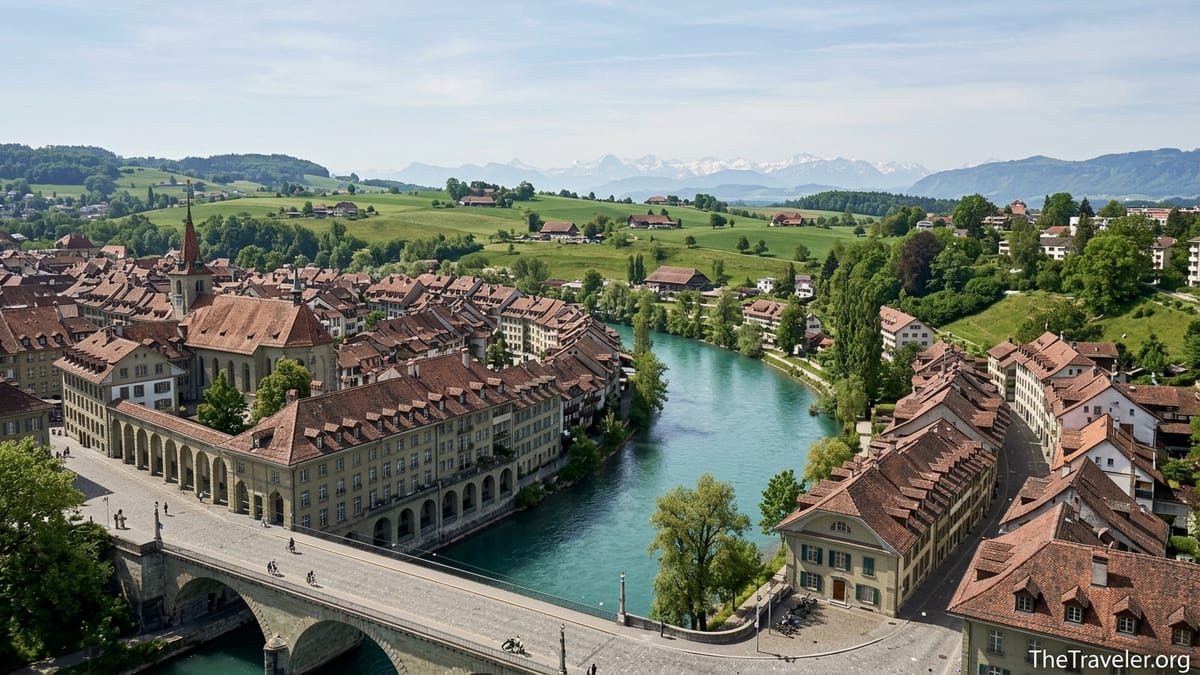
Bern, the federal capital, is the natural starting point for many plateau itineraries. The UNESCO listed Old City curves along a loop of the River Aare and is famous for its long covered arcades from the 15th century and ornate 16th century fountains. That architectural continuity gives Bern a unified, almost theatrical backdrop, but life here is practical rather than touristy. Government offices sit one block from delicatessens and tram stops, and you are as likely to hear locals chatting in Bernese German as tour groups following a flag.
For history focused travelers, Bern’s highlights include the Zytglogge clock tower, the Gothic cathedral with its intricate Last Judgment portal and the Bern Historical Museum, which combines medieval city history with an engaging Einstein exhibition. Visiting one or two of these sights, then pausing for coffee under the arcades on Kramgasse or Münstergasse, makes an easy half day before you stroll down to the river. In summer, a characteristic Bern experience is joining locals who float down the Aare in neoprene or with dry bags, though this requires confident swimming and attention to safety information.
Bern shines for couples and independent travelers who want a sophisticated but relaxed base. The restaurant scene ranges from traditional cellar restaurants serving platters of Bernese plate with sausage and bacon to contemporary spots and wine bars along the side streets. For example, in the streets behind the clock tower you will find small bistros mixing Swiss produce with Mediterranean dishes, while around the PROGR arts complex former classrooms now house bars popular with locals. Expect mains between about 25 and 40 francs, and consider lunch menus, which can be a better value.
Families appreciate Bern’s compactness and green spaces. The Bear Park across the river from the old town lets children see the city’s heraldic animals in a modern enclosure connected to river access, and the Gurten hill, reached by funicular from the outskirts, offers playgrounds and wide lawns with views to the Alps on clear days. Frequent trains from Bern also make it easy to day trip to Thun for a lakeside castle, to Burgdorf for a castle museum and cheese, or to Fribourg for ramparts and bridges.
Fribourg: Medieval Drama and a Bilingual Edge
Roughly 20 to 25 minutes by direct train from Bern, Fribourg feels like a different world while still being firmly on the plateau. The upper town sits on a rocky spur above a tight loop of the River Sarine, with one of Switzerland’s most complete ensembles of medieval fortifications, including towers, walls and gates. At the heart of the old town stands the Cathedral of Saint Nicholas, whose tower dominates the skyline and offers views over the old bridges and surrounding countryside.
Fribourg’s charm lies in its layers. You can start in the modern shopping streets around the main station, then walk toward the cathedral and gradually drop down on cobbled lanes into the lower town near the river. Here, stone fountains, convents and old merchant houses give a strong sense of the city’s role as a medieval trading hub. Cross the 19th century Pont de Zähringen for a wide view of roofs, or seek out the narrow pedestrian bridges that knit together the steep slopes.
The city is officially bilingual, with both French and German widely used. Menus in traditional restaurants often appear in both languages, and it is common to start a meal with a French style salad and end it with a slice of gâteau du Vully or a meringue with local double cream from Gruyère country. For fondue, visitors often head to simple, wood paneled restaurants just outside the core, where a classic moitié moitié fondue for two with bread and pickles might cost around 30 to 35 francs per person.
Fribourg suits travelers who enjoy atmospheric walking and do not mind hills. The network of historic bridges, including a suspension style pedestrian bridge and older stone spans, means that families can design short loops with frequent viewpoints and cafés. It also makes an engaging rainy day destination from Bern: you can focus on the cathedral interior, small museums and cafés tucked into old houses without committing to long outdoor hikes.
Solothurn and Aarau: Baroque Elegance and Painted Gables
Solothurn, around 30 to 40 minutes by train from Bern, is often described by Swiss tourism authorities as the country’s most beautiful baroque town. Its compact, pedestrian old town was largely built between the 16th and 18th centuries and today is known for its harmonious facades, fountains and the white stone St Ursus Cathedral. Many of the town’s quirks revolve around the number eleven, from eleven church altars to a clock with only eleven hours, which adds a playful element to walking tours.
Visitors typically enter through one of the old gates, then wander past the cathedral steps to small squares lined with boutiques, bookshops and cafés. On Wednesday and Saturday mornings, a lively market fills the central Märetplatz. You might shop for mountain cheese from nearby Jura pastures, bunches of Swiss chard or locally pressed apple juice, then carry your finds down to the riverside promenade for an impromptu picnic. On warm days, the outdoor cafés along the Aare fill up by late morning with locals lingering over espresso or an early glass of regional white wine.
Aarau, capital of the canton of Aargau and about 25 minutes by train from Zurich or 45 from Bern, has a different visual signature. Its old town is famous for richly painted gables, where late medieval and early modern townhouses carry colorful, often intricate designs under their eaves. A short walking tour from the station leads you through narrow lanes like Golattenmattgasse and past the town church to viewpoints of the old rooftops against the low Jura hills. Local museums explain how water supply shaped life in this riverside town.
In both Solothurn and Aarau, the mood is quietly local. Dinner might be in a small brasserie that offers seasonal asparagus or game in autumn alongside hearty rösti or spaetzle. Expect main courses in the usual 25 to 35 franc band. Couples who enjoy relaxed architecture spotting and café culture will find either town ideal for a gentle day out, while families may appreciate Solothurn’s easy riverside paths and short boat trips along the Aare in summer, which give younger children a change of pace without long transfers.
Baden and the Spa Tradition of the Plateau
Baden, in the canton of Aargau and about 20 minutes by direct train from Zurich or 55 from Bern with a change, has been attracting visitors to its hot springs since Roman times. The town sits on the River Limmat, with a largely car free old town on one bank and a compact spa district on the other. Eighteen mineral rich springs feed the thermal baths here, and water temperatures of around the high 40s Celsius make it one of the hottest and most mineral rich spa areas in Switzerland.
From the train station, it is a short walk to the old town, where steep alleys lead up to the ruins of Stein Castle. Climb to the top for views over the river, the covered wooden bridge and the tiled roofs of the historic center. At street level, the Halde district is lined with restored buildings that now house boutiques, cafés and wine bars. Many travelers combine an hour or two of wandering and shopping with an afternoon in the baths, either at a large contemporary complex or at smaller, historic facilities.
For couples, Baden can work as a romantic side trip or even as a base if spa time is a priority. A typical visit might involve arriving late morning, checking into a spa hotel in the thermal quarter, then alternating between warm outdoor pools, saunas and quiet rooms with views of the river. Day entry to major thermal facilities is usually priced somewhere between 40 and 70 francs per adult depending on duration and access to sauna areas, and several hotels offer bundled packages that fold the bath entry into room rates.
Families with older children may also enjoy Baden, especially if you mix spa time with easy walks along the Limmat and a picnic at the nearby Baldegg viewpoint, which looks out over the surrounding plateau and Jura ridge. However, some spa areas have age restrictions or quiet zones, so it is wise to check family policies in advance when choosing a bath complex. As a plateau destination, Baden is especially appealing in shoulder seasons and winter when poolside steam and cool air create a distinct atmosphere without the effort of a ski trip.
Burgdorf and the Emmental: Cheese Country at the Edge of the Hills
Burgdorf, about 20 minutes by regional train from Bern, is a small Zähringer founded town that markets itself as the gateway to the Emmental. It curls around a hill topped by Burgdorf Castle, whose profile is visible from the train line. The old town at the base of the hill has a few main streets lined with traditional houses and cafés, while the slopes above lead into green pastures and low forested ridges that define the Emmental landscape.
For travelers, Burgdorf’s main draw is the combination of built and rural heritage. The castle has been carefully restored and today houses a museum, hostel and event spaces, giving you the chance to learn about local history and, if you wish, even spend the night within the thick walls. Exhibitions use stories from Burgdorf and the wider Emmental to connect medieval politics, rural life and modern tourism. Down in town, you can sit at a café terrace in the old market area and watch everyday life unfold with far fewer tourists than in Bern.
The surrounding Emmental region is synonymous with the famous holey cheese. Several show dairies in the wider area invite visitors to see the production process, sample cheeses of different ages and sometimes join short walking trails between farms. While these dairies are not in Burgdorf itself, the town makes a convenient rail hub combined with local buses or cycling routes through the rolling countryside. Cyclists often follow dedicated signposted routes that string together villages, covered wooden bridges and hilltop viewpoints.
This is an excellent area for families and slow travelers who prefer pastoral scenery to dramatic peaks. Children can see cows in pasture, barns stacked with hay and small farm shops selling honey, cheese and dried sausages. A typical day might involve a morning visit to the castle museum and town, lunch at a simple inn serving cold plates of cheese and cured meats for 20 to 25 francs, and an afternoon walk along the Emme River or up to a nearby ridge for a view of the distant Alps on the horizon.
How to Choose Your Base: Comparing Towns and Traveler Types
When deciding where to stay on the Swiss Plateau, think in terms of your priorities: history, food, spa time, countryside or rail connectivity. Bern is the strongest all round choice, with a UNESCO listed old town, major museums, lively restaurant and bar scene, and excellent rail links in all directions. It suits couples and independent travelers who want urban comforts with easy day trips. Fribourg is a good alternative if you prefer a smaller, more medieval feeling city with a strong bilingual culture and dramatic topography, while still enjoying decent train frequencies.
Solothurn and Aarau are ideal for visitors who value relaxed old town charm and café culture over nightlife. They work particularly well for couples seeking a slower pace, photography enthusiasts drawn to baroque facades and painted gables, and families with younger children who need flat, walkable centers and easy river access. Both towns also make sense if you are traveling by rail between Bern and Zurich and want to break up the journey with a night somewhere calmer than the big cities.
Baden stands out for wellness focused trips. If soaking in thermal water is high on your wish list, or you are planning a winter visit where outdoor pool time will be a highlight, making Baden your base can be very satisfying. You will still have fast access to Zurich for day trips and can reach Bern or Lucerne in around an hour by train. Burgdorf and the Emmental, on the other hand, are better suited to travelers who want a taste of rural life and agritourism, with castle stays, working farms and cycling or walking between hamlets.
Budget and travel style matter too. Plateau towns rarely feel as crowded or as price pressured as the most famous alpine resorts, but their costs still reflect Swiss standards. If you are managing expenses, consider choosing a slightly smaller town, booking accommodation with kitchen facilities and using supermarkets for some meals. Rail passes can be very good value if you are moving around most days, whereas point to point tickets may be more economical for visitors who plan to stay put and only make one or two excursions.
Planning Easy Rail Trips and Practical Details
One of the plateau’s biggest assets is its rail network. Bern, Fribourg, Solothurn, Aarau and Baden all sit on mainline routes with at least hourly, and often half hourly, services between them during the day. For example, trains between Bern and Fribourg typically take around 20 minutes, Bern to Solothurn about 30 minutes and Aarau to Baden roughly 15 minutes. Services are integrated with local trams and buses, so you can step off your intercity train and onto a tram or bus to reach hilltop funiculars, riverfront quarters or suburban viewpoints using the same ticket within regional zones.
For visitors, Swiss Travel Passes, Saver Day Passes and regional day tickets can all simplify planning. If you intend to travel most days, a continuous pass allows you to board almost any train without advance reservations, which is especially convenient when weather is changeable. Families benefit from the Swiss Family Card, which lets children under a certain age travel free with a parent who has a valid pass. Even if you do not purchase a nationwide pass, local guest cards in some towns offer free public transport within the immediate area for hotel guests.
In terms of timing, shoulder seasons on the plateau can be very pleasant. April to early June and September to October usually bring mild temperatures, blooming trees or autumn colors, and lighter crowds than peak summer. Market days, local festivals and one off events can add interest, so it is worth checking municipal tourism calendars before you travel. At the same time, using plateau towns as bases in summer lets you react to alpine weather: if clouds close in over the high peaks, you can spend the day exploring Fribourg’s bridges or Baden’s baths instead of a fogbound cable car.
Practical tips include wearing comfortable walking shoes for cobbled streets and steep alleys, especially in Fribourg and Burgdorf; carrying a light layer even in summer because evenings can be cool; and budgeting a little extra for cafés and spontaneous museum visits. Most plateau towns accept contactless payment everywhere from bakeries to public transport ticket machines, and tap water from fountains in old towns is typically potable and widely used by locals to refill bottles, unless specifically signed otherwise.
The Takeaway
Exploring the Swiss Plateau is about trading headline grabbing peaks for a slower, more textured experience of Switzerland. In Bern you walk under arcades that have sheltered merchants for centuries, in Fribourg you cross bridges that link upper and lower town, in Solothurn and Aarau you pause under painted gables, in Baden you sink into mineral rich water, and around Burgdorf you watch cows grazing on the hills that gave the world Emmental cheese. Trains weave these places together so tightly that you can wake up in one town and choose another for lunch without much planning.
Whether you are a couple seeking a weekend of riverside strolls and good dinners, a family wanting castle visits and easy rail rides, or a repeat visitor looking for quieter corners beyond the Alps, the plateau towns between Bern and Zurich reward attention. Pick a base that fits your interests, allow a few unstructured days for wandering markets and side streets, and use the rail network to sample neighboring towns. Over a week, you will assemble your own mosaic of sandstone arcades, baroque facades, spa steam and green hills that together tell a subtler but deeply satisfying Swiss story.
FAQ
Q1. Is it better to base in Bern or Fribourg for exploring the Swiss Plateau?
Bern offers the best rail connections and a wider choice of hotels and restaurants, so it suits most first time visitors. Fribourg is smaller and more medieval in character, with fewer but atmospheric accommodation options. If you value convenience and variety, choose Bern; if you prefer a compact, dramatic old town with a bilingual feel, Fribourg can be a rewarding base.
Q2. Are plateau towns like Solothurn and Aarau suitable for families with young children?
Yes. Both Solothurn and Aarau have flat, largely traffic free old towns, riverside promenades and playgrounds that make them easy with strollers or small children. Distances are short, so you can combine a short museum visit or church stop with plenty of outdoor time. River access is popular in warm weather, but always supervise children closely around water and follow local safety signs.
Q3. How expensive are restaurants in these towns compared with alpine resorts?
Prices on the plateau are still Swiss level but often slightly gentler than in famous mountain resorts. In most old town brasseries, main courses commonly range from roughly 25 to 40 Swiss francs. Lunch menus, simple pizzerias and supermarket takeout counters help manage costs. Alpine hotspots with strong international demand often price similar dishes at the higher end of that range or above.
Q4. Do I need a car to visit Burgdorf and the Emmental countryside?
Burgdorf itself is easy to reach by regional trains from Bern, and you can walk from the station to the old town and castle in about 10 to 15 minutes. To reach more rural Emmental villages and show dairies, a car or e bike gives maximum flexibility, but local buses and marked cycling and hiking routes also link many points. For most visitors, combining rail with selected bus rides or bike rentals is enough.
Q5. Are the thermal baths in Baden worth a special trip?
If you enjoy spa culture, Baden is a very worthwhile detour. The town’s hot, mineral rich springs feed modern bath complexes and historic facilities, and you can easily combine a few hours of soaking with a walk through the old town and up to the castle ruins. Given the short rail journey from Zurich and reasonable connections from Bern, many travelers plan at least a half day or overnight stay focused on the baths.
Q6. Can I use a Swiss Travel Pass for all the towns mentioned in this guide?
Yes, regular trains between Bern, Fribourg, Solothurn, Aarau, Baden and Burgdorf are covered by the Swiss Travel Pass. In addition, many city trams and buses and some local boats on plateau rivers and lakes are included or discounted. Always check the current validity map, but in general, a pass simplifies hopping between these plateau destinations without buying individual tickets each time.
Q7. When is the best time of year to visit the Swiss Plateau?
Spring and autumn are particularly pleasant, with milder temperatures, blossoms or fall colors and fewer crowds than peak summer. April to early June and September to October usually offer good conditions for city walks and countryside excursions. Summer brings river swimming and longer evenings but also busier trains and higher accommodation demand, especially around school holidays.
Q8. Which town is most romantic for couples on a short break?
Bern and Baden are especially appealing for couples. Bern combines sandstone arcades, river views and an excellent dining scene, while Baden adds the element of spa time in its thermal baths. Solothurn, with its baroque facades and riverside cafés, is a strong alternative for those who prefer a smaller town where you can see most sights on foot in a day or two.
Q9. Are these plateau towns a good option in winter if I am not skiing?
Yes. In winter, the plateau often has cool but manageable temperatures, and the focus shifts to museums, cafés, Christmas markets and spa visits. Bern’s old town and museums, Fribourg’s cathedral and fortifications, Solothurn’s baroque streets and Baden’s hot pools all work well without snow sports. On clear days you may still see snowy alpine peaks from hills like Bern’s Gurten or viewpoints in the Emmental.
Q10. How many days should I plan for a Swiss Plateau itinerary?
With three full days you can base in Bern and add side trips to one or two neighboring towns, getting a good taste of plateau life. A week allows a more varied circuit, such as splitting time between Bern and a smaller town like Solothurn or Baden, adding countryside excursions around Burgdorf and Emmental. That length lets you mix structured sightseeing with unplanned wandering and café stops.