


Switzerland’s lakes are the country’s quiet showstoppers. Snowy peaks and vineyards drop straight into deep blue water, Belle Epoque steamers glide past medieval castles, and efficient trains make it easy to hop from city to shoreline in minutes. For a first-time visitor, choosing between Lake Geneva, Lucerne, Zurich, Thun, Brienz, Lugano, Constance and Maggiore can feel overwhelming. This guide focuses on those main regions and gives you concrete examples of where to stay, what cruises to take, how to swim safely, and how to move around without wasting time or money.
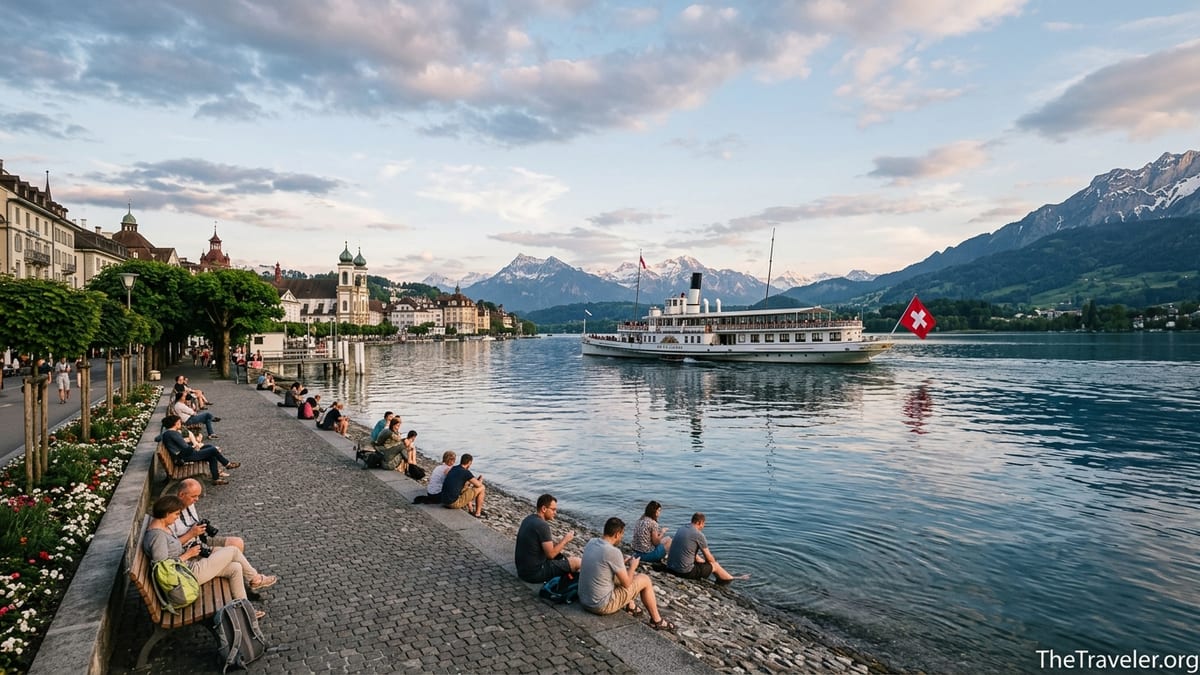
How the Swiss lake regions fit into a first-time itinerary
Most first-time itineraries focus on three areas: the western arc around Lake Geneva, central Switzerland around Lake Lucerne and Lake Zurich, and the Bernese Oberland around Lakes Thun and Brienz. Lake Lugano, Lake Constance and Lake Maggiore work well as add-ons of two or three nights if you have more than a week. For example, with 10 days you might spend three nights in Geneva or Montreux on Lake Geneva, three nights in Lucerne, three in Interlaken for Thun and Brienz, and a final night near Zurich Airport by Lake Zurich.
Train journeys between the lakes are short by international standards. Geneva to Montreux along Lake Geneva takes about 1 hour on frequent InterRegio trains. Montreux to Interlaken via Spiez is roughly 2 hours 30 minutes with one easy change. Lucerne to Zurich along the Reuss valley is about 45 to 50 minutes, and Zurich to Lugano through the Gotthard Base Tunnel is a little under 2 hours. This means you can use one town on each lake as a base and still do relaxed day trips, rather than moving every night.
For a first visit, it is usually best to pick two or three lakes and explore them properly instead of trying to see all eight. A common mistake is to schedule a cruise on every body of water and then feel rushed. A more realistic approach is to choose one big “showpiece” cruise, such as a full run from Geneva to Montreux on Lake Geneva in summer, a classic round trip on Lake Lucerne, or a Thun to Interlaken cruise, and then add shorter one-hour outings elsewhere if time and budget allow.
Season matters more than many visitors expect. Summer timetables for lake boats generally run from late April to mid October, with peak frequency in July and August. In winter, some lakes lose most scheduled sailings. For instance, on Lake Brienz there may be no regular boats for several weeks in the coldest months, while Lake Thun often maintains at least one daily ship between Thun and Interlaken West. If cruising is a priority, plan between May and September, and always check the current year’s timetable before you build a non-refundable itinerary around a specific departure.
Lake Geneva: cities, vineyards and Belle Epoque steamers
Lake Geneva, known in French as Lac Léman, is the most urban of the Swiss lakes, anchored by Geneva at one end and Montreux at the other. Geneva works well for travelers who want museums, international organizations and easy airport access, while Montreux and nearby Vevey appeal to those picturing lakeside promenades backed by vineyard-covered slopes. Lausanne sits roughly halfway and combines both, with a lively old town and direct lake access at Ouchy. A first-timer could base in Geneva for two nights, then move to Montreux or Vevey for another two to slow down by the water.
Historic paddle steamers operated by the Compagnie Générale de Navigation sur le lac Léman connect these towns. In summer, a classic day out is to take a mid-morning Belle Epoque steamer from Geneva or Lausanne to Montreux, which takes about 3 hours 30 to 3 hours 45 depending on the route. On board, you can book a table in the dining saloon for a simple plated lunch while passing vineyard villages such as St Saphorin and towering landmarks such as Chillon Castle near Montreux. Second class deck tickets are often enough if you just want to sit outside, and the food can be bought separately on board.
For swimming, the lakefront is dotted with paid lidos and free beaches. In Geneva, locals head to the Bains des Pâquis near the Jet d’Eau, where an inexpensive entrance fee gives access to ladders, platforms and a café. In Montreux and Vevey there are stretches of free shoreline with shallow-entry pebble beaches and floating platforms. Water temperatures in Lake Geneva are often around the high teens Celsius in June and can reach the low twenties in July and August, though this varies by year. On cooler or windy days, be prepared for a brisk dip even in midsummer and always obey lifeguard instructions and warning flags.
Accommodation on Lake Geneva spans every budget. In Geneva proper, expect city prices: even a straightforward three-star hotel near the main station can cost the equivalent of several hundred francs per night in peak season. Many visitors reduce costs by staying in nearby towns such as Nyon or Lausanne and using the frequent trains to reach Geneva for day visits. Around Montreux and Vevey, you will find grand lakeside hotels in Belle Epoque buildings, midrange chain properties just back from the lake, and small family-run inns tucked into the terraced Lavaux vineyards a short train or bus ride above the shoreline.
Lake Lucerne: iconic scenery and easy mountain access
Lake Lucerne, or Vierwaldstättersee, offers some of the most dramatic and varied lake scenery in Switzerland, with narrow fjord-like arms and steep green slopes plunging into deep water. Lucerne itself is one of the easiest bases for first-timers. The old town sits right by the lake, the train station is directly beside the boat piers, and famous excursions such as Mount Pilatus and Mount Rigi start from within walking distance of hotels. Many travelers choose to spend three nights here to combine urban sightseeing, a lake cruise and at least one mountain day trip.
Scheduled ships on Lake Lucerne run year-round, with a denser network in summer. A popular outing is the boat ride from Lucerne to the village of Vitznau, which typically takes between 1 hour and 1 hour 15 minutes. From Vitznau you can catch the cogwheel railway up Mount Rigi as part of the so-called “Rigi round trip,” then descend to Arth-Goldau and return to Lucerne by train. Another classic route is the “Golden Round Trip” to Mount Pilatus via boat from Lucerne to Alpnachstad, cogwheel railway up, cable car down to Kriens, then bus back into town. These combinations let first-time visitors stack several “Swiss experiences” into a single day without complicated planning.
Swimming in Lake Lucerne is best in designated lidos such as Strandbad Lido Luzern, located a short bus ride from the station. There you will find lawns, shallow areas, diving platforms and changing facilities. Entry fees are modest by Swiss standards and often include access to both the lake and a pool. In hot summers, water temperatures near the shoreline can reach the low twenties Celsius, but the lake remains refreshingly cool, especially in deeper sections. If you venture beyond lidos, always look for signs marking no-swim zones near ferry docks and strong-current areas.
Lucerne’s accommodation ranges from simple lakeside hostels to landmark hotels with direct water frontage. First-time visitors who want to optimize time often choose places within a 10 to 15 minute walk of the train station, so they can board early-morning boats or trains without relying on buses. While lake-view rooms cost more, you can still enjoy the setting by booking a standard city-facing room and spending your evenings strolling the lakeside promenade from the KKL concert hall toward the Verkehrshaus transport museum, where you will find quiet benches and views of the passing steamers.
Lake Zurich: local life, lidos and easy airport access
Lake Zurich, or Zürichsee, is integrated into everyday city life rather than focused on tourism alone. It is one of the most practical lakes for a first or last night in Switzerland, because Zurich’s main station is about 10 minutes on foot from the lake and the airport is 10 to 15 minutes away by train. You can land in the afternoon, check into a hotel near the station, and still have time for an evening walk along the Bürkliplatz pier as commuter boats crisscross the water.
The Zurich lake shipping company runs regular ferries and circular cruises, including short 1.5 to 2 hour trips that loop past Küsnacht, Thalwil and other lakeside communities. These are ideal for visitors who want a taste of lake cruising but have limited time. Tickets for these shorter trips are typically in the same range as a local public-transport day pass, and holders of certain city visitor cards can ride at a discount or for free, depending on the option they choose. Departures run year-round, but the timetable is densest in the summer season from roughly mid December 2025 to mid December 2026 according to current schedules, with dedicated excursion routes highlighted in the official brochure.
Zurich is particularly known for its lakeside “badis,” or bathing areas. These range from historic wooden lake baths such as Seebad Utoquai, which opens for the summer season in spring, to family-oriented shorefront parks further along the lake. Locals often buy seasonal or annual passes that allow access to a whole network of pools and lakeside facilities, while visitors typically pay a small single-entry fee at the turnstile. In warm summers, water in the shallow bays of Lake Zurich can feel almost tepid by July, but deeper sections remain cooler and currents are mild in calm weather. Always enter at designated points and respect boundaries marked by buoys.
For accommodation, first-time visitors often balance convenience and cost by staying near Zurich main station or just across the river in districts 1 and 4, where trams provide direct connections to the lakefront in under 10 minutes. While Zurich’s hotel rates are high even by Swiss standards, the ability to walk from your hotel to both the train station and the lakeside saves time and transit fares, which is especially valuable if you only have one or two nights in the city at either end of a longer lake-focused itinerary elsewhere in the country.
Lakes Thun and Brienz: Interlaken and the Bernese Oberland
Lakes Thun and Brienz sit on either side of the town of Interlaken and are often combined with mountain excursions to the Jungfrau region. Thun, at the western end of Lake Thun, is a charming small city with a castle and lively riverfront, while Brienz, at the eastern end of Lake Brienz, is a quiet village known for woodcarving and traditional chalets. Many first-time visitors base themselves in Interlaken for two or three nights, using the lake boats and mountain trains to explore in several directions.
On Lake Thun, scheduled boats often take about two hours for the full Thun to Interlaken West journey. Along the way they call at lakeside villages such as Spiez, with its castle and vineyards, and Beatenbucht, which connects by funicular and cable car to the Niederhorn viewpoint. Some services are marketed as “breakfast” or “lunch” cruises, with table reservations and set menus in addition to standard deck access. Enthusiastic planners should remember that operations can be affected by storms, fog or unusually high or low water levels, so it is wise to treat lake cruises as flexible highlights rather than rigidly timed connections.
Lake Brienz is narrower and more intensely turquoise thanks to glacial sediments. The route between Interlaken Ost and Brienz takes around 1 hour and passes steep forested slopes and isolated farmsteads. At the midpoint Lies the Giessbach Falls stop, where a short funicular carries passengers up to a historic grand hotel and walking paths around the cascade. Seasonal variations are more pronounced here: in winter, regular services on Lake Brienz may be suspended, so a November or early spring visit focused on cruising is better directed toward Lake Thun or other lakes with year-round timetables.
Swimming in Lakes Thun and Brienz is usually done from lidos in towns such as Thun, Spiez or Brienz, where lifeguards, changing cabins and marked safe zones help counter the lakes’ cold water and sudden depth changes. Even in midsummer these lakes can feel very cold beyond the shallows, especially near river inflows. Accommodation options include Interlaken hotels close to the ship canals, lakeside guesthouses near Spiez and Thun, and smaller B&Bs in Brienz. Choosing a base with easy access to a train station and boat pier allows you to experiment with different combinations, such as taking a morning train to Thun, a midday cruise back to Interlaken, then an afternoon rail trip into the mountains.
Lugano, Constance and Maggiore: rewarding add-ons beyond the core route
Lake Lugano in the Italian-speaking canton of Ticino offers a different flavor from the central and northern lakes. The town of Lugano blends palm-lined promenades and Italian-style piazzas with Swiss infrastructure and pricing. Many visitors arrive from Zurich or Lucerne via the fast tunnel route and stay two or three nights to combine lakeside relaxation with short hikes on nearby peaks such as Monte Brè or Monte San Salvatore. The lake’s boats link Swiss villages with those just over the border in Italy, so you can take a morning cruise to Gandria or Morcote, stroll through narrow lanes and lakeside gardens, and return by boat or bus later in the day.
Lake Maggiore straddles Switzerland and Italy, with the Swiss shore centered on the resort towns of Locarno and Ascona. Both are reachable by direct trains from northern Switzerland and make a natural continuation of a Lake Lugano stay. Cruises on Lake Maggiore tend to be longer, connecting Swiss and Italian ports; many visitors choose a partial route to nearby islands and combine it with strolls through subtropical gardens and waterfront cafés. Because operations involve two countries, it is important to check which tickets cover cross-border services and to carry valid identification, even within the Schengen zone.
Lake Constance, or Bodensee, touches Switzerland, Germany and Austria and is a favorite with cyclists and families. Swiss bases include Romanshorn and Kreuzlingen, both reached by trains from Zurich in under an hour. Regular ferries cross between Swiss and German shores, while longer routes run along the lake. Unlike some mountain lakes, Lake Constance has a busy working-life character; you will share space with commuters, school groups and freight vehicles boarding car ferries. For first-time visitors, one or two nights on the Swiss shore allow for a relaxed cycle ride along the well-marked lakeside paths, with plenty of places to stop for ice cream or a dip.
These three lakes are especially appealing in warm weather from late spring through early autumn, when shoreline cafés set out terraces and evening life spills onto promenades. Accommodation ranges from city hotels in Lugano to smaller lakeside inns on Lake Constance and boutique properties in Ascona and Locarno. Because some towns host major summer festivals, prices and availability can change quickly; booking a flexible rate a few months ahead is usually advisable if your dates coincide with school holidays in Switzerland or neighboring countries.
Practical planning: trains, tickets, cruises and swimming
Switzerland’s integrated public transport system makes it straightforward to link lakes and mountains without a car. Long-distance trains connect major lake cities such as Geneva, Lausanne, Montreux, Lucerne, Zurich, Lugano and the towns around Lake Constance, while regional lines and boat services fill in the gaps. A practical approach for first-time visitors is to choose a rail pass that matches their style of travel: a continuous national pass for those moving almost every day, or regional passes for travelers spending several days in one area such as the Lake Geneva region or the Bernese Oberland.
When planning cruises, it is helpful to distinguish between boats used as point-to-point public transport and dedicated excursion cruises. On Lake Geneva, for example, paddle steamers at peak times carry both commuters and tourists, and your ticket will usually work like a normal public transport fare, with supplements only for certain first-class or dining options. On Lake Thun, standard scheduled sailings may share the timetable with special breakfast or dinner cruises that need advance reservations because of the catering. First-timers can start by choosing simple scheduled routes that let them hop on and off, then consider adding a themed cruise if budget and time allow.
Swimming in Swiss lakes is generally free in public areas, but supervised lidos with changing cabins, lockers and sometimes pools typically charge a modest day fee. For example, in Zurich and other large towns, local residents can buy seasonal or annual passes for all city-operated pools and lakeside baths, while visitors can pay per entry. For a first-time traveler, this usually means budgeting a small extra amount per swim day for access to better facilities and safer entry points, especially if traveling with children or inexperienced swimmers.
Safety is a consistent theme across all the lakes. Even on warm days, water can be colder than expected a few meters from shore, and depth often increases quickly. Weather can change fast, bringing wind and small waves that make swimming or stand-up paddling more challenging. Lifeguards may close diving platforms or suspend boat services temporarily if conditions deteriorate. First-time visitors should follow local signage, stay inside designated swimming areas, wear life jackets when using small rental craft, and avoid alcohol before or during water activities.
The Takeaway
Switzerland’s great lakes are not a single destination but a network of distinct regions, each with its own character. Lake Geneva offers grand cities, vineyard villages and historic steamers; Lake Lucerne combines iconic scenery with easy access to famous peaks; Lake Zurich shows everyday Swiss life unfolding at the water’s edge; Lakes Thun and Brienz bring deep turquoise water into the heart of the Bernese Alps; and Lugano, Constance and Maggiore add Italian flair and cross-border variety. For a first-time visitor, the key is to resist trying to see everything and instead plan a clear route through two or three of these regions.
Build your itinerary around a few well-chosen bases, such as Geneva and Montreux on Lake Geneva, Lucerne on Lake Lucerne, Interlaken between Lakes Thun and Brienz, and Zurich or Lugano for arrival or departure days. From each base, select one major lake cruise, one or two short boat trips and a manageable number of swimming or walking spots. Use trains as the spine of your trip and treat boats as scenic extensions rather than necessities. With this approach, your first journey through Switzerland’s lake country will feel less like a checklist and more like a sequence of unhurried days spent between mountains and water.
FAQ
Q1. How many Swiss lakes should I include on a first trip?
Most first-time visitors are happiest focusing on two or three main lakes, for example Lake Geneva, Lake Lucerne and either Lakes Thun and Brienz or Lake Zurich, rather than trying to visit all eight in a single journey.
Q2. What is the best time of year for lake cruises in Switzerland?
The most reliable period for frequent cruises is from late May to early October, when summer timetables are in force and there are more daily departures and special themed sailings.
Q3. Can I use Swiss public transport passes on lake boats?
Yes, many national and regional public transport passes cover scheduled lake boats, sometimes with full coverage and sometimes with a discount, but special culinary or themed cruises may require supplements or separate tickets.
Q4. Are Swiss lakes warm enough for swimming?
In July and August, surface temperatures on larger lakes such as Geneva, Lucerne and Zurich often reach the high teens to low twenties Celsius, which is comfortable for most swimmers in shallow, calm areas on warm days.
Q5. Do I need to book lake cruises in advance?
For regular scheduled services, advance booking is rarely necessary outside the busiest weekends, but for popular lunch, dinner or music cruises with reserved seating, it is wise to book as soon as your travel dates are fixed.
Q6. Which town is best as a base for Lakes Thun and Brienz?
Interlaken is the most practical base because it sits between both lakes, has two train stations and easy access to the ship canals, but Thun, Spiez or Brienz work well if you prefer quieter evenings.
Q7. Is it easy to visit both Lake Geneva and Lake Lucerne on one trip?
Yes, trains link Geneva, Lausanne or Montreux with Lucerne in a few hours with at most one or two changes, so many itineraries spend two or three nights at each lake within a one or two week holiday.
Q8. Are there affordable places to stay near the lakes?
While lakeside grand hotels are expensive, you can often find more affordable options by staying a few streets back from the water, choosing smaller towns along the shore or booking early for shoulder-season dates.
Q9. Can I combine Swiss lakes with mountain excursions without changing hotels constantly?
Yes, bases like Lucerne, Interlaken and Montreux allow you to reach both lake cruises and major mountain excursions on day trips, so you can enjoy varied scenery while staying in the same hotel for several nights.
Q10. Is it necessary to rent a car for visiting the Swiss lakes?
No, Switzerland’s trains, boats, buses and mountain railways form an integrated network that makes visiting the main lakes straightforward without a car, and many lakeside areas are easier to enjoy on foot or by public transport than by driving.