


Snow capped peaks reflected in deep blue water, Belle Epoque paddle steamers gliding past vineyard terraces, children jumping from wooden piers into glass clear coves. Switzerland’s lakes shape almost every classic postcard view of the country, but they are not all the same. Some are built for city breaks with easy swims and sunset drinks, others for wild turquoise waters and quick access to serious mountains. Choosing the right lake can define the mood, budget and logistics of your whole trip.
How to Choose the Right Swiss Lake for Your Trip
When travelers talk about “the Swiss lakes,” they usually mean a handful of big names: Lake Geneva, Lake Lucerne, Lake Zurich, the twin lakes of Thun and Brienz in the Bernese Oberland, Lake Lugano and Lake Maggiore on the Italian border, and Lake Constance in the northeast. Each has a distinct personality shaped by language, climate, surrounding mountains and the cities on its shores. You do not need to see them all. Choosing one or two that match your travel style is usually enough for a first or second visit.
Three practical questions help narrow things down. First, do you want an urban base with museums and nightlife, or a quieter resort town where the last sound at night is the splash of waves against a wooden jetty? Second, is your priority being on the water, with easy swimming and regular cruises, or using the lake as a gateway to mountain excursions like Mount Rigi, Pilatus or the Jungfraujoch? Third, how important are car free streets and step free access if you are traveling with children, luggage or reduced mobility?
Transport passes make a difference to value. The Swiss Travel Pass and regional passes typically include most scheduled lake boats on Lucerne, Geneva, Zurich, Thun, Brienz and Lugano, which turns what might be a 40 to 60 Swiss franc cruise for two into a trip you are effectively getting “for free” once you have the pass. On Lake Lucerne, for example, a standard one way journey from Lucerne to Weggis currently costs roughly 20 to 25 francs in second class; with a pass you simply walk on and off. For travelers planning several rail journeys and at least a couple of long lake cruises, this can tilt the decision toward the lakes with the densest boat networks.
Seasonality matters. In July and August almost all lakes offer frequent cruises, outdoor pools, lidos and floating platforms. In winter, services are more limited and in some cases, such as Lake Brienz, full timetables pause outside the main season, leaving perhaps one daily boat on neighboring Lake Thun instead. If you are visiting between November and March and dream of being on the water, choose lakes with year round urban traffic such as Zurich or Geneva, or check current timetables before fixing a base in smaller resort towns.
Lake Lucerne: Classic Alps, Storybook Villages and Mountain Excursions
Lake Lucerne is often the first recommendation for travelers who want that archetypal Swiss mix of lake, old town and easy mountain access. The city of Lucerne itself has a preserved medieval core, the Kapellbrücke bridge, several serious museums and a relaxed promenade lined with grand hotels. From the lakeside piers in central Lucerne, you can step straight onto historic paddle steamers and modern boats that fan out to villages such as Weggis, Vitznau and Brunnen, then connect to cog railways and cable cars toward Rigi, Pilatus and Bürgenstock.
For scenery, the lake feels intimate rather than huge. Narrow arms twist between steep forested slopes and sheer cliffs, so the view is constantly changing. A popular day could involve a morning cruise from Lucerne to Vitznau, then the cog railway to Rigi Kulm for sweeping views over the Alps, followed by the descent to Rigi Kaltbad and a walk down to Weggis for a late swim and drink at the lakeside. This “golden round trip” style outing is very easy without a car: the boat from Lucerne to Vitznau takes around an hour, and Lucerne’s main station is two or three minutes’ walk from the piers.
Swimming is well catered for. Lucerne’s Lido has a long sandy beach and family friendly facilities, while smaller lakeside towns operate grassy bathing areas and floating platforms. Water is usually warm enough for comfortable swims from roughly late June to early September, although hardy locals dive in earlier. Couples and design minded travelers often favor hotels in Weggis or Vitznau, where properties like small boutique spa hotels or historic grand hotels sit almost on the water’s edge, and boat connections back to Lucerne run regularly into the evening.
For car free or car light holidays, Lucerne works especially well. You can arrive by train from Zurich Airport in about one hour, walk to your hotel in the compact old town, and use boats and mountain railways for day trips. Many visitors stay three to four nights, using Lucerne as a base for Lake Lucerne cruises one day, Mount Rigi or Pilatus on another, and perhaps a side trip to nearby Engelberg or the Stoos ridge if they want additional mountain hiking without changing hotels.
Lake Geneva: Cities, Vineyards and Riviera Style Lakeside Towns
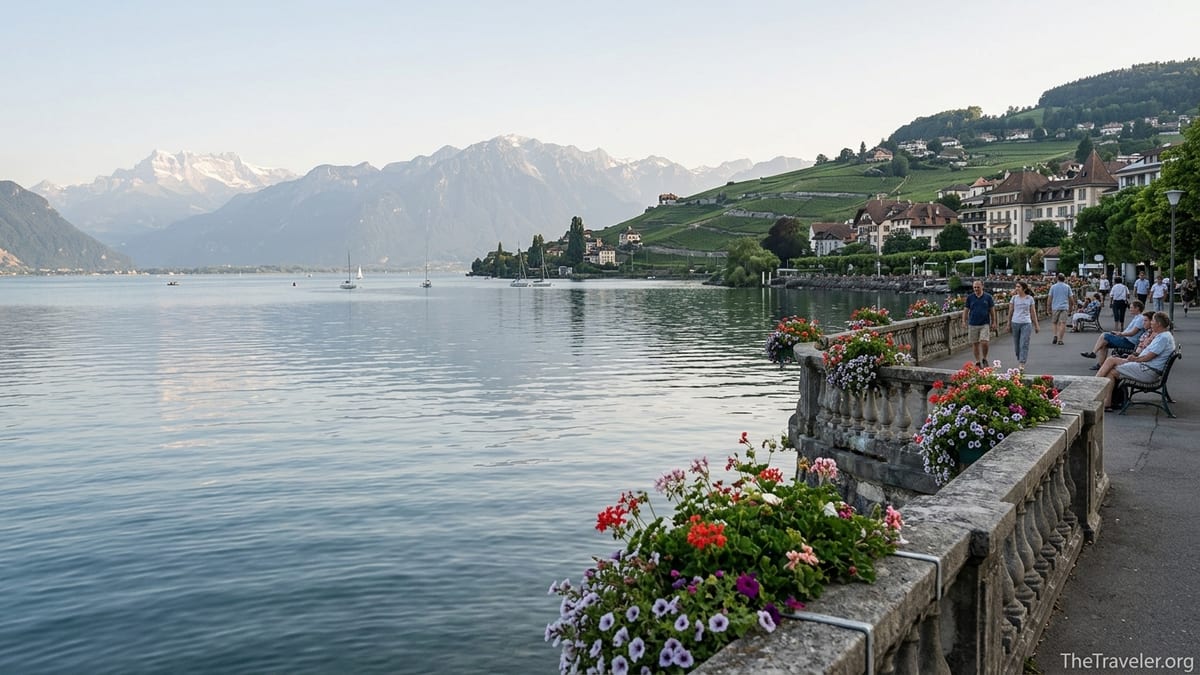
Lake Geneva, or Lac Léman, is Switzerland’s largest lake and feels more like an inland sea than an alpine pool. The western end around the city of Geneva has a cosmopolitan, international atmosphere, with lakeside parks, the Jet d’Eau fountain, and a strong emphasis on culture and dining. Further along the northern shore, Lausanne climbs steeply above the water and acts as a student and business hub, while Vevey and Montreux form the heart of the so called Swiss Riviera, backed by vineyard terraces and often bathed in a mild, almost Mediterranean climate.
If you want a city break combined with lake life, Geneva or Lausanne make sense. Both have frequent train connections to the rest of Switzerland and France, large museums, lively restaurant scenes and easy access to the water. From Lausanne’s Ouchy district, historic Belle Epoque paddle steamers and modern boats operated by the regional company criss cross the lake to destinations such as Vevey, Montreux and the Lavaux vineyards. In high season you can buy a simple “round trip” ticket and spend two to three hours gliding past stone terrace walls and small wine villages that are otherwise tricky to see from the road.
For many leisure travelers though, the most atmospheric base is Montreux or nearby Vevey. Montreux has a palm lined promenade, a famous jazz festival in early summer and views of sharp alpine peaks rising behind the lake. Vevey is lower key, with a traditional market square and easy ferry connections. A common pattern is to spend mornings exploring vineyard trails in Lavaux or visiting the lakeside Château de Chillon, then take a late afternoon cruise back toward Vevey or Lausanne, watching the light change on the rows of vines above the water.
Swimming opportunities are excellent in summer. Lausanne, Vevey, Montreux and smaller communities like Saint Sulpice and Préverenges maintain public beaches and grassy waterfront parks where locals barbecue and cool off. The water warms relatively quickly and is often comfortable for long swims from late June into early September. Compared with central alpine lakes, the climate is milder, making Lake Geneva a good choice for families and travelers who want a mix of culture, wine and gentle outdoor time rather than steep hikes.
Lake Thun and Lake Brienz: Turquoise Water and Gateway to the High Alps
Lake Thun and Lake Brienz sit on either side of Interlaken and function as the aquatic foreground to some of Switzerland’s most famous peaks. Lake Thun, to the west, is deep blue and dotted with castles and lakeside villages. Lake Brienz, to the east, is known for its milky turquoise color and steep forested slopes, with fewer settlements on its wild southern shore. Boats on both lakes connect with rail stations and bus lines, and are integrated into the national timetable. From Interlaken Ost you can sail along Lake Brienz toward the Giessbach Falls and historic hotels, or from Interlaken West you can head across Lake Thun to Spiez or Thun.
Travelers often ask which lake is better if they only have time for one cruise. Lake Thun offers more variety in villages, with stops at places like Spiez with its castle and vineyards, and access to the Beatus Caves above the northern shore. Views open toward the snow covered peaks of the Eiger, Mönch and Jungfrau. Lake Brienz feels more dramatic and enclosed, with intense turquoise water created by glacial sediments and sharp ridges such as the Brienzer Rothorn towering directly above the surface. A full one way trip between Interlaken and Brienz takes around an hour and a quarter, and many boat journeys can be combined with a cog railway up the Brienzer Rothorn or a funicular ride to the Giessbach waterfall path.
For families and active travelers, the region works almost like an outdoor theme park built around water. You can spend one day taking a gentle cruise and swimming from small lakeside beaches near Iseltwald or Niederried, another day heading up the Schynige Platte railway for views, and a third riding cable cars into the Jungfrau region above Grindelwald or Lauterbrunnen. Many regional rail passes include free or discounted lake cruise options, which can otherwise cost from around 50 francs for a full length round trip in second class if bought a la carte.
Base choice is important. Interlaken itself is practical, with frequent trains and boats but a more commercial feel. Travelers looking for quieter, romantic stays often choose traffic limited villages like Iseltwald on Lake Brienz or small towns such as Spiez or Thun on Lake Thun, then use boats and trains for day trips. In winter, lake activity is more subdued, and boats on Lake Brienz may pause for seasonal breaks while at least one daily ship often continues to cross Lake Thun, so check timetables if off season cruising is a priority.
Lake Zurich and Lake Constance: Easy City Access and Gentle Holidays
Lake Zurich and Lake Constance are less dramatic than some alpine lakes but very practical for travelers who want to combine urban life, moderate prices and gentle days on the water. Lake Zurich stretches southeast from the city of Zurich, Switzerland’s main air and rail hub. The city has a lively old town, extensive museums and a strong restaurant and nightlife scene, yet you are never far from the water. Local boats operate like part of the public transport system, shuttling commuters and leisure passengers between small lakeside communities and the city center.
For short stays, this convenience is compelling. You can land at Zurich Airport in the morning, check into a hotel near the Bahnhofstrasse by lunchtime, and by late afternoon be on a boat heading toward Küsnacht or Rapperswil, watching sailboats and paddleboarders drift by. In summer, dedicated swimming areas such as Seebad Enge and Strandbad Mythenquai create an almost beach club atmosphere, with diving boards, changing rooms and simple restaurants. These are popular with locals and are excellent if you want a quick swim without leaving the city.
Lake Constance, shared with Germany and Austria, appeals to cyclists and slow travelers. The lake is large and relatively low lying, with towns such as Kreuzlingen and Romanshorn on the Swiss side connected by ferries and regional trains. A dedicated cycle route loops around the shoreline, and families often base themselves in small lakeside resorts or farm stays. Swimming is usually more about grassy beaches, piers and gentle entries than dramatic cliffside coves. The atmosphere is relaxed and unhurried, and prices for accommodation and meals can be a little softer here than in the most famous alpine resorts.
Neither lake is ideal if your main goal is high alpine hiking straight from your hotel door. Instead, they suit travelers who want a softer introduction to Switzerland: couples combining business in Zurich with a weekend on the water, families with small children who appreciate playgrounds and flat lakeside paths, or anyone who likes the idea of mornings in museums and afternoons reading by the shore.
Lakes Lugano and Maggiore: Italian Flair, Palm Trees and Mild Evenings
At Switzerland’s southern edge, Lake Lugano and the Swiss stretches of Lake Maggiore offer a distinct Italian inflection: palm trees, gelato stands, late dinners on terraces and milder evenings that often last deep into autumn. The city of Lugano curves around a bay backed by steep green hills, with a compact old town, designer boutiques and easy rail connections north to Zurich and south into Italy. Regular boats shuttle between Lugano and villages like Gandria, Morcote and Melide, and you can link cruises with funicular rides up San Salvatore or cable cars to Monte Brè.
For couples, this region has a romantic, Riviera like feel at generally lower prices than the most famous Swiss alpine resorts. A typical day might start with a cappuccino on a lakeside promenade, continue with a boat ride to the tiny stone village of Gandria for lunch, then a shaded lakeside walk back toward Lugano and an evening aperitivo watching the lights reflect on the water. Boutique hotels and apartments are common, and meal prices often reflect Italian rather than Zurich level costs once you step a few streets away from the busiest squares.
Lake Maggiore is split between Switzerland and Italy, with the Swiss resort of Locarno and its neighbor Ascona forming an appealing base. The climate is among the warmest in Switzerland, with a long growing season that supports subtropical gardens and outdoor events such as the Locarno Film Festival in summer. Lake cruises here tend to feel leisurely, linking small islands, promenades and swimming spots. Families appreciate the combination of lake access with nearby attractions such as the Verzasca Valley, where clear rivers form natural pools suitable for supervised older children and strong swimmers.
These southern lakes are particularly attractive in May, June, September and early October, when the weather is usually warm enough for lake swimming but the crowds are thinner than in peak July and August. They also work well as a last stop on a longer itinerary that begins in the higher Alps, giving you time to warm up, relax and enjoy extended evenings outdoors before flying home.
Best Lakes for Swimming, Cruises, Luxury and Car Free Escapes
If swimming is your top priority, focus on lakes with a combination of public beaches, lidos and relatively warm water in summer. Lake Geneva’s north shore, especially around Lausanne, Vevey and Montreux, offers long stretches of accessible waterfront with grassy parks, pebble beaches and shallow entries suitable for families. Lake Zurich within the city has multiple enclosed “Seebad” areas with lifeguards and facilities. On Lake Lucerne, organized lidos in Lucerne and Weggis make it easy to combine a half day on the water with sightseeing in the city or a short mountain excursion.
For travelers who love being on the water as much as by it, the density and variety of cruise options matters. Lake Lucerne, Lake Geneva, Lake Zurich and the duo of Thun and Brienz all operate regular scheduled services that locals use almost like buses. This means you can treat a one hour or even three hour cruise not as a rare splurge but as your normal way of getting from town to town. On Lake Thun, for example, a full length cruise between Thun and Interlaken can take around three hours, passing castles and small harbors, and often includes simple onboard dining options. Evening dinner cruises run on several lakes in peak season, offering a relaxed way to see the shoreline lights without needing to navigate dark roads.
Luxury seekers often gravitate toward Lucerne, Montreux or the Lugano region. These areas mix high end lakeside hotels with spa facilities, fine dining and discrete service. A lakeside grand hotel in Lucerne or Montreux can command premium nightly rates in summer, but lakefront promenades also host smaller boutique properties and serviced apartments with access to the same views and boat piers. For a quieter version of luxury, consider lakeside spa resorts in smaller communities such as Weggis on Lake Lucerne or Ascona on Lake Maggiore, where the mood is more retreat than city break.
For car free holidays, a few combinations stand out. Lucerne plus Lake Lucerne gives you a compact, walkable city base connected directly to boats and mountain railways, ideal for first timers without a car. The Interlaken region allows you to base in a car free or low traffic village like Wengen or Mürren in the nearby mountains, then dip down to the lakes for cruises on days when the high peaks are cloudy. Around Lake Geneva, staying near Lausanne’s Ouchy district or in central Montreux puts you within a short walk of both train stations and boat piers, so you can cover vineyards, castles and shoreline towns without ever hiring a vehicle.
The Takeaway
Choosing the “best” lake in Switzerland is less about finding an objective champion and more about matching a region to your own style of travel. If you dream of storybook villages, classic mountain railways and frequent opportunities for both cruising and hiking, Lake Lucerne and the twin lakes of Thun and Brienz near Interlaken are hard to beat. If your heart leans toward culture, wine and long waterfront promenades, then Lake Geneva or the Swiss Riviera towns of Vevey and Montreux may be your natural home base.
Alternatively, Lake Zurich and Lake Constance provide softer, more urban or rural experiences with easier prices and gentle swimming, while the southern lakes of Lugano and Maggiore wrap lakeside life in Italian flair and late summer warmth. For many travelers, the smartest strategy is to pick one lake region as a hub and spend at least three nights there, layering in boat trips, swims, nearby excursions and slow mornings watching the light change on the water.
With dense public transport, widely accepted travel passes and well maintained public beaches, Switzerland makes it surprisingly simple to shape a lake holiday around what matters most to you. Decide whether you are a city cruiser, a mountain and water combination seeker, a family swimmer or a romantic promenade stroller, then let the geography of the lakes guide the rest of your itinerary.
FAQ
Q1. Which Swiss lake is best for a first time visitor?
For many first timers, Lake Lucerne works best because it combines a charming old town, frequent lake cruises and very easy access to classic mountain excursions like Rigi and Pilatus.
Q2. Where can I find the warmest lake water for swimming?
Lakes at lower elevations with milder climates, such as Lake Geneva around Lausanne and Montreux, Lake Lugano and Lake Maggiore, typically feel warmer in summer than high alpine lakes.
Q3. Which lake is best for combining city life with boat trips?
Zurich on Lake Zurich and Lausanne or Geneva on Lake Geneva all offer serious museums, restaurants and nightlife alongside regular scheduled boat services that make day cruises very easy.
Q4. What is the most scenic lake cruise in Switzerland?
Opinions vary, but many travelers highlight the narrow, fjord like arms of Lake Lucerne, the turquoise waters of Lake Brienz and the vineyard lined shoreline of Lake Geneva between Lausanne and Montreux.
Q5. Is it worth buying a Swiss Travel Pass for lake holidays?
If you plan several intercity train journeys plus multiple lake cruises, a Swiss Travel Pass or regional pass can be good value because most standard lake boats are included or discounted.
Q6. Which lakes are best for families with young children?
Lake Zurich, Lake Geneva and Lake Constance have many flat, grassy beaches, playgrounds and shallow swimming areas, while Lake Lucerne offers well equipped lidos close to the city and villages.
Q7. Where should couples go for a romantic lakeside stay?
Couples often choose Montreux or Vevey on Lake Geneva, Weggis or Vitznau on Lake Lucerne, or Lugano and Ascona in the south for promenades, wine, views and boutique hotels.
Q8. Which lake is best if I want serious mountain hiking nearby?
Base around Lake Lucerne for Mount Rigi and Pilatus, or choose the Lake Thun and Lake Brienz area near Interlaken for quick access to the Jungfrau, Grindelwald and Lauterbrunnen regions.
Q9. Can I have a car free holiday on the Swiss lakes?
Yes. Towns like Lucerne, Lausanne, Montreux, Zurich and Lugano, as well as many smaller villages, link train stations directly with lake piers, so you can rely entirely on public transport and boats.
Q10. Are lake cruises available in winter?
On larger lakes such as Geneva, Zurich and Lucerne, some boat services run all year, while on smaller or more alpine lakes, such as Brienz, timetables may be reduced or paused outside the main season.