


Switzerland’s lakeside rail routes link storybook old towns, glassy water and easy mountain excursions into some of Europe’s most rewarding short itineraries. With efficient trains, year-round boat services and compact distances, you can comfortably string together Lucerne, Interlaken, Montreux, Lugano and smaller lakeside bases in a week or two without ever renting a car. This guide breaks down practical 5, 7, 10 and 14 day lake-focused routes, using current train times, realistic overnight allocations and concrete examples of what a typical travel day actually looks like on the ground.
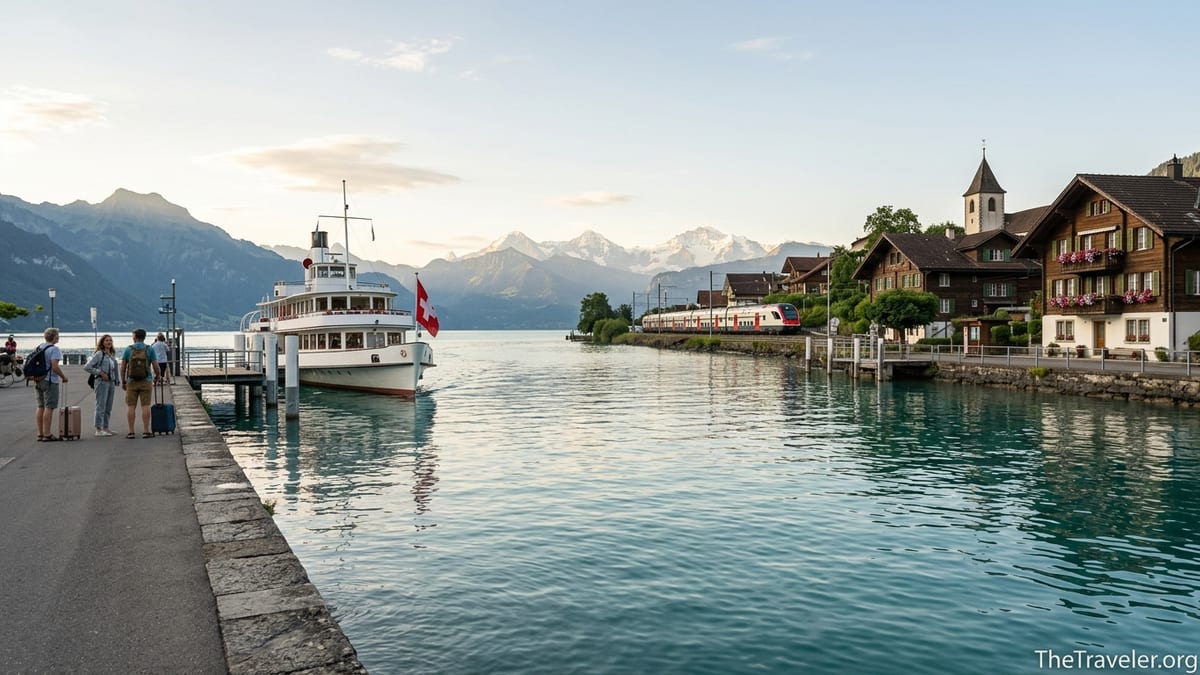
How Swiss lake itineraries work in practice
Lake-focused trips in Switzerland are built around three pillars: fast, frequent trains; scheduled boat services that function like floating buses; and cable cars or cogwheel railways that whisk you from lakeside promenades up to high viewpoints in under an hour. For example, the Luzern–Interlaken Express runs multiple times per day and takes about 1 hour 50 minutes between Lucerne and Interlaken Ost on a direct scenic route, so it is entirely realistic to leave Lucerne after breakfast and be on a lakeside walk in Interlaken before lunch.
Boats on the major lakes are not occasional tourist novelties but regular public transport. On Lake Lucerne, scheduled boats run year-round with more departures in summer, and typical journeys such as Lucerne to Weggis take about 45 minutes, while Lucerne to Flüelen at the far end of the lake takes roughly 2 hours 45 minutes. This means you can comfortably combine a late-morning cruise with an afternoon mountain excursion on the same ticket if you plan departure times carefully.
Mountain trips are usually half-day or full-day commitments, but distances are short. From Lucerne’s lakeside piers, a classic “Golden Round Trip” to Mount Pilatus might combine a 1-hour boat ride to Alpnachstad, a 30-minute cogwheel railway to the summit, and cable cars back down to Kriens with a short bus ride into town. Similarly, from Interlaken you can be standing at Schynige Platte or on the Harder Kulm viewpoint in under an hour from leaving your lakeside hotel, which is why lake itineraries can weave in several summit experiences without feeling rushed.
Budget-wise, lake itineraries are where Swiss rail passes tend to pay off. A Swiss Travel Pass, for example, typically covers all regular boats on lakes Lucerne, Thun, Brienz, Geneva and Zurich, and most standard trains, with mountain railways discounted. Given that individual lake cruises often cost from around 15 to 35 Swiss francs per adult depending on distance and class, and scenic mountain trains can be considerably more, passes quickly become attractive for anyone following a 7 day or longer lake circuit.
5-day Swiss lakes taster: Lucerne & Interlaken
A 5 day itinerary works best if you focus on just two hubs rather than trying to cross the whole country. A practical pattern is to spend three nights in Lucerne on Lake Lucerne and two nights in Interlaken between Lakes Thun and Brienz. This gives you time for at least two lake cruises and two mountain days without turning the trip into a checklist.
On day 1 and day 2, base yourself in Lucerne. Spend the arrival afternoon wandering the Chapel Bridge and old town, then take a short 1 to 1.5 hour round-trip cruise toward Weggis or Vitznau to get onto the water without committing to a long excursion. Ticket prices for shorter Lake Lucerne cruises often start around 15 to 25 Swiss francs per adult, but will be included if you hold a Swiss Travel Pass. Day 2 can be dedicated to Mount Pilatus or Mount Rigi, both of which pair naturally with travel by boat in one direction and mountain railway in the other.
On day 3, travel from Lucerne to Interlaken Ost on the Luzern–Interlaken Express. With a journey time of about 1 hour 50 minutes and departures throughout the day, you can leave mid-morning, drop your bags at a lakeside hotel in Interlaken or nearby Thun or Brienz, and still have a full afternoon. Many travelers take a late afternoon boat from Interlaken West along Lake Thun or from Interlaken Ost along Lake Brienz, with one-way journeys between Interlaken and Thun typically taking around 2 hours. Even in shoulder seasons, at least one round-trip sailing often runs daily on each lake.
Day 4 is ideal for a Bernese Oberland mountain day. A classic choice is to ride the train via Lauterbrunnen and Wengen to Kleine Scheidegg and, budget permitting, continue to Jungfraujoch on the modern Eiger Express connection. Alternatively, a shorter and cheaper option is Harder Kulm, reachable by a short funicular ride from Interlaken and offering sweeping views over both lakes. On day 5, you can either enjoy one last lakeside walk or short cruise in the morning before returning to Zurich, Geneva or Basel for onward travel, generally within 2 to 3 hours by direct train.
7-day circuit: Lucerne, Interlaken and Montreux
With a week, you can extend the 5 day taster into a true circuit by adding Montreux on Lake Geneva. A logical structure is two or three nights in Lucerne, two nights in Interlaken and two nights in Montreux, using the scenic GoldenPass Express or its regional equivalents between Interlaken and Montreux. This pattern limits one-night stays while still giving you three very different lake environments.
After two or three days enjoying Lake Lucerne and a mountain side trip, head to Interlaken as before. Spend two nights there with one full mountain day and one flexible lake day. On your lake day, for example, you might take a mid-morning boat from Interlaken West to Thun, spend several hours exploring Thun’s castle and riverside cafes, and then return by train, which takes only about 30 minutes compared with roughly 2 hours by boat. Combining slow water travel in one direction and fast rail in the other keeps days varied and manageable.
From Interlaken, the GoldenPass Express offers a direct panoramic route to Montreux on most days, taking roughly 3 to 3.5 hours via Zweisimmen and passing a string of smaller lakes and high meadows before descending to the vineyards above Lake Geneva. Seats on the named panoramic services often require reservations and can sell out in peak summer and autumn foliage season, but the same route is also served by regular trains that are covered by standard tickets and passes. If reservations on a specific departure are important, book a few weeks in advance.
Once in Montreux, two nights lets you enjoy the lakeside promenade, visit the island-like Château de Chillon and fit in a half-day mountain trip, for example on the rack railway up to Rochers-de-Naye. Boats across Lake Geneva link Montreux and nearby towns such as Vevey and Lausanne in around 20 to 60 minutes depending on route; they are scenic but not essential to stay on the lake, since the lakeside promenades are already directly on the water. From Montreux, direct trains to Geneva Airport typically take about 1.5 hours, while connections to Zurich Airport via Lausanne and Bern are usually in the 3 hour range, so even a midday flight can be realistic with an early departure.
10-day lake & mountain loop including Lugano
A 10 day itinerary lets you add Switzerland’s Italian-speaking south without sacrificing time on the northern lakes. A common pattern is: Lucerne (3 nights), Interlaken or Thun (3 nights), Montreux or Vevey (2 nights) and Lugano (2 nights), traveling between Lucerne and Lugano on the historic Gotthard route or the scenic Gotthard Panorama Express combination of boat and train.
After following the 7 day circuit to Montreux, travel from Montreux to Lugano via either the fast base-tunnel route or the more scenic older line through the mountains. Typical travel times fall around 4 to 5 hours with one or two changes, often in Visp and Bellinzona. This is a day when it can be worth booking a morning train and packing snacks so you arrive in Lugano mid-afternoon, with enough time to walk along the palm-lined promenade on Lake Lugano under a softer, Mediterranean-style light.
On Lake Lugano, boat services run between Lugano, Gandria and other small lakeside villages, especially between spring and autumn, and can be combined with mountain outings such as the funicular up Monte Brè or the cogwheel railway to Monte San Salvatore. An example day could involve a morning boat to Gandria, lunch in the village or back in Lugano’s old town, and an afternoon trip up Monte San Salvatore for sunset views over the lake and towards Italy. Prices for individual funicular or cogwheel rides in this region often fall in the 25 to 40 Swiss franc range for round trips, with holders of national or regional passes typically receiving discounts.
Returning to Lucerne from Lugano can be either a fast transfer or a scenic finale. Direct InterCity and EuroCity trains using the Gotthard Base Tunnel often complete the journey in under 2 hours, making it easy to catch onward connections the same day. If you prefer a leisurely last day, between April and mid-October you can book the Gotthard Panorama Express, which pairs a boat trip along the full length of Lake Lucerne between Lucerne and Flüelen with a panoramic train through the historic Gotthard route to or from Lugano. The full combination typically takes around 5.5 hours point to point, turning your transfer into one last highlight rather than a simple relocation.
14-day in-depth lakes itinerary with slower bases
Two weeks opens the door to a slower, more immersive pattern that balances big-name hubs with quieter lakeside towns. One practical approach is to split time across five bases: Lucerne (3 nights), Weggis or Vitznau on Lake Lucerne (2 nights), Interlaken or Thun (3 nights), Montreux or Vevey (3 nights) and Lugano (3 nights). This configuration reduces packing days to every 2 to 3 nights and allows for true “do nothing but watch the lake” afternoons.
Starting in Lucerne gives you city comforts, museums and direct rail connections. Moving just 45 to 55 minutes by boat along Lake Lucerne to Weggis or Vitznau for a two-night stay changes the mood entirely. These smaller resort towns sit literally at the water’s edge with immediate access to Mount Rigi’s mountain railway from Vitznau and frequent boats back to Lucerne. Many travelers spend their days here alternating between gentle lakeside walks, short cruises to other villages and half-day hiking on Rigi’s panoramic ridge trails.
In the Bernese Oberland, three nights in Thun rather than Interlaken can make sense if you prefer a slightly more local vibe while remaining connected to the lake system. Thun’s old town sits at the river outlet of Lake Thun, with boats departing directly from beside the castle and riverside cafes. Trains from Thun to Interlaken West usually take around 30 minutes, so you can still reach mountain railways in Lauterbrunnen or Grindelwald in under 90 minutes door to door, yet return to a quieter waterfront promenade in the evening.
On Lake Geneva, spreading three nights between Montreux and Vevey, or staying in just one and day-tripping to the other, allows time for vineyard walks through the Lavaux terraces, multiple ferry rides and perhaps a day in Lausanne’s museums. Finishing the itinerary with three nights in Lugano lets you slow down noticeably: think morning espresso by the lake, a leisurely boat ride to Morcote or Gandria, and late dinners on sheltered terraces. With 14 days, you can also insert an extra night in Zurich or Geneva at the start or end without disturbing the lake rhythm.
Choosing bases and timing travel days
When designing a lake itinerary, it helps to distinguish between hub days and transfer days. Hub days are when you stay put and explore one lake and its nearby mountain areas; transfer days are when you move bases by train or boat. The key to realistic planning is to keep transfer legs between about 2 and 4 hours on most days, so that you still have half a day free at either the origin or the destination. Routes such as Lucerne to Interlaken at 1 hour 50 minutes or Interlaken to Montreux at around 3 hours on a direct panoramic train fit this rule well.
Within each region, pick one primary base rather than hopping every night. On Lake Lucerne, Lucerne itself works best if you like a mix of culture and nightlife, while Weggis, Vitznau or Brunnen provide a quieter, resort feel with easy boat links back to the city. Around the Bernese lakes, Interlaken is the transport hub for mountain excursions but can feel busy, whereas Thun and Brienz offer more intimate lakeside promenades and still connect to mountain trains in under an hour. On Lake Geneva, Montreux has the heaviest resort infrastructure, while Vevey offers a more local-feeling old town just 10 to 15 minutes away by train.
It is also worth considering seasonality. In high summer from late June through August and around fall foliage in late September and early October, panoramic trains and larger lake cruises can be busy, and seat reservations on named services such as the GoldenPass Express are wise. In shoulder seasons, boats and mountain lifts may operate reduced timetables; for example, some evening lake cruises only run between approximately May and September. Winter can be atmospheric on the lakes, with snow-dusted peaks and quiet promenades, but expect fewer boat departures and some mountain hiking paths to be closed.
Arrival and departure airports will shape the loop. For a clockwise circuit, many travelers start in Zurich, overnight in Lucerne, then move sequentially through Interlaken, Montreux and Lugano before returning via the Gotthard route to Zurich or flying out of Milan, which is about an hour by train from Lugano’s region. Others fly into Geneva, head straight to Montreux, follow the loop in reverse, and finish in Zurich. Because domestic Swiss long-distance trains often run every 30 or 60 minutes on main lines, it is normally realistic to plan a final lakeside breakfast and still catch a midday or afternoon flight the same day.
Practical tips: passes, reservations and costs
Swiss transport is famously efficient but also relatively expensive, so understanding ticketing can make a big difference on a lake itinerary. For stays of 5 to 7 days or more involving multiple intercity trains and several lake cruises, many travelers choose a Swiss Travel Pass, which typically includes unlimited travel on most trains, buses and boats nationwide plus free or discounted entrance to museums and mountain railways. If your trip is shorter or more concentrated around one lake, regional passes such as Tell-Pass in Central Switzerland or Jungfrau Travel Pass in the Bernese Oberland can be better value.
Seat reservations are generally not required on ordinary intercity or regional trains, even for scenic routes, but they are mandatory or strongly recommended on certain named panoramic services such as the GoldenPass Express and the Gotthard Panorama Express. On these, a reservation fee is charged on top of your ticket or pass. For instance, travelers often book GoldenPass Express seats several weeks ahead in July and August to secure forward-facing panoramic seats, whereas in May or October it may be possible to reserve just a few days in advance and still find good availability.
Daily costs on a lake-focused itinerary vary with your hotel and dining choices, but a realistic mid-range budget might include a three-star lakeside hotel, a restaurant dinner, a café lunch and one paid excursion or cruise per day. Individual lake cruises on Lucerne, Thun, Geneva or Zurich typically range from roughly 15 to 35 Swiss francs for shorter one to two hour loops, with longer one-way rides across the entire lake costing more. Simple mountain viewpoints accessible by funiculars like Harder Kulm or Monte Brè are usually cheaper than big-name glacier excursions, so mixing a few expensive summit days with several moderate-cost viewpoints helps keep the overall budget manageable.
To minimize friction, consider staying within a short walk of a station or boat pier in each base. In Lucerne, for example, a hotel within 5 to 10 minutes of the main station makes it easy to roll your luggage between trains and boats without taxis. In Interlaken, accommodations near Interlaken Ost reduce your need to shuttle between stations when catching mountain trains or the Lake Brienz boats. In Lugano, staying near the lakeside funicular or along the main promenade allows you to access both the old town and boat piers on foot, turning even transfer days into relaxed strolls rather than rushed commutes.
The Takeaway
Designing a Swiss lakes itinerary is less about checking off famous names and more about choosing a comfortable rhythm of bases and travel days. With trains like the Luzern–Interlaken Express, panoramic routes such as the GoldenPass Express, and boats criss-crossing lakes Lucerne, Thun, Geneva and Lugano, you can link classic postcard scenery with everyday ease. Five days is enough for a focused taster of Lucerne and the Bernese lakes, seven days adds Lake Geneva, ten days brings in Lugano and a major scenic transfer, and two weeks lets you slow down in smaller lakeside resorts without missing the highlights.
By grounding your plans in realistic journey times, allocating at least two nights in each base and weaving in a mix of half-day lake cruises and mountain outings, you can create a trip that feels both rich and restful. Whether you board a paddle steamer gliding out of Lucerne at sunrise, watch the vineyards of Lavaux slide past your train window above Lake Geneva, or sip an espresso facing the palms of Lake Lugano, a well-structured lake itinerary turns Switzerland’s efficient transport into the backbone of a deeply memorable journey.
FAQ
Q1. Is a Swiss Travel Pass worth it for these lake itineraries?
For most 7, 10 or 14 day lake-focused trips that include several intercity trains, multiple boat rides and at least a couple of mountain excursions, a national pass is often good value. It typically covers boats on the major lakes and standard trains, with discounts on many mountain railways, so you can be more spontaneous about hopping on a cruise or taking a longer scenic route.
Q2. Do I need to reserve seats on the Luzern–Interlaken Express?
No, standard seats on the Luzern–Interlaken Express are usually covered by normal tickets or passes without mandatory reservations. You simply board and sit in any free seat in your class of travel. Reservations are more relevant on named panoramic trains like the GoldenPass Express or the Gotthard Panorama Express.
Q3. How many nights should I spend in each lakeside base?
A practical rule of thumb is at least two nights per base, which gives you one full day without packing. Three nights in larger hubs such as Lucerne, Interlaken and Lugano works even better, allowing for one lake day, one mountain day and one flexible day for weather or rest.
Q4. Can I swim in the Swiss lakes on these routes?
In summer, many locals and visitors swim in lakes Lucerne, Thun, Brienz, Geneva and Lugano at designated lidos and public bathing areas. Water temperatures are cool but refreshing, and facilities often include changing rooms, showers and café kiosks. Outside roughly June to early September, the water is generally considered too cold for casual swimming.
Q5. Are the boats on the lakes included in rail passes?
On the major lakes, regular scheduled boats are typically included with national passes and many regional passes, though special dinner cruises or themed sailings may require separate tickets. Always check the fine print for each pass, as some premium services or first-class upper decks can require a supplement even when basic passage is covered.
Q6. What is the best time of year for a lake-focused itinerary?
Late May to early October usually offers the best combination of frequent boat services, open mountain railways and pleasant hiking weather. July and August bring the warmest temperatures and the most crowds, while late September and early October can be quieter with beautiful autumn colors. Winter has its own charm but with reduced boat schedules.
Q7. Is it realistic to visit Jungfraujoch or Schilthorn on a 5-day trip?
Yes, if you base in Interlaken or nearby for at least two nights. From Interlaken, you can reach Jungfraujoch or Schilthorn in roughly 2 to 3 hours each way, so it makes sense as a dedicated full-day excursion within a short itinerary. Just keep an eye on the weather forecast and be prepared with a backup low-altitude plan.
Q8. Do I need to worry about luggage on boats and mountain trains?
Swiss boats and mountain railways are used to travelers with suitcases and hiking gear, and there is usually space for luggage near doors or in racks. For comfort, try to travel with one medium suitcase and a small daypack rather than multiple large bags, and avoid the very busiest midday departures in high summer when carriages can be most crowded.
Q9. Can I do these routes if I am afraid of heights?
Yes, with some thoughtful choices. Lakeside towns such as Lucerne, Thun, Montreux and Lugano are mostly flat and easy to walk, and many viewpoints are reachable by gentle funiculars rather than exposed cable cars. You can skip the highest gondolas and still enjoy panoramic terrace views from lower stations, or focus more on lake cruises and village walks.
Q10. Is it necessary to rent a car for a Swiss lakes itinerary?
No, renting a car is rarely necessary on these routes. Trains and boats are frequent, punctual and designed to connect smoothly, and many lakeside promenades and old towns are pedestrianized. Traveling by public transport also means you avoid parking costs and can fully enjoy scenic routes like the GoldenPass Express or Gotthard Panorama Express without concentrating on driving.