


Few travel experiences capture the essence of Switzerland as completely as a cruise on its great lakes. Snow-dusted peaks, vineyard-clad slopes, Belle Époque paddle steamers and spotless boats all come together in a network of cruises that double as both transport and sightseeing. With so many options, however, it pays to know which lakes, tickets and routes deserve space in your itinerary and budget.
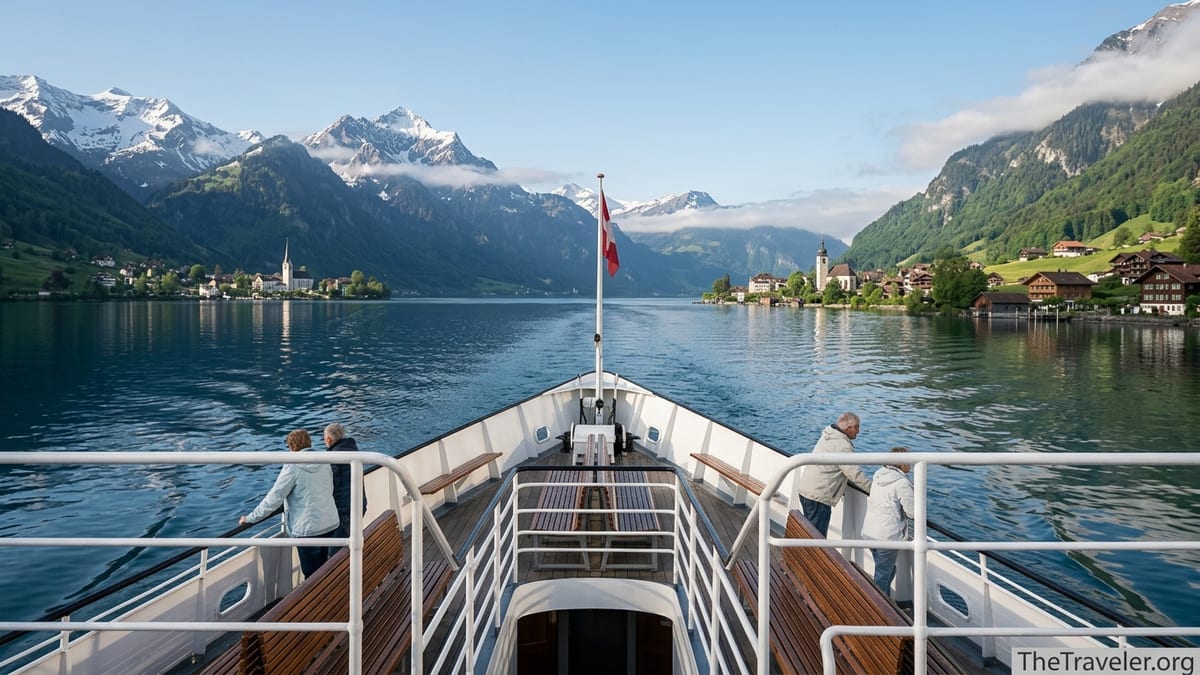
How Swiss lake cruises work in practice
Switzerland’s major lakes operate like scenic extensions of the rail network. On most lakes, scheduled boats run from village to village, with day passes or regular public-transport tickets allowing you to hop on and off. On Lake Geneva and Lake Lucerne, for instance, a day ticket lets you ride as many scheduled services as you like in one calendar day, which is ideal if you want to combine short hops with a longer cruise later in the afternoon.
Swiss Travel Pass and regional passes are powerful tools for lake cruising. As of 2026, the Swiss Travel Pass covers regular boat services on Lakes Geneva, Lucerne, Zurich, Thun, Brienz and the Swiss side of Lake Constance, and gives discounted travel on many special excursion cruises. Travelers who plan two or more substantial lake days during a rail-heavy trip often find that the pass quickly pays for itself, especially when factoring in mountain railways and museums along the shore.
For travelers without a rail pass, individual lake companies sell their own day tickets. On Lake Lucerne, a standard second-class day ticket for all regular cruises typically costs in the region of 80 to 90 Swiss francs for adults at full fare, while the Lake Geneva company CGN lists a full-fare day pass at around 90 francs in second class and roughly 60 to 65 francs depending on class and promotions. Exact prices change seasonally, so it is worth checking the operator directly, but these ballpark figures are useful when you are weighing a day on the lake against other activities.
Most boats have indoor lounges, open decks and some form of catering. Basic scheduled services offer snacks and simple hot dishes, while designated meal cruises add table service and multi-course menus that you pre-book. If you are prioritizing scenery and flexibility, focus on regular scheduled boats and day tickets. If you are looking for a special evening out, build your plans around a specific lunch or dinner cruise.
Lake Geneva: grand Belle Époque cruising between vineyards and spa towns
Lake Geneva, or Lac Léman, feels like classic Swiss-French Riviera cruising: elegant paddle steamers, terraced vineyards and cosmopolitan cities. CGN, the main operator, runs a mix of short city hops near Geneva, longer cross-lake routes to French towns and full-length cruises between Geneva, Lausanne, Vevey and Montreux. A popular example is the “Upper Lake” cruise from Lausanne to Montreux and back, which glides past the Lavaux UNESCO vineyard terraces and château-topped promontories in about three hours one way.
If you want to maximize lake time in one day, CGN’s day pass is the most straightforward option. At recent published rates, a full-fare second-class day pass sits around 90 francs, with roughly half-price offers for holders of the Half-Fare travelcard. That buys essentially unlimited hops on regular scheduled services for the day, making it easy to, for example, take a morning boat from Geneva to Yvoire for a few hours in the medieval village, then ride an afternoon steamer between Montreux and Lausanne for vineyard views before returning by train.
For meal-focused experiences, Lake Geneva stands out for its Belle Époque paddle steamers that host lunch and dinner cruises, often with themed menus. An evening dinner cruise from Geneva might circle the lower lake over two to three hours while serving a set three-course menu in the wood-paneled dining room. These cruises usually carry a supplement on top of the base ticket or involve a combined fare including the meal, so they cost more than simply riding the same boat with a day pass and buying something smaller from the bistro counter.
If your time is tight, prioritize Lake Geneva when you crave big-lake drama and a blend of city and vineyard scenery. A three- to four-hour stretch between Lausanne and Montreux typically delivers more varied views than the short Geneva harbor loop, which is better suited to an arrival afternoon or an evening stroll by boat. Travelers with a Swiss Travel Pass and a half day spare in Geneva can easily justify at least a simple out-and-back cruise along the shore, even if they skip a full day pass.
Lake Lucerne: fjord-like arms and the best all-round lake experience
Lake Lucerne is widely considered the most rewarding all-round lake cruise in Switzerland. The navigation company SGV operates year-round, with dense summer timetables that send historic paddle steamers and modern vessels deep into the fjord-like arms of the lake. A classic loop starts in Lucerne, threads through the narrows at Ennetbürgen and Beckenried, then continues to Flüelen at the far end in roughly three hours, with mountain panoramas almost the entire way.
For flexibility, the Lake Lucerne day ticket is the key product to understand. The current official description states that this ticket is valid on all regularly scheduled cruises on the lake for one calendar day, making it ideal if you want to combine multiple sections, like a short morning hop to Vitznau for the cogwheel train up Mount Rigi and an afternoon run out towards Bürgenstock or Flüelen. Adults without any rail discount can expect to pay on the order of 80 to 90 francs for such a pass, while holders of the Half-Fare travelcard benefit from roughly 50 percent off. The Swiss Travel Pass covers regular services completely, which simplifies things if you already hold one.
Sightseeing-wise, Lake Lucerne excels because boats link directly with mountain railways and cable cars. At Vitznau and Weggis, piers sit beside the Rigi trains and gondolas; at Alpnachstad, a short walk connects the Pier to the steep cog railway up Pilatus. A typical “Golden Round Trip” might have you cruise from Lucerne to Alpnachstad, ride the Pilatus railway up to the summit, descend by cable car to Kriens and return by bus. In high season, synchronized timetables make such combinations straightforward, but it is still wise to check departure times before you settle on a specific loop.
Lucerne also offers numerous meal cruises, including lunchtime trips on paddle steamers and evening dinner cruises with set menus. While these can be memorable, they are not essential if you are mainly comparing lakes. A regular daytime cruise to Flüelen or at least to Vitznau already delivers top-tier scenery. If you have only one full day in central Switzerland and want to prioritize, choose a Lake Lucerne day on a historic steamer over, say, a separate Lake Zurich cruise. The combination of dramatic topography, easy rail connections and classic vessels makes this lake the benchmark.
Lake Zurich: relaxed urban cruising and short scenic loops
Lake Zurich offers a more laid-back urban experience that works well if you are already staying in Zurich. The ZSG fleet connects Zurich Bürkliplatz with lakeside towns such as Küsnacht, Stäfa and Rapperswil, and also runs short circular cruises that last from 1.5 to around 4 hours. The “short lake cruise” of about 90 minutes is a common choice for visitors with limited time, looping from the city center past waterfront parks and well-heeled suburbs before returning.
Technically, ZSG services belong to the Zurich public-transport network. That means many visitors with Zurich Cards, ZVV zone passes or nationwide GA travelcards can ride the regular boats without a separate lake ticket, aside from some special cruises. A traveler with only a basic rail ticket, however, might buy a standalone lake ticket or combine a train out to Rapperswil with a one-way boat ride back, using a regular rail fare that is also valid on the boat for the same route. Specific pricing varies by zones and class, which makes it less intuitive than the flat day-pass model on Lake Lucerne or Lake Geneva.
Sightseeing from the water centers on city views and low Alpine horizons. On a clear day, you will see snow-capped peaks at the far end of the lake, but they stay relatively distant. The appeal here is more about relaxing on deck while seeing Zurich’s skyline, riverside promenades and villa-dotted hillsides. Meal cruises, including fondue and brunch trips, are popular with locals and often require reservations in peak season. They can turn a simple evening into a social occasion, though they do not add new scenery compared with daytime routes.
In a national comparison, Lake Zurich is rarely the top priority for visitors with only a week in Switzerland. If you are choosing between a long cruise on Lake Zurich and a day on Lake Lucerne or Lake Thun, the others usually win for dramatic scenery. Lake Zurich becomes a smart choice when you are already in the city, have a valid Zurich or ZVV pass, and want a low-effort, low-extra-cost way to unwind for a couple of hours.
Lakes Thun and Brienz: Interlaken’s double act of turquoise water and mountain walls
From Interlaken you have access to two distinct lakes, each with its own character. Lake Thun stretches west from Interlaken toward the town of Thun, framed by castle-topped villages like Spiez and the distant peaks of the Bernese Oberland. Lake Brienz, by contrast, runs eastward through a narrower valley, famous for its turquoise water and steep, forested slopes that drop almost directly into the lake. Many travelers and locals alike quietly rate Lake Brienz as the more dramatic of the two when it comes to pure scenery.
The boats here are operated by BLS Schiff. The company sells separate day tickets for each lake and a combined navigation day pass that covers unlimited scheduled boat travel on both Lake Thun and Lake Brienz in one day. Current references describe the day tickets as valid on all scheduled cruises, with dog passes and bike surcharges available as extras, and the navigation day pass as the product to choose if you want to jump between both lakes. Prices shift slightly year to year, but you can expect something in the broad range of 60 to 80 francs for a full-fare adult day on a single lake, with roughly half-off for Half-Fare card holders.
In practice, many visitors use the lakes as part of a loop. A popular option is to sail from Interlaken West to Thun on the morning boat, spend a few hours exploring Thun’s old town and castle, then take an afternoon train back to Interlaken. Others prefer to cruise Lake Brienz from Interlaken Ost to Brienz, then connect to the Brienz Rothorn steam railway or the bus to the Giessbachbahn funicular, which climbs up to the historic Giessbach hotel and waterfall. In shoulder seasons and winter, timetables are reduced, and Lake Brienz can have no regular boats at all for parts of the off-season, so checking the current schedule is essential.
For meal cruises, Lake Thun has the edge, with evening dinner trips and Sunday brunch offerings that pair well with sunset over the Niesen and Stockhorn ranges. If you have only one cruise day based in Interlaken and want maximum visual impact, prioritize at least a one-way Brienz cruise combined with a mountain or waterfall excursion. If you have two days, add a Lake Thun navigation day that lets you step off in Spiez for a lakeside walk before rejoining the boat to Thun or back to Interlaken.
Lake Lugano and Lake Constance: southern flair and border-hopping possibilities
Lake Lugano, shared between Switzerland and Italy, delivers a more Mediterranean mood. The Società Navigazione del Lago di Lugano, often abbreviated SNL, operates passenger boats that link Lugano with villages such as Gandria, Morcote and to certain Italian-side communities. The focus here is as much on access to car-free lakeside hamlets as on long, continuous cruises. Short hops from Lugano to Gandria, backed by steep olive-studded slopes and stone alleys, are among the most atmospheric rides in the country.
Instead of a single flat-priced day ticket from the operator, most travelers on Lake Lugano combine point-to-point SNL tickets with regional tariff products. For example, the Ticino fare community includes SNL services in its integrated ticketing, which means certain day passes for the Lugano urban area can cover specific lake routes, especially the commuter-style shuttles. Separate day cards are occasionally sold through Swiss rail partners, offering one full day of travel on regular SNL services, though availability and exact terms change regularly and should be confirmed close to travel.
Lake Constance, or Bodensee, feels different again. It is a vast, open lake shared by Switzerland, Germany and Austria, with Swiss services running largely along the southern shore between towns such as Rorschach, Romanshorn and Kreuzlingen. Boats function heavily as regional transport, and Swiss passengers often use combined rail and boat products. One example is the “day pass plus” from the eastern Swiss OSTWIND fare network, which includes a Swiss boat trip on Lake Constance along the shore between Rheineck, Rorschach, Romanshorn and Kreuzlingen. For a visitor, a typical day might involve training to Romanshorn, taking a boat ride along the lake, then crossing by rail over the border to a German town like Konstanz.
If your main goal is dramatic mountain scenery, Lake Lugano and Lake Constance are not must-dos ahead of Lucerne or the Bernese Oberland lakes. Their value lies more in distinct atmosphere and cross-border possibilities. Lake Lugano is especially rewarding if your itinerary already includes Ticino and you want to weave in Italian-language culture and lakeside villages. Lake Constance makes sense for travelers exploring eastern Switzerland, Liechtenstein or southern Germany, or for those interested in cycling the famous lakeside bike route and using boats as shortcuts.
Which lakes and tickets should you prioritize?
When time and budget are limited, the key question is where each lake fits in your overall Swiss itinerary. Most first-time visitors with 7 to 10 days will realistically have time for one or two substantial lake days plus a couple of shorter cityside cruises. In pure scenic terms, Lake Lucerne and Lake Brienz tend to deliver the highest “wow” factor per hour, thanks to their steep mountain walls, intricate shorelines and strong connections to mountain railways and cable cars.
If you hold a Swiss Travel Pass, start by looking at which boat services are already included. A Lucerne day that combines a full-arm cruise and a mountain excursion uses the pass to excellent effect. Around Interlaken, using covered boats on Lakes Thun and Brienz can replace some train segments while elevating the journey into an experience. In contrast, paid extras for themed dinner cruises might be something you add only if you have room in your budget after prioritizing mountain transport and museum entries.
Travelers based in Geneva or Zurich for work or a conference often have just a few free hours. In Geneva, a late-afternoon CGN harbor cruise or a quick out-and-back to a nearby French or Swiss village works well, especially if you can access discounted or integrated local tickets. In Zurich, the short ZSG lake cruise is a pleasant way to decompress after a day of meetings, particularly if your Zurich Card or ZVV pass already covers the fare. In both cities, the incremental cost of a harbor loop can be modest compared to a full intercity day on Lake Lucerne.
If you plan a grand circuit of Switzerland and can devote several lake days, an effective sequence could look like this: start with a flexible Lake Lucerne day ticket that lets you explore various arms of the lake, then add a combined Lakes Thun and Brienz day from Interlaken using a BLS navigation day pass. If you continue to western Switzerland, finish with a partial day on Lake Geneva between Lausanne and Montreux, using either a CGN day pass or single tickets depending on how many segments you actually plan to ride. Lake Zurich, Lugano and Constance then become location-driven extras rather than core priorities.
FAQ
Q1. Are regular lake boats included in the Swiss Travel Pass?
The Swiss Travel Pass generally includes regular scheduled boats on major lakes such as Geneva, Lucerne, Zurich, Thun, Brienz and the Swiss side of Lake Constance, but special cruises and certain themed or meal-focused trips may require a supplement or separate ticket. Always check current validity maps before you travel.
Q2. Is it worth buying a lake-specific day ticket if I already have a Half-Fare travelcard?
Often yes, if you plan more than two or three significant segments on the same lake in one day. With only a Half-Fare card, individual tickets are discounted but can still add up, while a day ticket on lakes like Lucerne, Thun or Brienz usually offers unlimited rides and can quickly become cheaper than buying several separate legs.
Q3. Which lake cruise should I choose if I only have one full day?
If you want the most varied scenery and easy connections without changing base, Lake Lucerne is usually the best single choice, especially if you combine the cruise with a mountain excursion. If you are staying in Interlaken, a full Lake Brienz cruise plus a visit to the Giessbach waterfalls or Brienz Rothorn railway is a strong alternative.
Q4. Can I use Zurich city transport tickets on Lake Zurich boats?
Many regular Lake Zurich services operated by ZSG are integrated into the Zurich public-transport network, meaning zonal tickets, Zurich Cards and GA travelcards are valid on those routes. Some special and themed cruises, especially meal-focused ones, are excluded and require separate tickets, so it is important to distinguish between regular line boats and special excursions when planning.
Q5. Do Lake Thun and Lake Brienz run boats all year?
Lake Thun maintains at least a minimal year-round service, although frequencies drop in winter and some routes pause. Lake Brienz often has a winter break with no regular boats for several weeks or months, particularly in the coldest part of the year, so off-season visitors must check the latest BLS timetable before assuming that a lake cruise will be available.
Q6. Are meal cruises good value compared with regular services?
Meal cruises tend to cost noticeably more than simply taking a regular scheduled boat and buying something basic from the on-board bistro. Their value lies in the experience of a reserved table, multi-course menu and perhaps live music rather than in the additional scenery. If you are budget-conscious and primarily focused on views, standard daytime cruises with a day ticket usually deliver better value.
Q7. How early should I reserve for popular lake cruises?
For ordinary daytime line boats, reservations are usually unnecessary, although it can be wise to arrive at the pier 15 to 20 minutes before departure in peak season. For meal cruises, historic paddle steamers on holiday weekends and special event sailings, advance booking is strongly recommended, particularly in July and August or during major local festivals.
Q8. What side of the boat offers the best views on Swiss lakes?
Views are excellent from both sides on most cruises, and decks are usually open so you can move around. That said, on routes like Lucerne to Flüelen or Interlaken to Brienz, sitting on the side facing the shoreline rather than the open lake often produces more varied scenery. If in doubt, ask crew members as you board which side will face the more dramatic shore.
Q9. Are Swiss lake cruises suitable in bad weather?
All major Swiss lake boats have enclosed, heated lounges and operate safely in rain or cool temperatures, so cruises remain possible in poor weather. However, low clouds or fog can limit mountain views and make longer trips feel less rewarding. On very overcast days, shorter harbor or point-to-point journeys may make more sense than committing to a multi-hour round trip.
Q10. Do I need to book in advance for Lake Lugano or Lake Constance boats?
For standard daytime services on Lake Lugano and the Swiss sections of Lake Constance, walk-up tickets are the norm, and advance booking is rarely required outside of major holidays. Reservations may be useful for special events or charter trips, but for regular line boats most travelers simply confirm the timetable, arrive in good time at the pier and purchase tickets on the spot or via local transport apps.