


Snow capped peaks, storybook villages and clockwork efficient trains make the Swiss Alps one of Europe’s most reliable “dream trips.” For first time visitors, though, the choice of regions, passes, and price points can feel overwhelming. This guide focuses on the main mountain areas most travelers consider on a first visit to the Alps in Switzerland and explains, with concrete examples, how to plan a smooth and realistic trip.
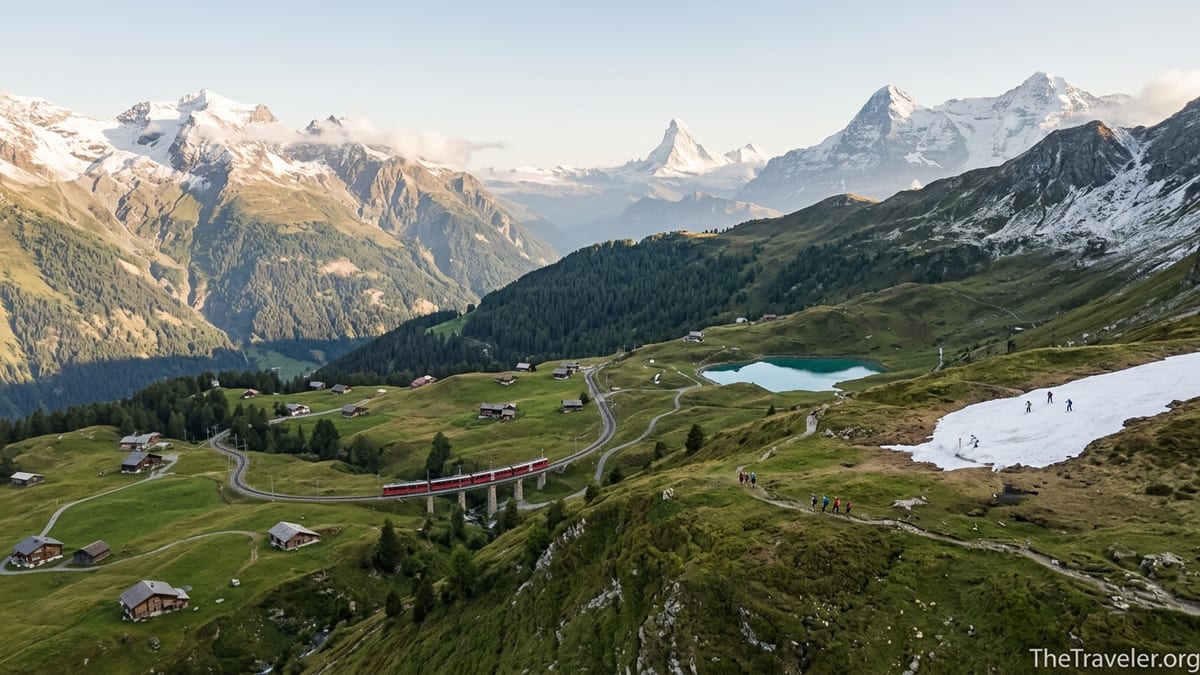
Understanding the Main Alpine Regions
For a first trip, most visitors focus on a handful of regions that combine spectacular scenery with strong transport links. Zermatt sits at the end of the Matter Valley in the canton of Valais, car free and dominated by the pyramid of the Matterhorn. The Jungfrau Region centers on the villages of Grindelwald, Wengen, Lauterbrunnen and Mürren in the Bernese Oberland. Further east, the Engadin valley holds St. Moritz and a string of quieter villages such as Sils, Pontresina and Celerina. Davos offers high altitude skiing and hiking plus conference style infrastructure, while Verbier and Andermatt are key bases for serious skiers.
These regions are linked not only by the national rail network but also by famous scenic lines. The narrow gauge Matterhorn Gotthard Bahn connects Brig with Zermatt and Andermatt, and continues across to Disentis, where it meets the Rhaetian Railway. Together they host the Glacier Express, which links Zermatt with St. Moritz via Andermatt and the Engadin. In practice, this means a traveler can arrive in Zurich or Geneva, ride standard intercity trains to a valley hub such as Visp or Interlaken, then change to mountain railways that climb directly into the heart of the Alps.
Each area has a distinct personality. Zermatt and St. Moritz lean upscale with designer boutiques and fine dining. The Jungfrau Region balances resort comforts with a more traditional feel, especially in traffic free Wengen and cliff edge Mürren. Verbier blends a youthful, international ski crowd with classic chalets and lively après ski. Andermatt, once a sleepy garrison town, is rapidly evolving with new hotels and a modern ski area while still feeling less polished than the big name resorts.
When planning, it often makes sense to choose one or two bases rather than trying to see everything. A week split between Zermatt and the Jungfrau Region, or between St. Moritz and Andermatt linked by the Glacier Express, gives a first time visitor a strong sense of the Alps without constant packing and unpacking.
Zermatt and the Matterhorn
Zermatt is car free, so visitors arrive by train, usually changing in Visp or Brig onto the Matterhorn Gotthard Bahn for the final climb up the valley. The village itself is compact enough to cross on foot in 15 to 20 minutes, with electric taxis and hotel shuttles for luggage. The draw is the almost constant view of the Matterhorn and easy access to high altitude viewpoints such as Gornergrat and Matterhorn Glacier Paradise.
Mountain transport is a major budget item here. As of mid 2026, common excursions such as the Gornergrat rack railway or the cable car system to Matterhorn Glacier Paradise often cost roughly in the CHF 96 to CHF 130 range for a return trip per adult, depending on season and discounts. Travelers with a Swiss Travel Pass or regional pass usually receive reductions, but it is still wise to plan which viewpoints matter most. A common approach for first timers is to devote one clear morning to Gornergrat, which offers classic Matterhorn views and an easy walk along the ridge, and another to the glacier side for ice caves and year round snow.
Food prices in Zermatt reflect its popularity. A simple burger meal at a fast food outlet can be around CHF 16, while a plate of pasta or rösti at a mid range restaurant in the village will often land between CHF 25 and CHF 35 before drinks. Many visitors manage costs by using the Coop or Migros supermarkets near the station, where takeaway sandwiches may run CHF 6 to CHF 9 and hot self service meals closer to CHF 12 to CHF 18. Self catering apartments, which are common in the side streets above the main drag, pair well with this strategy.
For hikers, summer and early autumn bring a network of well marked trails such as the Five Lakes Walk, which offers classic reflections of the Matterhorn on calm days. Lift accessible routes allow beginners to start high and walk mostly downhill back to the village. In winter, Zermatt’s ski area links with Cervinia in Italy when conditions permit, with high altitude slopes that hold snow into late April. First time skiers often start on the gentler Sunnegga and Blauherd slopes before venturing toward the glacier.
Jungfrau Region: Grindelwald, Wengen and Mürren
The Jungfrau Region, a few hours from Zurich or Geneva via Interlaken, feels like a natural amphitheater of rock and ice. Grindelwald sits beneath the north face of the Eiger, while Wengen perches on a sunny terrace above Lauterbrunnen’s waterfall lined valley. Across the chasm, Mürren clings to a cliff edge with direct access to the Schilthorn.
Rail and cable ways define the experience here. Trains and gondolas link Interlaken, Grindelwald and Wengen with Kleine Scheidegg and onward to Jungfraujoch, branded as the Top of Europe. As of the 2026 season, a return trip from Interlaken or Grindelwald to Jungfraujoch can cost in the region of CHF 200 per adult at full fare in high season, with holders of a Swiss Travel Pass or Berner Oberland Pass paying a reduced amount. Between May and October there is a compulsory seat reservation supplement on the final section of the journey, which first timers should factor into both timing and cost.
Because so much of the attraction lies in the journey, many visitors invest in a regional pass that covers most lifts and trains for several days. A Jungfrau Region ski pass in winter might cost a few hundred francs for six days, which looks steep on paper but quickly pays off if you ride multiple gondolas and trains each day. In summer, the Jungfrau Travel Pass or Berner Oberland Pass can be good value for those planning several mountain excursions such as Schynige Platte, First, Harder Kulm and Mürren.
Typical costs mirror Zermatt, though there is slightly more variation. In Grindelwald or Wengen, a mid range main course often falls in the CHF 25 to CHF 35 band, with hotel half board menus priced more favorably per course. Travelers on tighter budgets often book a guesthouse or apartment in Lauterbrunnen, where there are campgrounds and basic pensions, then ride up to the car free villages each day. For hiking, classic routes include the ridge walk from Mannlichen to Kleine Scheidegg, the Eiger Trail beneath the north face, and lake hikes above Grindelwald First. In winter, the region is popular for intermediate skiing and scenic sledging runs such as the long descent from Faulhorn to Grindelwald.
Engadin, St. Moritz and Davos
The Engadin valley in southeast Switzerland has a distinct character, with wide open light, larch forests and traditional sgraffito decorated houses. St. Moritz is its most famous resort, reached by train from Chur or via the Glacier Express from Zermatt and Andermatt. Surrounding it are smaller Engadin villages such as Sils, Pontresina and Zuoz, which can feel more relaxed while sharing the same ski and hiking infrastructure.
St. Moritz’s winter ski areas are spread across Corviglia above the town, Corvatsch across the lake and Diavolezza further down the valley. Together they offer over 150 kilometers of pistes with varied difficulty. In practice, a first timer might spend a day on Corviglia’s sunny slopes, another exploring the longer red runs of Corvatsch, and a third taking the cable car up Diavolezza for high alpine views and a glacier run when conditions allow. A multi day lift pass for the Upper Engadin is priced in line with other top Swiss resorts, often reaching several hundred francs for a week, but it unlocks a wide variety of terrain.
Summer brings a network of lakeside walks, high level hikes such as the Panorama Trail above Muottas Muragl, and easy family friendly circuits around Lake St. Moritz or Lake Sils. The Engadin also sits on key rail routes. The Glacier Express passes through Samedan and St. Moritz, while the Bernina Express heads south from nearby Pontresina toward Poschiavo and Tirano over the Bernina Pass, giving first time visitors options for dramatic day trips without a car.
Davos, reached by train from Landquart, has a slightly different atmosphere, shaped by its role as a conference venue and high mountain sanatorium town. The ski areas of Jakobshorn, Parsenn and Madrisa link Davos with the neighboring resort of Klosters. Accommodation here ranges from business style hotels convenient for the station to traditional chalets in side valleys. In summer, Davos is known for mountain biking and longer high level hikes, while winter draws skiers who value altitude and extensive piste mileage.
Verbier and Andermatt for Ski Focused Trips
Verbier, part of the 4 Vallées ski area in Valais, is a strong choice for confident skiers on a first Swiss Alps trip. The village sits on a sunny plateau above the Rhône valley and connects by lift and piste to Nendaz, Veysonnaz and Thyon to form more than 400 kilometers of runs. Lift passes here fall into two main categories: a Verbier only ticket and a full 4 Vallées ticket. In the 2025 to 2026 season the price of a one day adult pass varies depending on factors such as date and demand, but it is reasonable to budget around CHF 70 to CHF 90 for a mid winter day in the core Verbier area, with the full 4 Vallées pass priced above that.
For a first visit, many skiers choose the Verbier only option if they are intermediate and happy to stay on local slopes such as Savoleyres and La Chaux. More advanced riders, or those staying several days, often invest in the 4 Vallées pass to reach the highest point at Mont Fort and explore the full network. Epic Pass holders from North America should note that from the 2025 to 2026 winter season, their pass includes expanded access to Verbier 4 Vallées on a limited days basis, which can significantly reduce lift costs if used strategically.
Andermatt, in the canton of Uri, has evolved rapidly over the past decade. Its ski area is now branded Andermatt Sedrun Disentis and combines the formerly separate Gemsstock, Nätschen and Oberalp sections. The Matterhorn Gotthard Bahn plays a central role here, with hourly trains shuttling skiers between Andermatt and Sedrun in winter. The village is directly tied to the Andermatt railway station, which also acts as a stop on the Glacier Express between Zermatt and St. Moritz. This means a traveler could arrive on a panoramic train at midday, step off in Andermatt, and be riding the Gütsch Express gondola shortly after.
Accommodation and dining in both Verbier and Andermatt span from simple alpine inns to five star hotels. In Verbier, expect high season nightly rates for mid range hotels to start around CHF 250 to CHF 350 for a double room, rising over peak holiday weeks. In Andermatt, newer hotels near the base lifts command premium prices, but older pensions in the original village core remain more affordable. Dining follows a similar pattern: informal pizzerias and burger bars with mains around CHF 25 to CHF 30 coexist with gourmet restaurants where tasting menus reach into the low hundreds per person.
Mountain Railways, Passes and Typical Costs
Mountain railways and cable cars are central to a Swiss Alps itinerary and a major part of the budget. For a first time visitor planning several classic excursions in a week, it can be helpful to think in broad ranges. Scenic mountain return trips such as Zermatt to Gornergrat, Interlaken to Harder Kulm, or St. Moritz to Muottas Muragl often sit in the CHF 30 to CHF 120 band per adult depending on distance and elevation gain. Top tier journeys such as Jungfraujoch or Matterhorn Glacier Paradise can rise higher, sometimes close to or exceeding CHF 200 at full fare in high season.
National rail fares between major cities and mountain gateways are more moderate. A standard second class ticket from Zurich to Zermatt, with a change in Visp, typically falls near CHF 80 to CHF 100 one way at full price, with savings possible via advance purchase or discount cards such as the Half Fare Card. Many international visitors choose a Swiss Travel Pass that covers nearly all trains, buses and boats and gives discounts on mountain transport. For example, a pass valid for eight consecutive days costs several hundred francs but can be good value if you move between regions and ride multiple scenic lines.
Daily costs on the ground depend heavily on personal style. As of 2026, a realistic budget for a mid range traveler in the Swiss Alps might be roughly CHF 180 to CHF 250 per person per day excluding long haul flights, assuming a shared hotel room around CHF 120 to CHF 180 per person, meals around CHF 50 to CHF 70 and one paid mountain excursion. Budget conscious travelers who self cater, rely on supermarket food and choose simpler guesthouses or dorm beds can often reduce this to CHF 100 to CHF 150 per day. At the other end, those booking four or five star hotels and frequent fine dining can easily exceed CHF 400 per day.
Small savings add up. Free tap water is safe to drink throughout Switzerland, so refilling bottles instead of buying bottled water avoids several francs a day. Lunch at a mountain self service restaurant may cost CHF 20 to CHF 30 for a plate of pasta and a drink, while a picnic assembled from a bakery and supermarket can come in under CHF 15. Many visitors also schedule their priciest excursions for days with clear forecasts to avoid paying high fares for views hidden in cloud.
Weather, When to Go and First Time Planning
Weather in the Swiss Alps varies with altitude and season, but there are broad patterns that help with planning. Winter sports season in most major resorts runs roughly from early December to mid April, with higher areas such as Zermatt and parts of the 4 Vallées sometimes operating later. January and February bring the coldest temperatures and often reliable snow, but also higher prices around New Year and school holidays. March and early April often offer longer days and milder afternoons, with good skiing on higher slopes and pleasant terrace lunches.
For hikers, the core season usually runs from late June through September. Lower valley trails around Interlaken, Lauterbrunnen and the Engadin lakes can be walkable earlier, in May or early June, but high routes such as panoramic ridge paths and passes above 2,000 meters may hold snow well into early summer. September often combines stable weather, fewer crowds and autumn colors, especially in larch forests around St. Moritz and Zermatt. Shoulder seasons, roughly late April to early June and October to early December, can be quieter and cheaper but require flexibility as some lifts stop for maintenance and weather can swing quickly between sun and snow.
First time planners sometimes underestimate travel times between regions. On a map, Zermatt and the Jungfrau Region look close, but by train the journey from Zermatt to Interlaken typically takes about three hours with changes, not counting connections out to villages such as Wengen or Mürren. A loop that includes Zermatt, the Jungfrau Region and St. Moritz in one week is technically possible but will involve several long rail days. Many travelers find that focusing on two bases for a 7 to 10 day trip strikes a comfortable balance between variety and rest.
When building an itinerary, it is wise to include buffer days for weather dependent highlights. For example, if visiting the Jungfrau Region with the goal of seeing Jungfraujoch, plan three nights so that you have at least two full days to choose from. Likewise, in Zermatt, schedule key viewpoints such as Gornergrat or Glacier Paradise early in your stay so that you can adjust if clouds roll in. Most lift companies allow some flexibility with dated tickets, but reading conditions and being ready to swap days around is often the most practical strategy.
Accommodation Types and Booking Tips
The main Swiss Alpine resorts share a similar mix of accommodation types: full service hotels, simpler garni hotels that focus on bed and breakfast, self catering apartments and chalets, and a scattering of hostels and campgrounds. In Zermatt and St. Moritz, four and five star hotels with spas and half board dining dominate the central streets, while side lanes and neighboring hamlets hold more modest three star and family run properties. In the Jungfrau Region, Wengen and Mürren offer classic Belle Époque hotels alongside basic pensions, while Grindelwald and Lauterbrunnen have a wider range including hostels and apartments.
For a first time visitor, the choice often comes down to how much independence and cooking you want. A hotel with breakfast included simplifies mornings and is widely available in all the key regions. Half board, where dinner is included each evening, can offer good value in otherwise expensive food destinations, especially in winter when you may appreciate returning to a familiar dining room after a day on the slopes. Self catering apartments suit families or longer stays, letting you shop at Coop or Migros and cook simple meals to control costs.
Booking early matters during peak periods such as Christmas, New Year, February school holidays and high summer in July and August. In Zermatt, Wengen and Verbier, mid range hotels can easily sell out months in advance for these windows. Prices fluctuate, but as a broad guide, a clean three star double room in high season in a prime resort might start around CHF 220 to CHF 280 per night, with out of season deals sometimes under CHF 180. In smaller Engadin or Bernese Oberland villages slightly away from the main resort, similar comfort can often be found for less.
Location within each resort has practical impact. In car free Zermatt and Wengen, staying closer to the station or main lift saves both time and effort when walking with luggage or ski gear. In Verbier and St. Moritz, properties further up the hill or away from the main lifts may offer better views and lower rates but require reliance on shuttle buses. First timers who plan to use early lifts or attend ski school sessions often find it worthwhile to pay a little more for near slope accommodation.
FAQ
Q1. How many days do I need for a first trip to the Swiss Alps?
For a meaningful first visit, plan at least 5 to 7 days, ideally with one or two bases. For example, three nights in the Jungfrau Region and three in Zermatt or St. Moritz allows time for at least one major mountain excursion and one hiking or skiing day in each area without rushing.
Q2. Is it better to visit in summer or winter?
It depends on your priorities. Come in winter, roughly December to early April, if you want skiing, snowboarding and snowy villages. Choose summer from late June to September for hiking, lake walks and green alpine meadows. Shoulder months like May or October can be quieter and cheaper but bring more changeable weather and some lift closures.
Q3. Do I need a car to explore the Swiss Alps?
No. The Swiss Alps are exceptionally well served by trains, buses, mountain railways and cable cars. Resorts like Zermatt and Wengen are car free and only accessible by train. For a first time visitor, relying on public transport is usually easier and more relaxing than driving mountain roads and dealing with parking.
Q4. How expensive is food in the main resorts?
Expect higher prices than in many other European mountain areas. A casual restaurant main can often cost CHF 25 to CHF 35, and a basic fast food meal around CHF 15 to CHF 20. You can keep costs down by using supermarkets for picnics or self catering, where prepared meals may be in the CHF 10 to CHF 18 range.
Q5. Which region is best for first time skiers?
Gentler learning slopes and strong ski schools can be found in many resorts. The Jungfrau Region, particularly around Grindelwald and Wengen, offers wide intermediate pistes with spectacular views. Zermatt has good beginner areas at Sunnegga, while St. Moritz’s Corviglia sector and Andermatt’s Nätschen area also suit newcomers. Choosing a resort with easy access from your accommodation to the beginner lifts is more important than absolute vertical drop.
Q6. Are mountain railway tickets like Jungfraujoch or Gornergrat worth the cost?
For many first time visitors, yes, provided the weather is clear. These journeys are expensive compared with regular train rides, but they combine dramatic engineering, glacier scenery and high altitude viewpoints that are hard to match elsewhere. To maximize value, check the forecast and be flexible, aiming for a day with good visibility.
Q7. Should I buy a Swiss Travel Pass or separate tickets?
It depends on how much you plan to move around. A Swiss Travel Pass can be good value if you are visiting multiple regions by train and taking several boats and museums. If you will base yourself mainly in one area, a regional pass such as a Jungfrau, Engadin or Valais pass plus separate long distance tickets may work out cheaper. It is worth pricing a rough itinerary with both options before you buy.
Q8. What should I pack for changing mountain weather?
Even in summer, conditions can shift quickly. Pack layers: a moisture wicking base, a warm mid layer such as a fleece, and a waterproof shell. Add a warm hat, gloves, sunglasses, sunscreen and sturdy footwear. In winter, prioritize waterproof ski clothing, insulated gloves and good socks, and remember that temperatures can be much colder at 3,000 meters than in the valley.
Q9. Can I visit both Zermatt and the Jungfrau Region in one trip?
Yes, many travelers do, especially on trips of 7 to 10 days. The train journey between the two areas, usually via Visp and Interlaken, takes around three hours or more depending on connections. A typical plan is three nights in one region and four in the other, giving time for at least one major excursion and one flexible day in each.
Q10. How far in advance should I book hotels and key train journeys?
For peak periods such as Christmas, New Year, February school holidays and late July to mid August, aim to book accommodation and any special panoramic trains several months in advance. For shoulder seasons and midweek stays, booking one to two months out usually offers enough choice. Standard intercity trains within Switzerland rarely require reservations, but some mountain journeys and scenic services like the Glacier Express do, so always check when planning.