

A hiking trip to the Swiss Alps can feel overwhelming to plan. Do you base yourself in the Jungfrau Region, Zermatt or Engadin St Moritz? Which mountain passes and lift tickets make sense, and how do luggage transfers actually work between villages and hotels? This guide breaks down the practical choices for a one to two week Swiss hiking vacation, with concrete examples of bases, trails, lifts, hotels and services so you can match the right region to your time, budget and hiking style.
How to Choose Your Base in the Swiss Alps
For a summer hiking vacation, most travelers are choosing between three heavyweight regions: the Jungfrau Region in the Bernese Oberland, car-free Zermatt beneath the Matterhorn, and Engadin St Moritz in the canton of Graubünden. All three offer extensive trail networks, dense webs of lifts and mountain railways, and easy rail access from Zurich and Geneva. The key differences are scenery, crowd levels, typical prices and how spread out each valley feels day to day.
The Jungfrau Region works well for first-time visitors who want classic Alpine villages, green pastures and huge cliff walls. Most hikers base in car-free Wengen, more rustic Mürren or valley hub Grindelwald, each with direct access to lifts and the Jungfrau Railway via Kleine Scheidegg. Zermatt feels more dramatic and vertical, with glacier views from almost any trail and a compact village that gives fast access to high-altitude day hikes. Engadin St Moritz is broader and more open, with long lake valleys, larch forests and quieter paths; bases like St Moritz, Pontresina, Sils Maria and Silvaplana suit travelers who prefer space, sunshine and a slightly less touristy feel.
Choosing a base also involves thinking about logistics between valleys. If you plan to rely on public transport and travel with several bags, it often makes sense to pick one or two bases for a week and use mountain railways and buses for day trips, rather than moving every night. Switzerland’s national luggage transfer services can move suitcases from hotel to hotel, but these usually arrive one or two days later, which pushes you toward longer stays or thoughtful staging of your itinerary.
As a rough rule, budget-conscious travelers and families often gravitate to the Jungfrau Region’s spread of guesthouses and apartments, while Zermatt tends to sit at the higher end for hotels and restaurants. Engadin offers a wide spectrum, from historic grand hotels in St Moritz to modest pensions in Pontresina or Sils. If you plan six to eight days of hiking, spending three or four nights in two different regions gives you variety without constant unpacking.
Jungfrau Region: Wengen, Mürren & Grindelwald
The Jungfrau Region is built around the three iconic peaks of Eiger, Mönch and Jungfrau, with villages strung along the Lauterbrunnen and Grindelwald valleys. Rail hubs at Interlaken Ost and Lauterbrunnen connect you to cog railways that climb to car-free Wengen and mountain passes like Kleine Scheidegg, a classic starting point for high-level hikes and the Jungfrau Railway to Jungfraujoch at 3,454 meters. In summer, hikers mix with day-trippers heading for the “Top of Europe” viewing platforms.
Wengen and Mürren both sit on terraces high above sheer cliffs, which means inspiring views and quick access to trails. From Wengen, a typical moderate day might follow the Panoramaweg from Männlichen to Kleine Scheidegg, reached by gondola from the village, with constant views of the Eiger north face. From Mürren, a popular route links the Allmendhubel funicular to the Northface Trail, looping across meadows with views into the Lauterbrunnen valley. Grindelwald, set at the end of its own valley, offers quick gondola access to First and Pfingstegg and tends to have a wider choice of supermarkets, hostels and mid‑range hotels.
Lift passes matter in this region. Many hikers buy regional products such as the Jungfrau Travel Pass or the broader Berner Oberland Pass, which can cover trains, buses and key mountain railways for several consecutive days rather than paying each gondola separately. A return ticket from Grindelwald to Jungfraujoch via Kleine Scheidegg often runs into the high double or low triple digits in Swiss francs per adult, so a pass can quickly pay for itself if you are riding multiple lifts on three or more days. Trails vary from easy balcony walks such as Grütschalp to Mürren, to strenuous ascents above Schynige Platte or over the Kleine Scheidegg pass toward Wengen.
For luggage transfers in the Jungfrau, many visitors use station-to-station services. You can check bags at a staffed station such as Zurich Airport or Bern and have them forwarded to Lauterbrunnen, Wengen or Interlaken, where you collect them the next day. For added convenience, the “luggage door to door” services offered through Swiss rail operators can pick up bags from a hotel or apartment in areas like Wengen, Grindelwald or Wilderswil and deliver them directly to your next address in another participating village two days later, with an express same-day option on selected routes. This lets you hike with a daypack between bases while your suitcases travel separately.
Zermatt: Matterhorn Views, High Trails & Peak Passes
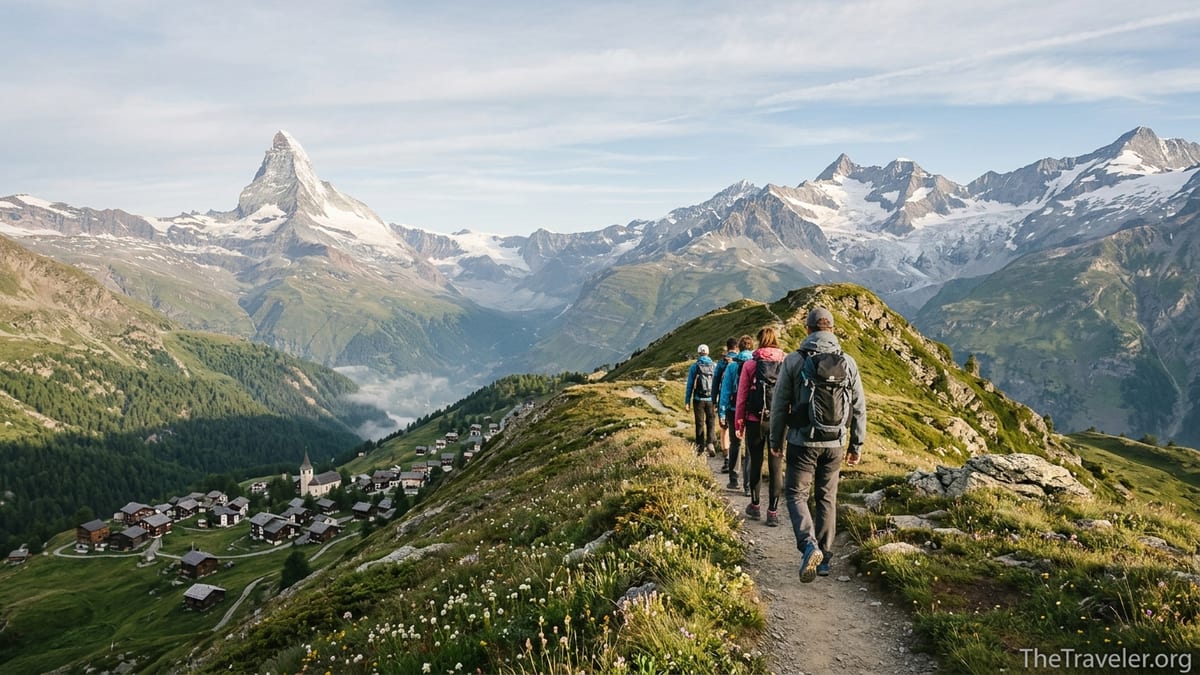
Zermatt sits at the head of the Mattertal valley, reached by the Matterhorn Gotthard Bahn from Visp or Brig. The village is car-free, with electric taxis and hotel shuttles meeting trains at the station. Almost every street frames a view of the Matterhorn, and the entire area is built around hiking, mountaineering and glacier excursions in summer. Three main lift systems fan out of the village toward Rothorn, Gornergrat and Matterhorn Glacier Paradise.
Hikers typically use gondolas and rack railways to climb quickly to 2,500 to 3,000 meters, then follow panoramic trails between mountain stations. Classic moderate outings include the Five Lakes Walk above Blauherd, where you ride the funicular and gondola from Zermatt, then hike past mountain lakes that reflect the Matterhorn when conditions are calm. Another favorite combines the Gornergrat cog railway with a descent on foot, weaving among viewpoints of the Gorner Glacier and 4,000‑meter peaks like Dufourspitze and Liskamm. Strong hikers can link lifts and paths to walk from Schwarzsee below the Matterhorn down through alpine pasture to the village.
Most visitors reduce costs and simplify planning with a regional lift pass. Zermatt’s Peak Pass, for example, is a multi-day ticket that allows unrestricted use, as timetabled, of major cableways such as Zermatt to Matterhorn Glacier Paradise, Zermatt to Rothorn and Zermatt to Gornergrat, together with the shuttle trains between Randa, Täsch and Zermatt and the local village bus. This kind of pass encourages flexible hiking, since you can choose any open cable car each morning based on the weather instead of worrying about individual ticket prices.
Luggage logistics in Zermatt are straightforward for most trips. If you arrive by train, you can either wheel your bags a short distance to central hotels or use the small electric hotel shuttles that wait outside the station. For one-way trips involving the Matterhorn Alpine Crossing between Zermatt and Cervinia, operators now advertise dedicated luggage transport between the two resorts so you can cross the border by cable car while your suitcases are transferred for you. National luggage services also list Zermatt as a destination for door-to-door and station-to-station transfers, which is helpful if you are hiking sections of long-distance routes like the Walker’s Haute Route and do not want to carry a full suitcase over multiple passes.
Engadin St Moritz: Lakes, Light and Quieter Paths
Engadin St Moritz stretches along a broad high valley in southeastern Switzerland, known for its dry, sunny climate, string of lakes and long-distance hiking options. The main arrival point is St Moritz, served by the Rhaetian Railway via Chur and the Albula line or via Tirano over the Bernina Pass. The area feels more open than the steep-walled valleys around Lauterbrunnen or Zermatt, with larch forests, riverside paths and extensive networks of mountain trails above villages like Pontresina, Sils Maria and Silvaplana.
For hikers, Engadin has a slightly more local, less resort-like atmosphere once you step away from central St Moritz. A common moderate day starts in Pontresina, taking the bus or trail into the Roseg Valley, then hiking up to the edge of the glacier and its surrounding peaks before returning to a riverside terrace for a late lunch. Around Sils Maria and Silvaplana, you can combine gentle shoreline walks along Lake Sils with steeper ascents by gondola to viewpoints like Corvatsch, then descend on foot through alpine meadows back to the lake. Families often enjoy the well-signed themed paths and forest playgrounds near Corviglia above St Moritz.
Lifts and passes are organized through Engadin St Moritz mountain railways. In summer, the region offers hiking tickets that cover multiple funiculars, cable cars and chairlifts for two to seven consecutive days across the Upper Engadin. Price lists show options ranging from short two-day hiking passes to season passes valid from May through October, which can make sense if you are staying for several weeks. Some hotels in Engadin participate in packages that include local mountain transport with your room, so it is worth asking directly when you compare rates.
Engadin is also fully integrated into Switzerland’s luggage network. Tourism boards highlight that you can “travel carefree without luggage,” using door-to-door services that pick up bags from your home or previous hotel and deliver them to accommodation in villages like St Moritz, Pontresina, Samedan, Silvaplana or Sils within two days, with express options on selected routes. Because Engadin has multiple distinct villages, a practical strategy is to spend three nights in St Moritz or Pontresina, then move to quieter Sils Maria or Silvaplana while your bags are forwarded, using bus and lake paths to link the bases along the way.
Lifts, Passes and Trail Difficulty
Switzerland’s mountain transport is one of its key advantages for hikers. Cable cars, chairlifts, funiculars and cog railways allow you to reach high viewpoints in 15 to 30 minutes rather than hiking for hours from the valley floor. This opens up big scenery to a wide range of fitness levels, but it also adds cost and forces choices about passes. Day return tickets for a single cable car can easily cost the equivalent of several restaurant meals, so most visitors look at regional passes if they plan more than two or three lift rides.
In the Jungfrau Region, passes such as the Jungfrau Travel Pass and Berner Oberland Pass cover many trains, boats and mountain lifts for three to eight consecutive days. Zermatt’s Peak Pass serves a similar role, bundling the main lift systems and shuttle trains, while Engadin’s hiking passes consolidate access to Corviglia, Corvatsch and Diavolezza among others. These products are updated each year, and details such as included lifts, validity dates and child discounts can change, so it is sensible to compare current terms before you buy. If your hiking plans focus mostly on one or two gondolas, individual tickets or half-fare discounts might still be cheaper.
Trail difficulty in all three regions ranges from stroller-friendly lakeside promenades to rugged, sometimes exposed high routes. Most official signposts use a color and grading system: yellow for easy hiking paths on clear trails, red-and-white for mountain hiking that demands surer footing and appropriate footwear, and blue-and-white for Alpine routes that may cross snowfields or require hands-on sections. First-time visitors often underestimate how tiring high-altitude walking can feel, especially when trails start above 2,000 meters after a cable car ride.
Concrete examples help set expectations. The Männlichen to Kleine Scheidegg path above Wengen is officially an easy walk, with mostly gentle gradients and broad gravel sections. In contrast, the Eiger Trail beneath the Eiger north face, although accessible by train, involves narrower paths, rocky sections and some scree. In Zermatt, the Five Lakes Walk counts as a moderately easy circuit, while routes like the Hörnli Hut approach demand good fitness and surefootedness. In Engadin, the gentle riverside path from Sils Maria to Maloja contrasts with steeper mountain hikes above Diavolezza or Piz Nair.
Luggage Transfers, Station Services and One-Way Hikes
One reason Switzerland works so well for hiking vacations is its national luggage-transfer infrastructure. Swiss rail operators run several options that let you travel by train without hauling large suitcases through every connection. With classic station-to-station service, you hand your bags to staff at a participating station in the morning, such as Zurich Airport, Lucerne or Interlaken, and collect them at another staffed station like Wengen, Zermatt or St Moritz the following day. This is useful when you move bases by rail and are happy to keep an overnight bag with you.
Door-to-door luggage services take this further. Couriers collect your labeled bags from your hotel or apartment in many regions, including popular resort areas such as Zermatt, Wengen, St Moritz, Pontresina and Sils, and deliver them to your next address, often two days later. An express version exists on selected routes, where pickup and delivery can happen on the same day, provided you book by a set cut-off time, typically around midday the day before. There are also “luggage special” flat-rate offers tied to participating hotels in certain holiday regions, which bundle in luggage collection and delivery as part of a package.
For hut-to-hut or one-way valley hikes, these services combine well with local storage. Many hotels in Jungfrau, Zermatt and Engadin will store a suitcase for several days while you hike with a lighter pack, then you return to the same base. Alternatively, you can send your main bags ahead by train luggage service to your end point, such as Zermatt station or St Moritz, while you walk a section of a longer route like the Via Alpina or a multi-day Engadin lake trek. Travelers on cross-border routes that include the Matterhorn Alpine Crossing between Zermatt and Italy can rely on dedicated luggage services that move bags between the two resorts while they travel by cable car.
It is worth noting a few practical caveats. Luggage services are tied to valid public‑transport tickets or passes for the relevant route, and they operate to specific timetables and cut-off times. You must label bags clearly and keep valuables such as passports, electronics and medication in your daypack rather than inside forwarded luggage. Some remote side valleys and small hamlets not directly on the rail or bus network are excluded, in which case you can either use station‑to‑station service or ask your accommodation about local taxi or transfer partners that can bridge the last few kilometers.
Suggested Trip Lengths and Sample Strategies
The ideal length for a Swiss Alps hiking vacation is often between seven and twelve days, plus travel days. This gives you time in at least two different regions, with a buffer for bad weather, without feeling rushed. For a one-week trip focused on variety, a classic pattern is three nights in the Jungfrau Region and four in Zermatt, or vice versa. You might fly into Zurich, travel by train to Wengen or Mürren for balcony trails and views of the Eiger, then use station luggage services to forward bags to Zermatt while you ride the scenic rail lines via Bern and Visp.
For a ten to twelve day trip, including Engadin opens up more variety. A sample route could start with four nights in Wengen for Jungfrau hikes, then move to Zermatt for three nights of glacier views and Matterhorn walks, and end with four nights in Pontresina or Sils Maria. You could send your large bags from Wengen to Zermatt using door-to-door service, hike with a daypack between valley stations, then repeat the process from Zermatt to St Moritz. This kind of triangle trip allows you to compare three distinct landscapes and cultures within one vacation.
Families with younger children or travelers sensitive to altitude often prefer longer stays in fewer places, such as a full week in the Jungfrau Region or Engadin. Here you can rent an apartment in Grindelwald or Sils Maria, buy a regional lift or hiking pass, and treat each day as a separate outing. On days of poor weather, you can rely on lower valley walks, indoor pools and short train excursions instead of forcing a cable car trip into the clouds. Travelers interested in long-distance hiking, such as continuous sections of the Via Alpina or multi-day lake-to-lake hikes in Engadin, can integrate luggage forwarding and occasional hotel nights into what is otherwise a hut-based trek.
Whatever length you choose, building in one or two deliberately light days can help with acclimatization. After a long-haul flight, scheduling a gentle lakeside walk in Interlaken, Zermatt or St Moritz, combined with an early night, often makes subsequent high-altitude days safer and more enjoyable. Likewise, if you plan a bucket-list trip to Jungfraujoch or Matterhorn Glacier Paradise, try to leave flexibility in your schedule so you can select the clearest morning of your stay rather than locking into a single non-refundable day too far in advance.
The Takeaway
Planning a Swiss Alps hiking vacation is about matching the character of each region to your style. The Jungfrau Region gives you classic green valleys, waterfalls and cliffside villages, with efficient links between Wengen, Mürren, Lauterbrunnen and Grindelwald. Zermatt adds sharper, higher peaks, glacier views and a compact car-free village dominated by the Matterhorn, where a Peak Pass and a good pair of trekking poles can unlock a week of high‑level walks. Engadin St Moritz offers wide lake valleys, larch forests and quieter trails, where hiking passes and hotel packages can soften the cost of repeated lift rides.
Across all three regions, the combination of dense public transport, reliable luggage-transfer services and well-signed trail networks means you can travel reasonably light, rely on trains and mountain lifts, and still reach dramatic landscapes without technical mountaineering skills. Choosing two bases for a week, or three for a longer trip, and using regional passes for mountain transport will usually keep both costs and logistics predictable. With thoughtful planning around passes, luggage and altitude, a first-time visitor can turn a wish-list of famous Swiss mountains into a practical, enjoyable hiking itinerary.
FAQ
Q1. How many days do I need for a Swiss Alps hiking vacation?
Most travelers find seven to ten days works well, giving time for at least two bases such as Jungfrau and Zermatt, plus one or two bad-weather days.
Q2. Which region is best for first-time visitors: Jungfrau, Zermatt or Engadin?
The Jungfrau Region suits many first-timers thanks to classic scenery, multiple villages and varied trails, while Zermatt is ideal if Matterhorn views are your top priority.
Q3. Do I need a lift pass, or can I just buy single tickets?
If you will ride several cable cars and mountain railways over three or more days, a regional pass like the Jungfrau Travel Pass, Peak Pass or Engadin hiking pass usually offers better value than separate tickets.
Q4. How difficult are typical day hikes in these regions?
You can choose from easy lakeside or balcony walks on wide paths to more strenuous routes with steep, rocky sections; official signposts mark most family-friendly routes as easy hiking paths.
Q5. How do Swiss luggage-transfer services work for hikers?
You hand over labeled bags at a station or have them collected from your hotel, then they are forwarded to your next station or address, usually arriving the following or second day.
Q6. Can I travel between bases like Wengen, Zermatt and St Moritz without renting a car?
Yes, all three regions are linked by frequent trains and buses, so most hikers rely entirely on public transport backed by luggage-transfer or simple rolling suitcases between platforms.
Q7. Is Zermatt much more expensive than the Jungfrau Region or Engadin?
Accommodation and restaurant prices in Zermatt often run higher than in many Jungfrau or Engadin villages, but you can still find simpler guesthouses and self-catering apartments if you book early.
Q8. When is the best time to plan a hiking trip to these Swiss regions?
Trails and lifts typically run from late June to late September, with July and August best for high routes and September offering fewer crowds and often very clear air.
Q9. Do I need special equipment for Swiss Alpine day hikes?
For marked hiking trails, sturdy footwear, weatherproof layers, sun protection, water and basic first aid are usually enough, though trekking poles help with long descents and rough paths.
Q10. Is it realistic to visit Jungfraujoch or Matterhorn Glacier Paradise on a hiking trip?
Yes, many hikers combine one high-altitude excursion by train or cable car with several regular hikes, but it is wise to schedule these on flexible days so you can target the best weather.