


Choosing the right Swiss ski resort is less about chasing the biggest mountain and more about matching a destination to how you actually want to ski, spend and sleep. Zermatt, St. Moritz, Verbier, Davos-Klosters and Grindelwald-Wengen all offer world-class snow and scenery, yet feel very different once you factor in beginner areas, family logistics, nightlife, hotel style, lift access and overall trip cost. This guide compares the major Swiss Alps resorts in concrete, real-world terms so you can decide where your budget and ski style fit best.
Understanding the Big Swiss Ski Players
For most international visitors planning a week in the Swiss Alps, the realistic short list looks similar: Zermatt, St. Moritz, Verbier (and the wider 4 Vallées), Davos-Klosters and the Jungfrau region anchored by Grindelwald-Wengen. All offer high-altitude snow, extensive lift systems and strong infrastructure, but they sit at different points on the spectrum from glamorous to down-to-earth, and from beginner-friendly to expert playground.
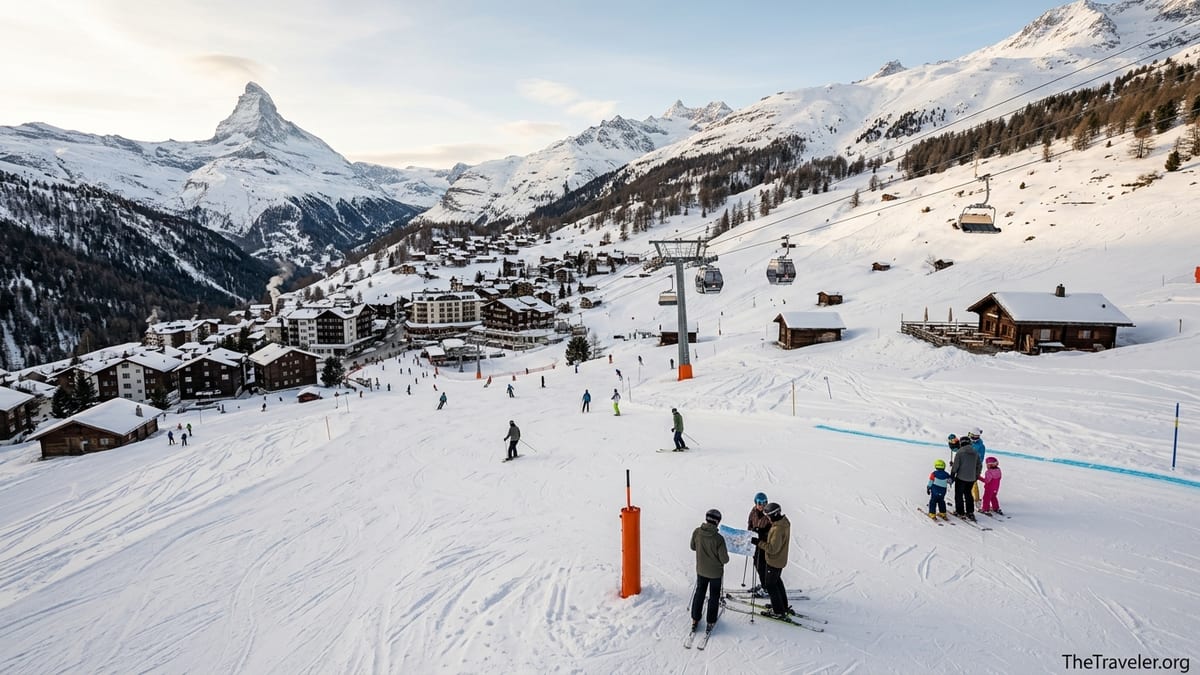
Zermatt spreads across roughly 200 km of pistes on the Swiss side alone, rising to almost 3,900 m at the Matterhorn Glacier Paradise. It connects with Cervinia in Italy, creating an international domain that advanced skiers can roam all day without repeating many runs. St. Moritz is part of the Engadin valley network, with Corviglia, Corvatsch and Diavolezza-Lagalb offering varied terrain, but it is the lakeside setting, five-star hotels and designer boutiques that define the experience as much as the skiing.
Verbier sits at the heart of the 4 Vallées, one of Switzerland’s largest linked ski areas, with a claimed 400 km of pistes. The resort has a compact, chalet-style village but big-mountain ambitions, attracting freeriders and strong intermediates who want steep itineraries off the Mont Gelé and Tortin sectors. Davos-Klosters is a spread-out destination of several distinct mountains, from carving-friendly Parsenn to freestyle-focused Jakobshorn and family-oriented Madrisa, with a more low-key, sporty atmosphere than the classic luxury resorts.
Grindelwald-Wengen belongs to the Jungfrau Ski Region, where the Eiger, Mönch and Jungfrau dominate the skyline. The ski area is smaller than Zermatt or Verbier but still big enough for a week at around 200 km of pistes when you include Mürren-Schilthorn. It stands out for those iconic train-accessed slopes under the Eiger North Face and for mid-range pricing compared to the country’s top-tier glamour spots.
Terrain & Skill Levels: Where Different Skiers Will Feel at Home
If you are a confident intermediate or expert, any of these resorts will deliver, but the flavor of the skiing varies enough to matter. Zermatt and Verbier are the clear choices for advanced skiers who want both vertical and variety. Zermatt’s long red runs from Gornergrat or Rothorn back toward the village can take 20 to 30 minutes to ski at a relaxed pace, while Verbier’s famous Tortin moguls and the itineraries off Mont Gelé appeal to strong legs and good technique.
For upper intermediates who want big-mountain views without being pushed onto scary steeps, St. Moritz Corviglia’s wide, sunny groomers and Davos Parsenn’s long red runs are ideal. Parsenn’s classic descent from Weissfluhjoch down to Küblis can be over 10 km depending on route, but most of it is a friendly red that allows you to relax and carve. Corviglia’s main slopes above St. Moritz Dorf are similarly confidence-boosting, with high-speed chairs and gondolas minimizing time in line.
Beginners and cautious skiers will notice big differences. Zermatt, despite its reputation, has dedicated learner zones such as Wolli Park above Sunnegga and a beginner ski pass that limits access to gentle lifts so total first-timers are not paying full Matterhorn rates for terrain they cannot yet use. Verbier offers a Jardin de Neige and mellow beginner slopes around Les Esserts in the village and at the top of the Médran lifts, but the main mountain becomes steep quickly, so progression needs a good instructor.
Grindelwald-Wengen and Davos-Klosters are often more forgiving for mixed-ability groups. In the Jungfrau region, long blue and easy red runs from Kleine Scheidegg toward Grindelwald or Wengen let cautious intermediates enjoy the scenery without constant exposure to cliffs or narrow traverses. Madrisa above Klosters and Rinerhorn near Davos have genuinely easy family pistes, and it is possible to spend a whole holiday there without stepping onto the more intimidating faces of Jakobshorn or the highest Parsenn sectors.
Beginners & Families: Where Learning to Ski Feels Easiest
For a family bringing kids or nervous adults onto snow for the first time, you are not just choosing a mountain, you are choosing how stressful or calm that first morning will feel. Zermatt has a clear two-step path: first days in Wolli Park at Sunnegga on magic carpets and very short lifts, then a move to gentle blue pistes like the Easy Run above Sunnegga. Many parents choose the cheaper beginner pass for two days, then upgrade to a regular Zermatt or Zermatt-Cervinia pass once everyone is happy stopping and turning.
Grindelwald-Wengen is often singled out as a practical family choice because of its combination of village-based learning zones and scenic but manageable blues. In Grindelwald, families can stay near the Grindelwald Terminal gondola hub, where fast lifts whisk you up to the Männlichen or Eiger Express sectors. From there, long, wide blue runs allow kids to ski with constant views of the Eiger without the terrain suddenly ramping up. Wengen itself is traffic-free, with small children able to walk from hotels to the village cable car without crossing busy roads, a detail that makes life easier with strollers and tired legs.
Davos-Klosters also scores strongly for progression. Madrisa above Klosters has a reputation as a proper family mountain, with play areas, toboggan runs and a mix of blue and easy red pistes. Many ski schools base younger kids there for the week. In Davos, Bolgen and Bünda near the village offer flat nursery slopes served by small lifts, so first-timers can walk to ski school from many central hotels and hostels. After a day or two, instructors often move groups up to Jakobshorn’s easier blues, which feel like a real mountain but still face-friendly gradients.
St. Moritz is more about polished service than budget-friendly learning, but that can be exactly what some families want. Private instructors meeting you at your five-star lobby, ski butlers storing gear and heated gondola seats up Corviglia reduce friction, at a price. For families who prioritize value and gentle progression over glamour, resorts like Arosa-Lenzerheide or Adelboden-Lenk can be easier on the wallet while still providing wide, forgiving pistes.
Après-Ski, Atmosphere & Non-Ski Activities
Verbier has arguably the liveliest classic Alpine après-ski scene of the big Swiss names. Late afternoons on the terrace at places like Le Rouge or the bar at the top of the Médran sector can feel almost like a festival when the sun is out, with DJs, champagne and ski boots dancing. Down in the village, a dense network of bars and nightclubs means you can easily be out past 2 a.m. several nights in a row, which may thrill younger groups and horrify early-rising families.
Davos offers a more low-key but still youthful vibe, with a strong student and local freerider crowd. Jakobshorn is the freestyle and party mountain, where music and terrain parks attract snowboarders and twin-tippers, while Parsenn and Gotschna feel more traditional. Because Davos is a real town rather than a purpose-built resort, evenings can include everything from casual pizzerias and sports bars to concerts at the local cultural center. This can be appealing for longer stays where you do not want every night to revolve around hotel lounges.
Zermatt’s après is atmospheric rather than wild. Mountain restaurants like those in the Furi and Findeln sectors specialize in long, late lunches with fondue or grilled meats on sun terraces facing the Matterhorn. Back in the village, there are piano bars, wine bars and a handful of livelier venues, but overall the tone is more about good food and conversation than all-night clubbing. Non-ski days can easily be filled with winter hiking, a ride up to Gornergrat for photography, or spa sessions in high-end hotels.
St. Moritz is in its own category: a social scene built around luxury shopping, art galleries, gourmet restaurants and high-profile events like polo on the frozen lake or bobsleigh runs on the historic Cresta Run. Visitors may ski only half the day and spend the rest between spa complexes and designer stores. Grindelwald and Wengen, by contrast, offer cosy, traditional evenings with hotel bars, a few local pubs and sledging by night. If your idea of après-ski is a quiet drink, a raclette dinner and early bed, the Jungfrau villages or smaller spots like Saas-Fee and Andermatt can be more relaxing than Verbier’s intensity.
Luxury Hotels, Lodges & Overall Trip Cost
On price, all of these destinations are expensive on a global scale, but there are meaningful differences when you compare real-world costs in peak season. Zermatt, St. Moritz and Verbier tend to sit at the top of the spectrum for both accommodation and daily mountain spending. A centrally located four-star hotel in Zermatt or St. Moritz in January or February commonly runs into the high hundreds of Swiss francs per night for a double room, and a casual lunch for two on the mountain with drinks can easily reach three figures.
Verbier has a wide spread of lodging, from simple apartments to ultra-luxury chalets with private chefs. Sharing a self-catered apartment in Verbier village can soften the blow for groups; for example, a mid-range two-bedroom unit booked early in low season might average a few hundred francs per night, split among four people. Davos-Klosters and Grindelwald-Wengen usually offer more mid-range options: three-star hotels, guesthouses and apartments that, booked ahead, can be significantly cheaper than equivalent quality in Zermatt or St. Moritz, especially outside New Year and February school holidays.
Lift passes are a major line item. Day rates vary based on season and how far ahead you book, but a typical adult day pass for a large Swiss area such as Zermatt, Verbier 4 Vallées or Davos-Klosters often falls somewhere roughly between 80 and 100 Swiss francs in high season if bought at the window, with early-booking and dynamic pricing offering potential discounts. Multi-day passes usually bring the per-day cost down, and many regions offer separate beginner passes that are significantly cheaper by limiting you to lower, easier lifts.
If you look for value within the Swiss Alps, Davos-Klosters and the Jungfrau region can be more cost-effective for a week-long stay, particularly when you factor in rail accessibility and mid-range hotel availability. Smaller but still high-quality areas such as Aletsch Arena, Engelberg-Titlis or Adelboden-Lenk sometimes offer season products or regional passes that cost less per ski day than paying walk-up rates at the flagships, which is why some Swiss and European skiers base themselves in these “second-tier” destinations and visit the icons like Zermatt or Verbier for just one or two special days.
Access, Lift Infrastructure & Getting Around the Mountain
For many travelers arriving by train from Zurich or Geneva, the journey is part of the experience. All the major resorts discussed here are reachable by public transport, but transit times and transfers vary. Zermatt is famously car-free; you take the train to the village terminal and then move around by electric taxis, hotel shuttles or on foot. St. Moritz sits beside two lakes and is well-served by the Rhaetian Railway, often reached via Chur on a scenic route through the Albula or Bernina lines.
Verbier requires a gondola link from Le Châble if you come by train: you ride up from the valley to the resort instead of driving the hill. This arrangement means the first lift of the day is effectively built into your commute, but it also demands good timing for the last cabin down if you are staying in the valley. Davos and Klosters, by contrast, are strung along a valley line with multiple train stations, each close to separate ski-lift bases like Parsenn, Jakobshorn or Madrisa. Grindelwald and Wengen use a combination of cog railways and modern gondolas, such as the Grindelwald Terminal hub with its fast Eiger Express, making access to high, snow-sure areas efficient even in busy weeks.
On-mountain infrastructure quality is high across Switzerland, but the details differ. Zermatt’s system of cable cars, gondolas and cog railways is designed to cope with heavy international traffic, yet some routes involve longer rides and connections, especially if you are crossing to Italy. Verbier balances traditional chairlifts with modern gondolas; queues can build under fresh snow at classic freeride points, but mid-week and outside holidays the network flows well. Davos-Klosters spreads its skiers over several unlinked mountains, which keeps any one area from feeling overwhelmed on most days.
Families with young children often appreciate resorts with simple “one hub” configurations. Grindelwald Terminal’s layout, where train platforms and gondola bases sit in the same modern complex, makes it realistic to wrangle kids, skis and groceries without a car. In Zermatt, staying near the Sunnegga funicular or the Gornergrat railway station means you can walk to lifts in regular shoes and change at the top, rather than boarding shuttle buses in ski boots. Thinking about where your accommodation sits relative to these access points can make as much difference as which resort you choose.
How to Match a Resort to Your Budget & Travel Style
If your priority is a bucket-list setting, long intermediate runs and romantic alpine village atmosphere, Zermatt and Grindelwald-Wengen are strong contenders. Zermatt delivers the archetypal Swiss postcard view of the Matterhorn, gourmet mountain dining and serious vertical, but at a correspondingly high price. Grindelwald-Wengen offers equally dramatic scenery under the Eiger and a softer price point, especially if you are happy in three-star hotels or apartments a short walk from lifts rather than slopeside luxury.
Travelers who care more about skiing quality and nightlife than designer retail will gravitate to Verbier or Davos-Klosters. Verbier is the place to choose if you want challenging terrain, vibrant après-ski and a concentrated social scene where it is easy to meet other skiers. Davos-Klosters suits those who value variety over a single huge, linked area: you might lap park lines on Jakobshorn one day, cruise long reds on Parsenn the next, then take the kids to Madrisa for sledging and ski school.
For high-end luxury and polished service, St. Moritz stands out. Trip budgets here often look like those for Zermatt or Verbier, but the emphasis is on grand hotels, private guides, fine dining and spa time as much as on racking up ski kilometers. If your group includes non-skiers who want serious shopping, art and wellness, St. Moritz can make more sense than a hardcore ski town.
In practical terms, it often helps to start with two filters: first, decide your approximate daily spend on accommodation and lift passes; second, decide whether you prioritize big linked terrain or a more relaxed, village-centric week. From there, you can fine-tune using factors like car-free vs. drive-in access, ski school offerings for your language, and how much nightlife your group actually wants after a full day on snow.
The Takeaway
There is no single “best” Swiss ski resort, only destinations that serve different kinds of trips particularly well. Zermatt and Verbier offer big-mountain adventure and international cachet, with prices to match. St. Moritz turns a ski holiday into a broader lifestyle statement centered on comfort and culture. Davos-Klosters and Grindelwald-Wengen provide extensive terrain, strong family infrastructure and somewhat gentler pricing, while many smaller regions quietly deliver excellent snow and value for travelers willing to skip the most famous names.
When you compare resorts, look beyond headline piste kilometers and focus on the specifics that will shape your week: how beginners progress, how far your hotel is from key lifts, what a typical mountain lunch costs, how late the last gondola runs, and what you will do if the weather closes in. Align those details with your budget and expectations, and the Swiss Alps will reward you with the kind of ski experience that keeps you planning the next trip before you even leave.
FAQ
Q1. Which Swiss resort is best for beginners between Zermatt, Verbier, St. Moritz, Davos-Klosters and Grindelwald-Wengen?
Grindelwald-Wengen and Davos-Klosters are generally the most forgiving for beginners, thanks to village-based nursery slopes and long, gentle blue runs. Zermatt and Verbier both have dedicated beginner areas but the main mountain terrain becomes steeper more quickly, so they work best when paired with good instruction.
Q2. Where should advanced skiers go for the most challenging terrain?
Advanced skiers usually gravitate to Verbier and Zermatt. Verbier’s itineraries off Mont Gelé and Tortin are famous for steep, variable conditions, while Zermatt offers serious vertical, long red and black runs, and off-piste routes on both the Swiss and Italian sides when conditions and guides permit.
Q3. Which resort offers the best value for money for a family week?
Davos-Klosters and the Jungfrau region, including Grindelwald-Wengen, tend to provide a better balance of price and quality for families than Zermatt, St. Moritz or Verbier. You will find more mid-range hotels and apartments, good ski-school options and extensive but not overwhelming terrain that suits mixed-ability groups.
Q4. Is it worth paying extra to stay in a car-free village like Zermatt or Wengen?
For many travelers it is. Car-free villages usually feel quieter and more atmospheric, and children can walk to lifts without heavy traffic. The trade-off is that logistics such as luggage transfers and late-night arrivals can be slightly more complex, and accommodation often costs more than in road-accessible towns.
Q5. How far in advance should I book to get better lift pass prices in Switzerland?
Many large Swiss resorts now use dynamic pricing, with discounts for advance online purchase and low-demand dates. Booking passes several weeks or months ahead often secures noticeably lower rates than buying at the window during peak season, especially around New Year and February school holidays.
Q6. Which resort has the liveliest après-ski and nightlife?
Verbier has the most concentrated and energetic après-ski scene among the resorts discussed, with busy terraces, bars and clubs. Davos offers a more spread-out but youthful nightlife. Zermatt and St. Moritz focus more on dining and elegant bars, while Grindelwald and Wengen feel quieter and more traditional.
Q7. Are there good non-ski activities for rest days in these resorts?
Yes. Zermatt and Grindelwald-Wengen offer scenic train or lift rides to viewpoints like Gornergrat or Kleine Scheidegg, plus winter hiking and sledging. St. Moritz adds upscale shopping, art galleries and spa culture. Davos-Klosters and Verbier offer winter walks, toboggan runs, ice rinks and, in Davos, a range of town-based cultural events.
Q8. If I care most about luxury hotels and fine dining, where should I go?
St. Moritz and Zermatt are the strongest choices for classic luxury, with grand hotels, gourmet restaurants and extensive spa facilities. Verbier also offers high-end chalets and boutique properties, but the overall tone is a little more sporty and youthful compared with St. Moritz’s old-world glamour.
Q9. Is it realistic to ski multiple Swiss resorts on one trip?
It can be, especially if you rely on Switzerland’s rail network and focus on regions that connect efficiently, such as Davos-Klosters and Arosa-Lenzerheide, or combining Grindelwald with Wengen and Mürren within the Jungfrau region. However, moving every few days adds cost and complexity, so many visitors prefer to base in one resort and perhaps add a single day trip elsewhere.
Q10. How should I choose between Verbier and Davos-Klosters for a mixed-ability group?
Pick Verbier if your group skews toward strong skiers who want challenging terrain and vibrant après-ski in a compact village. Choose Davos-Klosters if you prefer a wider range of difficulty levels spread over several mountains, more mid-range accommodation options and a town environment with varied, but generally more low-key, nightlife.