


Choosing where to go in the Swiss Alps can feel like choosing between postcards. Zermatt, the Jungfrau Region and the Engadin each promise dramatic peaks, car-free villages and world-class skiing, yet they deliver very different experiences on the ground. This guide compares the heavy hitters Zermatt, Grindelwald, Lauterbrunnen, Wengen, Mürren, St. Moritz, Davos, Andermatt and Verbier, so you can match the right mountain base to your style, budget and season.
Understanding the Main Swiss Alpine Regions
Most classic first-time trips to the Swiss Alps focus on three clusters of resorts. Around the Matterhorn you have Zermatt, a high-altitude, car-free village with year-round glacier skiing and a dense network of cable cars radiating to viewpoints like Gornergrat and Matterhorn Glacier Paradise. In the Bernese Oberland, the Jungfrau Region spreads around the Eiger, Mönch and Jungfrau, with valley village Lauterbrunnen connected by mountain railways to Grindelwald, Wengen and Mürren. Further east lies the Engadin, where St. Moritz anchors a string of lakeside villages amid wide, high valleys, with nearby ski centers like Corviglia, Corvatsch and Diavolezza.
Overlaying these regional differences are distinct resort personalities. Davos and Verbier feel like international ski capitals, busy in peak season and strong on nightlife. Andermatt has rapidly evolved from a quiet garrison town into a modern, snow-sure ski hub after major investment in lifts and hotels. Within the Jungfrau Region, Grindelwald is larger and more accessible, Wengen and Mürren are car-free and more intimate, and Lauterbrunnen works well as a transport hub if you prefer to day-trip into the mountains instead of sleeping in them.
Practicalities also vary in ways that matter day to day. Some bases are fully car-free, meaning you park in a valley garage and continue by train or cable car. Others allow driving directly to your hotel but charge steep nightly parking. Lift networks differ in how many separate areas you can ski without removing skis, how exposed they are to wind closures, and how much vertical drop they offer in a single run. For most visitors, the sweet spot is picking one or two contrasting bases rather than trying to sample everywhere in a single week.
Mountain Scenery: Where the Alps Feel Most Dramatic
If jaw-dropping scenery is your top priority, Zermatt and the Jungfrau Region are the standouts. In Zermatt, the Matterhorn dominates nearly every angle. Even a simple evening stroll along the river towards the old wooden barns of Hinterdorf gives you that iconic pyramid glowing pink at sunset. Many travellers ride the cog railway to Gornergrat, where panoramas take in dozens of 4,000 meter peaks and the Gorner Glacier below. On clear days, the viewing platforms and walking paths are packed with photographers, but you can still find quieter corners a few minutes along the ridge trails.
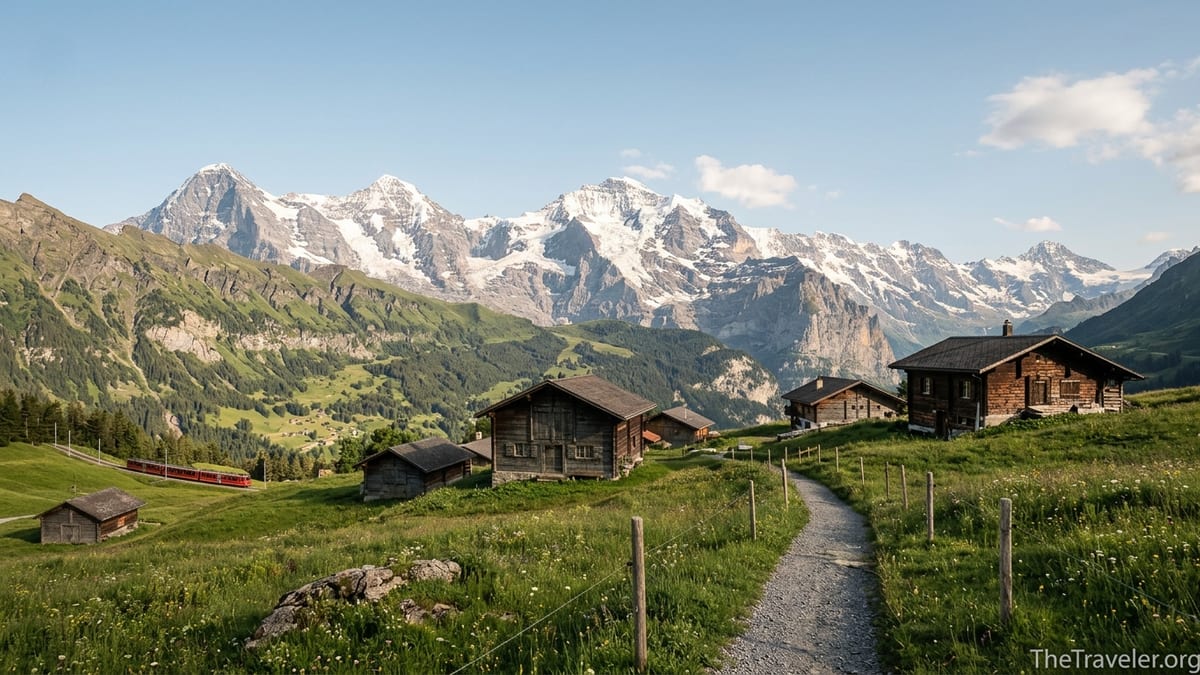
The Jungfrau Region offers a different kind of spectacle. Lauterbrunnen sits in a sheer-sided glacial valley of waterfalls, often described as a real-world inspiration for fantasy landscapes. From there, trains climb to car-free Wengen on one side and cable car plus mountain train carry you to Mürren on the opposite cliff edge. From Wengen’s main street you look straight to the Staubbach Falls across the valley and up to the Jungfrau massif; from Mürren’s walking paths you see the vertical north face of the Eiger almost at eye level. These villages feel more open and pastoral than Zermatt’s steep valley, with many meadows and farm tracks that double as walking paths.
For grand, airy vistas rather than single-peak drama, the Engadin around St. Moritz is compelling. Here the landscape is a high plateau at around 1,800 meters, dotted with lakes and ringed by peaks. A funicular runs from the valley floor up to Muottas Muragl, a panoramic terrace above the Upper Engadin, where a short loop path offers continuous views of the lake chain and the Bernina massif. On clear days in late summer, the combination of deep blue lakes, larch forests and light-colored peaks feels very different from the darker rock walls of Zermatt or Lauterbrunnen.
Hiking and Summer Activities: Trails, Railways and Lakes
For hiking, each region offers hundreds of kilometers of marked trails, but the style of walking differs. Around Zermatt, classic day routes include the Five Lakes Trail above Sunnegga, where you circle small alpine lakes that on calm days reflect the Matterhorn, and balcony paths from Blauherd or Trockener Steg with constant glacier views. Many visitors combine uphill lifts with long, mostly downhill hikes, making it realistic to do 4 to 6 hour routes without major climbing. In summer, a day return ticket on one mid-mountain lift often costs in the range of 40 to 70 Swiss francs per adult, so building in a few lift-assisted hikes is both a time saver and a budget consideration.
In the Jungfrau Region, hiking often blends with scenic train rides. A typical summer day might start with the cable car from Lauterbrunnen to Grütschalp, the small train along the cliff edge to Mürren, and then walks between Mürren and neighboring hamlets, with cows grazing in meadows next to the path. Another popular circuit links Mannlichen and Kleine Scheidegg on a broad, family-friendly ridge trail that faces the Eiger almost the entire way. Because the valley floor is relatively low, you can usually find snow-free routes from late spring through autumn, while high trails towards the Jungfraujoch stay snow-covered later.
The Engadin specializes in smooth, well-graded trails and lakeside promenades. In summer, visitors often start from St. Moritz Dorf and loop around Lake St. Moritz in an hour or two, or take the funicular up to Corviglia to hike among rolling, open slopes rather than cliffs. Families might ride the Muottas Muragl funicular, then follow themed walking paths lined with viewpoints and art installations before ending with cake and hot chocolate on the terrace. The high valley’s dry climate also lends itself to cycling, stand-up paddleboarding on the lakes during warm afternoons, and extensive cross-country skiing on frozen lakes in winter.
Skiing and Snow Reliability: Comparing the Big Ski Areas
For downhill skiing, all of the featured resorts offer significant terrain, but the feel on the slopes is distinct. Zermatt has one of the highest lift-served domains in Europe, with pistes reaching well above 3,000 meters and glacier runs that stay open most of the year. In peak winter, advanced skiers can link long itineraries from the Italian side at Cervinia back over to Zermatt, with single descents dropping well over 1,000 vertical meters. Snow reliability at higher elevations is generally strong, although rapid weather changes can close exposed lifts. Day lift passes are premium priced, often among the most expensive in the Alps, but that buys access to a huge altitude range and diverse runs.
The Jungfrau ski area, marketed as the Jungfrau Ski Region, knits together sectors above Grindelwald and Wengen around Kleine Scheidegg, plus separate pistes above Mürren and the Schilthorn. From Wengen in mid-winter you can be on snow in minutes with the Wengernalp Railway, while Grindelwald now has modern gondolas that rise quickly to Männlichen and the Eiger Glacier area. The slopes are particularly attractive for strong intermediates who like long, scenic red runs rather than extreme steeps. They are lower than Zermatt’s highest sectors, so early or late season snow can be more variable, but extensive snowmaking supports the main pistes.
In the Engadin, St. Moritz has several unlinked but individually large areas, notably Corviglia above town, Corvatsch a short bus ride away, and Diavolezza for more wild-feeling high alpine skiing. Corviglia has wide, sun-exposed pistes and a long history as a World Cup race venue, while Corvatsch tends to hold colder, grippier snow thanks to its orientation and higher top station. Davos is similar in that it offers multiple separate mountains, including Parsenn and Jakobshorn, connected by buses and trains rather than a single lift system. Verbier, part of the larger 4 Vallées, offers big verticals and extensive off-piste when conditions allow, drawing advanced skiers and freeriders. Andermatt splits its appeal: the Gemsstock sector is a steep, north-facing mountain prized by experts, while the linked Andermatt-Sedrun-Disentis terrain offers more gentle pistes for intermediates and families.
Romantic Escapes and Car-Free Charm for Couples
For couples looking for an atmospheric base, car-free villages like Zermatt, Wengen and Mürren have clear advantages. In Zermatt, the absence of regular cars means the narrow streets belong mostly to pedestrians, with just small electric taxis and hotel shuttles humming past. In the evenings, many visitors wander between wine bars and fondue restaurants, stopping on bridges to photograph the floodlit Matterhorn. Boutique hotels with spas and mountain views are common, and many couples splurge on rooms with balconies facing the peak or on tasting menus in gourmet hotel restaurants.
Wengen and Mürren feel more intimate. Both are reached by mountain railway or cable car, so arrival itself feels like an excursion. In Wengen, most hotels and guesthouses line a compact main street above the Lauterbrunnen Valley, with terraces looking straight towards waterfalls and snowy summits. Mürren is smaller still, perched on a cliff edge on the opposite side of the valley, with wooden chalets and narrow lanes where you can often hear cowbells drifting up from the meadows below. For a romantic day, many couples ride up to the Schilthorn and linger over lunch in the revolving restaurant, watching the Eiger, Mönch and Jungfrau pass slowly by the windows before walking easy panoramic trails back towards Mürren.
In the Engadin, St. Moritz mixes classic grand hotels with lakeside walks and stylish cafes, which can suit couples who like a blend of nature and low-key glamour. A typical winter day might include skiing on Corviglia in the morning, spa time in the afternoon, and an unhurried stroll along the frozen lake at sunset. For something quieter, smaller Engadin villages like Sils or Pontresina offer traditional hotels, candlelit dining rooms and direct access to cross-country ski trails and winter walking paths, all backed by big mountain views. These bases feel less busy than Verbier or Davos in peak season and can be ideal for travellers who value peaceful evenings.
Families, First Timers and Ease of Getting Around
Families often prioritize easy logistics over maximum vertical. The Jungfrau villages and parts of the Engadin score highly here. From Lauterbrunnen, you can reach Wengen in around 15 minutes by cog railway or Mürren in a pair of short lifts, so even young children experience fun mountain transport without long travel times. Once based in Wengen or Mürren, most beginner slopes and ski schools are on gentle pastures close to the village edge, reducing the daily shuffle with children’s gear. In summer, straightforward stroller-friendly paths around Mannlichen or along the Grütschalp to Mürren route make it simple to spend half days outdoors without committing to full-scale hikes.
St. Moritz and the wider Engadin are also appealing for families thanks to their open valley layout and wide choice of activities. In winter, beyond standard ski schools on Corviglia or Corvatsch, there are toboggan runs, ice rinks on the lakes in cold spells and extensive networks of prepared winter walking trails that grandparents can manage without skis. Engadin tourism boards regularly publish family activity maps that highlight playgrounds, themed trails and easy excursions such as Muottas Muragl, where a funicular delivers you to a car-free viewpoint with a restaurant, sledging runs and gentle snowshoe tracks that start right at the top station.
For first-time visitors to Switzerland, Grindelwald can be one of the easiest bases to understand. It is directly reachable by train from Interlaken without changes, has a broad main street with supermarkets and gear shops, and a mix of hotels, chalets and apartments. From many lodging options you can walk to the modern terminal that links quick gondolas to Männlichen and the Eiger Glacier. By contrast, Davos and Verbier are better choices for repeat visitors who are comfortable navigating larger ski systems, ski buses and more complex ticket options. They reward the extra planning with extensive terrain and plenty of non-ski activities, but they are less compact than the traditional car-free villages.
Car-Free Travel, Sustainability and Seasonal Timing
Switzerland’s rail system makes it straightforward to visit all of these resorts without a car, but some are structurally car-free in their cores. Zermatt, Wengen and Mürren do not allow private combustion-engine vehicles in the village streets. Drivers leave cars in valley garages such as the large facility at Täsch for Zermatt or the parking at Lauterbrunnen station for Wengen and Mürren, then continue by shuttle train, cog railway or cable car. Inside the resort, travel is usually on foot, by small electric taxis and buses, or via mountain lifts. This design not only improves air quality but also changes the feel of evenings: children can walk safely, and even busy weeks are less dominated by traffic noise.
Davos, Grindelwald, Andermatt and Verbier are all reachable by road, and many hotels offer on-site parking for a nightly fee. However, staying car-free is still practical. Trains link Interlaken to Grindelwald and Lauterbrunnen all year, the narrow-gauge Rhaetian Railway ties Chur to St. Moritz and Davos, and scenic routes like the Glacier Express connect Zermatt and Andermatt. If you plan to rely on trains and lifts heavily within a week, passes such as regional mountain transport passes or nationwide rail passes can reduce costs compared to buying individual tickets every day, especially if you take at least two significant mountain excursions per day.
Seasonal timing shapes which resort makes most sense. In July and August, Zermatt and the Jungfrau villages are very popular for hiking, with alpine meadows in bloom and high trails mostly snow-free. In autumn, the Engadin comes into its own when the larch forests turn gold and crowds thin out, yet lifts to viewpoints like Corviglia and Muottas Muragl still operate on fall timetables. For skiing, December through March are the core months in all these destinations, but high, glaciated areas like Zermatt and parts of the Engadin typically offer the longest seasons. Shoulder months like late April or early November can be quieter and cheaper on lodging but require careful checking of which lifts, restaurants and mountain trails are actually open.
The Takeaway
There is no single “best” place in the Swiss Alps, only the best fit for the trip you have in mind. If you dream of the Matterhorn and do not mind premium prices and steeper village streets, Zermatt delivers an unmatched combination of iconic scenery and high-altitude skiing. If you want classic green meadows, waterfalls and easy access to multiple car-free villages, the Jungfrau Region with bases such as Lauterbrunnen, Wengen, Mürren or Grindelwald is an excellent starting point. For wider horizons, elegant hotels and broad valleys laced with lakes and cross-country trails, the Engadin around St. Moritz stands out.
Advanced skiers and riders who value challenging terrain and nightlife might lean towards Verbier or Andermatt, while families and first-timers often find the scaled-down, walkable layouts of Wengen, Mürren and some Engadin villages easier to manage day to day. Regardless of where you choose, planning around your priorities for scenery, hiking, skiing, romance, family needs and car-free convenience will help you pick not just a beautiful destination but the right kind of mountain experience for you.
FAQ
Q1. Which Swiss Alpine base is best for first-time visitors?
Grindelwald and Lauterbrunnen are often ideal for first-timers. They are easy to reach by train, offer straightforward village layouts, and give quick access to car-free Wengen and Mürren, as well as famous excursions like Kleine Scheidegg and the Jungfraujoch.
Q2. Where should I stay for the most iconic mountain views?
If you want that classic single-peak panorama, Zermatt with the Matterhorn is hard to beat. For a wider amphitheater of cliffs and waterfalls, Lauterbrunnen with side trips to Wengen and Mürren offers some of the most dramatic valley scenery in the Alps.
Q3. Which resort is best for advanced skiers and snowboarders?
Zermatt, Verbier, Davos and Andermatt are particularly strong for advanced skiers. Zermatt offers long high-altitude runs and glacier skiing, Verbier and Davos have extensive freeride terrain in good conditions, and Andermatt’s Gemsstock is known for steep, north-facing slopes prized by experts.
Q4. What is the most family-friendly area in the Swiss Alps?
The Jungfrau villages and the Engadin are especially family-friendly. Wengen and Mürren have gentle beginner areas close to the village, while the Engadin around St. Moritz combines child-focused ski zones, toboggan runs and well-marked winter walking paths suitable for multi-generational trips.
Q5. Is it worth paying more to stay in a car-free village?
For many travellers, yes. Car-free bases like Zermatt, Wengen and Mürren feel quieter, safer for children and more atmospheric in the evenings. You typically pay a premium in lodging and spend a bit longer reaching the village, but daily life without traffic and with short walks to lifts can be a major advantage.
Q6. Which destination works best without renting a car?
All of the highlighted resorts can be reached by train, but Zermatt, Wengen and Mürren are designed for car-free stays from the outset. You park or arrive in the valley, then rely on trains, cable cars, local buses and walking. Grindelwald, St. Moritz, Davos, Andermatt and Verbier also work well car-free thanks to good rail and bus connections.
Q7. How should I choose between Zermatt and the Jungfrau Region?
Choose Zermatt if your priority is seeing the Matterhorn, skiing at very high altitudes or experiencing a dense network of mountain lifts in a single resort. Choose the Jungfrau Region if you value variety between several villages, love waterfall-filled valleys and prefer a mix of trains and lifts linking multiple scenic viewpoints.
Q8. When is the best time to visit for hiking rather than skiing?
Late June to early October is generally best for hiking. In July and August, high alpine trails around Zermatt and the Jungfrau Region are usually clear of snow, while September and early October are particularly beautiful in the Engadin when the larch forests turn golden and the main lifts are still operating on autumn schedules.
Q9. Which resort should I pick for a romantic long weekend?
For a romantic escape, Zermatt, Wengen, Mürren and St. Moritz are strong choices. They combine scenic arrival journeys, car-free or low-traffic centers, good spas and restaurants, and easy half-day excursions such as Gornergrat, Schilthorn or Muottas Muragl that leave time for leisurely evenings.
Q10. How do prices compare between these destinations?
All of these resorts are premium-priced by global standards, but Zermatt, St. Moritz and Verbier are generally among the most expensive for lodging and dining. Grindelwald, Lauterbrunnen, Wengen, Mürren, Davos and Andermatt can offer slightly better value, especially if you choose simpler hotels, apartments or guesthouses and purchase regional transport passes to manage lift and train costs.