


Central Switzerland offers a dilemma many travelers secretly enjoy: should you sleep in lakeside Lucerne, with its historic old town and boat-filled waterfront, or in Engelberg, a high valley resort at the foot of Mount Titlis with ski lifts and hiking trails on the doorstep? With fast trains linking the two in about 45 minutes, you can easily visit both. The real commercial decision is where to base yourself, how many nights to allocate to each, and which suits your style, season and budget.
Atmosphere: Medieval Lake City vs High-Alpine Monastery Village
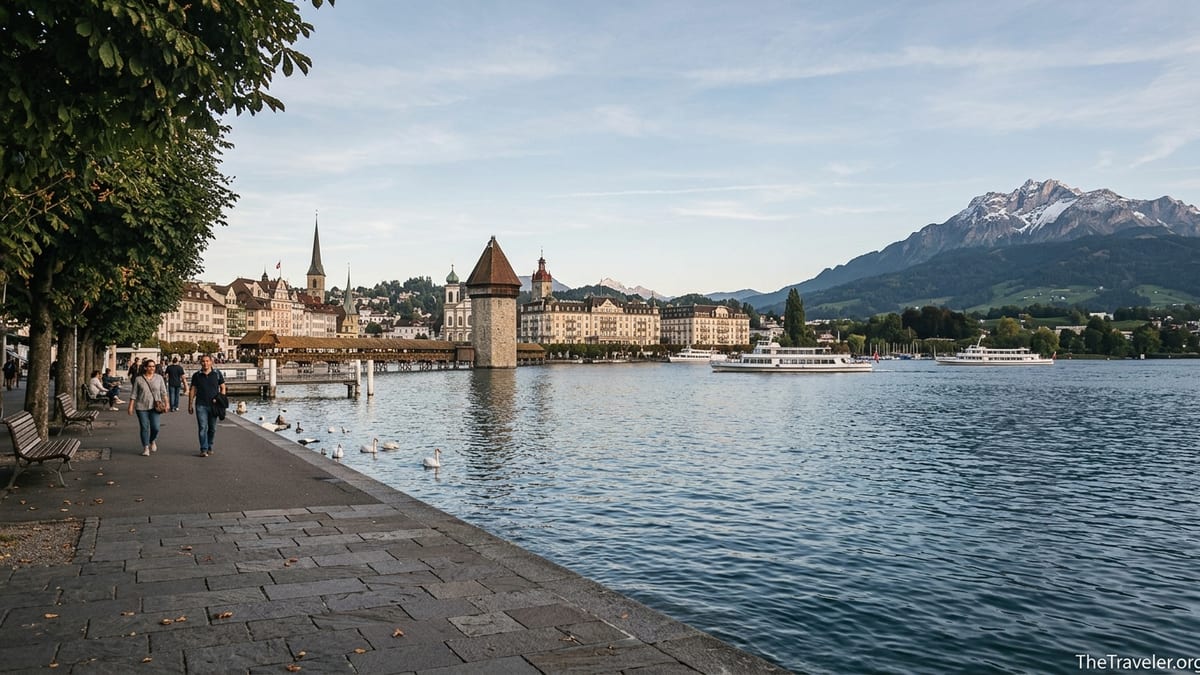
Lucerne feels like the Switzerland many visitors imagine: covered wooden bridges over a river, swans gliding across a deep-blue lake, church spires and grand 19th-century hotels lining the waterfront. The compact old town on either side of the Reuss River is full of frescoed facades, boutiques and cafés, with the famous Chapel Bridge and Water Tower at its heart. Even in peak season, Lucerne has the buzz of a small city rather than a resort, with office workers, students and commuters sharing the streets with tour groups.
Engelberg, by contrast, is a true mountain resort in a broad high valley, ringed by peaks and dominated by the 3,000-meter Titlis massif. The core of the village is clustered around a historic Benedictine monastery and a few main streets of hotels, ski shops and sports stores. The feeling is quieter and more seasonal. In winter and high summer the village is lively with skiers and hikers; in shoulder months some hotels and restaurants close, and evenings can be very low-key. You wake to cowbells and cable cars rather than boat horns and church choirs.
For travelers who want evening strolls along a lit promenade, a choice of museums and people-watching from café terraces, Lucerne offers a more urban-resort atmosphere. Those who prefer to walk out of the hotel and be at a gondola station or trailhead in ten minutes will feel more at home in Engelberg. The two complement each other rather than compete, which is why many itineraries now split time between both.
The practical context matters too. Lucerne is a major transport hub with frequent trains to Zurich airport, Interlaken and beyond, and lake boats leaving right outside the station. Engelberg sits at the end of a single scenic line served by the Luzern–Engelberg Express, so while it is not remote, it feels like a deliberate detour into the mountains rather than a crossroads.
Access and Mountain Excursions: Pilatus & Rigi vs Titlis & Brunni
From Lucerne, you have a classic combination of lake and mountains at your fingertips. Boat and cogwheel rail links climb Mount Rigi, often called the “Queen of the Mountains,” while the famous “golden round trip” to Mount Pilatus strings together lake steamer, steep cogwheel railway and panoramic gondola. Both peaks offer extensive walking trails, restaurants and family-friendly attractions like playgrounds and short loop hikes, with summer and shoulder-season operations designed to handle large day-trip crowds.
Engelberg’s signature mountain is Titlis. A sequence of cable cars runs directly from the edge of the village up to Klein Titlis at around 3,000 meters, with the final stage on the revolving Titlis Rotair gondola. At the top, visitors find a glacier cave, cliff walk and snow play area that operates for most of the year, plus high Alpine views that feel notably wilder than the gentler lakeside mountains. On a clear day you can see deep into the Bernese Alps and across Central Switzerland, and the snow experience is a key reason many short-stay visitors choose Titlis over other peaks when traveling in warmer months.
Engelberg is not a one-mountain story, however. The Brunni side of the valley offers sunnier, more pastoral slopes with easier hiking and family-friendly areas like the Ristis playground and summer toboggan. Around Trübsee, mid-way up the Titlis side, summer visitors can rent rowing boats on the small lake, walk around flower-filled meadows or use family-oriented attractions such as small rope parks or themed trails. Compared with Pilatus or Rigi, the Engelberg mountains feel less built up and more like a functioning Alpine landscape with pastures, herds and remote huts.
In terms of logistics, using Lucerne as a base for big mountain days is perfectly viable. A traveler could, for instance, take an early Luzern–Engelberg Express train, ride the Titlis lifts, spend several hours on the glacier and at Trübsee, then return to Lucerne for dinner by the lake. However, basing in Engelberg removes the commute and makes sunrise walks in the high valley or late-afternoon strolls through meadows part of your daily rhythm, which appeals especially in summer and for snow-focused winter trips.
Where to Stay: Hotel Styles and Typical Price Levels
Lucerne’s accommodation scene is dominated by traditional city hotels and modern business properties. Along the lakeside promenade just east of the old town you will find historic Grand Hotel National and Hotel Schweizerhof, both with lake-view rooms, classic interiors and service pitched at international city standards. In the old town itself, smaller boutique options like Hotel des Balances appeal to couples wanting atmospheric river views, frescoed facades and candlelit dinners a few steps from Chapel Bridge. Budget travelers rely on simpler city hotels or hostels set back from the water or near the main station.
Typical high-season double rooms in central Lucerne often start in the mid to upper three-figure range in Swiss francs, with lake-facing rooms in top properties reaching well into the premium bracket. Breakfast is usually included in leisure-focused hotels, and city tax adds a few francs per person per night but grants a local transport card that covers buses and some local trains. Apartments and guesthouses exist but are less dominant than traditional hotels, which suits short stays.
Engelberg’s hotels span everything from simple family-run guesthouses to polished Alpine resorts. At the top end, Kempinski Palace Engelberg occupies a restored historic building near the monastery, combining Belle Époque architecture with contemporary spa facilities, a large indoor pool and kid-friendly services. Nearby, mid-range hotels like Hotel Terrace perch slightly above the village with sweeping views of the Titlis massif and easy shuttle or tunnel-lift access down to the center. Around the Titlis base area, apartment-style properties such as Titlis Resort cater to families and groups who want kitchenettes and quick access to the lifts.
Nightly rates in Engelberg vary by season more sharply than in Lucerne. In peak ski weeks and high summer holiday periods, prices in well-located hotels can approach those in Lucerne, especially for properties close to ski lifts. In quieter spring and autumn weeks, however, Engelberg often becomes better value, with discounted packages that include lift passes or spa access. For travelers watching their budget who still want an Alpine base, simple pensions and a youth hostel provide dorms and basic doubles at significantly lower nightly cost than central Lucerne hotels facing the lake.
Dining, Nightlife and Everyday Convenience
Lucerne offers the broader restaurant and nightlife scene by far. Within a ten-minute walk of the train station you can eat classic Swiss dishes at riverside inns, contemporary tasting menus at upscale hotel dining rooms, and international cuisines ranging from Italian and Middle Eastern to Asian fusion. Cafés line the Reuss riverbanks and lake promenade, and many stay open late into the evening in high season. After dark, there are relaxed wine bars, hotel lounges with live piano and a handful of clubs and late bars that cater to both locals and visitors.
For families and cost-conscious travelers, Lucerne’s mainstream supermarkets and takeaway options are a practical advantage. Several grocery stores near the station sell ready-made salads, sandwiches and hot meals at Swiss, rather than tourist-premium, prices, and budget-minded visitors often picnic on the lakeshore instead of eating every meal in restaurants. Pharmacies, outdoor gear shops and department stores are all within walking distance, which makes Lucerne an efficient place to pick up anything you forgot to pack.
Engelberg’s dining scene is smaller and more focused on long Alpine evenings rather than city variety. Many hotels run half-board packages with multi-course dinners included, and village restaurants specialize in hearty mountain food: cheese fondue and raclette, rosti, game dishes in autumn and generous pasta and grill staples for hungry skiers in winter. Around the base stations and on the mountain, self-service restaurants and rustic huts serve soups, sausages and simple plates at prices typical of Swiss ski resorts. There are a few stylish hotel bars and après-ski spots, but nightlife is modest compared with larger resorts or Lucerne’s waterfront.
On the upside, Engelberg is compact and walkable. Grocery stores, bakeries and sports shops sit within a few blocks of most hotels, and you can stroll from the monastery to the Titlis cable car in around 10 to 15 minutes on foot. In winter, ski buses circulate, but many guests walk, which adds to the relaxed resort feel. Travelers who value convenience but do not care about late-night entertainment often find that Engelberg’s quieter evenings push them to rest more, ready for long days outdoors.
Winter: Skiing, Snow Play and Christmas Atmosphere
In winter, Lucerne itself is not a ski base in the strict sense, but it does act as a hub for nearby small areas. Local hills like Klewenalp, Sörenberg or Mythenregion are within reach by train and bus, and some visitors happily day trip from Lucerne to modest, family-friendly slopes. However, anyone who is serious about skiing full days on a consistent basis will find basing in Engelberg more practical. Commuting every morning and afternoon by train adds cost and eats into slope time, especially on shorter winter days.
The Engelberg–Titlis ski area offers roughly 80 kilometers of pistes, with a reputation for long top-to-bottom runs and challenging off-piste terrain. Advanced and expert skiers are attracted by freeride routes and big vertical, while intermediates enjoy red and blue pistes descending from mid-mountain. Engelberg has a reputation among some visitors as less friendly for absolute beginners than dedicated learning resorts, since the easiest terrain is more limited and snow conditions can be demanding on certain sections. For confident skiers and riders, though, having lifts a short walk or shuttle ride from the hotel is a major draw.
For non-skiers in winter, Engelberg still works well as a base. The Titlis summit offers snow tubing, panoramic platforms and a glacier cave that appeal to visitors who simply want to “touch snow” and take photos. Lower down, valley trails cater to winter walking and cross-country skiing, and toboggan runs like the one from Gerschnialp provide family-friendly fun. Lucerne, meanwhile, compensates for its lack of pistes with Christmas lights, markets and lake views framed by snowy peaks. Many travelers combine a few days of skiing in Engelberg with a night or two in Lucerne to enjoy festive atmosphere, shopping and museum visits before or after their mountain stay.
If your priority is skiing every possible hour, Engelberg deserves more nights in winter, especially if you plan to buy multi-day lift passes. A common pattern is four to six nights in Engelberg for skiing, with one or two nights in Lucerne tacked on to the beginning or end for cultural contrast and easier access to Zurich airport.
Summer: Hiking, Lake Life and Family Activities
In summer, Lucerne turns into a classic lake resort. Regular boats fan out across Lake Lucerne, stopping at villages like Weggis, Vitznau and Brunnen, and many visitors spend days combining short walks with swims, terrace lunches and occasional mountain outings. Lakeside parks near the Verkehrshaus transport museum become informal picnic grounds where families spread blankets, and in the evening the promenade is busy with locals out for a stroll. For travelers who love water and gentle activities, this lake focus is a major reason to give Lucerne more nights.
Engelberg in summer offers a different sort of outdoor life, centered on high meadows, trails and clear mountain air. Popular hikes include the Four Lakes Hike above Melchsee-Frutt, accessible as a day trip from Engelberg, and well-marked routes around Trübsee and up towards Jochpass. Families often ride the lifts up in the morning, walk on mostly gentle gradients between lakes and viewpoints, then reward themselves with cake at a mountain hut. Activities like downhill scooter trails, small rope parks and paragliding add variety for teenagers and adventurous adults.
For children, Engelberg’s combination of animals, playgrounds and short themed trails can be a hit. Cows graze on the pastures around Brunni and Trübsee in midsummer, and there are play areas with wooden structures, water features and barbecue spots where families can linger. Temperatures in the high valley are usually cooler than in Lucerne, which can be welcome on hot July and August days. However, rain or low cloud can limit views dramatically, and in poor weather Engelberg has fewer indoor diversions than Lucerne.
That is where Lucerne’s museums and covered sights make a difference. On a gray or stormy day, families can easily spend half a day at the Verkehrshaus, which combines interactive exhibits on trains, aviation and space with outdoor playground areas and a planetarium, or visit the Rosengart Collection art museum and then shelter in cafés and chocolate shops. In pure summer terms, Lucerne suits travelers who want flexibility between water, city and occasional mountains, while Engelberg is better for those who are happy to commit to high-Alpine days and accept that poor weather may mean quiet time at the hotel pool or spa.
Who Each Destination Suits Best & How Many Nights to Allocate
For first-time visitors to Switzerland, Lucerne often deserves more nights simply because it delivers such a complete introductory picture of the country: a beautiful old town, a major lake, easy mountain excursions and efficient onward connections. Couples on a one-week trip might, for example, spend four nights in Lucerne, using one day for Pilatus, one for Rigi and the lake, and another for a Titlis day trip or a simple city-lake day, then continue elsewhere. Engelberg, in that scenario, might not require an overnight stay unless you specifically want to wake up in the mountains.
However, for travelers whose priority is to immerse themselves in the Alpine landscape rather than urban or lakeside life, Engelberg can justifiably claim more nights. A family that loves hiking might book five nights in Engelberg in July, spending days rotating between Titlis, Brunni, Trübsee and regional outings, and then add two nights in Lucerne at the end to enjoy boat rides and city dinners before flying home. In winter, a serious skier or snowboarder might base entirely in Engelberg for a week, with perhaps a single night in Lucerne on arrival or departure day.
Couples looking for romantic city walks, riverside dining and a polished dining scene will generally be happier with a base in Lucerne, perhaps using Engelberg for a single day on Titlis if time is tight. Families balancing different interests often split their stay roughly half and half, for example three nights in Lucerne and three or four in Engelberg, giving themselves time for both lake cruises and mountain playgrounds. Budget-conscious travelers may find that sleeping in Engelberg outside peak ski or school-holiday periods can trim accommodation costs while still allowing for a full-day visit to Lucerne by train.
Ultimately, the destination that “deserves” more nights depends less on abstract rankings and more on your personal mix: city and culture versus mountain sport, love of boats versus love of cable cars, comfort with quiet evenings versus desire for nightlife. The good news is that the short train link between the two means you do not need to choose exclusively. Even a modest itinerary of five or six nights can feasibly include at least one overnight in each place.
The Takeaway
Lucerne and Engelberg are two faces of Central Switzerland that work best in tandem. Lucerne offers the classic postcard city on a lake, with a medieval core, grand hotels and a full menu of cultural and culinary experiences. It excels as an arrival and departure hub, a flexible base for lake cruises and accessible mountains like Pilatus and Rigi, and a year-round destination with enough indoor attractions to handle poor weather days.
Engelberg, anchored by the Titlis massif and its lifts, is a true Alpine resort with a village-scale atmosphere. It suits skiers who want to walk to the gondola in winter, hikers who prefer high meadows and glacier views in summer, and families who value fresh air and mountain playgrounds more than city shopping. Its hotel scene, from polished spa properties to modest guesthouses, supports longer stays that revolve around outdoor activity rather than sightseeing checklists.
If you must tip the scales, Lucerne arguably deserves more nights on a first general-interest trip, particularly outside the core ski season, because it combines lake, mountain excursions, city life and transport convenience in one place. Engelberg earns extra nights for mountain-focused itineraries, especially in high winter and peak summer, when its lifts and trails are fully running and the village atmosphere is at its best. For many travelers, the winning formula is not “Lucerne versus Engelberg” at all, but “Lucerne and Engelberg” in a carefully balanced split stay.
FAQ
Q1. Is it better to stay in Lucerne or Engelberg for visiting Mount Titlis?
Engelberg is closer, with the Titlis cable car starting at the edge of the village, which makes it ideal if Titlis is your main focus. However, Lucerne works well if you only plan a single Titlis day trip and also want lake cruises and city sights without changing hotels.
Q2. How long is the train journey between Lucerne and Engelberg?
The Luzern–Engelberg Express takes around 45 minutes from Lucerne’s main station to Engelberg, with several departures a day. The ride is scenic, passing lakes, villages and into the Engelberg valley, and the train drops you a short bus or taxi ride from the Titlis cable car station.
Q3. Which destination is better for families with young children?
Both can work well. Lucerne offers easy walking, playgrounds by the lake and indoor options like the transport museum for rainy days. Engelberg adds mountain playgrounds, short lift-accessible hikes and snow play areas on Titlis. For an active family that enjoys being outdoors, a split stay of a few nights in each is often the most satisfying balance.
Q4. Is Engelberg suitable for beginner skiers?
Engelberg has some beginner terrain and ski schools, but its reputation leans more toward confident intermediates and advanced skiers, especially on the Titlis side. Absolute beginners might find dedicated learning resorts with gentler slopes easier, while mixed-ability groups who include strong skiers can still enjoy Engelberg by choosing runs and lessons carefully.
Q5. Do I need a car to enjoy Lucerne and Engelberg?
No. Both destinations are very manageable by public transport. Lucerne is a major rail and boat hub, and Engelberg is at the end of a scenic train line with buses connecting to lifts. Many visitors travel entirely by train, boat and cable car, which is often more convenient and less stressful than driving and parking in mountainous areas.
Q6. How many nights should I spend in Lucerne versus Engelberg on a one-week trip?
For a first-time general-interest visit, a common pattern is four nights in Lucerne and three in Engelberg. Travelers who are focused on skiing or hiking might invert this, spending more nights in Engelberg and using Lucerne mainly as a gateway before or after their mountain stay.
Q7. Which place has better nightlife and restaurant options?
Lucerne has a wider choice of restaurants, bars and late-opening venues, from riverside bistros to upscale hotel bars and a few clubs. Engelberg’s evenings are quieter and center on hotel restaurants, cozy village bars and casual après-ski spots near the lifts, which many visitors find restful after active days outside.
Q8. Is Lucerne or Engelberg more budget-friendly?
Both are in a generally expensive country, but Engelberg can sometimes offer better value on accommodation outside peak ski and school-holiday periods, especially in simpler guesthouses or apartments. Lucerne has more day-to-day savings potential through supermarket picnics and a larger range of budget to mid-range hotels, though prime lakefront properties in both places are similarly priced at the higher end.
Q9. What is the best season to stay in Engelberg instead of just day-tripping?
Engelberg particularly rewards overnight stays in mid-winter for skiing and in high summer for hiking and mountain activities, when most lifts, huts and family attractions are fully operating. In these seasons, waking up in the valley and adjusting each day’s plan to the weather is a real advantage over commuting from elsewhere.
Q10. Can I comfortably visit both Lucerne and Engelberg without changing hotels?
Yes, if you strongly prefer not to move, you can base in Lucerne and take a full-day trip to Engelberg and Titlis. However, doing so means early starts and set return times. Spending at least one or two nights in Engelberg lets you enjoy quieter evenings in the mountains, sunrise views and more flexible timing for lifts and hikes, which many travelers find worth the extra move.