


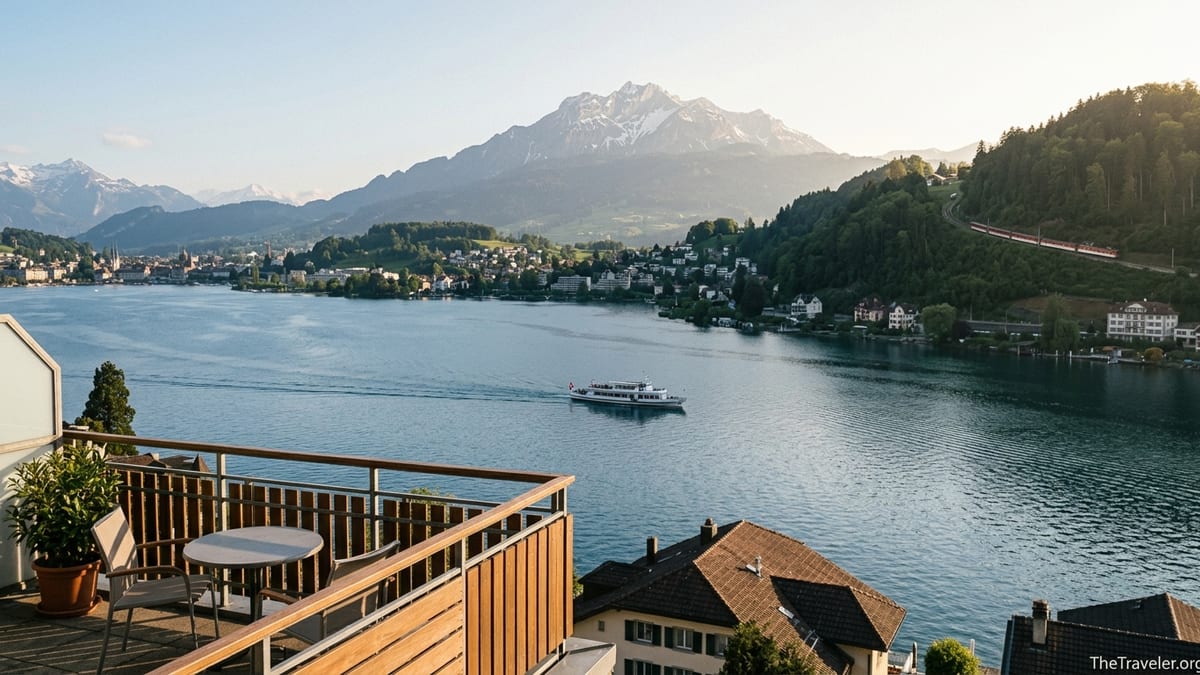
Choosing where to stay in Central Switzerland can be surprisingly hard. Around Lake Lucerne you have grand lakeside towns, quiet coves, high‑alpine ski hubs and tiny car‑free villages, all within a couple of hours of each other. The right base will shape everything from how often you ride boats and cable cars to whether your evenings are spent in lively waterfront bars or on a silent mountain terrace under the stars. This guide compares Lucerne, Engelberg, Weggis, Vitznau, Andermatt, Stoos and Brunnen so you can pick the best place to stay for lake views, mountain access, couples, families, hiking, skiing and car‑free travel.
How to Choose Your Base in Central Switzerland
Before you lock in a hotel, decide which experiences matter most on this trip. Some visitors want to wake up right on the lake with easy evenings in a strollable town. Others care more about high‑alpine hiking or skiing, or about keeping logistics simple with car‑free travel and direct train links. Lucerne works well as a hub for first‑timers who want to sample a bit of everything using boats and mountain railways as day trips. Mountain villages like Engelberg, Andermatt or Stoos are better if you want to walk out of your door straight onto trails or ski slopes.
Budget is another key filter. Around Lake Lucerne you will find traditional three‑star hotels from roughly the equivalent of a mid‑range city room, but lakeside suites in resort villages like Weggis or Vitznau can easily run several hundred Swiss francs per night in summer. High‑end mountain hotels in Andermatt and Engelberg can be similarly priced in peak ski season. At the more affordable end, family‑run inns and guesthouses a few minutes away from the water or a short walk from the cable car can offer much better value, especially outside school holidays and major events.
Finally, think about how much you want to move around. Many travelers split a week between two contrasting bases, such as three nights in Lucerne followed by three in a quieter lakeside village, or a few days on the lake then a few days higher up in Engelberg or Andermatt. Central Switzerland’s compact size makes this easy: typical train rides between these bases are around one to two hours, and boat rides on Lake Lucerne double as scenic excursions rather than just transfers.
Lucerne: Best All‑Round Base Without a Car
Lucerne is the natural gateway to Central Switzerland and the most versatile base if you are traveling by train. The city sits directly on Lake Lucerne with a compact, walkable old town, covered wooden bridges and waterfront promenades that feel atmospheric even if the weather turns. Lucerne’s main station is next to the lake piers, so you can step off an intercity train from Zurich or Basel and be on a boat to Weggis, Vitznau or Brunnen within minutes, or onto direct trains towards Engelberg and Andermatt.
For mountain access, Lucerne delivers variety more than height. Classic day trips include Mount Pilatus via the steep rack railway from Alpnachstad or the cable car from Kriens, and Mount Rigi from Weggis or Vitznau, both easily reached by boat or local train. These peaks offer family‑friendly walking paths, panoramic viewpoints, mountain playgrounds and restaurants, without committing you to a full high‑alpine environment. In summer, you can breakfast by the lake, ride a boat to Vitznau, take the cog railway up Rigi, walk an easy ridge trail and be back in Lucerne for dinner.
Lucerne’s accommodation spans efficient business hotels near the station, romantic waterfront properties with lake‑view balconies and a handful of design‑focused boutiques in the old town. For couples, it is a practical compromise between atmosphere and convenience: you can enjoy candlelit dinners by the Reuss River one night and a quick takeaway picnic on the lakefront the next. Families appreciate the short walking distances and the fact that many hotels include public transport cards for local buses and sometimes discounted mountain railways, reducing the need for a rental car.
Weggis and Vitznau: Lakeside Calm With Easy Rigi Access
On the north shore of Lake Lucerne, Weggis and Vitznau offer softer, more resort‑like bases than Lucerne itself. Both villages are known for milder microclimates, lakeside promenades lined with palm trees in summer and direct access to Mount Rigi. From Vitznau, the historic cogwheel railway runs straight up to Rigi Kulm; from Weggis, a cable car ascends to Rigi Kaltbad, where you can join walking paths or ride the train up the rest of the way. Boats from Lucerne connect frequently in season, so staying here does not isolate you, but you should expect fewer evening options and less late‑night public transport than in the city.
Weggis suits travelers who want a traditional lakeside holiday feel. You will find waterfront hotels with private lake access, small beaches and lawns with loungers that are popular with couples and relaxed families. In peak summer, lake‑view rooms in midrange hotels here can cost significantly more than inland equivalents, reflecting the setting. For example, it is common to see standard double rooms with balconies priced noticeably higher in July and August, particularly at properties with spas or large gardens. If you are happy to stay a short walk uphill from the water, guesthouses and apartments become more attainable.
Vitznau is smaller and feels more intimate, with a tiny harbor, a lakeside promenade and a handful of hotels and restaurants. It is attractive for travelers who want to be first up Mount Rigi in the morning or last back in the evening, or for those booking destination spa or gourmet stays. Because there are fewer properties, availability can be tight at popular times and prices skew towards the upper end. Vitznau works best if you plan a slower, less day‑trip heavy itinerary, focusing on boat rides, Rigi hikes and time by the water rather than nightly excursions to Lucerne.
Brunnen and Stoos: Lake Views and a Car‑Free Mountain Village
Further along Lake Lucerne, Brunnen offers wide‑angle views where several arms of the lake meet against a backdrop of steep mountains. The town has a pleasant but unpretentious feel, with a lakeside promenade, a small old center and a mix of modest hotels and simple apartments that tend to be more affordable than the premium resorts on the north shore. Boats connect Brunnen to Lucerne and Flüelen, and trains and buses fan out towards Schwyz and beyond, making it a solid base for travelers who want lake views without luxury pricing.
Brunnen pairs particularly well with the car‑free mountain village of Stoos. From Brunnen it is a short train or bus ride to the Stoos funicular valley station near Schwyz. The modern funicular climbs a steep slope to reach the plateau village at around 1,300 meters, which is entirely free of cars and through traffic. Visitors either leave vehicles in paid parking at the valley station or arrive by public transport and walk or use small service vehicles and sleds within the village. This setup creates a quiet, safe environment that is especially attractive for families with younger children and for travelers who value clean air and silence.
Stoos itself is small, with a cluster of simple hotels, guesthouses and holiday apartments. In summer, it is a hiking hub, with paths out to the Fronalpstock and Klingenstock ridges above the lake. The famous ridge trail between these peaks offers some of the most dramatic lake‑and‑mountain panoramas in Central Switzerland, and shorter walks and playgrounds are available near the lifts for less experienced walkers. In winter, Stoos becomes a compact ski area that suits families and intermediates more than experts. Because accommodation capacity is limited, prices can be relatively high at peak weekends, so budget‑conscious travelers often stay in Brunnen or Schwyz and ride up for the day.
Engelberg: Alpine Playground for Hikers, Skiers and Families
Engelberg lies south of Lucerne in a valley surrounded by high peaks, with the Titlis massif rising above the village. Regular trains from Lucerne reach Engelberg in about one hour, so you can use it either as a day‑trip destination or as a dedicated mountain base. The village is big enough to have supermarkets, equipment rental shops, a monastery and a small but active restaurant scene, while remaining compact enough to walk across in 15 to 20 minutes. In winter, the Engelberg‑Titlis ski area offers long pistes and high‑altitude snow, while summer brings an extensive network of hiking trails and themed paths suitable for families.
For hikers and active couples, Engelberg is one of the best bases in Central Switzerland. Cable cars climb both towards Titlis and towards the Brunni side of the valley, where sunnier slopes, lakes and easy circular hikes await. Popular routes include panoramic circuits above the treeline, family‑friendly theme trails and multi‑hour hikes that link mountain huts and small cable cars in neighboring valleys. The variety is such that you can do a gentle lake stroll one day and a more demanding ridge or high‑alpine route the next, without ever needing a car.
Accommodation in Engelberg spreads from traditional mountain hotels and pensions through self‑catering apartments to smart resorts with large spa areas and ski‑in, ski‑out convenience. In peak winter and during popular summer holiday weeks, room rates can climb steeply, especially close to the main lifts. Families often look for hotels that include kids’ playrooms, family suites or meal packages, while budget travelers opt for simple guesthouses slightly away from the center or for dorm‑style lodging in hostels and group houses. Because Engelberg is a genuine village rather than a purpose‑built resort, you can often find more down‑to‑earth places to eat and drink than in some glossier mountain developments.
Andermatt: High‑Alpine Style and Ski‑Focused Luxury
Andermatt sits at around 1,400 meters in a high valley where several mountain passes meet. Once known mainly to skiers and motorists crossing the Alps, it has been heavily redeveloped in recent years into a more upmarket year‑round destination. The traditional village center still has narrow streets and older inns, but next door a modern, largely car‑free quarter of apartments, hotels and a championship golf course has grown up. For travelers, this means a sharper contrast between rustic and contemporary than in many other Central Swiss villages.
The main draw for Andermatt is mountain access in all seasons. In winter it anchors one of the larger linked ski areas in Central Switzerland, with lifts running out towards Sedrun and Disentis and a reputation for off‑piste terrain that appeals to advanced skiers and snowboarders. In summer, hikers, cyclists and golfers take over the area, using a web of trails and roads over the surrounding passes. The scenery feels wilder and less lake‑focused than around Lucerne or Weggis, with broad valleys, rocky ridges and high wetlands replacing gentle bays and promenades.
Accommodation in Andermatt ranges from high‑end international hotels with large spas, concierge services and fine‑dining restaurants to more modest guesthouses in the historic core. Many of the newer properties are aimed squarely at a luxury audience, so prices in peak winter and high summer weeks can be among the highest in Central Switzerland. The car‑free layout of the new quarter appeals to couples and families who want to let children roam safely or enjoy quiet evenings without traffic noise, but the overall vibe is more design‑driven and resort‑like than in Engelberg or Brunnen.
Who Each Place Suits: Couples, Families, Hikers and Car‑Free Travelers
If you are planning a romantic trip, consider how you want to spend evenings. Lucerne offers the richest choice of restaurants, bars and lakeside walks, ideal if you like a bit of city energy and the option to see live music or museums. Weggis and Vitznau lean more towards peaceful sunset strolls and long hotel dinners, perhaps with spa time or a glass of wine on a balcony overlooking the lake. Engelberg and Andermatt provide cozy mountain atmospheres, with crackling fireplaces in winter and terrace drinks under starry skies in summer, but nightlife is more low‑key and often clustered in hotel lounges and a few dedicated bars.
For families, the questions are access, safety and simple entertainment. Lucerne is a strong all‑round base because you can walk from most hotels to boats, buses and playgrounds without steep climbs, and you have easy day trips to Pilatus, Rigi and the Verkehrshaus transport museum. Engelberg and Stoos stand out for children who love the outdoors: both offer playgrounds near cable car stations, themed hiking trails and beginner‑friendly ski areas. Stoos in particular is attractive for younger kids because the village is car‑free, so walking to the bakery or sledding hill does not involve crossing busy roads. Weggis and Brunnen appeal to families who want more time by the water, with small swimming areas, lakeside lawns and gentle promenades where children can run or ride scooters.
Hikers and skiers choosing between bases should look at how many days they plan to spend on the mountain versus the lake. Engelberg and Andermatt are better if most days will be dedicated to hiking or skiing and you want to wake up among peaks. Lucerne works if you want to mix moderate excursions with city sightseeing and maybe just one or two big mountain days. Stoos is perfect for those focusing on shorter stays centered around one signature hike or a few days on quiet slopes. Weggis and Vitznau sit in the middle: they put Mount Rigi at your doorstep and give access to the lake, but they are less ideal if you want constant high‑alpine terrain.
For car‑free travelers, all of these bases are workable, but some are easier than others. Lucerne has the best rail connections and frequent boats. Engelberg and Andermatt are on direct train lines from Lucerne and Zurich. Brunnen sits on mainline rail and lake routes with buses up to cable cars and funiculars. Weggis and Vitznau rely more on boats and local buses, so you will want to pay attention to timetables, especially outside high season or in the evenings. Stoos requires a transfer onto the funicular or cable car from Schwyz or Morschach; this is part of the charm, but it does add one more step at arrival and departure.
The Takeaway
Central Switzerland is compact enough that you can sample several landscapes in a short time, yet varied enough that your choice of base really does matter. Lucerne is the best all‑round option if you want a car‑free hub with strong public transport, plenty of accommodation choice and easy access to both lake and mountains. Weggis, Vitznau and Brunnen give you quieter lakefront stays and quick access to Mount Rigi and nearby viewpoints, at the cost of some nightlife and transport frequency. Engelberg and Andermatt pull you deeper into the mountains, rewarding hikers and skiers with doorstep access to trails and slopes. Stoos offers a rare combination of car‑free calm, big views and family‑friendly scale.
Think about what a perfect day on this trip looks like, then choose the village or town that makes that day easy. If it starts with a cappuccino in a lively old town and ends with a sunset boat ride, Lucerne is probably right. If it involves clipping into skis a few minutes after breakfast or hiking along a ridge above a glittering lake with cowbells in the distance, Engelberg, Andermatt or Stoos will suit you better. With good planning, there is no single wrong answer, only different shades of lake, mountain and quiet to match your own idea of a Central Swiss escape.
FAQ
Q1. Is Lucerne or Engelberg a better base for first‑time visitors to Central Switzerland?
Lucerne is usually better for first‑timers who want a mix of city atmosphere, lake cruises and easy mountain day trips without changing hotels. Engelberg suits those who know they want to focus on hiking or skiing and do not mind skipping some urban sightseeing in favor of a true mountain village setting.
Q2. Where should I stay for the best lake views around Lake Lucerne?
For pure lake views from your balcony, Weggis, Vitznau and Brunnen are hard to beat, as many hotels and apartments face directly onto the water. Lucerne also offers excellent views, but you will need to choose a lakefront property, while in the smaller villages even mid‑range hotels and guesthouses can have wide lake panoramas.
Q3. Which base is best for a car‑free trip with easy public transport?
Lucerne is the most convenient car‑free base thanks to its central train station, lake boat piers and local buses all in one compact area. Engelberg, Andermatt and Brunnen also work well without a car because they sit on train lines and are linked to nearby cable cars and funiculars by buses or short walks, though connections are less frequent than in Lucerne.
Q4. Is Stoos a good place to stay overnight or just for a day trip?
Stoos works both ways. Many travelers visit as a day trip from Lucerne or Brunnen to ride the funicular and hike the ridge trail, but staying one or two nights lets you enjoy the car‑free quiet before and after day‑tripper crowds. It is particularly rewarding for families and couples who value calm evenings and early‑morning walks.
Q5. How do prices compare between Weggis, Vitznau and Lucerne?
On average, lakeside hotels in Weggis and Vitznau can cost as much or more than comparable properties in Lucerne, especially in high summer and on weekends. You may find better value in Lucerne if you are willing to stay slightly back from the water, while in Weggis and Vitznau choosing a room without a full lake‑front position or staying uphill from the shore can help keep costs lower.
Q6. Which area is best for serious hiking in Central Switzerland?
Engelberg and Andermatt are the top choices for dedicated hikers because they offer extensive trail networks, multiple cable cars and higher‑altitude routes. Stoos and Mount Rigi above Weggis and Vitznau provide excellent moderate hikes with big views, ideal if you want rewarding but less demanding days that still start and end by the lake.
Q7. What is the best base for a family with young children?
For young children, Lucerne and Stoos are particularly attractive. Lucerne combines flat lakeside promenades, playgrounds and easy boat trips with good transport links and family‑friendly hotels. Stoos offers a compact, car‑free village where kids can walk and play safely, plus gentle hikes, playgrounds near the lifts and manageable ski slopes in winter.
Q8. Should skiers choose Engelberg or Andermatt as a base?
Advanced and adventurous skiers often favor Andermatt for its larger linked area and off‑piste potential, while Engelberg offers a mix of high‑altitude slopes and more varied winter activities within a single valley. If you want more of a resort feel with modern luxury hotels and a golf course for summer, Andermatt fits better; if you prefer a traditional village with a monastery and a softer atmosphere, Engelberg is the better choice.
Q9. Is it realistic to split a week between the lake and the mountains?
Yes, splitting a week works very well in Central Switzerland because distances are short. Many travelers spend three or four nights on Lake Lucerne, in Lucerne itself or a lakeside village, then move to Engelberg, Andermatt or Stoos for the remaining nights. Train and boat connections make these transfers straightforward, so you can change base once without losing much sightseeing time.
Q10. Do I need a car to visit Stoos, Weggis, Vitznau and Brunnen?
No, you do not need a car for these places. Boats and buses connect Lucerne to Weggis, Vitznau and Brunnen, and from Brunnen or Schwyz you can ride public transport to the Stoos funicular. A car can save a few minutes on some routes and help if you are carrying a lot of luggage, but for most visitors the public network is sufficient and more relaxing.