


From toddler-friendly paddling bays to big steamboats and cable cars gliding into the Alps, Switzerland’s lakes can pack more into a family day out than many theme parks. The challenge is choosing the right base for your children’s ages and energy levels. This guide compares some of the most family-friendly Swiss lakes for easy swimming, boat trips, mountain excursions, playgrounds and family hotels, so you can match the shoreline to your style of holiday.
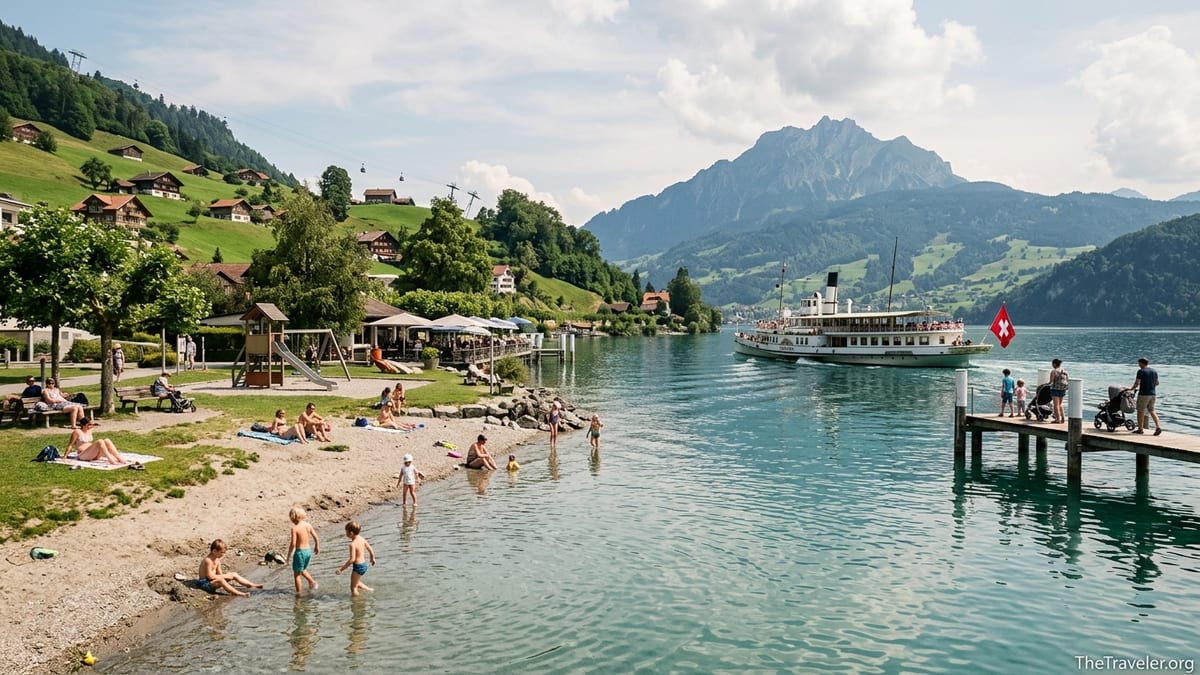
How to Choose the Right Swiss Lake for Your Family
Swiss lakes look similar on a map, but on the ground they feel very different. Some have gently shelving beaches where toddlers can potter in the shallows, others drop off quickly and suit confident swimmers and teens. Some are lined with lively promenades, lakeside lidos and playgrounds close to the town station, while others are set in quieter valleys that require more travel time but reward you with car-free villages and big mountain scenery.
For families, practical questions matter more than postcards. How easy is it to reach the lake from Zurich or Geneva airports with a stroller and luggage. Are there supervised swimming areas or just wild shorelines. Is there a covered boat deck where you can escape a sudden shower. Can you walk straight from the pier onto a cable car or cogwheel railway without several bus changes. These details can turn a longed-for lake break into either a breeze or a battle.
In Switzerland, you will see the word “Badi” used to describe public bathing areas, usually with changing rooms, lockers, shallow pools and access to the lake. Many lakeside towns also operate classic paddle steamers or modern boats in summer, which can double as gentle sightseeing and a nap-friendly break for younger children. When you compare lakes, think about whether you want to stay in a larger town such as Lucerne or Montreux, where there is plenty to do on a rainy day, or in a smaller resort such as Weggis or Spiez, where the beach and playground are minutes from your hotel door.
The lakes in this guide have been chosen because they combine three things families tend to value most: safe and relatively easy swimming spots, regular boat services, and quick access to at least one mountain excursion with facilities at the top. Within each destination you will find different price levels, from simple campsites and local guesthouses to five-star spa hotels with kids’ pools and lake views.
Lake Lucerne: Classic Scenery and Easy Day Trips
Lake Lucerne is one of the best all-round bases for families experiencing Switzerland for the first time. The city of Lucerne sits right on the water, a one-hour direct train from Zurich Airport, which keeps transfer time with tired children under control. From the main station it is a short stroll to the lakeside promenade and several Badis, so you can be in the water or at a playground within an hour or two of landing.
For swimming, families gravitate to Lido Lucerne, a large lakeside complex with a long sandy beach on Lake Lucerne itself, plus separate heated pools, a spacious children’s area and a playground. There are changing cabins, lockers, shade trees and a café, so you can realistically spend half a day here without needing to pack a full picnic. Entry is typically a modest per-person fee by Swiss standards, often less than the cost of a café lunch, which makes it one of the better-value ways to enjoy the lake in summer.
Lucerne also shines for boat trips. Historic paddle steamers and modern lake boats fan out from the pier opposite the station, serving villages such as Weggis, Vitznau and Brunnen. Many classic mountain excursions start right from these jetties. In Vitznau you can board the cogwheel railway to Mount Rigi, which is gentle enough for school-age children and offers an easy playground-topped walk on the Kaltbad plateau. From Alpnachstad, accessible by boat and a short walk, the Pilatus railway climbs to dramatic viewpoints, while the return via cable car and bus back to Lucerne keeps routes varied even for restless older kids.
Accommodation spans everything from campsites along quieter stretches of the lake to luxury properties such as lakeside spa hotels near Vitznau, some of which offer indoor pools and family suites so you are not relying solely on lake temperatures. In practice, many families choose to stay in Lucerne itself for the convenience of supermarkets, indoor attractions like the Swiss Museum of Transport and the old town, then use the lake boats for day trips to beaches and mountains. That mix keeps everyone busy even if the weather turns cool.
Lake Geneva (Lac Léman): Beaches, Parks and Culture
Lake Geneva, stretching between Geneva and Montreux, combines city comforts with a string of family-friendly beaches and parks. If you start in Geneva, regular direct trains from the airport mean you can be at the lakeshore promenade in the time it takes for a toddler nap. In summer, the city treats the lake as an outdoor playground, with bathing areas, boat rentals and a network of small yellow water taxis that feel like miniature ferries to younger children.
Geneva’s main public swimming areas, such as the long-established lakeside bathing complexes, typically offer lifeguarded zones, children’s pools, lawns for picnics and snack kiosks. Families with under-fives particularly value the shallow paddling sections and the presence of toilets, shade and cafés all in one fenced area, which makes it much less stressful than a completely wild shore. Several parks along the south shore, like Parc de la Grange and Parc des Eaux-Vives, have large playgrounds set a short walk back from the water, ideal when children need a break from swimming.
Further along the lake towards Lausanne and Montreux, the vibe becomes more resort-like. The Riviera towns are strung together by frequent trains and regular lake boats, so you can combine a short cruise with a walk on the flower-lined promenades. Many public beaches in this area are free or charge a modest entrance fee and provide changing cabins, snack bars and floating platforms. For example, family-oriented beaches near towns such as Vevey and Montreux often have gently sloping access, a roped-off swimming area and a playground right behind the shore, making it practical to stay from mid-morning through late afternoon.
Lake Geneva is also strong on non-water attractions that work across ages. In Montreux and Vevey you can pair a swim with visits to lakeside sculptures and parks, while older children may enjoy short train rides up into the Lavaux vineyards or mountain railways above Montreux that deliver easy walks with sweeping views. Hotels range from business-style properties near Geneva’s station, handy for early flights, to resort hotels in Montreux with family rooms, kids’ corners and direct access to the lakeside path. If budget allows, some higher-end options include small indoor pools, which are a welcome back-up on cooler days when the lake feels chilly.
Lake Thun and Lake Brienz: Boats and Mountains from Interlaken
If your family wants lakes and big mountains in one place, the twin lakes of Thun and Brienz, anchored by the town of Interlaken, are hard to beat. Interlaken is reachable in around two hours by train from Zurich Airport, with one straightforward connection in Bern. From its central position you can reach lakeside beaches, river walks and high Alpine viewpoints in under an hour.
On the western side, Lake Thun offers several family-oriented bathing areas. The lido in the town of Thun has a sandy or grassy lakeshore, pools, a dedicated children’s and water playground, and on-site food, which makes it a comfortable base for families with kids of different ages. The mountain backdrop is spectacular but access to the water is designed with children in mind, with clearly marked swimming zones and platforms. Up the lake, smaller lakeside villages such as Spiez have compact but charming bathing spots and playgrounds near the pier, which you can combine with a short cruise.
Lake Brienz to the east has a wilder feel, with a striking turquoise colour that fascinates children but can be bracingly cold. While there are bathing areas and small beaches, many families come here more for the boat trips and excursions than for long swims. One popular family outing is to take the steamboat from Interlaken to the landing stage below the Giessbach Falls, ride the short funicular up to the historic hotel terrace and walk the easy, often misty, path behind the waterfall. The combination of boat, funicular and gentle trail works well across primary school ages without requiring serious hiking gear.
Mountain access around both lakes is excellent. From Interlaken you can ride trains and cable cars to car-free mountain villages such as Wengen or Mürren, where playgrounds, short themed walks and summer toboggans are set against iconic peaks. The lakes themselves have regular boat timetables in summer, and some hotels along the shore offer guest cards that include discounts on local buses or boats, making it affordable to criss-cross between swimming spots, villages and viewpoints without renting a car. For accommodation, Interlaken offers the broadest choice, from simple family rooms in guesthouses to resorts with indoor pools, while villages like Spiez or Thun work well if you prefer to be directly on the lake.
Family-Friendly Corners of Lake Zurich
Lake Zurich is often seen as a commuter lake for the city, but several corners work very well for families who want to mix urban sightseeing with easy swimming. The key advantage here is short transfers. Trains from Zurich Airport to the city centre take about 15 minutes, and from there S-Bahn suburban trains or trams reach multiple lakeside Badis in a matter of minutes, which is very helpful if you are juggling naps or rain showers.
On the city side, a number of public bathing complexes offer combinations of lake access, pools, lawns and simple playgrounds. These are usually well equipped with changing rooms, lockers, snack bars and shaded areas, and many have designated shallow zones for children and non-swimmers. Because the city population uses them heavily in summer, facilities are generally well maintained, with regular water quality checks and lifeguards on duty during opening hours.
For families who value a slightly calmer atmosphere, suburban spots along the right and left shores of the lake can be appealing. Small towns connected by frequent trains often have their own Badis, sometimes with grass rather than sand, simple slides into the water and play structures on the lawn. Prices are typically moderate by Swiss standards and children under a certain age often enter free or at a reduced rate, which can keep daily costs reasonable if you plan to swim most days of your trip.
While Lake Zurich does not sit right under dramatic Alpine peaks, it offers easy access to low mountain lookouts and forest walks that suit younger children. Cable cars and funiculars near the city, along with short train rides to nearby hills, allow you to combine a morning paddle in the lake with an afternoon forest playground without spending half the day in transit. Accommodation in Zurich itself ranges widely, from apartment-style hotels with kitchenettes, helpful for families managing snacks and early bedtimes, to central hotels that include public transport passes, reducing the cost of reaching lakeside areas.
Smaller Alpine Lakes for Younger Kids: Oeschinen and Arosa
Beyond the major lakes, a few smaller Alpine lakes are particularly appealing for families who want car-light or car-free holidays and very short distances between bed, beach and mountain trails. They usually require one or two transport connections, but once you arrive, everything is close at hand and the setting feels more like a high mountain resort than a busy town.
Oeschinensee above Kandersteg is one such lake. Reached by a cable car from the village and a short, mostly level walk, it offers rowboat rentals, lakeside meadows and gentle lakeshore paths. The water is cold, so swimming is generally for hardy older children and adults in high summer, but paddling at the edge, picnicking and watching cows graze on the slopes nearby can keep younger children happy for hours. A summer toboggan run near the cable car station adds a bit of gentle thrill for school-age kids.
A different style of family lake break awaits in Arosa, in the canton of Graubünden. The village is perched at around 1,800 metres and built around a small lake, with larger lakes and reservoirs accessible by chairlift and cable car. The journey up from Chur on the mountain railway is part of the adventure, winding past villages and over viaducts. Once in Arosa, families find a compact resort with lakeside paths suitable for strollers, playgrounds close to the water and easy access to mountain railways that run in summer. Local visitor passes sometimes include free or discounted use of lifts and attractions, making it good value if you plan multiple excursions.
These smaller lakes generally lack the big boat networks of the larger Swiss lakes but make up for it with stress-free logistics once you have arrived. Distances are short, traffic is limited or absent, and children can often run between playgrounds, shallow water edges and your accommodation without long walks. Accommodation is skewed towards chalet-style hotels and apartments, many of which cater specifically to families with playrooms, kids’ menus and flexible sleeping arrangements. If your children are happiest with a simple formula of short walks, a small playground and somewhere to throw stones in the water, these Alpine lakes can be ideal.
Practical Tips: Water Temperatures, Safety and Budgets
Swiss lakes are generally very clean, but they can be cold, especially early in the summer season or at higher altitudes. Larger lowland lakes such as Geneva, Zurich, Lucerne, Thun and Brienz tend to be most comfortable for family swimming from roughly late June through August, when shallow areas warm up and kids are more willing to stay in the water. Mountain lakes like Oeschinensee or the smaller reservoirs near Arosa remain brisk even in mid-summer, which is worth explaining to older children who may be picturing warm seas.
Most official Badis and lidos have clear depth markings, roped-off non-swimmer areas and lifeguards during opening hours. At some, the rules restrict inflatables and require non-swimmers to remain in the designated shallow zones, which is designed to keep the swimming areas un-crowded and easier to supervise. Families should bring water shoes if their children are sensitive to pebbly bottoms and a dry change of clothes so you can move straight on to a restaurant or mountain railway after swimming without returning to your hotel.
Budget-wise, entrance to lakeside lidos is often one of the more affordable paid activities in Switzerland. A family of four might expect to pay a combined fee roughly comparable to a mid-range lunch in a café, in exchange for several hours of entertainment, showers and facilities. Daily family passes on lake boats or regional guest cards provided by hotels can significantly cut the cost of boat rides and local buses, particularly around Lake Thun, Lake Brienz and some Graubünden resorts. Booking accommodation within easy walking distance of both a lake access point and a public transport stop can also reduce your need for taxis.
Finally, consider how your children’s ages shape your day. Younger kids tend to do best with one main activity per half-day, such as a swim in the morning and a short boat ride after a nap. Teens might prefer combining a tougher hike with a cool-down swim and an evening stroll along a lively promenade. Choosing a base where you can mix water, boat and mountain with minimal transfers lets you adjust your plan on the fly, which is perhaps the most valuable “amenity” a family lake destination can offer.
The Takeaway
For families, the best Swiss lake is not simply the most dramatic on a postcard but the one that slots neatly into your real-world rhythms. Lake Lucerne suits first-time visitors who want an easy train ride, classic wooden steamers and big-name mountain outings like Rigi and Pilatus. Lake Geneva works well if you like the idea of combining parks, culture and beaches along a well-connected shoreline. The twin lakes of Thun and Brienz deliver perhaps the most intense mix of turquoise water and towering peaks, while Lake Zurich offers short transfers and city comforts wrapped around accessible Badis.
Smaller Alpine lakes such as Oeschinensee and the waters around Arosa can be perfect if your aim is to slow down in a compact, high-altitude setting where everything is within a short walk. Across all these destinations, Swiss attention to safety, cleanliness and public transport makes it relatively straightforward to manage swims, boat trips and mountain excursions even with younger children in tow.
When you weigh up your options, think first about transfers, then about how each lake’s swimming spots, boat network and mountain access match your children’s ages and interests. Once those pieces line up, Switzerland’s lakes become an easy stage set for the kind of family memories that start with a paddle in the shallows and end with tired smiles on the last boat back to shore.
FAQ
Q1. Which Swiss lake is best for a first family trip to Switzerland. Lake Lucerne is often the easiest introduction, thanks to its one-hour rail link from Zurich Airport, family-friendly lidos in the city and straightforward access to Mount Rigi and Mount Pilatus by boat and mountain railway.
Q2. When is the best time of year for lake swimming with children in Switzerland. For most families, late June to late August offers the warmest water in lowland lakes such as Lucerne, Geneva, Thun and Zurich. Earlier in June and into September, swimming is still possible on sunny days, but younger children may find the water chilly and prefer shorter dips.
Q3. Are Swiss lake beaches suitable for toddlers and non-swimmers. Many official lakeside lidos provide shallow paddling areas, roped-off non-swimmer zones and small children’s pools, along with lifeguards during opening hours. Look for places described as a Badi or Lido in towns like Lucerne, Thun, Geneva and along Lake Zurich, where facilities are designed with families in mind.
Q4. Do we need a car to enjoy Swiss lakes with kids. In most of the destinations described, a car is not essential. Lakes such as Lucerne, Geneva, Thun, Brienz and Zurich are tightly integrated with trains, buses, boats and mountain railways, so you can move between town, beach and mountain with a stroller using public transport.
Q5. How expensive are boat trips on Swiss lakes for families. Prices vary by lake and distance, but a short return cruise for a family of four can add up. To keep costs manageable, look for regional guest cards included with accommodation, discounted family passes or half-fare and children’s railcards, which often apply to lake boats as well.
Q6. Can we combine a mountain excursion and lake swimming in one day. Yes, on many lakes this is a natural combination. For example, around Lake Lucerne you can ride the cogwheel railway up Mount Rigi in the morning, walk an easy trail and then return by boat to swim at a lakeside lido in the afternoon, as long as you keep an eye on timetables and your children’s energy levels.
Q7. Which lakes are best for families who prefer quieter, more nature-focused stays. Smaller Alpine lakes such as Oeschinensee above Kandersteg and the lakes around Arosa suit families who enjoy short walks, picnics and simple lakeside play in a quieter setting, without the busier promenades you find in larger towns.
Q8. Are there family-friendly hotels directly on the lakeshore. Yes, many lakeside towns have hotels and guesthouses directly on or just behind the promenade. Around Lake Lucerne, Lake Geneva and the Thun and Brienz region you will find properties offering family rooms, play corners and sometimes small indoor pools that complement lake swimming.
Q9. What should we pack for a Swiss lake holiday with children. In addition to usual swimwear and sun protection, consider water shoes for pebbly shores, light layers for cooler evenings, compact towels, a small dry bag, and any flotation aids your children are accustomed to, while respecting local rules about where inflatables are allowed.
Q10. Is it safe for children to swim outside supervised lidos in Swiss lakes. Water quality is generally high, but safety depends on local conditions such as depth, currents and boat traffic. With children, it is usually safest to stick to marked bathing areas and lidos where swimming zones are separated from boats and lifeguards are present during opening hours.