

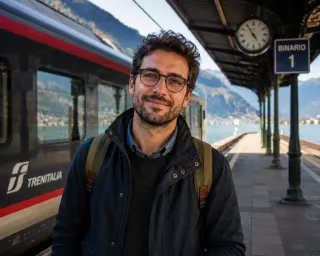
French-speaking Switzerland is built for travelers who prefer train doors to car keys. From Geneva’s lakefront promenades to Sion’s sun-baked vineyards, the region’s cities, castles and mountain villages are woven together by frequent, comfortable rail services that make driving largely optional. With a bit of planning, you can stitch Geneva, Lausanne, Montreux, Gruyères, Neuchâtel and Sion into a coherent rail-first journey, with optional panoramic trains and lake boats that add drama without turning your trip into a puzzle of supplements and seat reservations.
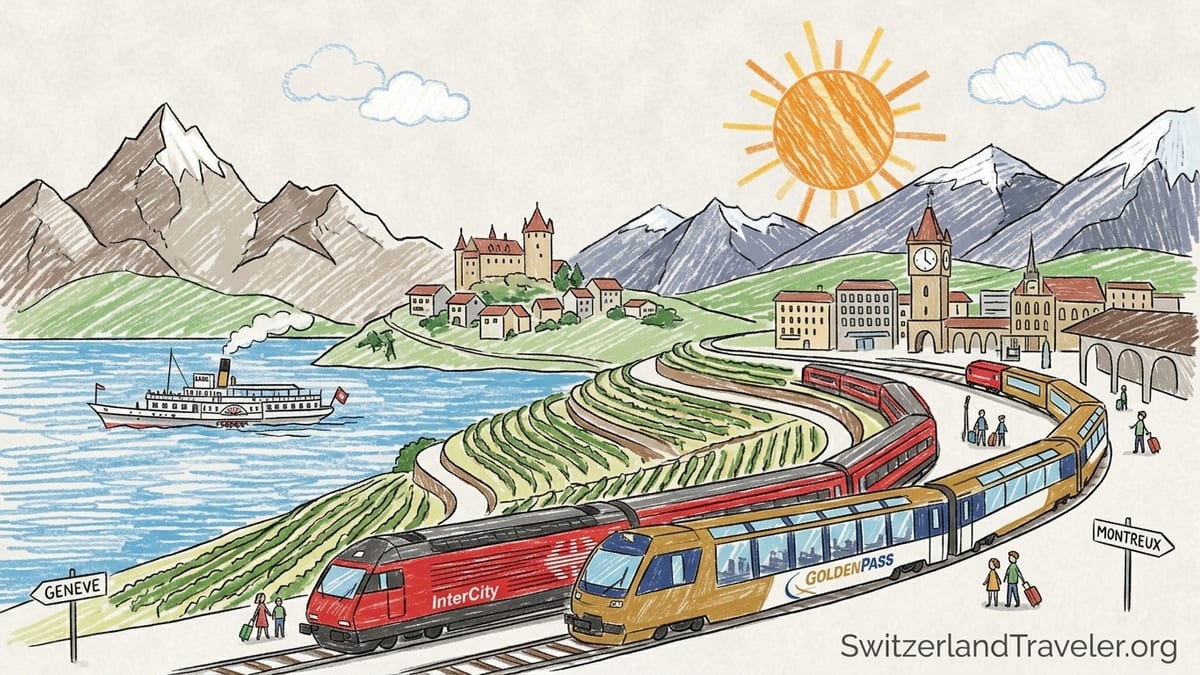
Why French-Speaking Switzerland Works So Well by Train
On a map, the main cities of French-speaking Switzerland form a loose arc around Lake Geneva and along the Rhône valley. In practice, this arc is stitched together by fast InterCity and InterRegio trains that run at least hourly, often every 30 minutes, between Geneva, Lausanne, Montreux and the Valais. Regional trains and a few short branch lines fill in the gaps toward Gruyères, Fribourg and Neuchâtel. For most visitors, this network is dense and reliable enough that renting a car is not just unnecessary, it can be a burden in cities where parking is scarce and expensive.
The practical advantages show up immediately. From Geneva Airport, you roll your suitcase 2 or 3 minutes to the underground station and take a direct train to Lausanne in around 45 minutes. A similar InterRegio brings you from Lausanne to Montreux in about 25 minutes, hugging the lakeshore past the Lavaux vineyards. Regional trains from Montreux continue up the Rhône valley to Sion roughly every half hour at peak times. The same pattern repeats across the region: relatively short journey times, simple platform changes and stations embedded in the walkable historic cores.
Costs are also more predictable by rail. A typical full-fare, second-class ticket from Geneva to Lausanne booked on the day runs in the tens of francs rather than hundreds, and SBB frequently offers Saver Day Passes or point-to-point Saver Tickets that bring prices down if you book a few weeks ahead. For travelers using Swiss Travel Passes or regional passes, the calculus is even simpler, as most mainline and regional trains in this area are fully included without supplements.
Underlying this is a deliberate positioning by Swiss Federal Railways. SBB’s leisure pages highlight itineraries along Lake Geneva, up to Gruyères and through Neuchâtel’s watchmaking country as turnkey rail excursions, while Lausanne Tourism explicitly promotes panoramic and regional train outings as day trips from the city. This institutional framing matters: timetables, station signage and tourism brochures are designed around rail users, not drivers, so you benefit directly when you plan your trip around the train network.
Building a Logical Rail-First Route
A practical way to link Geneva, Lausanne, Montreux, Gruyères or Fribourg, Neuchâtel and Sion is to think of your trip as a loose loop with modest backtracking. One common pattern is to start in Geneva, follow the lake to Lausanne and Montreux, make a day excursion into Gruyères country, then swing north to Fribourg and Neuchâtel before dropping back down via Lausanne to reach Sion in the Rhône valley. Trains make this entire loop straightforward without ever touching a steering wheel.
For example, you might spend two nights in Geneva, using the first full day to adjust to the time zone and stroll the Old Town and lakefront. On day three, you roll your luggage onto an InterRegio to Lausanne and settle in there for three nights. Lausanne’s central position and good connections make it an efficient base for day trips to Montreux, Vevey and the Lavaux vineyards by regular trains, plus a one-day excursion to Gruyères via the Broc valley. From Lausanne, direct or one-change services to Fribourg and Neuchâtel let you reach both cities and be back at your hotel by evening.
Once you have explored the lake and the northern arc toward Neuchâtel, you can reposition to Sion for two or three nights. A typical move would be Lausanne to Sion in roughly 1 hour 15 minutes on a direct InterRegio, with the last 30 minutes following the Rhône past vineyards and castle-topped hillsides. Sion’s small, relaxed old town makes a good base for walks, winery visits and side trips up side valleys such as Hérens or Anniviers using the coordinated postbus network that meets arriving trains outside the station.
Even if you prefer to change hotels less often, rail makes it easy. Some travelers base themselves entirely in Lausanne or Montreux and treat Geneva, Gruyères, Neuchâtel and Sion as day trips. It is a long day to reach Sion and back, but perfectly achievable, and the simplicity of throwing a small daypack under your seat instead of unpacking a car at each stop frequently outweighs the appeal of point-to-point driving.
Mainline Segments vs Scenic Detours
The core of this itinerary consists of mainline SBB routes. Geneva to Lausanne, Lausanne to Montreux and Montreux to Sion all use standard-gauge mainline tracks used by fast InterCity, InterRegio and regional trains. These services are modern, air-conditioned and designed for commuters and long-distance passengers, which means level boarding at larger stations, generous luggage racks and clear digital displays. For a rail-first planner, these are your structural beams: predictable, frequent, all-weather links that you can rely on regardless of the season.
Within that backbone, you have several opportunities to divert onto regional or panoramic lines that enhance the experience without complicating the logistics. A classic example is the short “Train des Vignes” line between Vevey and Puidoux Chexbres above the Lavaux vineyards. Instead of riding the fast but relatively enclosed mainline between Lausanne and Vevey, you can hop off at Vevey, board this small regional train and climb through terraced vineyards, with sweeping views over Lake Geneva and the Alps. The ride takes roughly 15 minutes, and trains usually run about once an hour, which means it can slot naturally into a sightseeing day without the feel of a major detour.
Another optional detour is to switch from standard InterRegio trains to the GoldenPass panoramic services between Montreux and the mountain village of Montbovon or further toward Zweisimmen. The line is operated by the Montreux Oberland Bernois Railway and climbs steeply out of Montreux, quickly trading palm trees and lakeside promenades for meadows and chalet hamlets. While GoldenPass-branded trains emphasize oversized windows and nostalgic Belle Époque coaches, the underlying route is also served by regular regional trains, so you can decide how much of a “named train” experience you want without losing access to the scenery.
On the lake itself, boat services add another layer. Passenger ferries operated by the local navigation company crisscross Lake Geneva between Geneva, Lausanne, Vevey, Montreux and smaller resort towns. In practice, this means you can replace one leg of your rail day with a boat segment, for example traveling from Geneva to Lausanne by train, then returning on an afternoon paddle steamer that takes several hours but doubles as a sightseeing cruise. In summer, many passes valid on trains also include at least partial coverage on these boats, making them an easy, rail-compatible extension.
Optional GoldenPass and Train des Vignes Segments
The GoldenPass route from Montreux into the Pre-Alps is heavily marketed, but you do not need to treat it as a stand-alone product. If you are spending a day in Montreux within this French-speaking Switzerland loop, you could allocate half a day to ride from Montreux to Montbovon, enjoy a simple lunch in a village café and then return by a later train. This gives you the experience of the steep climb and the shift from palm-lined Riviera to mountain pasture, without dedicating a full day to continuing across the language border into the Bernese Oberland unless you wish to.
When you look at timetables, you will see both GoldenPass Express or GoldenPass Panoramic trains and ordinary regional services on this line. The panoramic and Belle Époque trains emphasize large windows, wood-panelled interiors or retro styling and may require or recommend seat reservations, especially in peak summer. By contrast, regional trains are covered like any other SBB service by your ticket or rail pass and can be boarded spontaneously. If you prefer flexibility, consider aiming for a GoldenPass-branded train in one direction and taking a regular service back, so you experience the line without tying yourself to one exact departure.
The Train des Vignes offers a different type of add-on: short, frequent and woven into everyday life in the Lavaux region. Running between Vevey and Puidoux Chexbres, it climbs above the lake, crossing terraced vineyards that are part of a UNESCO-listed cultural landscape. Typical travelers might combine it with a lakeside walk and wine tasting, for example taking a morning InterRegio from Lausanne to Vevey, hopping on the Train des Vignes uphill, then walking back down through the vineyard paths to Cully or Epesses before catching a standard train to Montreux. The point here is variety rather than grand spectacle, and because the ride is short and reasonably priced, it fits easily into a half-day without complex reservations.
Both of these optional segments highlight a broader planning principle: let the mainline trains move you between bases, then layer in scenic mini-journeys where they naturally fit into your sightseeing days. That keeps your itinerary focused and minimizes the risk of spending more time managing tickets and departure times than actually enjoying the lakes, villages and old towns you came to see.
Gruyères, Fribourg and Neuchâtel Without a Car
Gruyères, perched on a hill above the upper Sarine valley, is one place many travelers assume requires a car. In reality, it is connected seamlessly by rail. From Montreux or Lausanne, you take an InterRegio or regional train to Palézieux or Bulle, then transfer to a smaller regional service that stops at Gruyères station below the village. From there, a signed path leads uphill in about 10 to 15 minutes to the walled town and castle. Your luggage can stay at your base in Montreux or Lausanne, so you climb only with a light daypack rather than hauling suitcases up medieval cobbles.
The same rail-first logic applies to the chocolate-focused excursions that operate in the region. While some branded “chocolate trains” package together factory visits and castle tours with reserved seats on nostalgic rolling stock, the underlying tracks are public. You can piece together your own version by taking standard trains between Montreux, Montbovon, Gruyères and Broc, timing your day around entry slots for cheese and chocolate sites rather than charter timetables. This keeps costs predictable and avoids the pressure to fit your sightseeing into a narrow window dictated by a single excursion train.
Fribourg and Neuchâtel, both north of the lake, are straightforward by mainline rail and make excellent additions to a French-speaking Switzerland loop. From Lausanne, direct trains reach Fribourg in roughly 45 minutes, and from there Neuchâtel is about another hour away along a line that skirts lakes and countryside rather than high alpine scenery. Many travelers choose to overnight in one of these cities to sample their distinct characters: Fribourg with its split-level old town straddling the Sarine, Neuchâtel with its lakeside promenade and yellow sandstone architecture tied to the region’s watchmaking heritage.
Here again, a car would add little benefit. Both cities have compact centers centered on the station, with most sights, restaurants and hotels within a 10 to 15 minute walk or a short tram or bus ride. If you decide to venture into smaller watchmaking towns further up the Jura, such as La Chaux-de-Fonds or Le Locle, regional trains provide a direct link, allowing you to sample these landscapes without navigating mountain roads or searching for parking near modestly sized museums and workshops.
Lake Geneva Boats and When a Car Becomes Truly Unnecessary
Lake Geneva is one of the rare places where surface transport itself is part of the attraction. Paddle steamers and modern ferries trace the shores between Geneva, Nyon, Lausanne, Vevey, Montreux and small resort towns, and in summer their decks fill with a mix of commuters, school groups and day-trippers. For a rail-first traveler, these boats are not competition but complement: many regional and international rail passes include at least discounted travel on the lake, and the main railway stations in Geneva, Lausanne, Vevey and Montreux are within a short walk of the piers.
A typical example of a boat-rail combination might start with a morning train from Lausanne to Montreux for a castle visit, followed by a lakeside walk to Chillon and then an afternoon paddle steamer back to Lausanne. Another option is to leave Geneva by boat, cruising east along the lake before disembarking in Nyon or Lausanne and returning to your base by train. Because the boats run on fixed timetables, and delays are rare, they mesh easily with the clockwork precision of the Swiss rail network. The main extra planning step is to check seasonal schedules, since some long-distance services run only in the warmer months.
All of this further reduces the case for renting a car. Once you factor in hotel parking charges, limited spaces in historic centers and the reality of summer congestion along the lakeside highways, rail and boat start to look not just romantic but rational. In practice, many itineraries that once seemed to require a car, such as visiting multiple wine villages, castles and lakeshore promenades in a single day, are easier by public transport. You can step off a boat in Vevey, taste wine in a terraced Lavaux village, board a regional train uphill and ride back to Lausanne without ever having to designate a driver.
The main caveat is timing. If you plan to stay in extremely small villages or high mountain resorts without railway access, such as certain remote side valleys in Valais, a car can still offer independence. But for a loop focused on Geneva, Lausanne, Montreux, Gruyères, Neuchâtel and Sion, the combination of long-distance trains, regional lines, postbuses and lake boats is comprehensive enough that a rental car often ends up parked more than it moves.
Luggage, Station Logistics and Seat Reservations
Arriving in Switzerland with luggage, the immediate question is how well trains can handle suitcases. On the mainline routes that form the spine of this itinerary, carriages typically have low steps or level boarding at major stations, plus large luggage shelves near the doors and racks above the seats. Travelers commonly bring medium suitcases and daypacks without issue. For sprawling bags, aim for the dedicated luggage spaces at the end of each carriage and avoid blocking aisles, especially at peak commuting times around Geneva and Lausanne.
If you prefer not to roll a suitcase at all between cities, SBB’s luggage services can move bags separately while you travel light. In practical terms, this might mean checking a suitcase in Geneva and collecting it later in Sion or Montreux, freeing you to change trains or add a short scenic detour like the Train des Vignes without worrying about escalators or station underpasses. For most visitors on a one- or two-week trip, using a mix of a single checked suitcase and a small backpack keeps transfers between platforms manageable, even when regional lines require you to cross from one side of the station to another.
Seat reservations on Swiss trains are the exception rather than the rule. On standard InterCity, InterRegio and regional trains between Geneva, Lausanne, Montreux, Gruyères, Neuchâtel and Sion, you simply board with a valid ticket or pass and sit in any open seat in the correct class. Reservations are either not offered or purely optional. Supplements and reservations tend to apply mainly to named panoramic trains such as certain GoldenPass services. Even there, it is often possible to ride over the same tracks in an ordinary regional train that does not require any extra fee, at the cost of slightly less dramatic windows.
One subtle but important detail: in summer and during major events such as the Montreux Jazz Festival, trains on the Lake Geneva shore can become busy in the late afternoon and evening. If you carry significant luggage, aim for departures outside peak commuting hours and consider boarding nearer the ends of the train, where carriages are often less full. Learning to read the occupancy indicators in the SBB mobile app or on station displays can also help you pick quieter connections at a glance.
The Takeaway
French-speaking Switzerland is one of Europe’s most rail-friendly regions, and a thoughtfully planned itinerary between Geneva, Lausanne, Montreux, Gruyères or Fribourg, Neuchâtel and Sion shows why. Mainline trains create a fast, frequent backbone, while short scenic branches like the Train des Vignes and optional panoramic services such as the GoldenPass enrich individual days without dictating your entire schedule. Lake boats and well-timed postbuses extend your reach into vineyards, castles and small mountain valleys, often more comfortably than a car could.
For travelers used to driving, the biggest adjustment is psychological rather than practical. You learn to think in terms of hourly departures, integrated tickets and station-centric city layouts instead of parking garages and road maps. In return, you gain the ability to watch the landscape from a wide train window instead of a windshield, to step off in a lakeside village for an impromptu stroll and to arrive in compact old towns with your hotel a short walk away instead of a complex sequence of turns through one-way streets.
Ultimately, the case for a rail-first journey here is not ideological, it is experiential. The rhythm of trains and boats naturally matches the scale of the region’s towns and landscapes, and the infrastructure has been tuned over decades to support precisely the kind of multi-stop trip many visitors now seek. If you build your route around Geneva, Lausanne, Montreux, Gruyères, Neuchâtel and Sion, and treat cars as optional extras rather than default tools, you are likely to find that the transport itself becomes one of the quiet highlights of your time in French-speaking Switzerland.
FAQ
Q1. Do I need to reserve seats for trains between Geneva, Lausanne, Montreux, Gruyères, Neuchâtel and Sion?
Seat reservations are generally not required on standard InterCity, InterRegio and regional trains on these routes. You can board with a valid ticket or pass and sit in any free seat in your class. Reservations and supplements apply mainly to named panoramic services, and even then you can often choose equivalent regional trains without them.
Q2. Is a Swiss Travel Pass worth it for this itinerary?
For a multi-day loop combining Geneva, Lausanne, Montreux, Gruyères, Neuchâtel and Sion with several day trips, many travelers find a Swiss Travel Pass or regional pass good value, especially if they also plan to use lake boats and urban transport. If you travel only on a few mainline segments, point-to-point tickets or Saver Day Passes bought in advance can be cheaper.
Q3. How much luggage can I realistically take on Swiss trains?
Swiss trains are designed to handle typical holiday luggage: a medium suitcase plus a small backpack per person is easy to manage. Larger or multiple suitcases are possible but more awkward when changing platforms or using short regional trains. SBB luggage services are available if you want to send big bags separately.
Q4. Is it possible to visit Gruyères as a day trip from Lausanne or Montreux?
Yes. Many visitors take a morning train from Lausanne or Montreux, change once onto the regional line and arrive in Gruyères by late morning. After exploring the village, castle and food-focused museums, they return by rail in the afternoon or early evening without feeling rushed.
Q5. When is the best season to ride the Train des Vignes or GoldenPass segments?
Both are attractive year-round, but the Train des Vignes is particularly striking from late spring through early autumn when the Lavaux vineyards are green and the lake shimmers in bright light. GoldenPass services show strong seasonal contrast, with summer meadows and winter snowfields offering very different but equally photogenic views.
Q6. Are Lake Geneva boat rides included in train tickets or passes?
Coverage varies by ticket type. Some national and regional rail passes include lake boats in full or at a discount, especially in summer, while simple point-to-point train tickets usually do not. It is worth checking the precise validity of your chosen pass before planning a long boat segment as part of your day.
Q7. Do I ever really need a rental car for this route?
For an itinerary focused on Geneva, Lausanne, Montreux, Gruyères, Neuchâtel and Sion, most travelers find no practical need for a car. Renting only becomes compelling if you plan to stay in very small, rail-less villages or want maximum flexibility in remote side valleys that rely more on infrequent buses than on trains.
Q8. How child-friendly are Swiss trains and boats on this itinerary?
Families generally find trains and boats in this region very child-friendly. Stations have clear signage, trains have space for strollers and boats provide open decks for restless kids. Short scenic segments such as the Train des Vignes or a Lake Geneva paddle steamer ride can be highlights for children rather than just transport.
Q9. Can I work remotely while moving between these cities by train?
Yes, many InterCity and InterRegio trains offer power sockets and stable mobile reception along much of the route, especially between major centers. Quiet carriages and first-class sections are useful if you need to join calls or focus on laptop work while watching vineyards and lakes roll by outside.
Q10. How far in advance should I plan and book my rail itinerary?
For standard trains in this region, detailed planning can be relatively last-minute, as seats are not limited in the same way as planes. However, booking passes or Saver Day Passes several weeks in advance can reduce costs, and securing reservations on popular panoramic trains or boats ahead of peak summer dates provides extra peace of mind.