


Central Switzerland is one of Europe’s most beautiful regions, but it is also one of the most expensive. Lucerne, Lake Lucerne, Mount Pilatus and Mount Rigi deliver outstanding value only if you understand how much key items actually cost and how to structure your spending. This guide focuses on concrete, up to date examples so you can build a realistic budget for 3, 5 and 7 day trips without unpleasant surprises.
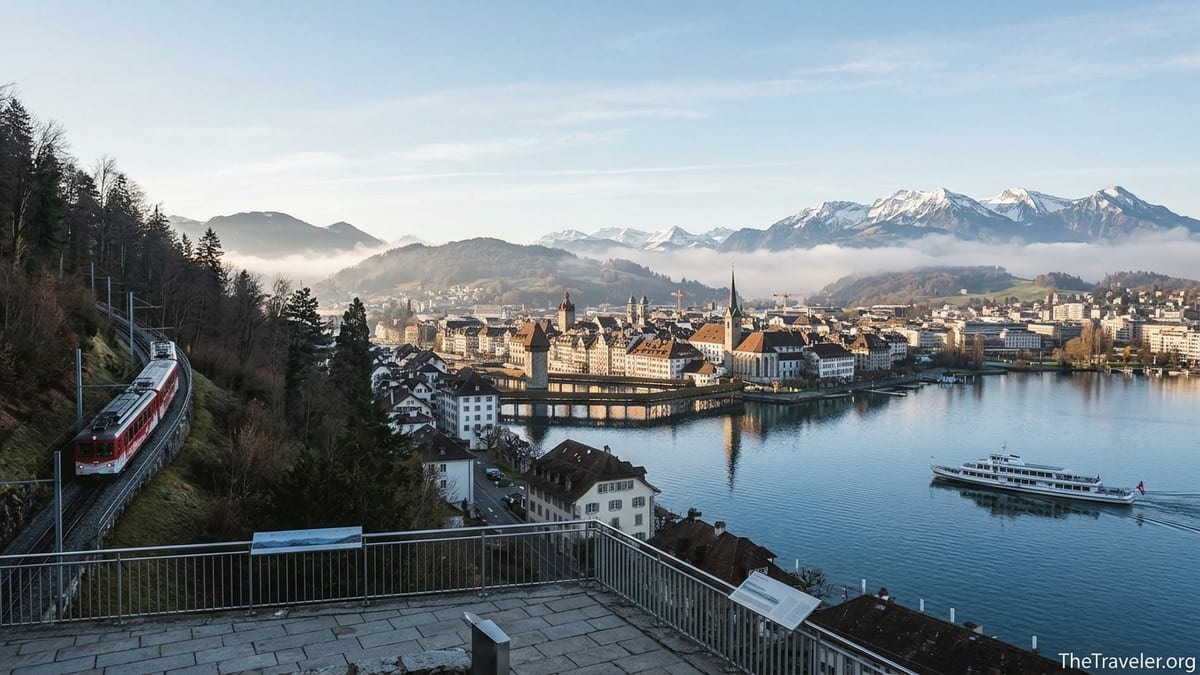
How Much Does a Central Switzerland Trip Really Cost?
When travelers talk about “sticker shock” in Switzerland, they rarely mean a single ticket. It is the combination of hotel rates, mountain railways, lake cruises and restaurant meals that rapidly adds up. For a typical couple staying in Lucerne in 2026, a comfortable but not extravagant daily budget usually lands somewhere between 260 and 450 Swiss francs, depending on hotel category and how many premium excursions you include.
At the lower end, a careful traveler staying in a well rated budget hotel or guesthouse outside Lucerne’s old town might pay around 140 to 190 francs per night for a double room, add 25 to 40 francs per person for simple restaurant or supermarket meals, and then choose one substantial paid activity every second day. At the higher end, a central four star hotel, sit down meals twice a day and at least one mountain or lake excursion daily can easily push costs over 400 francs per day for two people.
Transport is a major variable. A 3 day second class Swiss Travel Pass valid in 2026 costs in the region of 250 to 280 francs per adult and covers almost all public trains, buses and scheduled boats, including the Lake Lucerne fleet, for those days. By contrast, paying individual fares with no pass can mean 30 to 70 francs per person for a single day of regional train and boat trips, even before you add mountain railways.
Because of this, thinking of your budget in “layers” is helpful: accommodation, food and local transit form your base costs, then mountain railways, lake cruises and tours sit on top as discretionary add ons. The following sections break those layers down with real examples from Lucerne and the surrounding mountains.
Hotels and Accommodation: What You Pay by Category
Lucerne is the main base for exploring Central Switzerland, and its hotel prices largely set the tone for the region. In high season, a clean double room in a budget hotel or simple guesthouse can often be found around 140 to 190 francs per night, especially if you stay a short walk or a short bus ride from the old town rather than on the lakefront. These properties tend to include basic breakfast, free Wi Fi and a Lucerne Visitor Card that gives free local buses and discounts on some attractions.
Mid range three and four star hotels in central Lucerne normally price standard double rooms in the 220 to 350 franc range in summer, depending on lake views and exact location. For example, a well rated three star hotel close to the station with modern rooms and a breakfast buffet will often sit around 230 to 270 francs per night, while classic lakefront properties with historic façades easily exceed 300 francs for similar dates.
At the top end, iconic lakefront five star hotels with spa facilities or grand historic interiors regularly charge 450 francs per night and upwards for a double room in high season. These establishments appeal to travelers for whom the hotel itself is a highlight equal to any mountain excursion. For most visitors seeking value, the sweet spot lies in the mid range, using smart booking strategies such as staying Sunday to Thursday rather than over a peak weekend, or visiting in May, early June or late September when rates are slightly softer than July and August.
Outside Lucerne, accommodation around Weggis, Vitznau or in smaller lakeside villages can be marginally cheaper, particularly for apartments or simple hotels. A holiday apartment suitable for two people might cost 130 to 200 francs per night plus cleaning fees. This becomes attractive for 5 or 7 night stays, especially if you plan to self cater and reduce restaurant spending.
Mountain Railways and Cable Cars: Pilatus, Rigi and Beyond
Mountain railways are often the single biggest line item after accommodation. On Mount Pilatus, the flagship excursion is the Golden Round Trip, which combines a boat ride from Lucerne to Alpnachstad, the steep cogwheel railway to the summit, an aerial cableway and gondola down to Kriens, and a short bus ride back into town. Adult pricing for this loop in 2026 is typically in the low to mid 100 franc range per person, with exact amounts depending on season and whether you hold a Swiss Half Fare Card or Swiss Travel Pass.
A more focused option is to skip the lake boat and combine only the railway and cable cars. A straightforward return between Pilatus Kulm and Kriens or Alpnachstad often comes out around 72 to 120 francs per adult at full price, again with substantial reductions if you have a Half Fare Card. If you travel as a couple, one Pilatus day can therefore add roughly 200 francs to your budget before food, which underlines why it is important to choose mountain days deliberately rather than stringing them together on consecutive days without planning.
Mount Rigi, by contrast, offers a mix of higher and lower costs depending on the ticket type. A Rigi day ticket for the cogwheel railways and certain cable cars is generally around 78 francs at full fare, and about half that if you have the Half Fare Card. Holders of a Swiss Travel Pass often ride the main Rigi routes without additional payment, which can save a couple well over 100 francs on a single clear day. Simple one way journeys on subsidiary cable cars, such as the link between Kräbel and Rigi Scheidegg, fall closer to 29 francs one way or 46 francs return at full price for adults, with half price reductions common for many visitors.
Other mountain destinations in Central Switzerland, like the Stanserhorn with its open top cable car or the Brienzer Rothorn accessed by steam railway from the lake, are similarly priced in the 70 to 120 franc range for a full adult excursion. A realistic rule of thumb is that every major summit day will cost 80 to 130 francs per person before food and drinks at the top. When planning a multi day stay, limiting yourself to two or three premium mountains and filling other days with free or inexpensive hikes, lake walks or city sightseeing keeps the overall budget under control.
Lake Lucerne Cruises and Regional Trains: What to Expect
Boats on Lake Lucerne are both transport and sightseeing, and prices reflect that dual role. A simple one hour circular cruise from Lucerne, operated on modern motor vessels, often costs around 30 francs per adult at full price. Longer trips to Vitznau, Weggis or Flüelen, especially on nostalgic paddle steamers, cost more but are still typically below 70 francs one way even on the longest sectors. A Lake Lucerne day ticket that allows unlimited travel on scheduled boats for one calendar day usually sits somewhere around 70 to 90 francs per adult.
If you hold a Swiss Travel Pass, scheduled Lake Lucerne services are included, meaning that the marginal cost of an extra cruise is effectively zero on those pass days. With a Swiss Half Fare Card or other rail pass, you generally receive 50 percent reductions on most standard boat tickets. For travelers without any pass, combining a morning cruise to Vitznau, an ascent of Mount Rigi and an afternoon return to Lucerne can easily reach 150 to 170 francs per person in combined boat and mountain costs.
On land, regular second class train fares between Lucerne and nearby cities are easy to find in advance using the Swiss national rail timetable. Typical one way prices without discounts might be in the region of 13 to 20 francs for Lucerne to Zurich, 15 to 25 francs for Lucerne to Interlaken via the scenic Brünig line, and under 10 francs for short hops around the lake or into smaller valleys. Saver Day Pass offers released in limited quantities can reduce costs significantly if you commit to a specific date; the cheapest versions can fall below 60 francs for a full day of network wide travel, with even lower pricing for holders of the Half Fare Card.
As a result, a traveler planning one or two substantial rail days during a 3 or 5 day Central Switzerland stay could either buy regular point to point tickets or look for Saver Day Passes. For longer trips with frequent train and boat use, a Swiss Travel Pass starts to look attractive, especially because it simplifies decisions on the ground: you can hop on most trains, postbuses and boats without thinking about individual ticket prices.
Food, Restaurants and Everyday Spending
Food is the third main budget pillar after accommodation and transport. In Lucerne and other Central Switzerland towns, a basic sit down lunch of a main dish and a soft drink in a mid range restaurant often costs around 25 to 35 francs per person. A simple pizza or plate of pasta can be slightly cheaper, perhaps in the low 20s, while a traditional dish such as Zürcher Geschnetzeltes with rösti or a generous schnitzel often exceeds 30 francs.
Dinner in a casual but popular restaurant averages between 35 and 50 francs per person for a main course, plus 5 to 8 francs for mineral water or soft drinks and 8 to 15 francs for a glass of wine or beer. A two course dinner with a shared dessert for a couple can therefore land between 90 and 130 francs once you factor in drinks. Upscale venues along the lakefront or in landmark hotels naturally charge more, with tasting menus or multi course meals easily climbing beyond 120 francs per person before beverages.
Travelers on tighter budgets can save considerably by using supermarkets and bakeries. Many Migros and Coop branches offer ready made salads, sandwiches and hot dishes; a picnic style lunch bought this way is usually 10 to 18 francs per person. Bakeries often sell filled breads, quiches and pastries for a few francs each. Coffee at a café is generally 4 to 6 francs, while takeaway espresso stands can be a little cheaper. By alternating self catered or supermarket lunches with restaurant dinners, a couple can hold their food spending to roughly 80 to 120 francs per day instead of 150 francs or more.
Do not forget incidental costs. A scoop of gelato on the lakeside is around 4 to 5 francs, bottled water from kiosks is 3 to 4 francs unless you refill from public fountains, and small souvenirs quickly accumulate. For realistic planning, it is wise to build an extra 10 to 20 francs per person per day into your budget to cover these small but consistent outlays.
Sample Daily Budgets for 3, 5 and 7 Day Trips
To translate all of these prices into something practical, it helps to imagine complete days rather than isolated tickets. Consider a couple on a 3 day Central Switzerland stay who choose a mid range hotel in Lucerne at 260 francs per night including breakfast. On their first full day, they take a one hour Lake Lucerne cruise at roughly 30 francs per person, stroll the city and enjoy two restaurant meals totaling about 120 francs. Their spending that day would be around 440 francs in total: 260 for the hotel, 60 for the cruise and 120 for food and incidentals.
On day two, they invest in the Mount Pilatus Golden Round Trip at a bit over 100 francs per person and again eat out twice for about 120 francs combined. Including the hotel, that day could easily reach 580 francs: 260 for accommodation, roughly 220 for the two Pilatus tickets and 100 to 120 for meals and small extras. Averaged over their 3 day stay, including a less expensive arrival or departure day focused mostly on walking the old town, they might be looking at a total trip cost in the neighborhood of 1,400 to 1,600 francs.
Stretching to a 5 day visit gives more scope for lower cost days between major excursions. The same couple might allocate two “big spend” days, one on Mount Rigi combined with a boat ride and another on Pilatus, then balance those with inexpensive walking and museum days. Their hotel line for five nights would be around 1,300 francs. Adding two premium mountain days at about 200 francs each per couple, two moderate sightseeing days at about 150 francs each and one quiet day at 120 francs brings their overall total into the range of 2,100 to 2,300 francs.
For a 7 day itinerary, passes become especially relevant. Two adults who buy an 8 day second class Swiss Travel Pass, costing around 420 to 450 francs per person, lock in most of their trains and boats for the entire week, including scheduled Lake Lucerne services. If they then choose two or three mountain railways with pass discounts, stay in a mid range Lucerne hotel at around 260 francs a night and keep food spending to about 100 to 120 francs per day, their total for a week will typically land somewhere between 3,400 and 3,900 francs. Travelers content with simpler accommodation and more self catering can trim that total by several hundred francs, while fans of luxury hotels and fine dining should budget at least 30 to 40 percent more.
Passes, Discounts and When They Make Sense
Whether to buy a Swiss Travel Pass, a Swiss Half Fare Card or individual tickets is one of the most common questions for Central Switzerland trips. A key principle is that no single product is best for everyone; it depends on how intensively you plan to use trains, boats and mountain railways. For visitors planning three or more long distance travel days within a week, such as airport to Lucerne, Lucerne to another region and then back to a different airport, the arithmetic often favors a pass. The 3, 4, 6 and 8 day Swiss Travel Pass options all include unlimited use of most public trains, buses and boats for those consecutive days, plus entry to many museums.
The Swiss Half Fare Card, valid for one month, offers 50 percent discounts on almost all public transport tickets and many mountain railways for a fixed upfront cost. As of 2026, that card for tourists is priced around 150 francs. It tends to work well for travelers who are in Switzerland for more than a week and expect to make multiple medium priced trips throughout the country rather than concentrating everything into a handful of intense days. In Central Switzerland alone, a Half Fare Card halves the fares on regular trains, many Lake Lucerne cruises and most cogwheel railways and cable cars.
For shorter stays based largely in Lucerne, you may find that buying one or two Saver Day Passes for your heaviest train days, then adding individual mountain tickets on top, is more economical than committing to a full Swiss Travel Pass. Saver Day Passes are date specific day tickets whose price rises as the travel date approaches; early purchasers with a Half Fare Card sometimes pay under 40 francs for a whole day of nationwide transport, though prices vary by demand and season. The important point is to compare the sum of your likely individual tickets with the fixed cost of a pass, using real journeys such as Zurich Airport to Lucerne, Lucerne to Interlaken and Lucerne to Mount Rigi rather than abstract distances.
Families should remember that children often travel very cheaply. Kids under 6 usually travel free on most public transport, and those between 6 and 15 can often travel free with a special family card when accompanied by a parent holding a valid Swiss Travel System ticket. On mountain railways, small supplements may still apply, but the overall effect can be to reduce the cost of a family’s week in Central Switzerland by hundreds of francs compared with paying full adult fares for every child.
The Takeaway
Central Switzerland offers a rare combination of compact distances, efficient public transport and wide ranging scenery, from lakefront promenades to snowy summits. The price of that convenience and beauty is a high baseline cost for almost every part of the trip. By understanding concrete price ranges for hotels, mountain railways, lake cruises, regional trains and restaurant meals, you can make deliberate choices instead of reactive ones.
For a 3 day break, splurging on one classic mountain such as Pilatus and one Lake Lucerne cruise, while choosing a good value hotel and alternating restaurant meals with supermarket lunches, delivers a memorable but manageable bill. Over 5 days, balancing two premium mountain days with several low cost city or hiking days keeps the experience rich without the budget spiraling. Across a 7 day stay, the smart use of a Swiss Travel Pass or Half Fare Card, combined with careful selection of which peaks matter most to you, can shave hundreds of francs off the final total.
Ultimately, the goal is not to eliminate spending in Central Switzerland but to direct it toward the experiences that matter most. Knowing in advance that a single mountain day can cost as much as your hotel night, or that a Swiss Travel Pass might cover a full week of trains and boats for less than a handful of long distance fares, lets you design a trip that feels generous rather than anxious. With realistic daily budgets and a clear idea of what tickets to buy, the region’s lakes, cogwheel trains and cable cars become a pleasure, not a financial puzzle.
FAQ
Q1. Is Central Switzerland more expensive than the rest of the country?
Central Switzerland, especially Lucerne and the Lake Lucerne area, broadly reflects national Swiss price levels. Hotels and restaurant meals are similar to major cities, while flagship mountain excursions such as Pilatus or Rigi sit in the typical 80 to 130 franc range per adult. The region is not dramatically more expensive than other tourist hotspots but offers fewer ultra budget options than some larger cities.
Q2. How much should I budget per day in Central Switzerland as a couple?
A realistic daily budget for two adults staying in a mid range Lucerne hotel, eating one restaurant meal and one simpler meal per day, and adding a paid activity every second day usually falls between 320 and 420 francs. This includes accommodation around 240 to 280 francs, food around 80 to 120 francs and an average of 40 to 60 francs per day for transport and admissions when spread over the length of the trip.
Q3. Are mountain railways like Pilatus and Rigi worth the cost?
For most visitors, at least one or two mountain excursions are the highlight of a Central Switzerland trip and justify their high prices. The Pilatus Golden Round Trip combines boat, cogwheel train and cable cars in a single classic loop, while Rigi offers broad lake panoramas and more walking options. Given that each can cost around 100 francs or more per person, it is worth checking the forecast and choosing the clearest days to ensure you get full value.
Q4. Should I buy a Swiss Travel Pass for a short 3 day Lucerne stay?
For a compact 3 day visit focused mainly on Lucerne, one nearby mountain and perhaps a short cruise, a full Swiss Travel Pass is not always necessary. You might spend less by buying an airport to Lucerne ticket, a Lake Lucerne cruise, and an individual mountain railway ticket. However, if you intend to ride multiple trains and boats daily, a 3 day pass can still be convenient and reduce overall costs, so it is worth comparing sample itineraries in a fare calculator.
Q5. How can I reduce food costs without cooking every meal?
You can significantly reduce food spending by mixing restaurant meals with supermarket and bakery options. Many locals buy hot dishes or salads from Migros or Coop food counters for 10 to 18 francs, then save restaurants for dinners or special occasions. Filling bakery snacks for a light lunch are often 5 to 10 francs, and tap water from fountains is safe to drink, which helps avoid repeated bottled water purchases.
Q6. Are lake cruises on Lake Lucerne included in passes?
Scheduled cruises on Lake Lucerne are generally included with the Swiss Travel Pass on valid days, meaning you do not pay extra for regular boat services. Holders of the Swiss Half Fare Card typically receive a 50 percent discount. Travelers without any pass must pay the full fare, which could be around 30 francs for a short round trip and more for longer routes.
Q7. How far in advance should I book hotels in Lucerne?
For peak summer months and festival periods, booking Lucerne accommodation several months ahead usually secures better rates and more choice. Shoulder seasons such as May, early June and late September can be more forgiving, but even then, booking at least six to eight weeks before arrival often locks in mid range options around the 220 to 280 franc level for a double room rather than last minute higher rates.
Q8. Do I need to reserve trains and boats in Central Switzerland?
Most regular trains and scheduled lake boats in Central Switzerland do not require reservations; you can board with a valid ticket or pass and sit wherever seats are available. Reservations are sometimes required or recommended only on special panoramic trains or dinner cruises. For routine travel between Lucerne, Zurich, Interlaken and nearby destinations, buying the correct ticket and arriving a few minutes early is usually sufficient.
Q9. Is cash necessary, or can I rely on cards and phones?
Within Lucerne and on major mountain railways and lake cruises, credit cards and contactless payments are widely accepted, and many travelers manage almost entirely without cash. However, carrying a small amount of Swiss francs is still useful for small rural kiosks, public toilets that require coins, or occasional card terminal outages. An emergency reserve of 50 to 100 francs in notes and coins is generally enough.
Q10. What is the best season for good value without losing the views?
Late spring and early autumn often provide the best balance between price and experience. May, early June and late September typically bring lower hotel rates than high summer, more manageable crowds on Pilatus and Rigi, and still frequent Lake Lucerne boat services. While weather is always changeable in the Alps, these shoulder periods often deliver clear days and long enough daylight hours to enjoy full mountain and lake excursions.