


Central Switzerland looks compact on a map, but it is easy to burn precious vacation days packing, unpacking and changing hotels. With smart routing, you can see Mount Pilatus, Rigi, Engelberg, Stoos, Lake Lucerne and the historic canton of Uri while sleeping in just one or two bases. This guide lays out realistic 3, 5, 7 and 10 day itineraries that minimize hotel changes and long backtracking trips, using Lucerne as your anchor city.
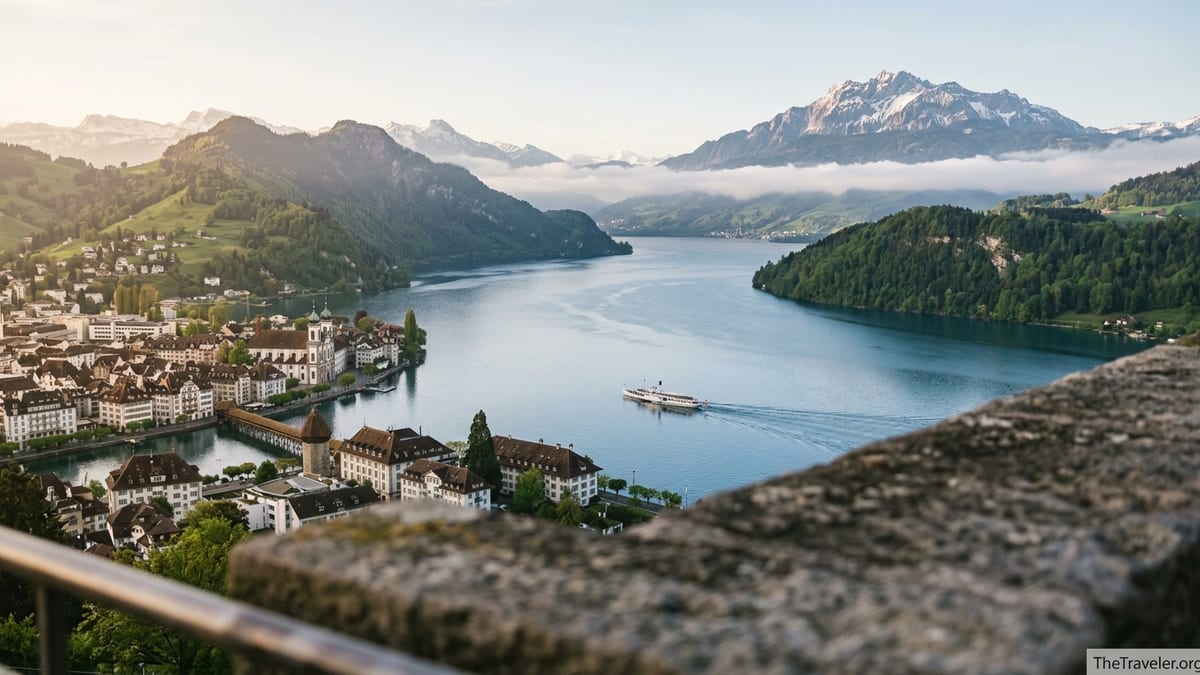
How to Use This Central Switzerland Itinerary Guide
Central Switzerland is one of the most efficient regions in the country for scenic day trips. Lucerne sits at the junction of the main rail lines, lake boats and mountain railways, which means you can reach Pilatus, Rigi, Engelberg, Stoos and the Uri arm of Lake Lucerne on day trips of 6 to 9 hours without needing to move hotels. Fast trains from Zurich Airport reach Lucerne in about one hour, which makes it a natural starting point for most itineraries.
This guide assumes you want alpine scenery and classic Swiss experiences without changing hotels every night. The sample routes use Lucerne as the main base, then add Engelberg or the Lake Uri area for longer trips. Travel times are manageable: Lucerne to Engelberg is around 45 minutes by direct train, to Alpnachstad for Pilatus about 20 minutes, to Vitznau for Rigi about one hour with a boat or 45 to 60 minutes by a train and bus combination, and to Schwyz Stoosbahn about one hour via Arth-Goldau and Schwyz.
Ticket options matter for cost and convenience. Many visitors use the Swiss Travel Pass or regional passes such as the Tell Pass or the Lake Lucerne company’s combined boat and mountain tickets. As an example, a Pilatus Golden Round Trip that includes boat, cogwheel train and cable cars typically costs in the range of 120 to 140 Swiss francs per adult, depending on season and discounts, while a Rigi Classic Round Trip with boat and cogwheel railways usually sits under that. If you hold a Swiss Travel Pass, many lake boats and mountain railways in this region are either fully covered or discounted, which can significantly reduce your total cost over a 5 to 10 day stay.
All itineraries can be reversed or swapped by day depending on the weather. Mountain visibility is highly weather dependent in Central Switzerland. It is wise to decide each morning whether to commit to a high-altitude trip such as Pilatus or Rigi, checking webcams and forecast first, then keep lake or city days as bad weather backups.
3 Day Central Switzerland Itinerary: Lucerne Focus
A three day stay is enough to experience Lucerne’s old town, one major mountain and the lake. Base yourself entirely in Lucerne to avoid hotel changes. Most centrally located hotels are within a 10 to 15 minute walk of the main station and the boat piers, such as properties clustered near the Chapel Bridge or along the lake promenade.
On Day 1, focus on Lucerne itself. After arriving and dropping bags, walk the Chapel Bridge and Water Tower, explore the old town squares and visit the Lion Monument. Many travelers finish the day with a quick sunset cruise on Lake Lucerne using one of the one hour round trip departures from the main pier. These short cruises introduce you to the fjord like shape of the lake without consuming a full day.
Day 2 is ideal for Mount Pilatus from Lucerne. In summer season, one classic option is the Golden Round Trip that combines a Lake Lucerne boat ride to Alpnachstad, the steep cogwheel railway to Pilatus Kulm, then aerial cableway and gondolas down to Kriens, returning by trolley bus to Lucerne. The boat section typically takes around 70 minutes, the cogwheel train about 30 minutes, and the cableways roughly 30 minutes total, not including time on the summit. Under clear skies, plan at least three hours on top for short walks, terrace views and meals.
On Day 3, choose between Mount Rigi or a relaxed lake and museum day. For Rigi, many visitors take a morning boat from Lucerne to Vitznau, connect to the cogwheel train to Rigi Kulm, walk a gentle ridge path and then descend to Arth-Goldau on the other cogwheel line, returning to Lucerne by train. Boat to Vitznau takes around one hour, Vitznau to Rigi Kulm about 30 minutes, and the descent to Arth-Goldau another 30 to 40 minutes, leaving generous time for walks and café stops. If you prefer to stay low, combine the Swiss Transport Museum with a shorter lake cruise and a final stroll through the old town before an evening departure.
5 Day Itinerary: Adding Engelberg and Stoos
With five days, you can enjoy Lucerne plus two or three distinct mountain personalities without changing hotels. A common pattern is to spend four nights in Lucerne and keep Engelberg as a long but straightforward day trip, or to spend three nights in Lucerne and two in Engelberg if you prefer quieter evenings in the mountains.
One efficient five day sequence with a single Lucerne base might look like this: Day 1 Lucerne city and lake, Day 2 Pilatus, Day 3 Rigi, Day 4 Engelberg and Mount Titlis, Day 5 Stoos and the Lake Uri area. Engelberg is reached in about 45 minutes by direct train from Lucerne. From the station, regular buses and a short walk connect you to the valley cable car for Titlis. A complete Engelberg and Titlis outing typically runs 7 to 9 hours door to door, including cable car segments, glacier cave visits and walking time at the top, so set out early.
The Stoos day works well as a contrast to the bigger name mountains. From Lucerne, ride the train toward Arth Goldau and change for Schwyz, then transfer to the Stoos funicular. The Stoosbahn is one of the steepest funiculars in the world and covers the climb in just a few minutes, delivering you to a car free plateau. Once there, you can hike an easy panoramic trail or continue to Fronalpstock by chairlift in good weather for lake views and a loop hike. Some organized sample programs also combine a Lake Lucerne cruise from Beckenried to Brunnen with the Stoosbahn, but doing it on your own by regular trains and bus is straightforward for independent travelers.
If you prefer two bases, an alternative five day route is three nights in Lucerne followed by two nights in Engelberg. Use the Lucerne days for Pilatus and Rigi plus a city and lake day, then move to Engelberg for a pair of slower paced mountain days with the option of Titlis one day and easier walking in the valley or on the Brunni side the next. This pattern cuts back on early trains and lets you enjoy the longer alpine evenings without worrying about the last return service to Lucerne.
7 Day Itinerary: Lucerne Plus Two Mountain Bases
A week in Central Switzerland allows a more spacious rhythm. The most time efficient structure for seven days is often four nights in Lucerne, two nights in Engelberg and one night in the Lake Uri area such as Brunnen or Flüelen, or alternatively five nights in Lucerne and two nights in Engelberg if you prefer fewer moves. Both versions keep hotel changes to a minimum while letting you enjoy mornings and evenings right in the mountains.
A sample seven day plan with limited moves could begin with Day 1 in Lucerne city, Day 2 Pilatus, Day 3 Rigi, Day 4 Engelberg and Titlis as a day trip, Day 5 Stoos or an additional lake day, Day 6 transfer to the Lake Uri area with a scenic cruise, and Day 7 departure via the historic Gotthard rail line or back to Zurich. In practice, that means checking out of your Lucerne hotel on Day 6, storing bags at the station, then boarding a mid morning lake steamer toward Flüelen. This section of the lake passes steep cliffs, the Rütli meadow and Tell’s Chapel, with commentary on board in multiple languages.
Spending a night near Lake Uri allows you to experience the quieter evenings once day trippers are gone. In Brunnen, for example, you can walk the lakeside promenade with views toward the snow covered peaks and dine at a waterfront restaurant. Next morning, it is easy to continue by train south toward Ticino or north back to Zurich. If you are holding a Swiss Travel Pass, the lake boat between Lucerne and Flüelen and most trains on this stretch are included, which helps offset the cost of the additional hotel night.
If you want more time actually sleeping in the mountains, flip the emphasis: spend three nights in Lucerne and four in Engelberg. From that base, you can still do a day trip to Rigi by taking the train or boat to Vitznau or Arth-Goldau and return in the evening, though the journey will add an extra 45 minutes each way compared with starting in Lucerne. This trade-off suits travelers who love early morning and late evening mountain light and are happy to accept slightly longer day trip times as the price for a quieter base.
10 Day Itinerary: Slow Travel Around Lake Lucerne and Uri
With ten days, you can travel at a relaxed pace and layer in lesser known corners without adding constant hotel changes. A practical pattern is five nights in Lucerne, three in Engelberg and two around Lake Uri or in the nearby canton of Uri itself. That means a maximum of two hotel moves over the entire trip, yet you still gain three distinct atmospheres: lakeside city, alpine village and historic lakeside towns.
A detailed example sequence could look like this. Days 1 and 2 focus on Lucerne, including old town walks, Chapel Bridge at different times of day and a flexible lake cruise of one to two hours. Day 3 Pilatus, Day 4 Rigi, Day 5 Stoos and Schwyz or a second lake focused day visiting villages like Weggis or Vitznau, which you reach by scheduled boats or by train and bus. On Day 6, move to Engelberg by mid morning train and enjoy a relaxed afternoon walk in the valley or the easier Brunni side if the weather is clear.
Day 7 in Engelberg is well suited to Titlis, leaving Day 8 for a second Engelberg activity such as a longer hike or a spa day. On Day 9, travel back toward the lake but continue on to the Uri side, for example staying in a hotel in Brunnen, Flüelen or Sisikon. You can reach these towns by lake steamer from Lucerne or by train along the lake shore. On your final day, enjoy a short lakeside walk or a last viewpoint, then continue by direct train routes back to Zurich Airport.
Throughout a ten day stay, high mountain days are best kept flexible. You might decide to repeat Rigi or Pilatus if one of your early visits was clouded in, or to substitute a low level hike along the lake if storms roll through the peaks. Because boats and regional trains run multiple times per day on most routes, last minute changes are usually possible as long as you keep an eye on the latest timetables and any seasonal maintenance closures on specific cable cars or cogwheel lines.
Choosing the Right Base: Lucerne, Engelberg, Stoos and Lake Uri
Lucerne is the primary base for this region thanks to its transportation hub and variety of hotels. It works especially well for first time visitors who want a balance of city atmosphere and easy day trips. Hotels range from simple guesthouses behind the station to upscale lakefront properties. From most central hotels, you can walk to the main station, lake boat piers and old town in under 10 minutes, which keeps transit overhead low on day trips.
Engelberg functions as a true alpine village base. Accommodation tends to be a mix of chalet style hotels, apartments and guesthouses clustered around the train station and monastery. It is quieter at night than Lucerne and appeals to visitors who want to hear cowbells and wake to views of surrounding peaks. Because train connections to Lucerne are frequent and take under an hour, you can still visit the city for a day or for an evening concert if desired.
Stoos and the Lake Uri towns are generally better as one or two night add ons than as week long bases unless you are focused on hiking. Stoos itself is car free, reached only by funicular or cable car, and has a small selection of hotels and holiday flats. This makes it atmospheric but less practical for a series of long day trips because every excursion requires a descent and connection. Brunnen, Flüelen and other Lake Uri towns sit directly on the lake and main rail corridor. They offer easy access to lake boats and trains, with a more local feel than Lucerne, which can be attractive on a longer itinerary.
Whichever base you choose, think about where you want to spend your early mornings and evenings rather than only mid day hours. Sunrise light on the lake from a Brunnen promenade, the sound of church bells in Engelberg at dusk, or an after dinner stroll through Lucerne’s illuminated alleys are all part of the experience. Structuring your bases around these moments, while using trains and boats to fill the days with excursions, is the key to an efficient and memorable Central Switzerland trip.
Costs, Passes and Practical Tips to Avoid Wasted Time
Central Switzerland is not inexpensive, but careful planning can prevent both budget surprises and wasted transfers. As of recent seasons, typical full price adult fares for a major mountain excursion such as Pilatus or Titlis often land around 100 to 120 Swiss francs before any discounts. A combined lake and mountain ticket for Rigi that includes a Lake Lucerne boat and unlimited use of Rigi railways for a day is usually somewhat lower, while simpler cableways and funiculars like those to Stoos tend to cost less again. Prices vary slightly by season and promotional offers, so it is wise to confirm shortly before travel.
Regional passes like the Tell Pass, sold for 2, 3, 4, 5 or 10 days, can be particularly good value if you plan multiple mountains and lake cruises within a short window. Many holders find that a 3 day Tell Pass covering Pilatus, Rigi and Stoos plus lake boats already recoups much of its cost, especially if those days are grouped together in your itinerary. The national Swiss Travel Pass is more expensive but includes long distance trains and museum entry across the country, which can pay off on a 7 or 10 day route that also includes Interlaken, Zermatt or other regions.
To avoid losing time to queues and misconnections, aim to depart for mountain excursions early, ideally on boats or trains before 9:00 in the morning. Midday departures often coincide with peak group traffic, which can lengthen waits at cogwheel railways and cable cars. On Pilatus, for instance, catching an early boat to Alpnachstad or arriving at the Kriens gondola shortly after opening reduces both crowding and the risk that afternoon storms will obscure views. Similarly, on Rigi, starting with one of the earlier boats or trains gives you quieter trails on the summit ridge.
Finally, build in time buffers between segments, especially when combining lake boats and mountain railways that may have limited departure patterns in shoulder seasons. Timetables on Lake Lucerne and the mountain lines are coordinated in many cases, but weather, capacity management and maintenance can cause minor changes. Keeping 15 to 20 minutes between scheduled arrival and your next departure and checking the latest digital timetables each morning will help ensure that your well planned 3, 5, 7 or 10 day itinerary runs smoothly without rushed transfers.
FAQ
Q1. Is Lucerne a good single base for all these Central Switzerland excursions?
Yes. Lucerne is a strong single base because direct trains and boats connect it to Pilatus, Rigi, Engelberg, Stoos and Lake Uri within about one hour, so most visitors can comfortably see two or three mountains plus the lake without changing hotels.
Q2. How many mountain excursions fit comfortably into a 3 day Lucerne stay?
Most travelers find that one major mountain, such as Pilatus or Rigi, plus a second lighter outing or lake cruise is ideal in three days. Trying to squeeze two full scale mountain days into such a short stay can feel rushed and leaves little time for Lucerne itself.
Q3. Should I buy the Swiss Travel Pass or a regional pass like the Tell Pass?
The best choice depends on how far you travel beyond Central Switzerland. If you will stay mainly around Lucerne and do several lake and mountain trips in a few days, a regional pass can be very good value. If your 7 or 10 day route includes cities like Zurich, Bern, Interlaken or Zermatt, the Swiss Travel Pass may become more cost effective despite its higher upfront price.
Q4. Is it necessary to reserve seats on boats and mountain trains near Lucerne?
For most individual travelers, advance reservations are not required on regular lake boats, cogwheel trains and cable cars in this region, although some special panoramic cruises and premium coaches do have reservations. It is more important to arrive a little early at departure points during summer and weekends to secure a good spot.
Q5. Can I visit both Pilatus and Rigi in one day from Lucerne?
It is technically possible but not recommended for most visitors. Each mountain easily fills six to eight hours when you include transport, summit time and walks. Combining them in one day often leads to rushed experiences and higher fatigue without significantly improving what you actually see.
Q6. When is the best season to follow these Central Switzerland itineraries?
Late spring through early autumn, roughly May to October, offers the most reliable combination of lake boats, open mountain railways and hiking trails. Winter itineraries are also possible but rely more on specific lift openings and will shift focus toward snow sports rather than ridge walks.
Q7. Is Engelberg worth adding as a second base or should I just day trip?
If you have five days or more and enjoy quiet alpine evenings, Engelberg is usually worth at least one or two nights. For shorter three day stays, it is more time efficient to visit Engelberg and Titlis as a long day trip from Lucerne and keep a single base.
Q8. How family friendly are Pilatus, Rigi, Engelberg and Stoos?
These destinations are generally very family friendly, with well maintained paths, playgrounds near some mountain stations, and clear signage. Many families choose Rigi or Stoos for gentler walking and open grassy areas, and keep higher altitude glacier visits like Titlis for older children comfortable with cooler temperatures.
Q9. Do I need hiking gear for these itineraries?
You do not need technical hiking equipment for the basic routes described here, just comfortable walking shoes with good grip, layered clothing for changing mountain weather and sun and rain protection. If you plan longer trails, trekking poles and a small daypack become helpful but are still not mandatory for most marked paths.
Q10. How can I adapt the itinerary if the mountain weather is poor?
Keep lake cruises, museum visits in Lucerne and low level walks along the lake in reserve as bad weather options. You can often swap planned mountain days and city days at short notice, as trains and boats run in most conditions, while summit views are very dependent on clear skies.