

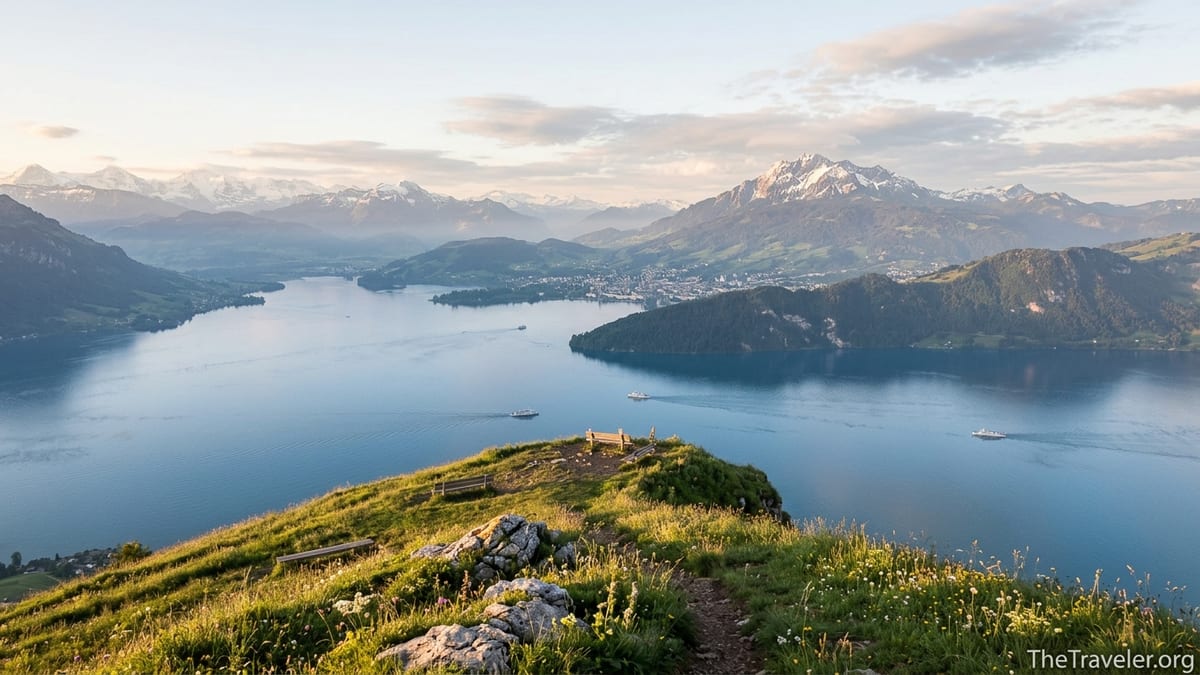
Central Switzerland’s heartland around Lucerne offers one of Europe’s most concentrated mixes of alpine peaks, quiet lakeside towns and easy day trips. The challenge is not whether you should go, but how to choose between places with very different moods: Lucerne’s medieval streets, Engelberg’s glaciers, Stoos’s silent ridge walks, or the classic lake villages of Weggis and Vitznau. This guide compares the key bases and mountain excursions so you can match destinations to your style, whether you are a first-time visitor, a couple looking for romance, an active hiking group or a family balancing budgets with big views.
How to Use This Central Switzerland Destination Guide
Think of Central Switzerland as a compact hub with Lucerne at the center and a ring of lakeside towns and mountain railways within one to ninety minutes. Many travelers underestimate how different these places feel on the ground. Lucerne and Zug are proper small cities, Engelberg and Andermatt are high-valley resorts, while Stoos, Rigi and Pilatus are essentially mountain playgrounds reached by cable car or train. Choosing the right combination can save both money and travel time.
This guide focuses on real-world trade-offs instead of generic superlatives. For example, a couple visiting in June with three nights in Lucerne might reasonably choose one big mountain day (Pilatus or Rigi), one lakeside day (Weggis or Vitznau) and one “off the beaten path” experience such as Stoos. Families on a longer trip might overnight in Engelberg or Andermatt for cooler air and easier access to gentle walking paths. Prices mentioned are indicative for 2025–2026 and may change, but they give a sense of the cost differences between destinations.
Most of the places described are linked by the Swiss public transport network, so you can do nearly everything without a car. From Lucerne, frequent boats cross Lake Lucerne to Weggis, Vitznau and Brunnen, while trains head to Engelberg, Andermatt and Zug. Mountain railways and cable cars then take you higher into the Alps. When you compare destinations below, keep transfer times in mind: a 50-minute train to Engelberg feels very different from a 12-minute cable car from Weggis up to Rigi Kaltbad.
At the end of this guide you will find a detailed FAQ section that addresses common planning questions, from how many nights to spend in Lucerne to whether Pilatus or Rigi is better with children, along with a brief summary of passes and money-saving options.
Lucerne: Best All-Round Base for First-Time Visitors
Lucerne is usually the smartest first base in Central Switzerland. It combines a compact old town, lakeside promenades and easy day trips in almost every direction. You can stroll across the Chapel Bridge in the morning, take a boat to Vitznau for lunch by the water, then ride a historic cogwheel railway up Rigi in the afternoon. Many visitors stay two or three nights and could easily stay longer without running out of varied day trips.
Accommodation runs from simple guesthouses to high-end lakefront hotels. In summer 2026, expect midrange double rooms near the station or old town to start around the equivalent of a few hundred Swiss francs per night, with lake-view and luxury properties higher. Lucerne’s Visitor Card, usually given by hotels at check-in, offers free local buses and small discounts on some mountain trips such as Engelberg–Titlis or hiking tickets, which can soften costs on a busy sightseeing day.
For couples and first-time visitors, Lucerne works well because you do not need to commit to a single mountain in advance. On a clear morning you might wake up and decide between Pilatus, Rigi or Engelberg depending on cloud levels and crowds. Families appreciate rainy-day options such as the Swiss Museum of Transport and the covered shopping arcades near the old town. From Lucerne, direct trains reach Zurich Airport in roughly an hour, which simplifies arrival and departure logistics.
On the downside, Lucerne is busier and more commercial than the smaller lake villages. In peak July and August evenings, the old town restaurants can feel crowded and prices for lakefront dinners are noticeably higher than in Brunnen or Zug. If your priority is quiet evenings facing the water, pairing Lucerne with at least one night in a lakeside town or mountain village can offer a better balance.
Engelberg and Andermatt: Alpine Bases for Active Days
Engelberg lies in a high valley about 50 minutes by direct train from Lucerne. It feels like a mountain resort rather than a city, with wooden chalets, church spires and grassy slopes rising steeply from the village. The main draw is Mount Titlis, reached by cable car, which offers near year-round snow and activities such as a cliff walk and glacier cave. For visitors who want a true alpine setting with easy access to marked trails and picnic spots, Engelberg is an appealing base.
In summer, costs in Engelberg are often a little lower than lakeside Lucerne, especially for apartment-style stays. A self-catering family apartment can sometimes cost similar to or slightly less than two hotel rooms in Lucerne, which matters for longer stays. Day excursions might include the Fürenalp gondola for gentle meadow walks and playgrounds or the Brunni area with its kid-friendly themed trails. Engelberg works particularly well for families and hikers who are happy to trade city life for more nights at altitude.
Andermatt, further into the mountains along the Oberalp Pass line, has transformed from a quiet army town into a small luxury resort village. It sits at around 1,400 meters, with easy access to passes and panoramic rail lines. For many visitors, the appeal lies in combining hiking or skiing with scenic train rides, such as segments of the famous Glacier Express route. Compared with Engelberg, Andermatt feels smaller and more purpose-built, with a growing number of upscale hotels and serviced apartments.
For a first-time visitor with limited time, Engelberg is often the more straightforward choice: direct trains from Lucerne, a wider range of family-friendly walks and a clear marquee attraction at Titlis. Andermatt suits repeat visitors, rail enthusiasts and travelers putting together a longer circuit across Switzerland, who value its position between Central Switzerland, Valais and Graubünden.
Stoos and Brunnen: Quiet Alternatives with Big Views
Stoos is a small car-free mountain village reached by a record-breaking funicular from the valley near Schwyz. The funicular climbs a very steep slope to about 1,300 meters, then you transfer to chairlifts up to panoramic points such as Fronalpstock. Once on the ridge, you look down on Lake Lucerne and Lake Uri, with a view that many locals quietly consider as impressive as the more famous peaks near Lucerne. For visitors who like quieter paths and fewer large tour groups, Stoos offers a different atmosphere from Pilatus and Titlis.
For families, Stoos has particular advantages. The village is compact, flat enough for strollers in many areas and dotted with playgrounds and picnic spots. Short signposted trails suitable for children loop between viewpoints, and there are dedicated easy paths suitable for all-terrain strollers. In summer, combination tickets that bundle the funicular and chairlifts into a day pass typically cost less than the headline round-trip prices to Pilatus or Titlis, which makes Stoos a relatively budget-friendly mountain day if you are based in Lucerne or Brunnen.
Brunnen, on the southeastern arm of Lake Lucerne, is a low-key lakeside town that works well as a base for Stoos. It has a relaxed waterfront promenade, a modest number of hotels and a noticeably quieter evening scene than Lucerne. Accommodation around the harbor can be more affordable than in the most popular Lucerne neighborhoods, especially for lake-view rooms. From Brunnen, boats and trains connect you onwards to Rigi, Stoos, Schwyz and back to Lucerne, so it can function as a “calm hub” for travelers who prefer staying by the lake rather than in a high valley.
For couples, a combination such as two nights in Lucerne followed by two nights in Brunnen can be ideal. You enjoy Lucerne’s restaurants and museums first, then shift to a slower pace with lakeside walks, Stoos day trips and evening swims. The trade-off is a smaller choice of dining options and a quieter nightlife, which may or may not match your preferences.
Weggis, Vitznau and Zug: Lakeside Towns for Slow Travel
Weggis and Vitznau sit on what local tourism boards call the “Lucerne Riviera,” a sunny stretch of Lake Lucerne’s northern shore. They are linked by road, buses and frequent boats from Lucerne, typically taking about an hour by boat to reach Vitznau. Both villages are classic choices for travelers who picture themselves sitting on a hotel terrace with a glass of wine, watching paddle steamers and ferries crisscross the lake, with the Rigi massif rising directly behind.
Vitznau is the starting point for the historic cogwheel railway that climbs up Mount Rigi. Hotels here often have private jetties, small bathing areas and gardens stepping down to the water. Because boats and the Rigi railway meet by the lakefront, it is very easy to do a combined lake and mountain day without long transfers. Weggis, slightly larger, is the valley station for the cable car up to Rigi Kaltbad, an intermediate plateau known for its views and spa complex. Both villages are used to overnight guests and long-stay visitors, with self-catering apartments and midrange hotels common.
Costs for lake-view rooms in Weggis or Vitznau can be similar to midrange Lucerne city hotels, but you are paying for calm and scenery rather than proximity to museums or shops. For couples or older travelers, waking up directly to the lake and catching a morning boat with locals on their commute can be more appealing than staying in Lucerne’s busy old town. For families, safe lakeside promenades, simple playgrounds and easy access to Rigi make these towns strong contenders.
Zug, on nearby Lake Zug, is a small city with a strong business community and a compact old town on the water. It is roughly a 20 to 25 minute train ride from Lucerne, making it feasible as either a base or a side trip. Zug is less overtly touristic than Lucerne but has a reputation in Switzerland for beautiful sunsets over the lake and a good selection of restaurants. For travelers who prefer to stay where locals live and commute, yet still want quick access to Lucerne and Zurich, Zug is a pragmatic choice.
For trip planning, think of Weggis and Vitznau as “holiday villages” optimized for slow, scenic stays and Rigi access, while Zug is more of a practical base if you want strong train connections and a lived-in city feel without heavy tourist crowds. All three appeal more to couples, families and repeat visitors than to backpackers looking for nightlife.
Mount Pilatus vs Mount Rigi: Which Mountain Fits Your Style
Mount Pilatus and Mount Rigi are the two headline peaks most commonly visited from Lucerne. They are both excellent, but they offer different experiences. Pilatus is higher, steeper and feels more dramatic, with jagged rock and narrow paths near the summit. Rigi is gentler, with grassy slopes, farms and multiple intermediate stations, which makes it better for flexible hiking and for visitors who prefer wide views over vertical drops.
Pilatus is often marketed via the “Golden Round Trip,” which typically combines a boat ride from Lucerne to Alpnachstad, a cogwheel railway up to the summit, then gondolas and a cable car down to Kriens, returning by bus to Lucerne. Buying this as a package can be convenient but also one of the more expensive mountain days in the region, especially for families. Some travelers choose a “Silver” variation that uses trains instead of the boat to reduce cost. Near the middle station at Fräkmüntegg, a summer toboggan run and rope park add appeal for older children and teenagers.
Rigi, in contrast, is sometimes called the “Queen of the Mountains” and is famous for sunrise and sunset views over multiple lakes. A classic route is to take a boat from Lucerne to Vitznau, ride the cogwheel train up to Rigi Kulm at the summit, then descend via Rigi Kaltbad and the cable car to Weggis, catching a boat back to Lucerne. This loop typically costs less than the Pilatus Golden Round Trip and offers many possibilities to get off early for walks, picnics or swims in hotel pools at Rigi Kaltbad.
For couples, Rigi’s softer landscape and many benches and meadows make it a romantic choice, especially if you stay overnight in Weggis, Vitznau or at Rigi Kaltbad. For families with very young children or anyone nervous with heights, Rigi’s broad paths and grassy ridges generally feel more comfortable than the rocky summit of Pilatus. For adventurous hikers and photographers, Pilatus offers steeper trails and more dramatic rock formations, though it can feel busy at the summit station in peak summer.
If you only have time for one, a simple rule of thumb works for most travelers: choose Pilatus if you want a dramatic, “big day out” with varied transport and do not mind spending a bit more, and choose Rigi if you value flexibility, easier walking and the option to combine gentle hikes with long lakeside evenings in Weggis or Vitznau.
Matching Destinations to Trip Types: Couples, Families, Hikers, First-Timers
For couples seeking a romantic short break, the most effective combination is often Lucerne plus one lakeside or mountain night. One example itinerary: arrive in Lucerne on a Friday, spend the afternoon exploring the old town and waterfront, then on Saturday take the boat to Vitznau, ride the railway up Rigi for easy walks and views, descend to Weggis, and stay overnight in a lakeside hotel. On Sunday, enjoy a slow breakfast, perhaps a short morning boat ride or lakeside walk in Weggis, then return to Lucerne or Zurich Airport. This kind of plan keeps transfers simple while delivering varied scenery.
Families with school-age children may want to anchor the trip around a mountain area with space to run and play. Splitting time between Lucerne and Engelberg works particularly well: use Lucerne for museums, a relaxed lake cruise and one of the classic mountains, then shift to Engelberg for hikes to meadows, picnics near cable car stations and family-friendly activities like themed walking trails. Alternatively, pairing Lucerne with Stoos or Rigi can provide a quieter, stroller-friendly mountain experience with less time spent standing in queues.
Hikers looking for ridge walks and panoramic routes will want to choose destinations based as much on trail type as on views. Stoos offers a famous ridge hike between Klingenstock and Fronalpstock that feels genuinely alpine yet is reachable via funicular and chairlifts in a single day. Rigi has multiple graded trails, from gentle terrace walks near Kaltbad to longer circuits from Rigi Kulm. Engelberg and Andermatt open up more demanding high-alpine hikes and hut visits, best tackled in late June to September when most snow has melted from upper trails. In all cases, planning for weather and carrying basic gear like good shoes and layers is more important here than in many urban-day-trip destinations.
For first-time visitors to Switzerland, the key is not to overpack the schedule with too many different bases. A realistic five-night plan might be three nights in Lucerne and two nights in either Weggis, Engelberg or Andermatt, with one or two big mountain days and one or two slower lake days. Remember that boat rides on Lake Lucerne and simple lakeside walks can be just as rewarding as ticking off every summit, especially if you are adjusting to jet lag or traveling with children.
The Takeaway
Central Switzerland compresses a surprising amount of variety into a small area. Lucerne offers the classic postcard views and easy access to almost everything, while surrounding destinations each bring a distinct flavor: Engelberg for a true mountain-resort feel and glacier access, Andermatt for rail routes and high passes, Stoos for quieter ridge hikes and a car-free village, Brunnen for a low-key lakeside base, Weggis and Vitznau for long, sunny evenings by the water, Zug for a lived-in small city atmosphere, and Pilatus and Rigi for signature peak experiences.
When choosing where to go, start with your priorities. If you care most about iconic photos and do not mind crowds or higher prices, Pilatus or Titlis from a Lucerne base will deliver. If you prefer gentler landscapes and lake swimming, focus on Rigi, Weggis, Vitznau and Zug. If hiking is central to your trip, push out to Engelberg, Andermatt or Stoos, where varied trails start almost at your hotel door. In every case, avoid rushing: Central Switzerland rewards travelers who slow down enough to watch the light change on the lakes and ridges rather than racing from summit to summit.
Finally, keep your plans flexible. Weather can change quickly in the mountains, so it is wise to have a “cloudy day” plan in Lucerne or Zug that does not rely on views from high summits. With a bit of forethought and a realistic number of bases, your time around Lucerne will likely become a highlight of any Switzerland itinerary, whether it is your first visit or your fifth.
FAQ
Q1. How many nights should I spend in Lucerne for a first visit?
Most first-time visitors do well with two to three nights in Lucerne. That allows one full day to explore the city and lake, plus one or two days for mountain trips such as Pilatus, Rigi, Engelberg or Stoos without feeling rushed.
Q2. Is Mount Pilatus or Mount Rigi better with children?
Both work with children, but Rigi is usually easier. Its grassy slopes, broad paths and multiple intermediate stations suit strollers and younger kids, while Pilatus feels steeper and more dramatic. Families with teenagers may enjoy Pilatus more for its toboggan run and rockier summit paths.
Q3. Are Engelberg and Andermatt feasible as day trips from Lucerne?
Engelberg is an easy day trip, about 50 minutes by direct train each way, and many visitors go just for Titlis. Andermatt is reachable but further, so it tends to work better as an overnight base, especially if you are combining it with scenic rail journeys or high-pass hikes.
Q4. Which lakeside town is best for a romantic stay: Weggis, Vitznau, Brunnen or Zug?
For pure lakeside atmosphere and Rigi access, Weggis and Vitznau are hard to beat, with many hotels directly on the water. Brunnen is quieter and less polished but very scenic, while Zug offers a more urban feel with sunsets and better train connections. Couples often choose Weggis or Vitznau for a first romantic stay.
Q5. Is Stoos worth visiting if I already plan to see Pilatus or Rigi?
Yes, if you have the time. Stoos offers a calmer, more intimate mountain experience with a car-free village and a spectacular ridge hike above multiple lakes. It feels quite different from the larger, more commercialized summit stations on Pilatus or Titlis and pairs well with a stay in Brunnen or Lucerne.
Q6. Can I visit both Pilatus and Rigi in one day from Lucerne?
It is technically possible but not recommended. Each mountain deserves most of a day once you factor in boats, trains, cable cars and walking time. Trying to do both in a single day often results in rushed schedules and limited time to enjoy the views or hike.
Q7. Are these destinations suitable without renting a car?
Yes. Lucerne, Engelberg, Andermatt, Stoos, Brunnen, Weggis, Vitznau, Zug, Pilatus and Rigi are all reachable by a mix of trains, boats, funiculars and cable cars. In many cases, public transport is faster and more convenient than driving, especially to car-free areas such as Stoos and some parts of Rigi.
Q8. When is the best time of year to visit Central Switzerland for hiking?
For most hikers, late June through September offers the best balance of open trails and stable weather at higher elevations. Lower routes around the lakes and mid-level terraces like Rigi Kaltbad usually open earlier in spring, while high-alpine paths near Engelberg or Andermatt may hold snow into early summer and see the first snowfalls again in autumn.
Q9. How expensive are mountain excursions from Lucerne?
Major mountain trips such as Pilatus, Rigi or Titlis are significant expenses, often costing the equivalent of a nice dinner out per person or more once you include trains and boats. Carving out room in your budget for one or two big excursions and then adding lower-cost days on the lake, in Lucerne, or on gentler mountains like Stoos is a sensible strategy.
Q10. Should I buy a regional pass or separate tickets for this region?
It depends on how many mountain and boat trips you plan. If you expect to ride multiple cable cars, cogwheel trains and boats over several days, a regional pass covering Central Switzerland can be good value. If you only plan one major peak and mostly train travel between a couple of bases, separate tickets may cost less. It is worth adding up your likely routes and comparing against current pass prices before you decide.