


Central Switzerland, anchored by Lucerne and its famous lake, is a compact region where seasons change the experience dramatically. The same view of Mount Pilatus or Rigi can feel like a gentle summer hiking paradise in July, a snowy wonderland in January, or a misty, atmospheric escape in November. Choosing when to visit is less about finding a single “best” month and more about matching your priorities for hiking, lake cruises, skiing, snow and budget to the rhythms of the year.
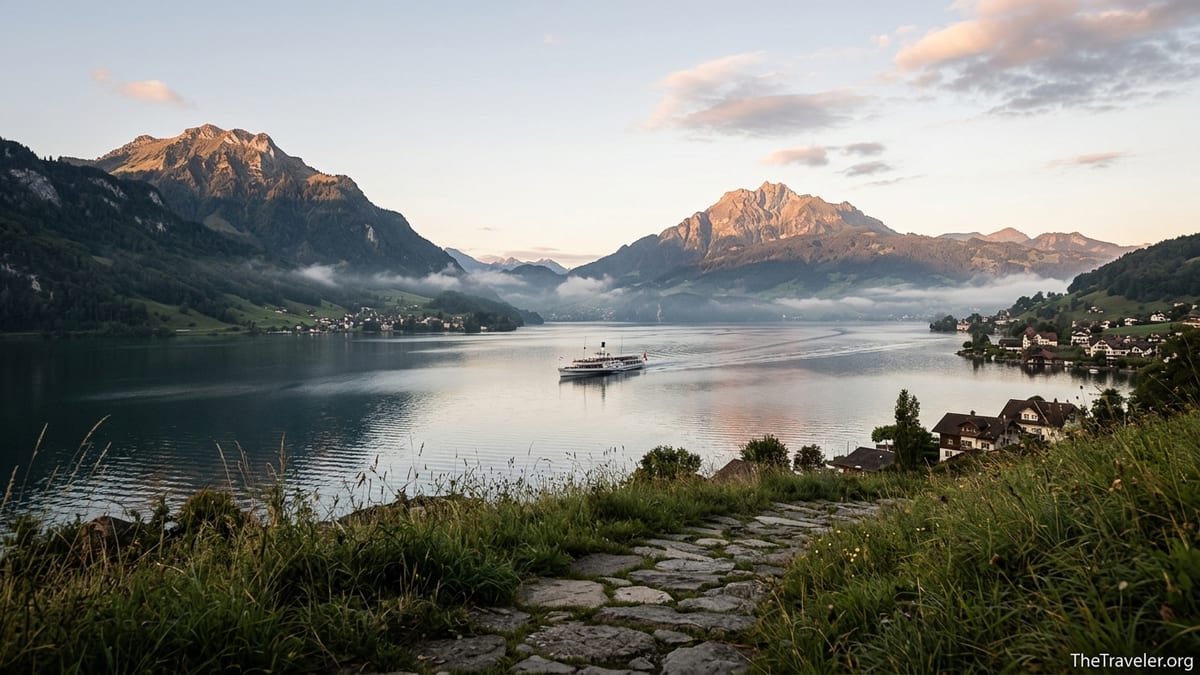
How Central Switzerland’s Seasons Shape Your Trip
Central Switzerland has four distinct seasons, but what matters most to travelers is how those seasons affect access to the mountains, lake cruises on Lake Lucerne, hiking trails, snow conditions and operating schedules. Lucerne itself, at around 440 meters above sea level, has relatively mild winters and warm summers. In contrast, nearby peaks such as Rigi (1,798 meters), Pilatus (2,128 meters) and Titlis above Engelberg (over 3,000 meters) can be in deep winter while flowers are already blooming in the valley.
Lake Lucerne cruises operate all year, with a full summer timetable from roughly late May to early September and reduced but reliable services the rest of the year. For example, current timetables show a summer schedule from about May 23 to September 6 and a winter schedule from mid or late October through mid April, with shoulder-season spring and autumn periods in between. Ships run daily in winter, just less frequently, which means you can still pair a morning on the lake with an afternoon mountain excursion in January.
Mountain transport also follows clear patterns. The Pilatus “Golden Round Trip” boat plus cogwheel train plus cable car circuit only operates in full from roughly May to October, while the gondolas from Kriens generally run most of the year except for short maintenance windows. Rigi’s cogwheel railways and cable cars operate year-round and support both summer hiking and winter sledging. Engelberg Titlis runs a long ski season, often from early December to late April or early May, with a shoulder period for maintenance in early November when the glacier cable car can be briefly closed.
Crowds and hotel prices mirror these patterns. July, August and late December around Christmas and New Year see the highest demand, particularly in Lucerne’s Old Town and lakefront hotels. Shoulder months such as May, June, September and early October often offer the best compromise: good mountain access, frequent lake cruises, relatively stable weather and slightly softer room rates than peak summer and festive weeks.
December to February: Deep Winter & Stable Snow
December to February is the time to visit Central Switzerland if you want reliable snow, winter sports and crisp mountain views, especially at higher elevations. In Lucerne itself you may see occasional snow, but days can also be grey and damp. Head to the mountains and it is a different story. Engelberg Titlis, about 45 to 60 minutes from Lucerne by train, is typically in full ski season through this period, with multiple lifts and pistes open and a glacier sector that holds snow even in milder winters.
This is the best window for skiers and snowboarders who want a base in a scenic town but easy access to the slopes. A one day adult winter lift pass for Engelberg Titlis commonly costs in the ballpark of 80 to 100 Swiss francs depending on the exact ticket type and promotions, which generally includes the cable car ride up from the valley. Many visitors pair a ski day with a non-ski excursion such as the Titlis Cliff Walk, the glacier cave and beginner sledging at Trübsee, making this period highly attractive for mixed-ability groups or families.
Closer to Lucerne, Rigi and Pilatus run winter operations geared towards panoramic views, sledding and short walks on groomed winter trails rather than long alpine hikes. On Rigi you can ride the cogwheel train from Vitznau or Arth-Goldau, step into a snowy plateau at Rigi Kulm, rent a sledge and slide down prepared runs before warming up with a fondue in a mountain restaurant. Many winter visitors use regional passes such as the Tell-Pass or Lake Lucerne passes to bundle boat rides and mountain railways, which can offer value if you plan multiple excursions in a few days.
Hotel rates over Christmas, New Year and sports holiday weeks in February are among the highest of the year, especially in Engelberg and attractive lakefront properties in Lucerne. If you want snow with fewer crowds and more moderate prices, consider early December (before Christmas week) or late January, when ski areas are fully operational but demand is less intense. Just keep in mind that daylight is short and some small lake or countryside hotels may reduce hours or close their restaurants midweek.
March and April: Shoulder Season & Unpredictable Mix
March and April in Central Switzerland are transition months, and they can be either magical or frustrating depending on your expectations. In the valleys spring is slowly arriving, with milder temperatures and increasing sunshine. On the mountains, especially around Titlis and higher parts of Rigi and Pilatus, winter lingers. It is entirely realistic to spend a morning skiing in Engelberg and the afternoon strolling along the lake promenade in Lucerne without a winter jacket.
Skiing usually remains viable at Titlis through late April and sometimes into early May, though lower slopes can become slushy by midday. This is a good period for intermediate skiers seeking quieter pistes and discounted packages. Many hotels in Engelberg offer late season ski deals that combine lodging, breakfast and lift passes at a lower nightly rate than in February. Snow-focused non-ski activities such as tubing and easy winter walking around Trübsee also remain possible, but operations can wind down if snow cover thins.
For hikers, however, March and early April are still early. Most high alpine hiking trails are closed due to snow, and even mid-elevation paths can be muddy or blocked. If walking is a priority, you are better off sticking to valley trails along the Reuss River, lakeside promenades around Lucerne, or low-elevation loops near Weggis and Vitznau. Some mountain railways enter brief maintenance closures in April, so it is important to check operating calendars if you have your heart set on the full Pilatus Golden Round Trip or particular cable cars.
From a budget and crowd perspective, this is a soft spot. Outside of Easter and occasional spring holidays, hotel prices in Lucerne and Engelberg are often more attractive than in high winter or summer. Lake Lucerne cruises already run daily, though on a thinned-out timetable and usually with fewer special themed cruises. You might find only one or two departures suited to a round trip excursion rather than a dense grid of choices, so build some flexibility into your daily plans.
May and June: Best for Hiking & Full Lake Cruises
By May and June Central Switzerland shifts decisively into outdoor season. Snow retreats from mid-elevation trails, meadows around Rigi and Pilatus turn green, and the full spring and early summer boat timetable comes into force. Lake Lucerne’s main navigation company typically transitions from its winter schedule in April to a spring timetable, then to a dense summer schedule from around late May. In practice, that means hourly or better departures on popular routes such as Lucerne to Vitznau or Lucerne to Flüelen, plus special offerings like lunch cruises or evening cruises on select days.
For hikers who also want mountain panoramas rather than just valley walks, late May through June is one of the best overall times to visit. On Rigi you can often hike along panoramic trails between Rigi Kaltbad and Rigi Scheidegg, enjoying views over Lake Lucerne and Lake Zug with only patchy snow remaining on north-facing slopes. Pilatus offers increasingly accessible ridge paths around its summit area on clear days, though some demanding routes can still hold snow in early June. This is also the period when excursions such as the Stanserhorn CabriO cable car typically run their full daytime operations, letting you ride an open-top cable car to a grassy summit with views of the Uri Alps.
Lake temperatures remain cool but pleasant enough for short swims on warm days at easily reached spots such as the Seebad Luzern bathing platform or lakeside lawns near Weggis. Crowds are building compared to March and April, especially as tour groups and school trips return, but hotel prices have not yet reached the sustained peak of July and August. It is usually easier to find lake-view rooms or family suites in Lucerne and Weggis without booking months in advance, though holidays such as Pentecost can be busy.
Weather in May and June is still changeable. You can enjoy several days of sparkling blue skies and then encounter a day of steady rain that hides the summits completely. A flexible strategy works best: plan one or two key mountain excursions such as Pilatus or Titlis early in your stay so you can switch days based on updated forecasts. If clouds close in, use the opportunity to focus on Lucerne’s museums, such as the Swiss Museum of Transport, or short cruises that remain beautiful even in softer light.
July and August: Peak Summer & Busy Mountain Access
July and August are the classic peak season for Central Switzerland, especially for travelers whose top priorities are warm weather hiking, long days and the widest range of boat and mountain operations. Temperatures in Lucerne commonly reach the low to high twenties Celsius in the afternoons, and the lake can be warm enough for regular swimming. At the same time, the high elevation around Titlis still offers pockets of snow and ice on the glacier, making it a popular day trip for visitors seeking a “summer snow” experience without a full winter trip.
Hiking is at its most extensive in these months. Most trails on Rigi and Pilatus are open and dry, from family friendly panorama paths to more demanding alpine routes. Around Engelberg, summer lifts give access to areas like Jochpass and Trübsee with lakeside walks, wildflower meadows and moderate ridge hikes. Because the full lake timetable is in operation, it is easy to design one way itineraries such as sailing from Lucerne to Vitznau, hiking a stretch of the Rigi massif and descending by a different cogwheel line, then returning to Lucerne by train.
The tradeoff is crowding and price. Lucerne’s Old Town and Chapel Bridge area can feel busy from mid morning onwards, with popular viewpoints on Rigi and Pilatus attracting both international visitors and Swiss day trippers. Mid-range hotels that might be around 180 to 220 Swiss francs per night in shoulder season can climb noticeably higher in late July and early August, especially for lakefront properties or rooms with guaranteed views. Popular lake cruises such as sunset dinner cruises often require advance booking, and mountain tickets for Pilatus or Titlis purchased on the day can represent a significant portion of a daily budget.
If you travel in these months but want to avoid the worst of the crowds, consider starting mountain excursions early, catching the first or second boat departure from Lucerne where possible, and returning to the city by mid afternoon. Alternatively, base yourself in quieter lakeside villages such as Weggis, Vitznau or Brunnen, which still have good connections by boat and train but a more relaxed atmosphere after day trippers leave. These bases can also make it easier to catch a peaceful evening swim or lakeside dinner after the sun has set behind the surrounding peaks.
September and October: Clear Views & Quieter Trails
September and early October are often described by locals as one of the best times to visit Central Switzerland. Summer heat mellows, the air turns crisper, and there are many days with remarkably clear mountain views as the atmosphere dries out. The core summer lake timetable continues until roughly early September, after which an autumn schedule takes over with still frequent but slightly reduced services. This is usually more than sufficient for day trips, and you will often find boats and mountain trains noticeably less crowded than in August.
For hikers, this is prime time. Most trails on Rigi, Pilatus and around Engelberg remain open and snow free through at least early October, allowing full day hikes without the heat of July. The first pockets of autumn color appear in the forests around the lake, and vineyards near villages such as Weggis and Brunnen begin to ripen. Stanserhorn’s open-air CabriO still typically operates in daylight hours, offering perhaps the most comfortable temperatures of the year for an open deck ride.
Lake Lucerne cruises are particularly pleasant in the soft autumn light. Lunch cruises continue on many days, and some operators offer special seasonal menus focused on regional products such as local cheeses, freshwater fish and early game dishes. Prices for special cruises, for instance a two to three hour autumn lunch cruise in second class, commonly start in the range of 30 to 50 Swiss francs per adult for transport alone, with dining and drinks extra. Compared to high season they can feel less crowded, which makes window seats and outdoor deck spots easier to secure without arriving excessively early.
By late October, however, the region moves back into shoulder and early winter mode. Some high elevation hikes close with the first meaningful snowfalls, and individual lifts may switch to weekend only schedules before pausing for maintenance. If you visit in late October and want guaranteed mountain access, build redundancy into your plans by choosing at least two different possible peaks, such as Rigi and Pilatus, so that if one is closed or visibility is poor you have an alternative.
November: Quiet, Cheaper, But Limited Mountain Options
November is the most challenging month for a classic Central Switzerland itinerary built around hiking, lake cruises and sweeping mountain views, yet it can still make sense for certain travelers. The valley can feel damp and cool, with frequent cloud cover and early sunsets. Snow is not always established at lower elevations, which means you may get grey days without the brightness of snow underfoot. At the same time, many mountain railways and cable cars pause for maintenance before the winter season begins, and some high trails are already closed for safety.
For example, Engelberg Titlis often schedules a maintenance window for its main Rotair glacier cable car in early November, exactly when many visitors are hoping to see their first snow. During such closures, access to the glacier viewpoint and some high winter activities is not possible even if there is fresh snow. Pilatus and Rigi retain limited operations, but signature circuits such as the full Pilatus Golden Round Trip are generally not available in their summer form. Lake Lucerne cruises continue on a reduced winter timetable, with one or two key departures per day on certain routes rather than a full grid.
The upside is value and atmosphere. Hotel rates in Lucerne are among the lowest of the year outside special events, and you will rarely need to queue for lake boats or city attractions. If you are more interested in a cultural city break with the occasional low-level walk and lake excursion, and you accept that your chance of cloud-obscured mountain views is higher, November can be workable. It suits repeat visitors who have already experienced the region in full sun and now want a quieter, more introspective trip rather than first timers chasing postcard views.
For many travelers, however, it makes sense either to come earlier in October for autumn color and stable hiking or later in December and January for a clear winter identity with established snow and ski operations. If November is your only option, plan flexibly, prioritize Lucerne’s museums, cafes and historic quarters, and treat any clear mountain day as a welcome bonus rather than a guarantee.
The Takeaway
The best time to visit Central Switzerland for hiking, lake cruises, snow and mountain views depends less on an abstract “perfect month” and more on your specific priorities. If you value broad hiking options, open mountain circuits and full lake timetables above all else, late May, June, September and early October stand out as offering the richest mix with manageable crowds and moderated prices.
If snow and winter sports are central to your plans, aim for December through March, with a focus on Engelberg Titlis for skiing and snow play and Rigi for accessible winter walking and sledging. For a few summer days that combine lake swimming, green meadows and the possibility of a quick glacier visit, July and August work well, provided you book accommodation early and accept higher prices and busier boats and mountain trains.
Travelers on tighter budgets or those seeking fewer crowds can lean into the shoulder months, with March, April and November best suited to flexible plans that do not rely on specific high-altitude hikes or advanced mountain routes. Lake Lucerne’s year-round navigation and the enduring charm of Lucerne’s Old Town mean there is no truly bad month to visit. The key is matching your expectations to the way Central Switzerland actually functions across the year and then building in enough flexibility to adjust for the region’s famously changeable alpine weather.
FAQ
Q1. What is the single best month to visit Central Switzerland for first timers?
For most first time visitors, September offers the best balance of clear views, open hiking trails, frequent lake cruises, relatively mild weather and slightly quieter conditions than peak July and August.
Q2. When is the best time to visit if I want both hiking and some snow?
Late April and May often let you hike comfortably on mid elevation trails around Rigi or lower Pilatus while still finding snow and winter activities at higher areas such as Titlis and Trübsee near Engelberg.
Q3. Are Lake Lucerne cruises available in winter?
Yes. Lake Lucerne boats run all year, with a dense timetable from roughly late May to early September and a reduced but reliable winter schedule from around late October to mid April.
Q4. When is mountain access most limited in Central Switzerland?
Mountain access is most constrained in November, when some cable cars and high railways close for maintenance and many hiking trails are either snow covered or officially closed while winter operations are not yet fully running.
Q5. Which months are cheapest for hotels in Lucerne and Engelberg?
Hotel prices are usually lowest in March, early April and November, outside major holidays or events. Rates climb in July, August and late December around Christmas and New Year.
Q6. When should I come for the best chance of clear mountain views?
There are no guarantees, but September and early October tend to produce some of the clearest days, with drier air and slightly more stable weather than in the changeable high summer or the cloudy depths of winter.
Q7. Is summer always better for hiking than spring or autumn?
Not necessarily. July and August offer the widest range of open trails, but they can be hot and crowded. Late May, June and September usually provide cooler temperatures, fewer people and equally rewarding hikes.
Q8. When is the best time to combine skiing with a stay in Lucerne?
January, February and early March are ideal for combining a Lucerne base with day trips to Engelberg Titlis, which typically has a full winter ski operation, while Lucerne itself remains accessible and lively.
Q9. Are there months when the Pilatus Golden Round Trip does not run?
Yes. The full circuit that combines lake boat, cogwheel railway and cable cars usually operates from roughly May to October. Outside these months you can still reach Pilatus via cable car from Kriens, subject to maintenance closures.
Q10. If I can only visit in November, how should I plan?
In November focus on Lucerne’s city attractions, select low-level walks and a reduced timetable lake cruise. Treat any mountain excursion as weather dependent and check lift maintenance schedules before committing.