


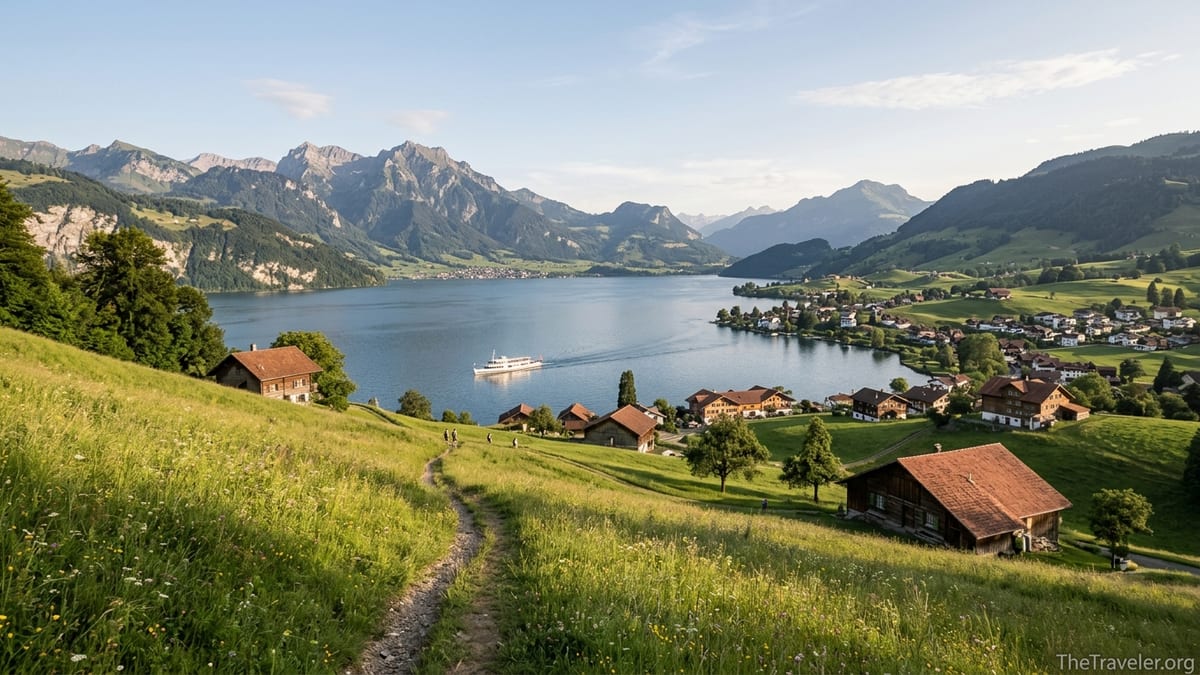
Choosing where to go in Switzerland can be harder than getting there. With glittering lakes, car free Alpine villages, polished cities and some of Europe’s most famous ski resorts, the country offers more great options than most travelers can fit into a single trip. This guide breaks down Switzerland’s headline destinations, comparing what they do best for mountains, lakes, couples, families, skiing and first time visitors so you can build an itinerary that fits how you actually like to travel.
How to Choose Your Swiss Base: Key Questions First
Before you weigh Zurich against Zermatt or Interlaken against Lugano, it helps to be clear on what kind of trip you want. If your priority is iconic mountain scenery and cable cars, think in terms of the Bernese Oberland region around Interlaken, Lauterbrunnen and Grindelwald, or the high Alpine resorts of Zermatt and St. Moritz. If you prefer culture, museums and food with lake views on the side, the cities of Zurich, Geneva, Bern and the resort towns of Lucerne and Montreux make more sense.
Budget and travel style matter. A compact rail based itinerary that uses a Swiss Travel Pass, which in 2024 typically costs around 240 to 460 Swiss francs for 3 to 15 days of unlimited 2nd class travel, will feel different from a slower trip where you rent an apartment in one village for a week and buy individual tickets as you go. Mountain resorts like Zermatt and St. Moritz can be noticeably more expensive for dining and ski passes than mid sized cities such as Bern or lakeside towns like Montreux, so it often makes sense to mix one “splurge” base with one or two more moderate stops.
Season is crucial. January in Zermatt means world class skiing and higher hotel rates, while April can bring shoulder season discounts but limited high altitude hiking. Summer from late June to early September is optimal for hiking in Lauterbrunnen, Grindelwald and Zermatt, as most lifts and mountain railways operate on full schedules and trails are generally snow free at mid elevations. Spring and autumn are ideal for combining cities and lakes, especially around Lucerne, Zurich, Geneva and Lugano, with milder prices and fewer crowds.
Finally, consider how much moving around you enjoy. Switzerland’s trains are famously punctual and scenic, but packing up every night gets tiring. For a typical 7 to 10 day trip, many travelers find that two or three bases works best, for example splitting time between a city such as Zurich or Geneva, a lake and mountain hub such as Lucerne or Interlaken, and one pure Alpine village such as Zermatt or Wengen above Lauterbrunnen.
Zurich, Geneva and Bern: Urban Switzerland with Character
Zurich is often just an arrival and departure point, but for many first time visitors it deserves at least one full day and often two. The compact Old Town is easy to explore on foot, with steep lanes, church towers and the Limmat River flowing into Lake Zurich. A one hour lake cruise on a standard boat typically costs the equivalent of a casual restaurant meal and gives you mountain views without leaving the city. Zurich works especially well for travelers who enjoy art, design and food: you can spend a morning at the Kunsthaus art museum, browse the boutiques in the Niederdorf district, then have dinner in the trendy Zurich West neighborhood where former warehouses now house cocktail bars and modern Swiss restaurants.
Geneva feels more international and French influenced. Here, lake scenery is the main draw, with the Jet d’Eau fountain visible from almost anywhere along the shore and views across to Mont Blanc on clear days. Travelers interested in diplomacy and science can tour institutions such as the Palais des Nations and the CERN visitor center on the city’s outskirts. Geneva is a strong choice for couples who want a refined, slower pace and access to day trips along Lake Geneva to Montreux and the Lavaux vineyards. It can be expensive for families, but the lakeside promenades, parks and free public beaches in summer help balance the costs.
Bern is Switzerland’s understated capital and a smart pick for travelers who want a base with character and slightly softer prices. The UNESCO listed Old Town curves along a bend of the Aare River, with arcaded streets that provide shelter in any weather and a relaxed, local feel. From Bern you can reach Interlaken in about an hour by direct train, so it works as a city base for people who want occasional forays to the mountains without fully committing to a resort town. Families appreciate Bern’s bear park, riverside playgrounds and the Einstein Museum, while couples enjoy the sunset views from the Rosengarten above the Old Town, where outdoor terraces fill with locals in good weather.
Lucerne and Interlaken: Classic Gateways to Lakes and Peaks
Lucerne is often recommended as Switzerland in one place for first timers, and with good reason. The city combines a walkable medieval core, including the famous Chapel Bridge, with easy boat and mountain excursions. From Lucerne station, many travelers ride the cogwheel train and cable car up Mount Pilatus or the combination of boat and cog railway to Mount Rigi. These half day trips give you panoramic views over Lake Lucerne and the surrounding Alps without complicated logistics. For a couple or a family with three or four nights, Lucerne offers a balanced mix of culture, lake time and mountain access without feeling overwhelmingly touristy outside the peak summer weeks.
Interlaken, by contrast, is more of a transit and activity hub than a destination in itself. The town sits between Lake Thun and Lake Brienz, with paragliders circling above its central meadow on most clear days. Many visitors arrive, notice the souvenir shops and tour buses, and quickly continue by train up to Lauterbrunnen, Wengen or Grindelwald. That said, Interlaken can work well for short stays when you want maximum flexibility. Multiple excursion companies operate from the main streets, offering everything from beginner canyoning trips to lake kayaking and tandem paragliding. For a group of friends or a family with teenagers who want easy access to adrenaline activities, booking a hotel near Interlaken Ost station for two or three nights keeps logistics simple.
For lake lovers, both Lucerne and Interlaken deliver. In Lucerne, you can walk from the Old Town to the pier and board historic paddle steamers that serve as regular boat services, using a day ticket or a rail pass instead of paying for a separate sightseeing cruise. Around Interlaken, many travelers take an afternoon boat trip on Lake Thun to visit the medieval Oberhofen or Spiez castles, or cruise Lake Brienz to the Giessbach Falls funicular. These outings can easily be combined with short hikes along the lake shores, making them suitable for multi generational groups.
When comparing the two, Lucerne generally feels more polished and atmospheric for couples and first timers, while Interlaken is better for visitors focused on high mountain excursions to Jungfraujoch or Schilthorn who want to decide each morning based on the weather. If you have a week in Switzerland and want one easy base that showcases both a lake and nearby peaks without constant repacking, Lucerne is often the more relaxing choice.
Lauterbrunnen and Grindelwald: Valley Charm vs Alpine Action
The Jungfrau region around Lauterbrunnen and Grindelwald offers some of the most dramatic scenery in the country. Lauterbrunnen sits in a deep glacial valley with sheer cliffs and numerous waterfalls, including the famous Staubbach Falls dropping almost directly behind the village. It feels quiet and rural in the evenings once day trippers leave. Many travelers choose to stay not in Lauterbrunnen itself but in the car free villages of Wengen or Mürren on the cliffs above, which are reached by mountain railway or cable car. These bases trade some convenience for intimate Alpine character and views directly onto peaks like the Jungfrau and Eiger.
Grindelwald, on the other side of the valley, has a livelier resort feel. The main street is lined with hotels, sports shops and cafés, and the village has multiple gondolas for quick access to high level hiking and skiing. The popular Grindelwald First area offers a scenic cliff walk, easily accessible viewpoints and summer activities like zip lines and scooter style trotti bikes down to the village. For families with children who like a bit of organized fun, or groups of friends who want a mix of hiking and evening atmosphere, Grindelwald often wins over the quieter valley villages.
For couples seeking a romantic, slow paced stay, Wengen or Mürren above Lauterbrunnen are usually better fits. You might spend a day riding the cogwheel railway up to Kleine Scheidegg for close views of the Eiger, then walk gentle trails back toward Wengen, stopping at mountain huts for simple lunches of rösti and soup. The lack of cars and the constant sound of cowbells create the classic Swiss postcard experience many visitors imagine.
In winter, both Grindelwald and Wengen plug into the Jungfrau ski area, which offers a large network of pistes suitable for intermediates. Grindelwald has slightly quicker access to some runs via modern lifts, and more rental and ski school options, which can be helpful for beginners and families. However, winter weather here can be more changeable than in higher, snow sure resorts like Zermatt or St. Moritz, so skiers planning a dedicated week of skiing sometimes prefer to split time between the Jungfrau region and another resort to hedge their bets.
Zermatt and St. Moritz: High Alpine Icons for Skiers and Scenery Seekers
Zermatt is arguably Switzerland’s most famous mountain village, largely thanks to the Matterhorn. The town is car free, with small electric taxis trundling along its main street lined with hotels, restaurants and sports shops. Even non skiers will find enough to justify at least two nights: the cog railway to Gornergrat offers one of the country’s most celebrated viewpoints, and the cable car network up to Matterhorn Glacier Paradise allows summer visitors to walk on snow and even try glacier skiing in many years. Prices for hotels and restaurant meals are higher than in most other destinations in this guide, and lift passes for a winter week of skiing add a substantial extra cost, but for many travelers the views and atmosphere feel worth the splurge.
St. Moritz, in the Engadine valley, has a different personality. It is one of the birthplaces of winter tourism and still attracts a wealthy crowd, with designer boutiques and luxury hotels around the frozen lake each winter. However, visitors willing to stay in nearby villages such as Celerina or Sils Maria can enjoy similar access to the ski slopes and hiking trails at more moderate prices. In summer, the region is a paradise for hikers and cyclists, with broad valleys, larch forests and a chain of turquoise lakes between St. Moritz and Maloja. Couples who enjoy stylish hotels and spa culture will find many options here, and non skiers can still fill days with winter walking trails, toboggan runs and scenic train rides.
For serious skiers, both Zermatt and St. Moritz offer extensive, high altitude terrain with relatively reliable snow cover from December into April. Zermatt connects across the border to Italy’s Cervinia area, giving long, panoramic runs. St. Moritz combines several separate ski areas, including Corviglia above the town and Corvatsch nearby, each with its own character. Ski schools in both resorts are used to serving international guests, and equipment rental is straightforward, though advance booking is wise for peak February weeks and New Year.
For first time visitors who are not fixated on skiing but want one unforgettable mountain stop, Zermatt usually edges ahead because the Matterhorn is visible from many points in the village and the transport options up the surrounding mountains are straightforward to understand. A classic pattern for a 7 to 10 day trip is to spend two or three nights in Lucerne or Zurich, three nights in the Jungfrau region, and two or three nights in Zermatt, creating a loop of varied scenery without excessive backtracking.
Montreux and Lugano: Lakeside Escapes with a Mediterranean Feel
Montreux sits on the northeastern shore of Lake Geneva, backed by steep vineyards and mountains. It has a mild microclimate, palm trees along the promenade and a long tradition as a resort town. Travelers come for lakeside strolls, the famous Montreux Jazz Festival in early July, and easy access to nearby attractions. The lakeside Château de Chillon is one of Switzerland’s most visited castles, and many visitors combine it with a scenic train ride up to the Rochers de Naye viewpoint or a walk through the terraced vineyards of Lavaux, where small wine cellars offer tastings to passersby.
Montreux works especially well for couples and relaxed travelers who want a few slower days between more intense mountain stops. It pairs naturally with Geneva, since fast trains between the two take roughly an hour. In practical terms, that makes it simple to spend a couple of nights in Geneva’s city environment and then shift to Montreux to enjoy the lake at a more leisurely pace, perhaps renting paddleboards or taking a short cruise across to the French side of the lake.
Lugano, in the Italian speaking canton of Ticino, feels almost like a different country. The lakefront is lined with subtropical plants, and café terraces are busy late into the evening. The town is framed by mountains such as Monte Brè and Monte San Salvatore, both reachable by funicular or cable car for sweeping views across the lake. Food here leans heavily Italian, with pizza, gelato and espresso easy to find even near the main squares, which makes Lugano a favorite with families who have less adventurous eaters.
For visitors who prioritize a sense of Mediterranean warmth and a blend of city and nature, Lugano is a strong alternative to the more Germanic feeling lakes around Lucerne and Interlaken. It connects by fast train to Zurich in a little over two hours through the long Gotthard Base Tunnel, so it can feature as the southern anchor of a north to south itinerary. In spring and autumn, Lugano often enjoys milder temperatures than northern Switzerland, making it a good shoulder season base when high Alpine trails are still snow covered or already closed for winter.
Matching Destinations to Couples, Families, Skiers and First Timers
For couples, the most satisfying combinations usually balance atmosphere, scenery and dining. A classic romantic itinerary might pair Lucerne’s waterfront and mountain excursions with a car free village like Wengen or Zermatt, then finish with two nights in Montreux or Lugano. In each place, you can choose smaller, character filled hotels or guesthouses a short walk from the main stations, allowing for relaxed evenings wandering along lake promenades or through quiet village lanes without worrying about late night transport.
Families with younger children often do best with fewer hotel changes and bases that offer easy, low stress activities. Lucerne is one of the most family friendly choices, thanks to level lakeside paths, frequent boats and mountain trips that start right at the central station. The Jungfrau region also works well if you choose accommodation near a lift or mountain railway station in Grindelwald, Wengen or Mürren, reducing walking time with strollers or tired kids. Adding a couple of nights in Lugano can help break up a mountain heavy itinerary with playgrounds, lakeside parks and familiar Italian style food.
For skiers, destination choice depends on how serious you are about the sport. Dedicated skiers who want large, high altitude areas and long seasons gravitate to Zermatt and St. Moritz, accepting higher prices in exchange for reliable snow and extensive terrain. Intermediates who also want non skiers in the group to enjoy themselves might base in Grindelwald or Wengen, where winter walking trails, toboggan runs and easy train rides to viewpoints give everyone options on bad weather days. Lucerne, Montreux, Geneva and Zurich are better suited to short, flexible ski days combined with city sightseeing rather than full week ski holidays.
For first time visitors to Switzerland, a simple rule is to choose one city, one lake and one Alpine village, linked by straightforward rail routes. Zurich plus Lucerne plus Lauterbrunnen or Wengen is a classic trio that fits comfortably into a week. Travelers who fly into Geneva might instead choose Geneva, Montreux and Zermatt. Those more interested in Italian influenced culture could select Zurich or Lucerne, then Lugano, and finish in the Engadine around St. Moritz. Within each pattern, you can adjust the number of nights depending on whether you lean more toward museums and cafés or hiking and cable cars.
FAQ
Q1. Is Zurich or Geneva better as a starting point for a first trip to Switzerland?
Zurich is usually more convenient for classic central Switzerland itineraries that include Lucerne, Interlaken and the Jungfrau region, thanks to frequent direct trains and slightly shorter travel times. Geneva works better if you plan to focus on Lake Geneva, Montreux and Zermatt, or if you are combining Switzerland with nearby France. Both cities have good international flight connections, but Zurich offers more onward rail options without changes.
Q2. If I only have three or four days, where should I base myself?
With a very short trip, Lucerne is often the most efficient single base. You can explore the Old Town, take a lake cruise, ride up Mount Pilatus or Rigi, and still have time for a day trip to nearby mountains or to Zurich. Alternatively, if your priority is experiencing a true Alpine village, spending all three or four nights in Wengen, Mürren or Grindelwald in the Jungfrau region gives you the classic mountain experience without wasting time moving between hotels.
Q3. Which destination is best for families visiting Switzerland for the first time?
Lucerne and the Jungfrau region together make an excellent combination for families. In Lucerne, children enjoy the boats, the lakeside promenades and the transport museum, while parents appreciate short walking distances and easy day trips. In the Jungfrau region, staying near a lift or railway station in Grindelwald or Wengen keeps mountain excursions simple, and many trails offer playgrounds, themed paths and accessible viewpoints that do not require long or difficult hikes.
Q4. How should I choose between Lauterbrunnen, Grindelwald and Interlaken as a base?
Lauterbrunnen and nearby car free villages like Wengen and Mürren are best if you want quiet evenings and dramatic valley or cliff side views. Grindelwald suits travelers who prefer a busier resort feeling with more restaurants and direct gondola access to high level viewpoints and activities. Interlaken makes sense mainly if you value flexibility, quick access to transport connections, and easy booking of adventure sports, but many visitors find the atmosphere less charming than in the higher villages.
Q5. Is Zermatt worth the extra cost for non skiers?
For many travelers, yes. Even if you do not ski, riding the Gornergrat railway, visiting Matterhorn Glacier Paradise and simply walking through the car free village with the Matterhorn in view can justify two or three nights. However, if your budget is tight, you can still experience impressive mountain scenery in the Jungfrau region or around Lucerne at lower overall cost, especially in terms of hotels and dining.
Q6. Which Swiss destinations are best for couples looking for a romantic trip?
Car free mountain villages such as Wengen, Mürren and Zermatt are perennial favorites for couples, thanks to quiet evenings and dramatic views. Combining one of these with a lakeside town like Lucerne, Montreux or Lugano creates a varied itinerary with opportunities for sunset strolls, boat trips and dinners with a view. Bern also appeals to couples who enjoy atmospheric old towns and a more local, less touristy feel.
Q7. Where should serious skiers focus for a one week winter trip?
Skiers who want extensive, high altitude terrain and relatively reliable snow should look first at Zermatt and St. Moritz. Both offer large linked ski areas, good ski schools and modern lift systems. The Jungfrau region around Grindelwald and Wengen is also attractive, particularly for intermediates who like scenic runs, but snow conditions can vary more than in the highest resorts, so some skiers combine a few days there with time in Zermatt or St. Moritz.
Q8. Are Geneva, Zurich and Bern good places to stay if I mainly want mountain scenery?
These cities do offer distant mountain views and easy day trips, but if your top priority is being surrounded by peaks, it is better to base yourself in Lucerne, the Jungfrau region, Zermatt or St. Moritz. The cities shine for culture, museums, food and nightlife, and they are great bookends to a trip, but the most immersive Alpine scenery is found in the smaller resort towns and villages higher up in the mountains.
Q9. How many destinations should I include in a 7 to 10 day Switzerland itinerary?
Most travelers are happiest with two or three bases in 7 to 10 days. For example, you might choose Zurich or Geneva for 1 to 2 nights, then 3 to 4 nights in Lucerne or the Jungfrau region, and finally 2 to 3 nights in Zermatt, Montreux, St. Moritz or Lugano. Adding more stops usually leads to too much time spent checking in and out of hotels and sitting on trains, even though Swiss rail journeys are scenic.
Q10. When is the best time of year to visit Switzerland for hiking and lake activities?
Late June through early September is generally best for hiking at mid and higher elevations, as most snow has melted from the main trails and mountain lifts operate on full schedules. Lakes are warmest for swimming from roughly mid July to late August, especially around lower altitude towns like Lugano, Montreux and Lucerne. In May and October, you can still enjoy many low and mid level hikes and boat trips, but some high mountain routes and lifts may be closed, so it is wise to check local schedules when planning.