

Southern Switzerland’s Ticino region feels almost Italian, with palm-lined lakes, stone villages and a relaxed café culture, yet it runs on Swiss efficiency. The challenge for many visitors is not whether to go, but where to base themselves. Lugano, Locarno, Ascona, Bellinzona and the surrounding valleys all offer very different experiences, price levels and transport convenience. This guide compares them as accommodation hubs so you can pick the best place to stay for your own trip.
Understanding Ticino as a Connected Mini Region
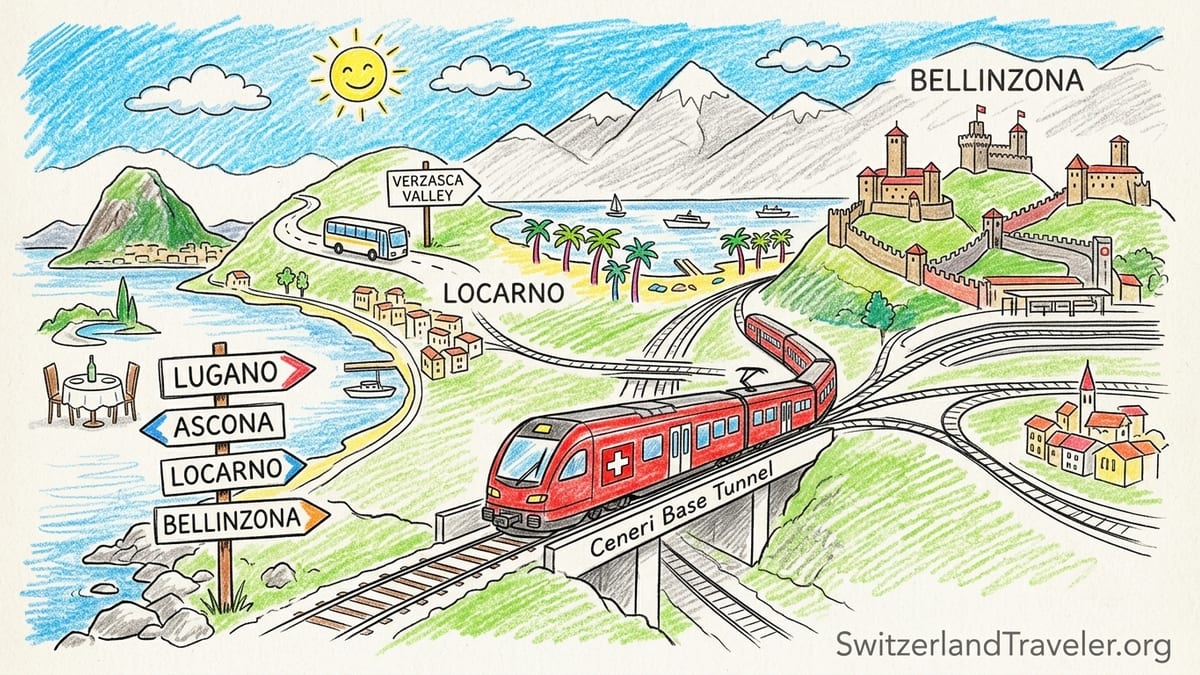
Ticino is compact and well connected, which means you can sleep in one town and still explore the others easily on day trips. Fast trains using the Ceneri Base Tunnel now link Lugano, Bellinzona and Locarno in roughly 15 to 30 minutes, with several departures each hour on the regional TILO network. Typical travel times are around 15 minutes between Lugano and Bellinzona and about 25 minutes between Locarno and Bellinzona, so choosing a base is less about access and more about the type of stay you want.
Public transport is integrated across the canton. If you stay in registered accommodation, many hotels and guesthouses issue the Ticino Ticket, which usually gives free or heavily discounted travel on regional trains and buses within Ticino. In practice, that can mean hopping from Lugano to Bellinzona in the morning for castles, continuing to Locarno for an afternoon on Lake Maggiore, then returning to your base without buying individual tickets each time. This makes it realistic to pick one hub for a three to five night stay.
Most visitors arrive by train through the Gotthard Base Tunnel from Zurich or Lucerne, or via Milan and Como from the Italian side. From Milan Malpensa Airport, there are direct trains to Lugano in roughly 1 hour 45 minutes, and regular connections onward to Bellinzona and Locarno. Driving is straightforward too, but for many itineraries a car is not essential because valley buses reach even remote spots such as Valle Verzasca and Valle Maggia from Locarno or nearby Tenero.
With that connectivity in mind, the key question becomes what you want on your doorstep: a vibrant lakeside city, a practical hub for valleys and boat trips, an atmospheric upscale promenade, a central rail junction under medieval castles, or a quiet village wrapped in nature. The following sections look at each option in turn.
Lugano: Best for Lake Lugano, Dining and Italy Access
Lugano is the largest city in Ticino and the main gateway from Milan, which makes it a strong choice for many first-time visitors. The lakeside promenade, the funicular up Monte Brè, and the views from Monte San Salvatore give quick access to the scenery people associate with Lake Como, but with a distinctly Swiss twist. The compact old town is filled with boutiques, gelato shops and cafés, while the LAC Lugano Arte e Cultura center brings a steady flow of concerts and exhibitions.
Lugano’s restaurant scene is the most varied in Ticino. You will find everything from classic grotto restaurants in the hills serving polenta with braised beef, to modern fine dining tasting menus, to casual pizzerias. Expect main courses in mid range places to start around 25 to 30 Swiss francs, with pizzas often a bit less. Lakeside hotel bars and rooftop terraces are popular at aperitivo hour, particularly around Piazza della Riforma and the waterfront just south of the center.
Accommodation runs from polished international brands near the station and lakefront to family run three star hotels a short walk uphill. A comfortable double room in central Lugano often starts around 180 to 230 Swiss francs per night in high season, with lakefront and pool access pushing prices higher. In return, you gain the easiest rail access from Italy, half hourly trains to Locarno and Bellinzona, frequent buses to Gandria and Morcote on the lake, and straightforward onward travel to Como and Milan.
Lugano works especially well if you want a city feel at night, with plenty of restaurant options and evening strolls, while still making day trips. From here you can visit Bellinzona’s castles in a half day, take a boat trip on Lake Lugano, or even make a long day trip to Lake Como or Lake Maggiore. If your priorities are dining choice, quick access from Milan’s airports and an urban lakefront atmosphere, Lugano is the most logical base.
Locarno: Most Practical Base for Lake Maggiore and Valleys
Locarno sits at the northern end of Lake Maggiore and functions as the most practical transport hub for exploring Ticino’s famed side valleys. The main railway station is just above the lake, with regional trains to Bellinzona and Lugano, and the scenic Centovalli Railway toward Domodossola and the Italian Piemonte side of Lake Maggiore. The bus terminal right outside the station has lines fanning into Valle Verzasca, Valle Maggia and smaller side valleys, which makes Locarno a very efficient base if you are planning multiple hiking or river days.
The town itself has a relaxed, low rise feel. Piazza Grande hosts the Locarno Film Festival in August and various markets and events at other times. The lakefront between Locarno and neighboring Muralto has a string of hotels, from simple two star properties to modern lakeside four stars with pools. Prices usually undercut Lugano a little for similar quality, and you can often find mid range doubles between about 160 and 210 Swiss francs in high season, with better deals in spring and autumn.
Locarno’s dining scene is solid rather than flashy. In the old town you will find trattoria style restaurants serving risotto, lake fish and seasonal game dishes, plus wine bars that spill into the narrow lanes on summer evenings. Along the lake there are hotel restaurants and casual spots for pizza, pasta and ice cream. While it does not match Lugano for depth of choice, it balances enough options with an easygoing holiday town mood.
Where Locarno really excels is logistics for nature focused day trips. Buses to Valle Verzasca typically leave from Locarno or nearby Tenero, serving villages like Lavertezzo and Sonogno. Other lines climb into Valle Maggia toward Bignasco and Cavergno. With the Ticino Ticket, many visitors simply board whichever bus is leaving next on a clear morning, pick a trail or swimming spot along the valley, then return in the late afternoon for dinner in town. If your ideal Ticino base combines lake swimming, quick access to multiple valleys and straightforward rail connections, Locarno is often the most practical location.
Ascona: Atmosphere and Upscale Lakeside Stays
Ascona, just a short bus or boat ride from Locarno, is the most atmospheric and upscale of the three Lake Maggiore bases. The compact historic center curls around a colorful promenade lined with arcaded buildings, lakeside terraces and small jetties. On a warm evening, the reflections of pastel facades in the water, live music drifting from a bar and the clink of glasses at outdoor restaurants give Ascona a distinctly Mediterranean holiday feel.
This mood comes with a price premium. Ascona has a concentration of four and five star hotels, including classic grand properties right on the lakefront with pools, manicured gardens and private lake access. In high season, double rooms in these hotels often start somewhere in the 300 to 450 Swiss franc range and can rise well above that for suites or direct lake views. There are smaller guesthouses and apartments tucked into the back streets that bring costs down a little, but Ascona is rarely the budget choice.
The reward is atmosphere and comfort. Many hotels include generous breakfast buffets on terraces facing the water, while the promenade restaurants specialise in seafood, antipasti platters and carefully plated risottos. You can wander the narrow back lanes to find wine bars and gelaterie, or walk a little north along the shore toward quieter stretches for swimming. Boats connect Ascona to the Brissago Islands, where visitors can explore subtropical gardens, and to other stops on Lake Maggiore including Italian towns such as Cannobio in season.
As a base, Ascona is a good fit if you value a stylish, almost resort like lakefront and are willing to pay extra for it. Public transport is still efficient: buses run frequently to Locarno station for trains and valley buses, and boats link you with other lake towns. However, for pure convenience to the valleys, Locarno edges ahead. Think of Ascona as the choice for couples’ getaways, slower paced trips and travelers who want to enjoy their hotel as much as the wider region.
Bellinzona: Central Rail Hub Under Medieval Castles
Bellinzona is the political capital of Ticino and the key railway junction where north south and east west lines meet. Almost every long distance train between German speaking Switzerland and Lugano passes through, and regional services connect Bellinzona to Locarno and Lugano in well under half an hour. Staying here gives you very fast rail access in both directions, which can make sense if you plan to day trip across the canton or are arriving late and leaving early by train.
The city has a very different character to the lakeside towns. Bellinzona spreads along the valley floor beneath three medieval castles that form a UNESCO World Heritage site. Castelgrande, Montebello and Sasso Corbaro are linked by walls and paths, and you can easily spend a day exploring the ramparts and views. On Saturdays, the old town streets fill with a lively market selling local cheeses, cured meats, produce and crafts.
Hotels in Bellinzona are fewer than in Lugano or Locarno, but they are well placed for train travelers. Properties such as the Hotel & SPA Internazionale sit directly opposite the main station, while others like Hotel Unione are a short walk into the historic center. Typical high season rates often undercut Lugano, with comfortable doubles sometimes available in the 150 to 200 Swiss franc range. Dining here is also a touch less expensive than in the lakeside resorts, with plenty of simple grottos and pizzerias catering to locals as well as visitors.
Bellinzona makes a strong base if you care more about transport and heritage than being right on the lake. From the station you can reach Lugano in about 15 minutes, Locarno in roughly 25 minutes and even continue further north to Airolo or over the Alps on longer day trips. After a day out, you come back to a quieter city where evenings are focused on a few piazzas and the lit up castles overhead, rather than a hectic lake promenade.
Staying in Ticino Valleys: Nature First, Town Second
Beyond the main towns, Ticino’s valleys offer a different kind of base. In Valle Verzasca and Valle Maggia, for example, you will find stone built villages, emerald rivers, chestnut woods and mountain peaks, but also fewer restaurants and limited late evening transport. Buses run up and down the valleys from Locarno or Tenero, with numerous stops such as Lavertezzo, Brione, Frasco and Sonogno in Valle Verzasca, and Cevio or Bignasco in Valle Maggia. Services are geared to daytime hikers and residents, so you need to pay attention to the last bus back if you do not have a car.
Accommodation in the valleys ranges from simple hotels and rustic inns to renovated rustici, traditional stone cottages rented as holiday homes. A small hotel or guesthouse might charge around 130 to 180 Swiss francs for a double room in high season, sometimes including half board with dinner. Self catering cottages vary widely in price depending on size and location, but they give you flexibility if you want long stays and space for hiking gear or families. In places like Sonogno or Moghegno, life is slow and evenings are quiet, focused on a couple of local restaurants or a single grotto.
The obvious gain of staying in the valleys is immersion in nature. From a base in Lavertezzo, for example, you can walk out early to the famous stone bridge and turquoise pools before the day trippers arrive, then continue on river trails without having to check bus times. In Valle Maggia, you might wake up in a tiny hamlet like Someo, listen to the river outside your window and head straight onto alpine paths without ever seeing a main road that day.
The trade off is reduced choice. There are fewer restaurants, almost no nightlife, and if the weather turns rainy for days you may wish you were based in a town with museums and cafés. For many travelers, a hybrid approach works well: three or four nights in Locarno, Lugano or Ascona, plus two or three nights in a valley village. If your main priority is hiking, river swimming and quiet evenings, though, basing yourself entirely in the valleys can be ideal, provided you plan groceries, restaurant opening days and bus schedules in advance.
Comparing Prices, Lake Access and Day Trip Reach
When choosing your base, it helps to consider how each place balances cost, lake access and day trip convenience. In very broad terms, Lugano and Ascona tend to be the most expensive choices, particularly for waterfront hotels and upscale dining, while Locarno and Bellinzona sit slightly lower on average, and valley villages can be cheaper still if you opt for simple accommodation or self catering. However, prices fluctuate with events such as the Locarno Film Festival or Ascona’s music festivals, when availability tightens and rates rise.
For immediate lake access, Lugano, Locarno and Ascona all deliver, but in different ways. Lugano offers a long urban promenade and views framed by steep mountains, with frequent boats to villages like Gandria and Morcote. Locarno’s lakefront is more open and family oriented, with lidos and beaches on Lake Maggiore near Lido Locarno and Tenero. Ascona’s setting is the most intimate, with its curved promenade and restaurant terraces right above the water, and boats across to islands and Italian towns in season. Bellinzona, by contrast, is not on a major lake itself, but short rail and bus rides put lakes within reach.
In terms of day trip reach, Bellinzona and Locarno stand out. From Bellinzona, fast trains radiate across the canton, making it easy to combine Lugano, Locarno and even higher alpine sections in one stay. From Locarno, you not only have easy rail access to Bellinzona and Lugano, but also the best bus connections into Valle Verzasca, Valle Maggia and Centovalli, plus the scenic train toward Domodossola. Lugano is more convenient than the others for day trips into Italy, including Como and Milan. Ascona relies on short transfers to Locarno or direct boats, so it is slightly less practical but still very workable.
For many itineraries, a useful rule of thumb is to pick Lugano if you want a city plus lake stay with Italian side trips, Locarno if you want the most flexible overall hub, Ascona if you prioritise charm and an indulgent lakeside atmosphere, Bellinzona if fast rail links are top of your list, and a valley village if you want to wake up surrounded by mountains with hiking trails at your door. Because distances are short, you do not have to worry about missing major sights as long as you allow enough days to move around.
The Takeaway
Choosing where to stay in southern Switzerland’s Ticino region is less about which town is “best” and more about matching your base to your travel style. Lugano delivers a cosmopolitan lakeside city experience with the strongest dining scene and the easiest access to and from Italy. Locarno functions as the most efficient all round hub, especially if you want to split your time between Lake Maggiore, side valleys and scenic train rides.
Ascona shines when atmosphere and upscale lakeside hotels are your priority, rewarding those happy to pay a little more for characterful evenings on the promenade. Bellinzona offers central rail connections and dramatic castle scenery, ideal for visitors focused on heritage and quick movement around the canton. The Ticino valleys provide the most immersive nature stays, trading restaurants and nightlife for stone villages, river pools and trailheads just outside your door.
Because trains and buses are frequent and distances short, you can confidently choose one main base for a three to five night trip, or combine two contrasting locations, such as Lugano and a valley village, or Ascona and Bellinzona. With a clear sense of your priorities and an understanding of how each area works in practice, you can turn Ticino’s compact geography into an advantage and build a stay that fits your own version of the perfect southern Swiss escape.
FAQ
Q1. Is Lugano or Locarno a better base for a first visit to Ticino?
Lugano is better if you want a larger city feel, more restaurants and easy access to Italy. Locarno is better if you plan lots of nature day trips into Valle Verzasca, Valle Maggia and along Lake Maggiore, thanks to its strong bus and train connections.
Q2. How long should I stay in Ticino to see the main highlights?
With three nights you can experience one main base and a couple of day trips. Four to five nights allow you to add valley hikes, a scenic train ride and visits to more than one lake town without feeling rushed.
Q3. Is Ascona worth the higher hotel prices compared to Locarno?
Ascona is worth it if you value a very atmospheric lakeside promenade, stylish hotels and a slower pace. If budget is more important than setting, Locarno offers similar lake access and easier transport to the valleys for slightly lower average prices.
Q4. Is Bellinzona a good place to stay without a car?
Yes. Bellinzona’s station is a major rail hub with frequent trains to Lugano, Locarno and further north. You can explore the castles on foot and rely on trains for almost all day trips, making a car unnecessary.
Q5. Should I stay in a valley village or just visit on day trips from Locarno?
Day trips from Locarno are convenient, but staying in a valley village gives you quiet mornings and evenings, and quicker access to hiking trails and river spots. It suits travelers who prioritise nature and do not mind fewer restaurants or nightlife options.
Q6. How expensive is Ticino compared with other parts of Switzerland?
Overall prices are similar to other popular Swiss regions, with lakeside four star hotels often starting around the high mid hundreds of francs per night. You can keep costs down by choosing simpler accommodation in Bellinzona or the valleys and making use of breakfast buffets and supermarket picnics.
Q7. Can I visit both Lake Lugano and Lake Maggiore from a single base?
Yes. Fast trains link Lugano, Bellinzona and Locarno in under an hour, so you can stay in one town and day trip to the other lake. Many travelers base in Lugano and visit Ascona or Locarno, or stay in Locarno and visit Lugano for a day.
Q8. Is it better to use public transport or rent a car in Ticino?
For most visitors, public transport is sufficient. Trains and buses are frequent between main towns and up the valleys. A car can be useful for very small hamlets or flexible late evening returns, but parking in town centers and at busy lake spots can be limited.
Q9. Which base is best for travelers arriving from Milan or other parts of Italy?
Lugano is usually the easiest, with direct trains from Milan and good onward connections. From Lugano you can then day trip to Bellinzona, Locarno and Ascona. If your focus is Lake Maggiore rather than Lake Lugano, Locarno and Ascona are also straightforward to reach with a change in Bellinzona.
Q10. Is Ticino a good destination for visiting outside the summer months?
Yes. Spring and autumn often bring pleasant temperatures, fewer crowds and lower accommodation prices. Lakeside towns remain attractive, and valley hikes can be especially enjoyable in cooler weather, though some higher routes and boat services may be limited compared with peak summer.