


Southern Switzerland’s Ticino region feels like Italy with Swiss trains. Palms line the promenades, ferries glide across deep blue lakes, and granite valleys rise just beyond the last gelato stand. Yet when it comes time to book a base, most visitors end up facing the same choice: Lugano, Locarno or Ascona. Each town offers water views, mountain access and easy public transport, but the experience on the ground is very different.
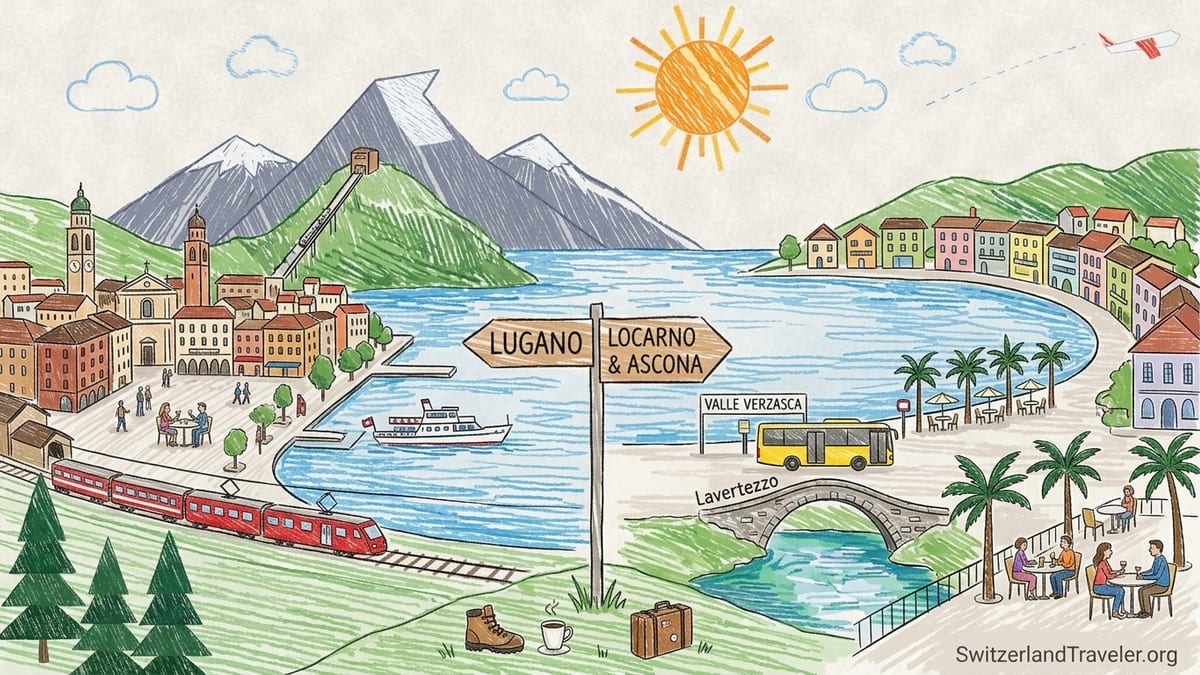
Lugano, Locarno or Ascona: The Core Decision
If you want a proper city on a spectacular lake with excellent restaurants and effortless links into Italy, Lugano is the clear front‑runner. It is the largest of the three, with a compact but urban center, serious shopping streets, a university campus and year‑round cultural life. You can spend a day browsing boutiques off Via Nassa, ride the funicular up Monte San Salvatore or Monte Brè, then sit down to a long dinner at a lakeside grotto without feeling you have “done” the town in a single afternoon.
Locarno suits travelers who plan to spend serious time in the valleys and around Lake Maggiore. It sits at the mouth of Vallemaggia and close to the road and bus network that climbs into Valle Verzasca, which makes it the most practical base if canyoning, hiking or swimming in emerald pools is the focus. Locarno itself is more low‑key than Lugano, with a central Piazza Grande, a lakeside promenade and seasonal buzz during events like the Locarno Film Festival in August.
Ascona is the romantic choice. Smaller than both Lugano and Locarno, it curls around a pretty bay on Lake Maggiore with pastel houses, a car‑free old town and a waterfront lined with terraces. Many of its hotels are upscale, with manicured gardens, private lake access or spa areas. Couples often choose Ascona for long weekend stays, sundowner aperitivi and slower, more indulgent evenings.
A useful rule of thumb is this: choose Lugano for a city on Lake Lugano and easy Italy connections, Locarno for the most efficient access to Valle Verzasca, Vallemaggia and Lake Maggiore, and Ascona if your priority is a smaller, more romantic, upscale lakeside atmosphere.
Atmosphere and Neighborhood Feel
Lugano feels like a small Mediterranean city rather than a resort town. Around the lakefront Parco Ciani and the boat piers, you see joggers, commuters and students as much as tourists. The old town behind Piazza della Riforma is compact but busy, with mainstream fashion chains and Italian cafes. In the evenings, particularly from Thursday to Saturday, wine bars and modern restaurants fill with locals, and you can stay out late without the town shutting down. If you like the idea of a lake break that still feels connected to everyday life, this is your best fit.
Locarno’s personality changes more with the seasons. In summer, and during major events, the town can feel lively, with outdoor concerts on Piazza Grande and full cafe terraces. Outside peak times it relaxes into something closer to a lakeside provincial town. The waterfront stretch toward the Lido and the river mouth draws walkers year‑round, and you are never far from a bus stop heading into the valleys. Locarno works well for travelers who want a quieter base but still appreciate a bit of street life.
Ascona feels distinctly more curated. The car‑free lakefront piazza is backed by narrow alleys, art galleries and boutiques, and many buildings house small design hotels or long‑established family properties. The atmosphere is chic rather than flashy: think linen shirts, discreet jewelry and guests lingering over wine on hotel terraces. In high summer and on holiday weekends, you will notice a luxurious, almost resort‑like vibe; in shoulder seasons, Ascona can be a peaceful retreat where evenings focus on dinner and lake views rather than nightlife.
If you prefer to blend into a working city, Lugano is ideal. If you want a holiday town that still feels practical, choose Locarno. If you imagine strolling a promenade that looks like a postcard and returning to a boutique hotel with a garden, Ascona is the better match.
Hotels, Budgets and Who Each Town Suits
Lugano has the widest range of accommodation, from chain hotels near the station to smart properties right on the lake. Couples looking for something polished often gravitate to established lakeside hotels or renovated boutique properties tucked into the hills above town, where you might pay from the upper mid‑range up to luxury prices in peak season. Budget travelers can find functional three‑star options within a 10 to 15 minute walk of the center, particularly near the station or in outlying neighborhoods like Paradiso, with frequent buses along the lake.
Locarno’s hotel stock tilts toward mid‑range holiday properties, apartment‑style stays and family‑oriented hotels with pools and breakfast included. Around the lakefront and Piazza Grande you can expect to pay broadly mid‑range Swiss rates, especially in July and August. Slightly up the hill or a few tram stops out, you may find simpler hotels and guesthouses that keep costs a bit lower, which is attractive if you plan to spend most of your time in the valleys rather than on your hotel terrace.
Ascona stands out for its concentration of upscale lakeside hotels and refined boutique properties. Well known addresses on or near the promenade typically combine landscaped grounds, spa facilities and in‑house fine dining. These can command premium nightly rates, particularly in summer and on festival weekends, and are often booked by couples celebrating anniversaries or honeymoons. There are a few more modest three‑star hotels set a short walk back from the lake, which can work for travelers who want the Ascona atmosphere without a full luxury budget.
Families often find Locarno the best value and most practical mix: mid‑range hotels, easy transport into the valleys and lake activities that do not require a car. Couples with a focus on food, design and slow evenings tend to prefer Ascona or a characterful hotel in Lugano. Group trips and longer stays can work particularly well in Lugano’s apartments and apart‑hotels, which benefit from supermarket access and city infrastructure.
Trains, Ferries and Access to Valleys and Italy
All three towns are well served by Swiss public transport, but they play different roles in the network. Lugano is on a main north‑south rail line, which makes it the most convenient choice for itineraries that connect Zurich, Lucerne, Milan and northern Italy. Direct trains to Milan run several times a day, and long‑distance services across the Alps stop here, making same‑day arrivals from other Swiss cities straightforward. Buses cross into Italy along Lake Lugano and toward Lake Como, which makes Lugano a good base if you want to hop across the border without changing hotels.
Locarno is easily reached by regional trains from Bellinzona and by the scenic Centovalli railway that links to Domodossola in Italy. The real advantage, however, is its position at the mouth of Valle Verzasca and Vallemaggia. Buses up Valle Verzasca leave from the main bus station near the center, climbing through villages like Lavertezzo before ending in Sonogno. Similar services follow the Maggia river from Locarno into Vallemaggia. In practice, this means you can finish breakfast in town and be walking beside turquoise river pools or granite gorges within an hour, without needing a car.
Ascona shares much of the same valley access as Locarno, but usually with one extra step. Local buses link Ascona to Locarno’s stations in around 10 to 15 minutes, and from there you transfer to the valley routes. This is simple, but adds time at the start and end of each hiking or canyoning day. For Lake Maggiore cruises, both Locarno and Ascona have piers with regular boat services that zigzag between Swiss and Italian towns on the lake. If your trip will involve frequent boat outings more than serious valley exploration, either place works well.
For travelers planning to continue toward Italy by rail, Lugano is the logical gateway. For those whose main goal is exploring Valle Verzasca, Vallemaggia or side valleys like Centovalli, basing in or near Locarno keeps daily logistics shorter and simpler. Ascona remains attractive if lake views and a romantic setting matter more than shaving a few minutes off each bus connection.
Food, Nightlife and Lakefront Evenings
Lugano delivers the most varied food scene. Alongside traditional grotti serving risotto, polenta and grilled meats, you will find modern bistros, pizza places and international options. The area around Piazza della Riforma and the parallel streets fills in the evening with locals meeting for aperitivo. Nightlife leans toward wine bars, cocktail spots and a few late‑opening venues rather than large clubs, but you can easily stay out past midnight on weekends. In summer, lakefront bars in neighborhoods like Paradiso add outdoor seating and DJ sets to the mix.
Locarno’s dining scene is smaller but satisfying, particularly if you appreciate simple, well‑cooked Ticinese dishes. Many visitors end up on Piazza Grande or along the lakefront at sunset, choosing between casual terraces and hotel restaurants. In high summer, pop‑up stands and events add to the atmosphere. Nightlife is less structured than in Lugano: you will find bars and cafes open late enough for a relaxed drink after dinner, but the town is quieter overall once the evening promenade thins out.
Ascona places more emphasis on slow, scenic evenings than on conventional nightlife. The lakeside promenade is packed with restaurant terraces, many attached to hotels, and a typical night might involve an aperitivo with lake views, a lingering multi‑course dinner and a walk along the water. Several upscale hotels also offer in‑house bars and lounges where guests gather after dark. While you can find a drink well into the night, Ascona is not a party town; last orders often align with the closing of hotel bars rather than independent late‑night venues.
If you are traveling with friends who prioritize nightlife, Lugano offers the most choice and latest hours. For couples who want memorable dinners and unhurried walks by the lake, Ascona is especially appealing. Locarno sits in the middle, with enough dining and drinking options to fill a few nights without feeling hectic.
Families, Couples and Whether You Need a Car
Families often appreciate the practical advantages of Locarno. You can combine days in the valleys with time at the lake, and there are family‑friendly attractions such as swimming complexes on the lakefront and easy river spots for paddling in good weather. Most valley buses accept common Swiss travel passes, making public transport both simple and relatively economical. Kid‑friendly restaurants, playgrounds and flat promenades add to the appeal for those pushing strollers or traveling with younger children.
Couples, especially on shorter romantic breaks, tend to lean toward Ascona or a well‑located hotel in Lugano. Ascona’s compact old town, car‑free lakeside and high concentration of boutique and luxury hotels make it an easy place to relax for a long weekend without planning much beyond where to eat each night. Lugano, on the other hand, suits couples who like to mix romance with activity: you can take morning hikes above the lake, spend afternoons shopping and exploring, then dress up for dinner in town.
In all three towns, you can comfortably visit without a car. Trains and buses connect Lugano to Italy and the rest of Switzerland, and local buses serve surrounding villages and attractions. Around Locarno and Ascona, valley buses handle the journeys most visitors want to make. A car becomes useful only if your plans involve remote trailheads, flexible timings in the valleys or frequent cross‑border day trips to smaller Italian villages that sit away from main ferry routes.
If you are driving, parking is typically easier on the outskirts and in marked garages than directly in historic centers. Ascona’s lakeside core is largely car‑free, and both Lugano and Locarno restrict vehicular access in central pedestrian zones. For many itineraries, a sensible compromise is to arrive by train, use local transport during your stay, and rent a car only for specific days when you need more flexibility in the valleys.
Sample Itineraries to Help You Decide
Imagine you have three nights in Ticino and want to experience an Italian‑speaking city, a classic lake cruise and a taste of Italy across the border. In this case, basing in Lugano makes the most sense. You could spend one day exploring the old town and taking the funicular up Monte San Salvatore, another visiting lakeside villages like Morcote or Gandria, and a third day riding the train to Milan for shopping and museums. Throughout, you return each evening to a city with plenty of dining choices.
Now consider four or five nights focused on nature: swimming in emerald pools, hiking stone paths between villages and seeing traditional valley hamlets. Locarno is the strongest fit. You might allocate one day to Valle Verzasca, starting early to enjoy the famous arched bridge at Lavertezzo before it gets busy, another day to Vallemaggia with its scattered hamlets and river beaches, and additional days on the lake or riding the Centovalli railway into the hills. Even without a car, you can link these days together smoothly using valley buses and boats on Lake Maggiore.
For a romantic long weekend with an emphasis on relaxation, food and views, Ascona stands out. You could spend your first afternoon wandering the old town and lakefront, perhaps booking a spa treatment at your hotel. On the second day, take a lake cruise to nearby islands or Italian shore towns and return for a late dinner along the promenade. Another day could be a gentle outing to Locarno or a short valley walk, followed by sunset drinks on a hotel terrace. The point here is less to “see everything” and more to enjoy an atmosphere that feels removed from everyday life.
Travelers with a week or more in Ticino sometimes split their time, combining, for example, three nights in Lugano with three or four in Locarno or Ascona. This approach lets you sample both the Lake Lugano and Lake Maggiore sides of the region without rushing, and makes sense if Ticino is the centerpiece of your trip rather than a short side excursion.
The Takeaway
Lugano, Locarno and Ascona all offer palm trees, lakeside promenades and easy access to the mountains, but they serve different kinds of trips. Lugano is the largest city, best for travelers who want a lively, urban base on Lake Lugano with a strong restaurant scene and simple rail links into Italy. Locarno is the most efficient launchpad for Valle Verzasca, Vallemaggia and Lake Maggiore, ideal for hikers, swimmers and families who want straightforward public transport into the valleys. Ascona, smaller and more upscale, is the choice for a romantic, design‑conscious lakeside stay where evenings revolve around good food and quiet walks by the water.
If your priority is city energy and cross‑border connections, choose Lugano. If you dream of turquoise rivers and granite valleys with minimal daily logistics, choose Locarno. If you imagine waking up to manicured gardens and lake views in a chic village setting, choose Ascona. All three are close enough that you can visit the others as day trips, so the real decision is which atmosphere you want to come home to each night.
FAQ
Q1. Which town is best for first‑time visitors to Ticino?
Lugano is usually the most versatile choice for a first visit, thanks to its city feel, broad accommodation range, strong restaurant scene and direct rail links to other Swiss cities and Milan. You can then visit Locarno and Ascona as easy day trips.
Q2. Where should I stay if I want to focus on Valle Verzasca and Vallemaggia?
Locarno is the most practical base for valley trips, with frequent buses heading into Valle Verzasca and along Vallemaggia. Staying in Locarno keeps travel times short so you can be on the trails or by river pools soon after breakfast, without relying on a car.
Q3. Is Ascona worth the higher hotel prices?
For travelers who value a romantic, upscale setting, Ascona often justifies the premium. Many hotels offer refined rooms, gardens, spa facilities and direct lake access, and the compact, car‑free lakeside feels particularly special at sunrise and sunset. If your budget is tight, consider a slightly inland hotel that still allows you to enjoy the atmosphere.
Q4. Do I need a car to explore the region from any of these bases?
No, a car is not essential in Lugano, Locarno or Ascona. Trains and buses cover the main routes, and valley buses reach most popular spots in Valle Verzasca and Vallemaggia. A car is helpful only if you want maximum flexibility with timing or plan to visit smaller, less connected villages on both the Swiss and Italian sides of the lakes.
Q5. Which town is best for nightlife?
Lugano offers the liveliest evenings, with a good spread of bars, wine bars and late‑opening venues around the center and lakefront. Locarno has a more relaxed scene that centers on its piazzas and waterfront. Ascona focuses on long dinners and hotel bars rather than energetic nightlife, which suits visitors seeking quieter nights.
Q6. What about families with children?
Locarno often works best for families, combining mid‑range hotels, lakeside swimming areas and easy access to the valleys by bus. Flat promenades are stroller‑friendly, and there are playgrounds and casual restaurants that welcome children. Lugano is also a good option if you prefer a city base with parks and varied activities.
Q7. How do prices compare between Lugano, Locarno and Ascona?
In general, Lugano and Locarno offer a wide spread of prices, from more affordable three‑star hotels and apartments to high‑end properties. Ascona tends to skew more expensive, especially for lakeside hotels with gardens, pools and spa facilities. Shoulder seasons such as late spring and early autumn can bring better rates in all three towns.
Q8. Can I visit all three towns without changing hotels?
Yes. The distances are short, and all three are linked by frequent buses and boats. For example, from Lugano you can reach Locarno or Ascona in well under two hours using trains and local connections, and from Locarno you can be in Ascona in around 15 minutes. Many travelers base in one town and visit the others as day trips.
Q9. Which base works best for a car‑free romantic weekend?
Ascona is especially well suited to a car‑free romantic break. You can walk everywhere in town, enjoy lakeside restaurants and rely on buses or boats for occasional excursions. A romantic alternative is to choose a well‑located lakeview hotel in Lugano, which combines scenic walks with a larger choice of bars and restaurants.
Q10. How many nights should I plan in this part of Ticino?
Three nights is a comfortable minimum to get a feel for the region and visit at least one valley and one neighboring town. With five to seven nights, you can mix Lugano’s city energy with time in Locarno or Ascona, add multiple hikes or swims in the valleys, and allow relaxed, unscheduled days by the lake.