


Western Switzerland’s arc of water and vineyards, from Geneva to Lausanne and along the so called Swiss Riviera to Montreux and Vevey, sits high on many European wish lists. Add the storybook village of Gruyères, the medieval streets of Fribourg and the relaxed lake city of Neuchâtel, and you have one of the most compact, scenic regions in the country. The challenge is not where to go but where to sleep. This guide focuses first on location and setting, then on style and budget, giving concrete hotel suggestions for luxury, lakefront, boutique, family and value stays across Geneva, Lausanne, Montreux and Vevey, Gruyères and Fribourg, and Neuchâtel.
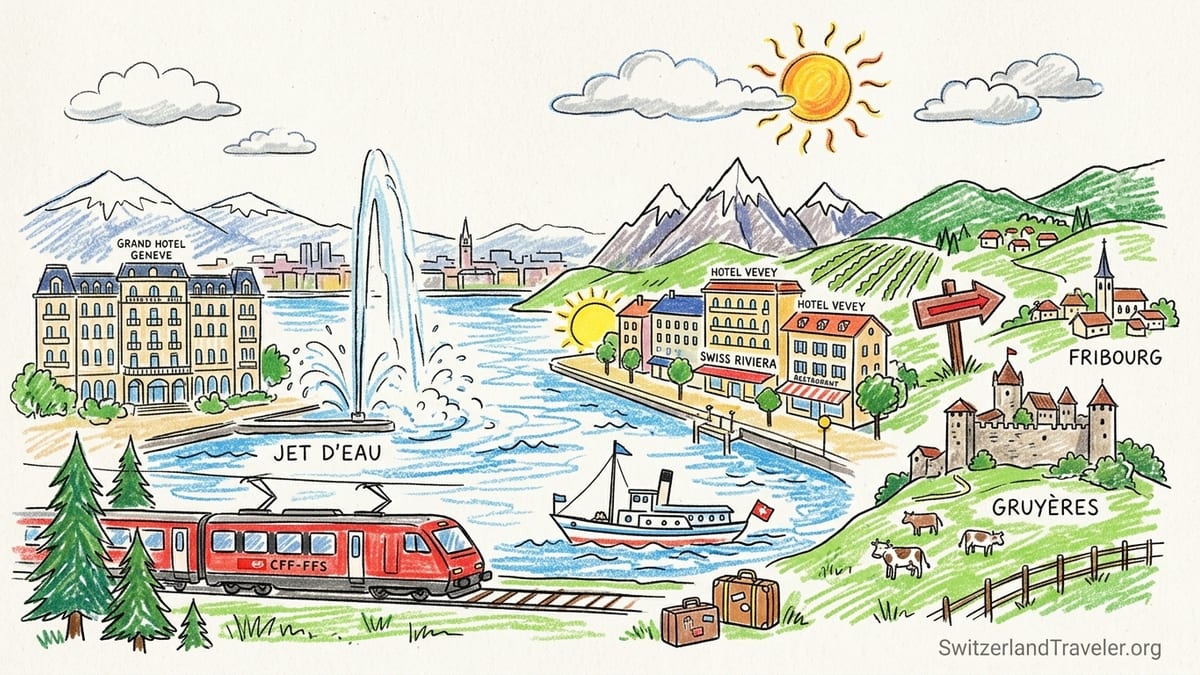
How to Choose the Right Base in Western Switzerland
If you look at a map, the main destinations in this guide lie within about 90 minutes of each other by train. That makes Western Switzerland ideal for travelers who want to unpack once or twice instead of moving every night. Your first decision is therefore which lake and which town to use as a base. Geneva and Lausanne work well for visitors who want big city services, museums, shopping and direct rail connections. Montreux and Vevey suit travelers who care most about being right on the water with mountain views. Gruyères and Fribourg are best for rural and medieval charm, while Neuchâtel offers a quieter, slightly less expensive lakeside city.
Location matters more than star ratings here because public transport is so efficient and the scenery is the main event. A room looking onto Lake Geneva or Lake Neuchâtel can feel more special than an extra half star of service. When comparing options, pay close attention to whether a hotel sits directly on the lake promenade, one or two streets back, or up the hill. The difference between walking straight onto the waterfront and crossing a main road every time can shape your stay more than the thread count of the sheets.
Prices fluctuate strongly with season, major events and whether your dates overlap with festivals like the Montreux Jazz Festival in early July. In summer, expect lakefront luxury rooms in Geneva or on the Swiss Riviera to start in the high hundreds of Swiss francs per night, with suites going much higher. In shoulder seasons such as April or late October, similar rooms can be noticeably less, and rooms in secondary locations a few minutes’ walk back from the lake can represent strong value.
Across the region, most hotels include a local transport card, which gives free or heavily discounted public transport within the city or along the coast. In Vevey and Montreux, for example, guests typically receive a Riviera Card that can cover local buses and may discount mountain railways. These cards, plus dense train and boat networks, mean you can prioritize charm and lake views over the need to park a rental car at the door.
Geneva: Lakefront Grandeur and Characterful Boutiques
Geneva curves around the western tip of Lake Geneva, with many of its most desirable hotels lined up along the right bank facing the Jet d’Eau fountain. For pure lakefront luxury, properties such as Beau Rivage Genève and Hotel President Wilson combine historic facades or sleek contemporary design with direct views of the water and, on clear days, the Alps. Typical high season rates for entry level rooms in these hotels can run from roughly 800 to well over 1,000 Swiss francs per night, but travelers are paying as much for the location and view as for the service level.
Travelers who want lake access without always paying flagship prices can look a few steps back from the water or toward the left bank near the Old Town. Here, boutique style properties with 40 to 100 rooms often trade direct water frontage for character, design and walkability. Several long running Geneva guide publications highlight small hotels in the Old Town housed in converted townhouses and inns, where a five minute stroll brings you to the cathedral and narrow lanes rather than the convention center. Nightly rates at such boutiques commonly start in the mid hundreds of francs, climbing with room size and view.
Families benefit from Geneva’s compact scale and kid friendly infrastructure. Many hotels, including several four and five star properties around the lake, provide free public transport passes for all registered guests. That can make it easy to base the family in a quieter lakeside neighborhood and still access museums, parks and boat trips. When comparing family options, look for connecting rooms or junior suites with sofa beds, and check whether children’s breakfast is included. Some Geneva hotels include special weekend offers where children under a certain age stay free in parents’ rooms or receive half price meals, which can significantly soften the bill.
For value travelers, Geneva’s reputation for high prices can be intimidating, but you can mitigate costs by choosing small hotels and guesthouses on tram lines a few stops back from the lake. These may not offer postcard views, but they often provide clean, well run rooms at a fraction of the cost of the palaces and are still within a 10 to 15 minute ride of the Jet d’Eau. Booking well ahead for trade fair free periods and being flexible by a day or two can also yield noticeably better rates.
Lausanne: Hillside Views and Refined Urban Living
Lausanne, roughly 40 minutes by train northeast of Geneva, is built on a series of steep hills that rise from the lake up to the Old Town and cathedral. This topography creates a clear distinction between waterfront resorts at Ouchy and urban grand hotels higher up. At the lake, Beau Rivage Palace is widely regarded by Swiss travelers and hoteliers as one of the country’s top properties, combining Belle Epoque architecture, extensive gardens and indoor and outdoor pools. Rooms with full lake views here can command several hundred francs per night even outside peak months, but the combination of direct promenade access and resort style facilities appeals to couples and families prepared to invest in a special stay.
One or two blocks back from the lake, mid scale hotels provide more affordable lake access. These properties often occupy modern or early twentieth century buildings with simple but comfortable rooms. They work well for travelers who want to stroll the waterfront and hop on lake boats but would rather dedicate budget to restaurants or excursions into the Lavaux vineyards. Expect standard rooms in these hotels to fall somewhere in the mid range for Switzerland, commonly less than half the price of the top luxury addresses on busy dates.
Higher up the hill near Lausanne’s main train station and in the city center, hotels like Lausanne Palace and Royal Savoy blend urban convenience with panoramic views from upper floors. While they may not sit directly on the lake, they are within a few minutes’ metro ride of Ouchy and place guests in the heart of the city for shopping, dining and nightlife. For travelers splitting their time between business in Geneva and leisure in Lavaux, an address close to Lausanne’s station can be especially practical, as fast trains run in both directions throughout the day.
Families often appreciate Lausanne’s combination of parks, lakeside playgrounds at Ouchy and indoor attractions such as the Olympic Museum. When choosing where to stay with children, balance the attraction of landscaped palace gardens and pools with the reality of Lausanne’s hills. Families with strollers may prefer lakeside hotels or properties directly on a metro stop to avoid steep daily climbs back from the promenade.
Montreux & Vevey: The Heart of the Swiss Riviera
The stretch of shoreline between Lausanne and Montreux, often marketed as the Swiss Riviera, concentrates some of the most atmospheric lakefront hotels in Western Switzerland. Montreux itself, framed by steep slopes and the Dents du Midi peaks, is home to Fairmont Le Montreux Palace, a historic five star hotel opened in the early twentieth century. The Palace sits directly on the lakeside promenade, with a large spa that includes indoor and outdoor pools, and is adjacent to venues used by the Montreux Jazz Festival in early July. During festival weeks, rates for lake view rooms and suites climb significantly, and bookings are often made many months in advance.
A few minutes along the shore in Vevey, Grand Hotel du Lac and Hôtel des Trois Couronnes occupy privileged positions directly on the lakefront, with private gardens or terraces separating guests from the passing promenade. Both are recognized five star properties and part of respected hotel collections. Travelers report that rooms with balconies facing the water are particularly coveted, offering uninterrupted views of the lake and mountains without a road in between. In high season, such rooms can easily reach the upper mid to high hundreds of francs per night, but guests are paying for a combination of quiet, character and setting that is hard to reproduce elsewhere.
Above Vevey, on Mont Pèlerin, Le Mirador Resort & Spa trades immediate lake access for one of the widest panoramas in the region. The hotel terraces and many rooms look over the Lavaux vineyards, the full sweep of Lake Geneva and distant alpine peaks. Accessed by road or via a small funicular from the lakeside, Le Mirador suits travelers who prioritize views, a sense of retreat and spa facilities over being able to step directly out onto the promenade. It is a strong choice for couples on a short break or travelers combining sightseeing with time in a medical or wellness center.
Along this stretch of coast there are also several mid range and family friendly hotels with either partial lake views or direct waterfront locations but simpler facilities. These may offer smaller rooms, more compact spa areas or fewer dining options, but they open the Riviera experience to a wider range of budgets. When reviewing options, check how much outdoor space the hotel actually controls, whether there is a garden between you and the promenade, and how convenient it is to reach the nearest train or boat pier. For many visitors, the ability to walk along the lakefront in the evening without needing a car proves more valuable than a higher category of room.
Gruyères & Fribourg: Storybook Villages and Rural Calm
Turning inland from Vevey or Lausanne, the landscape rises into soft green hills, dairy farms and small towns. Gruyères, famous for its cheese, is a compact walled village on a hilltop that feels almost like a film set. Accommodation inside the medieval core is limited, typically to a couple of small hotels and guesthouses that offer simple rooms, traditional decor and immediate access to the cobbled main street. These work well for travelers who want to experience the village early in the morning or late in the evening before day trippers arrive, though rooms can be snug and parking is usually just outside the walls.
A short drive or bus ride away, the surrounding countryside and nearby towns offer more flexible options. Mid range family run hotels in the villages below Gruyères usually provide larger rooms, more modern bathrooms and easier parking than the historic inns in the old village. Some have views up toward the castle or across open fields. Prices here are often milder than on the lake, which makes this area attractive to families or travelers planning several days of hiking, visiting dairies and chocolate factories, and exploring Fribourg.
Fribourg itself straddles a river gorge and has a well preserved medieval old town combined with a modern upper city. Hotels tend to cluster either near the station, which is convenient for onward travel to Bern, Lausanne or Neuchâtel, or in and around the historic lower town. For most visitors, a small hotel or guesthouse within walking distance of the old streets and river bridges offers the best experience, even if it means climbing some steep lanes or taking the funicular between levels. Room rates in Fribourg are generally lower than in Geneva or Lausanne, and value conscious travelers can often find comfortable, central rooms here that cost a fraction of a night on the Riviera.
Families basing themselves around Gruyères or Fribourg gain easy access to child friendly activities like farm visits, easy valley hikes and chocolate factory tours, without the crowds of the main lakefront resorts. When choosing a base, consider whether you prefer to be in a quiet village with one or two dining options within walking distance or in a small city with more restaurants but a less rural feel. In either case, proximity to a train or frequent bus line simplifies exploring without a car.
Neuchâtel: Understated Lakeside Charm
North of the main Lake Geneva arc, Neuchâtel stands on the shore of its own lake, with vineyards climbing the lower slopes and the Jura mountains in the distance. Compared with Geneva or Lausanne, Neuchâtel feels more local and less driven by international organizations and events. This often translates into slightly gentler hotel prices, particularly outside major summer weekends. The compact Old Town rises from the lakeside up to a castle and church, with a small cluster of hotels and guesthouses within easy walking distance of both the waterfront and the historic streets.
Lakeside hotels in Neuchâtel may not have the same global name recognition as those on the Swiss Riviera, but they offer similar pleasures on a more intimate scale. Rooms with balconies facing the lake can provide sunset views that rival those in more famous resorts, often at mid range rather than high luxury prices. For travelers looking to spend several nights in one place, Neuchâtel has the advantage of a relaxed pace of life, good rail connections to Bern, Fribourg and Lausanne, and access to nearby vineyards and lakeside walking paths.
Inland from the lake, smaller properties and apartment style accommodations appeal to visitors planning longer stays. Monthly renters often choose Neuchâtel as a base for working trips or slow travel, using the efficient public transport network to reach neighboring towns and hiking areas. If you plan to stay for a week or more, consider whether an apart hotel or serviced apartment with a small kitchen might suit your needs better than a classic hotel room, as restaurant prices across Switzerland add up quickly.
Families often appreciate Neuchâtel’s mix of lake swimming areas, nearby forests and caves, and a friendly, manageable city center. When choosing a hotel, check walking distances between the station, lake and old quarter on a map, as the difference between a property right on the waterfront and one a 10 to 15 minute walk uphill can change how often you spontaneously head down for an evening stroll.
Matching Hotels to Travel Styles and Budgets
Once you have narrowed down the geography, the next step is matching specific hotels to your travel style. For pure luxury, the cluster of five star properties that ring Lake Geneva and line the Swiss Riviera set the tone. In Geneva and Lausanne that means traditional palaces and high end international brands with full service spas, concierges, and refined dining rooms. On the Riviera, Fairmont Le Montreux Palace, Grand Hotel du Lac, Hôtel des Trois Couronnes and Le Mirador Resort & Spa are the headline names, each offering a different balance between direct lakefront access, gardens, elevated viewpoints and resort style amenities.
Travelers who prioritize the lake over labels can often find four star hotels or high quality boutiques that sit just as close to the water as the big names, at lower prices. In Montreux and Vevey, several long established hotels occupy prime spots on the promenade with slightly simpler interiors and fewer facilities, but the same sunsets. In Geneva and Lausanne, independent city hotels one or two streets back from the quay can still offer angled lake views from higher floors, while reducing nightly rates enough to cover a good dinner for two.
Boutique hotel fans will find the richest choice in Geneva, Lausanne and Fribourg, where historic townhouses and early twentieth century buildings convert naturally into small, characterful properties. These often emphasize design, local art and personalized service rather than large spas or conference centers. Rooms can be compact, particularly in historic fabrics, but guests trade space for atmosphere and locations within walking distance of old streets, markets and neighborhood restaurants.
For families and value travelers, the best strategy is to think in terms of neighborhoods rather than individual hotels. On Lake Geneva, this might mean choosing a modest three star property near a lakefront park with a playground and easy tram or boat access to larger towns. Around Gruyères and Neuchâtel, it could mean prioritizing a village or district with supermarkets, casual restaurants and frequent buses, even if that means skipping the most famous hotel in the area. In all cases, booking cancellable rates several months ahead and watching for occasional promotions can make Western Switzerland’s hotel prices feel more manageable.
FAQ
Q1. What is the best place to base myself in Western Switzerland for a first visit?
For a first trip of five to seven days, many travelers choose Lausanne or Vevey. Lausanne offers a mix of city life and quick access to the lake, while Vevey sits at the heart of the Swiss Riviera with easy boat and train links to Montreux, Gruyères and the Lavaux vineyards.
Q2. How far in advance should I book hotels on the Swiss Riviera in summer?
For peak summer dates between late June and mid August, and especially during the Montreux Jazz Festival in early July, it is wise to book three to six months in advance for top lakefront hotels. Mid range properties can sometimes be found closer to arrival, but choice narrows significantly.
Q3. Are lakefront hotels in Geneva worth the premium price?
If your budget allows, a lakefront room in Geneva with a direct view of the Jet d’Eau and the mountains can transform a short stay. The combination of scenery and being able to stroll the promenade in minutes often justifies the higher rates for special occasions.
Q4. Can I visit Gruyères and stay on Lake Geneva, or should I sleep in the village?
Many visitors happily day trip to Gruyères from Vevey, Montreux or Lausanne using trains and buses. However, staying one night in or near the village lets you experience it in the quieter early morning and evening hours, which some travelers find more atmospheric.
Q5. Is Neuchâtel a good alternative to the Lake Geneva resorts?
Yes. Neuchâtel offers a relaxed lakeside atmosphere, an attractive old town and generally slightly lower prices than the most famous Lake Geneva resorts. It is a good choice for travelers who value calm and local feel over big name hotels.
Q6. What is a realistic nightly budget for a good mid range hotel in this region?
For a comfortable mid range double room in cities like Lausanne or Neuchâtel, or in smaller towns around Gruyères, a realistic range is the low to mid hundreds of Swiss francs per night, depending on season and exact location.
Q7. Do I need a car to enjoy Western Switzerland’s lakes and towns?
No. Trains, buses and boats are frequent and reliable, and most hotels provide local transport cards. A car can be useful for rural areas and flexible day trips, but it is not essential for the main destinations in this guide.
Q8. Which area is best for families with young children?
Families often do well in Lausanne, Vevey or Montreux, where there are lakeside playgrounds, flat promenades for strollers and easy connections to mountain excursions. Gruyères and Fribourg also work very well for older children who enjoy castles, farms and gentle hikes.
Q9. Are there truly budget options near the lakes?
While lakeside locations are rarely cheap, you can reduce costs by staying a few blocks back from the water or in secondary towns connected by frequent trains. Small city hotels and guesthouses in Neuchâtel, Fribourg or inland from Gruyères often offer better value than flagship Riviera resorts.
Q10. How can I prioritize location when comparing hotel options online?
Focus first on the hotel’s exact position relative to the lake, old town or station, using map views rather than just descriptions. Then consider access to promenades, parks and transport stops. Once you are happy with the location, compare room types, views and prices within that shortlist.