


Zurich, Lucerne, Interlaken and Zermatt form one of the classic first-timer routes through Switzerland. Linked by fast and scenic trains, these four stops give you a mix of historic cities, lakeside promenades and big Alpine scenery, including the Jungfrau region and the Matterhorn. This guide lays out realistic 7, 10 and 14-day itineraries, with suggested nights in each base, typical train journeys, popular mountain excursions and examples of where to stay.
How to Structure a Classic Zurich–Lucerne–Interlaken–Zermatt Route
The cleanest way to travel this route is in a gentle arc from north to south: Zurich to Lucerne to Interlaken to Zermatt, then either back to Zurich or out via Geneva. This avoids backtracking, keeps train days manageable and lets you build toward the high Alpine drama of Zermatt at the end. All four hubs are fully connected by Switzerland’s national rail network, with at least one connection every hour on the main segments.
For a first trip focused on these four bases, a typical split is one night in Zurich, two or three nights in Lucerne, three or four nights in the Interlaken area and two or three nights in Zermatt. That pattern works whether you have a week, ten days or two weeks. With more time you add extra nights in Lucerne or the Jungfrau region rather than new bases, which reduces packing and gives you more flexibility when mountain weather turns.
Public transport is the backbone of this itinerary. In 2026, a standard second-class one-way ticket from Zurich Airport to Lucerne is often in the range of 30 to 40 Swiss francs when bought on the day, while Lucerne to Interlaken on the Luzern–Interlaken Express often runs around 35 to 45 francs. Travelers who plan several long train days and mountain railways frequently choose the Swiss Travel Pass for unlimited nationwide travel over a set number of days plus 50 percent discounts on many mountain lines.
Mountain excursions are the big-ticket experiences that justify this route. From Lucerne, that often means Pilatus or Rigi. Around Interlaken, many visitors prioritize Jungfraujoch or Schilthorn and a cable car such as Grindelwald First. In Zermatt the headline options are Gornergrat and the Matterhorn Glacier Paradise. In the sections that follow you will see how to fit these into 7, 10 and 14-day versions without overloading any one day.
7-Day Itinerary: The Essential Highlights
A week in Switzerland is enough to see all four hubs if you keep a steady pace and stay near major rail stations. A balanced 7-day plan could look like this: one night in Zurich, two nights in Lucerne, two nights in the Interlaken area and two nights in Zermatt. This gives you a taste of each region while keeping travel days under about three and a half hours.
On Day 1, most travelers land at Zurich Airport and either spend the night in the city or take the direct train to Lucerne if they arrive before late afternoon. The airport to Zurich main station ride is about 10 minutes, and Zurich to Lucerne typically takes 45 to 55 minutes on direct InterCity trains. If you stay in Zurich, properties near the main station such as modern business-style hotels or smaller boutique addresses in the Niederdorf old town let you drop your bags and be on the Limmat riverfront within minutes.
Days 2 and 3 are focused on Lucerne. With two nights you can walk the chapel bridge and Old Town on arrival day and take a mountain trip the following morning. A popular choice is the “golden round trip” to Pilatus, combining a boat across Lake Lucerne, the steep Pilatus cogwheel railway, and aerial cableways down to Kriens before a bus back to the city. Alternatively, Mount Rigi offers multiple access points by cogwheel train and cable car, and is often slightly less crowded. Many visitors stay close to the station or on the lakeside promenade, where mid-range and upscale lake-view hotels cluster.
Days 4 and 5 shift you to the Bernese Oberland around Interlaken. The Luzern–Interlaken Express takes roughly 2 hours and 10 minutes and is marketed as a scenic route with panoramic windows. With only two nights, consider basing in either Interlaken itself for convenient connections, or in a mountain village such as Lauterbrunnen or Grindelwald for a more Alpine feel. With one full day, you can usually manage a single major excursion, for example Jungfraujoch via Grindelwald or Lauterbrunnen, or Schynige Platte for classic views of Lake Thun and the Eiger.
Days 6 and 7 are devoted to Zermatt and the Matterhorn. Interlaken Ost to Zermatt usually involves trains via Spiez and Visp and takes around 2 hours and 15 to 2 hours and 30 minutes. Once in car-free Zermatt, many guests choose accommodations within a 5 to 10 minute walk of the station, from simple guesthouses up to full-service alpine hotels with spa facilities. One clear-weather day might be spent riding the cog railway to Gornergrat for sweeping Matterhorn views and an easy ridge walk, while another morning could be reserved for the Matterhorn Glacier Paradise cable car before your return train to Zurich or Geneva late on Day 7.
10-Day Itinerary: Slower Travel and Weather Flexibility
With 10 days, you can slow the pace and give yourself more margin for poor weather in the mountains. A common pattern is one night in Zurich, three nights in Lucerne, three or four nights in the Interlaken area, and two or three nights in Zermatt. This often means you are not forced to take an expensive mountain excursion in low cloud simply because you are leaving the next day.
In Lucerne, a third night lets you spread out your activities: one half-day exploring the Old Town and lakeside promenade, one full or half-day for Pilatus or Rigi, and another half-day for a lake steamer cruise or the Swiss Museum of Transport. Many visitors buy a regional Tell-Pass for central Switzerland, which covers local trains, boats and mountain lifts for a set number of days, and can be good value if you plan multiple boat rides and cable cars from Lucerne.
In the Interlaken area, three or four nights is ideal. This gives you two or three full days for the Jungfrau region plus some buffer. Travelers commonly split their stay between Interlaken for arrival and departure nights and a mountain village for the bulk of their time, or simply base entirely in villages like Wengen, Mürren, Lauterbrunnen or Grindelwald. For example, one day might focus on Jungfraujoch via the new Eiger Express gondola from Grindelwald Terminal, another on Schilthorn and the village of Mürren, and a third on valley hikes between Lauterbrunnen and Stechelberg with short cable car hops up to Gimmelwald.
Ten days also make space for more relaxed experiences. Around Lake Thun and Lake Brienz, you can take evening boat cruises, visit lakeside castles or enjoy sunset viewpoints such as Harder Kulm above Interlaken. Families often mix high alpine days with lighter activities like playground walks in Grindelwald, quick swims in the lake in summer or short scooter rides down from mountain stations where they are offered as rentals.
When you reach Zermatt, two or three nights allow for at least one full “Matterhorn day” plus a flexible day. Many itineraries schedule Gornergrat early, because it runs in most conditions and is relatively easy, then keep the Matterhorn Glacier Paradise cable car for the clearest forecast. If the weather closes in, you still have options such as the Gorner Gorge walk, the small but engaging Matterhorn Museum or an indoor spa afternoon. With ten days total, it is realistic to depart Zermatt on the final day and still catch an afternoon or evening flight from Zurich, although many travelers prefer to overnight near the airport to avoid rushing.
14-Day Itinerary: Deep Dive Into Each Region
Fourteen days allow you to treat Zurich, Lucerne, Interlaken and Zermatt as slow-travel bases rather than a checklist. A popular two-week pattern allocates two nights in Zurich, three or four nights in Lucerne, four or five nights in the Interlaken area and three or four nights in Zermatt. That still leaves room to add a side trip to another region, such as a night on Lake Geneva or a night in Italian-speaking Ticino, but the core route remains the same.
Extra time in Zurich lets you see the city beyond a quick old-town stroll. You might split your stay between a central old-town guesthouse and a lakefront hotel near Seefeld or Enge. During the day, travelers often take the short train to Uetliberg for city and lake views, visit the modern art museum cluster, or take a lake cruise that departs near the main station. Zurich is also a practical base for a day trip to Rhine Falls, Europe’s largest waterfall, using frequent direct trains to Schaffhausen.
In Lucerne, a fourth night can accommodate both Pilatus and Rigi, plus a relaxed day wandering the lakeshore or taking a longer boat trip to villages such as Weggis or Vitznau. Some visitors choose a hotel directly on the lake with private swimming access in summer, while others prefer compact city-center properties within a few blocks of the Chapel Bridge. With two weeks total, you can also take a day trip from Lucerne across the Brünig Pass toward Meiringen and Engelberg, if you want a preview of the Alps before moving to Interlaken.
The real benefit of a 14-day itinerary comes in the Interlaken and Zermatt sections. With four or five nights in the Bernese Oberland, it is realistic to plan three or four big mountain days and still have one full rest day in case of storms. Many repeat visitors schedule one day each for Jungfraujoch, Schilthorn, Grindelwald First and a lower-altitude lake or valley day. Similarly, three or four nights in Zermatt make time for Gornergrat, the Matterhorn Glacier Trail between Trockener Steg and Schwarzsee in summer, and easier half-day hikes like the Five Lakes Walk near Sunnegga.
On a 14-day route, it is common to start in Zurich, loop through Lucerne, Interlaken and Zermatt, then exit via Geneva or Milan rather than backtracking. For example, you might fly into Zurich, follow the main arc to Zermatt, then catch a direct train down the valley and continue to Geneva Airport, usually in under four hours. That kind of open-jaw ticket often adds only a modest amount to intercontinental airfare but saves you half a travel day in Switzerland.
Train Connections and How to Use Them Smartly
Trains tie this itinerary together and are generally the fastest and most comfortable way to move between bases. Zurich Airport to Zurich main station usually runs every 5 to 10 minutes. Zurich to Lucerne often takes under an hour on direct trains. Lucerne to Interlaken Ost on the Luzern–Interlaken Express is around 2 hours and is marketed as a scenic line that passes lakes, waterfalls and mountain villages. Interlaken Ost to Zermatt via Spiez and Visp can be done in roughly 2 hours and 15 minutes if you time your connections well.
Most of these connections can be booked on the day, but many longer-distance travelers still reserve seats on the panoramic trains where that option exists, especially in high season. The Swiss rail system typically publishes new timetables in December for the following year, so if you are planning travel in mid-2026 you can usually see your departure times several months in advance. Major hubs such as Zurich, Lucerne, Interlaken Ost and Visp all offer staffed ticket counters, ticket machines with English interfaces and clear platform signage.
For costs, approximate examples help with budgeting. A second-class walk-up fare from Lucerne to Interlaken Ost often falls somewhere in the 35 to 45 franc range, while Interlaken to Zermatt via Visp can be modestly higher due to the mountain section. If you use a Swiss Travel Pass, you usually ride these routes without extra payment, though mountain railways and cable cars may still require a reduced supplement. Travelers who only take a few long trips sometimes prefer buying individual point-to-point tickets and adding regional passes in specific areas.
On travel days, many visitors aim for mid-morning departures, which allow time for an unhurried hotel checkout and still provide several afternoon hours in the next destination. For example, leaving Lucerne at around 10:00 for Interlaken usually has you in the Bernese Oberland by lunchtime, while a mid-morning train from Interlaken to Zermatt gets you into your car-free village by mid-afternoon, in time for an orientation stroll and early dinner.
Mountain Excursions: Where to Spend Your Splurge Days
Mountain excursions are often the most expensive single days of a Swiss itinerary, but they are also the experiences most travelers remember. In Lucerne, Pilatus and Rigi are the main choices. The Pilatus golden round trip typically involves a boat ride from Lucerne to Alpnachstad, then the steep cogwheel railway to the peak before descending by aerial cableways and a bus back to town. Mount Rigi, accessible by boat and cogwheel from Vitznau or by train and cable car from Weggis, offers wide lake panoramas and more gentle walking paths.
In the Interlaken area, Jungfraujoch is the iconic excursion, running via Lauterbrunnen or Grindelwald to Europe’s highest railway station. Tickets can be significantly discounted with a Swiss Travel Pass or a regional Jungfrau Travel Pass, but still represent a major outlay, so many visitors pick a clear, stable-weather day and book the earliest possible departure. Schilthorn, reached by cable car from Stechelberg through Gimmelwald and Mürren, offers a slightly different angle on the Bernese Alps and is sometimes less crowded. Grindelwald First, reachable by gondola from the village, combines shorter hikes with optional activities such as cliff walks and zip lines.
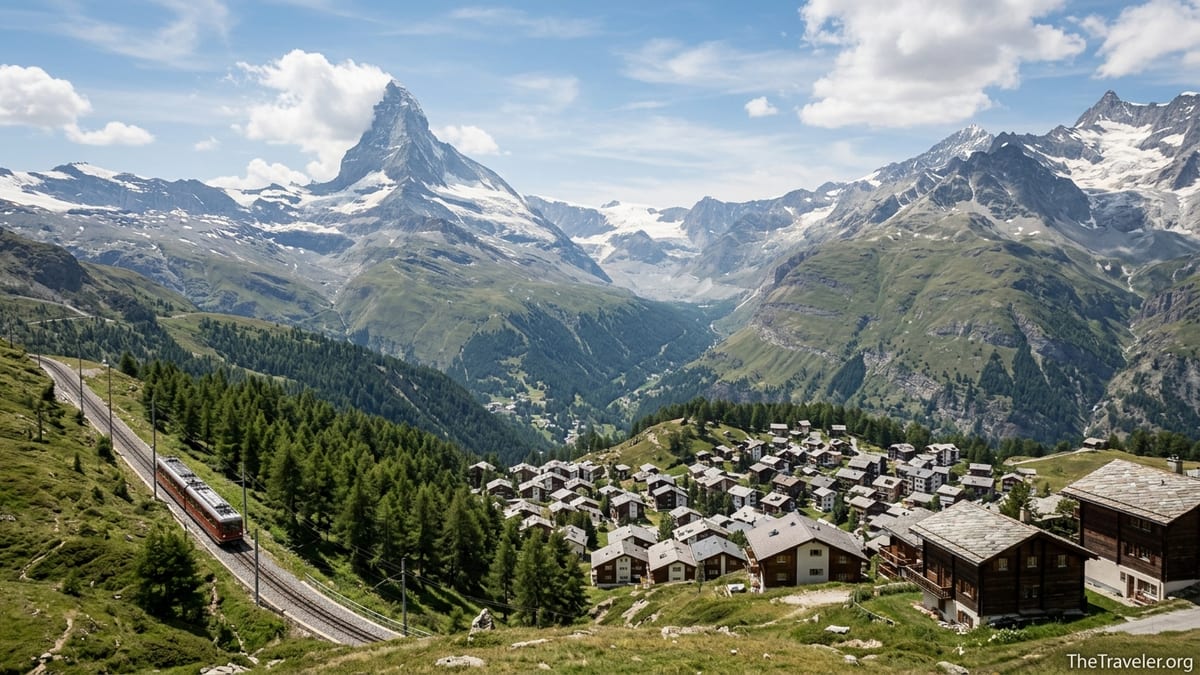
Zermatt focuses squarely on the Matterhorn. The cog railway to Gornergrat provides a series of viewing platforms and gentle ridge paths with repeated Matterhorn views. On another day, the Matterhorn Glacier Paradise cable car network climbs to a very high-altitude viewing deck and year-round snow, with tunnels through the ice and high-level walks when conditions allow. Zermatt also offers dozens of marked hiking routes, from easy forest paths to full-day mountain trails, so extra days here are easily filled without repeating experiences.
Given the variability of alpine weather, especially outside high summer, most travelers build these big excursions into their plans but keep the specific day flexible until a day or two before. Rather than tightly assigning Jungfraujoch to a set calendar date, many people on a 10 or 14-day trip keep two or three possible days free and lock in reservations only once the short-range forecast shows sun. This approach may mean shifting a town-day or lake cruise when cloud closes in on the peaks.
Where to Stay in Zurich, Lucerne, Interlaken and Zermatt
Accommodation choices along this route tend to cluster around train stations, lakefronts and compact old towns. In Zurich, staying within a short walk of the main station makes early departures and late arrivals simple. That area includes everything from modern chain hotels with reliable business amenities to smaller boutique addresses above street-level cafes in the old town. For a quieter base, lakeside neighborhoods such as Seefeld or Enge offer residential streets and easy access to parks along the water.
In Lucerne, many visitors prioritize either a lake-view stay or a central location within a few minutes of the station and Chapel Bridge. Upscale hotels line the lakeside boulevard, often with balconies overlooking the water and the Pilatus massif, while mid-range and smaller family-run properties fill the side streets just behind. Because many mountain excursions start early, it is practical to choose a base where you can walk to the boat pier or bus stops in under 10 minutes.
The Interlaken section of this itinerary is more complex, because you can either stay in Interlaken itself or in the car-free or limited-traffic mountain villages above. Interlaken offers flat walking, a full spread of supermarkets and casual dining options, and quick rail connections in multiple directions. The villages, such as Wengen above Lauterbrunnen or Mürren perched on a ledge above the valley, offer stronger mountain atmosphere at the cost of longer onward travel times and steeper walks. Many first-time visitors split their stay, perhaps spending the first night in Interlaken to settle in and then moving up to a village for two or three nights.
Zermatt is entirely car-free, with electric taxis and hotel shuttles meeting trains at the small station square. Most visitors choose hotels within a 10 to 15 minute walk of the station to avoid relying too heavily on shuttles, especially in peak season when demand is high. Properties here range from simple bed-and-breakfasts to classic alpine hotels with full spa facilities and multi-course half-board dinners. Room categories that mention Matterhorn views typically command a premium, so it can be worth comparing standard and view rooms to see how much you value waking up to the peak outside your window.
The Takeaway
A Zurich–Lucerne–Interlaken–Zermatt itinerary gives first-time visitors a clear structure and covers much of what people picture when they imagine Switzerland: lakeside promenades, efficient trains and jagged white peaks. Whether you have seven, ten or fourteen days, the basic arc remains the same, with more time translating into extra nights in Lucerne, the Interlaken region and Zermatt rather than a long list of additional bases.
Using trains as your backbone, building in flexible days for mountain weather and choosing stays close to stations or lifts all make the trip smoother. With those pieces in place, you can decide how many major mountain excursions fit your budget and preferences, from Pilatus and Rigi to Jungfraujoch, Schilthorn, Gornergrat and the Matterhorn Glacier Paradise. The result is a high-intent but realistic route that feels full without feeling frantic.
FAQ
Q1. How many days do I really need for Zurich, Lucerne, Interlaken and Zermatt?
Most travelers find 7 days workable, 10 days comfortable and 14 days ideal if they want weather flexibility and multiple mountain excursions without rushing.
Q2. Is a Swiss Travel Pass worth it for this itinerary?
It often is if you plan several long train rides plus mountain railways and museum visits. If you only take a few long trips, point-to-point tickets and regional passes can be better value.
Q3. Should I stay in Interlaken or in a mountain village like Wengen or Mürren?
Interlaken is more convenient for trains, buses and shops, while the villages offer stronger Alpine atmosphere. Many visitors split their stay to enjoy both.
Q4. Can I visit both Jungfraujoch and Schilthorn on a 7-day trip?
Yes, but it may feel busy. With a week you can fit both if you base in the Jungfrau region for at least three nights and dedicate separate days to each excursion.
Q5. How far in advance should I book trains on this route?
For regular intercity trains you can usually buy tickets close to travel, but panoramic and international services may require advance reservations, especially in summer.
Q6. Is it better to fly in and out of Zurich or use different airports?
Open-jaw tickets, such as arriving in Zurich and departing from Geneva after Zermatt, often save time on backtracking and may cost only slightly more than round-trips.
Q7. What is the best season for this itinerary?
Late spring through early autumn offers the widest range of hiking and mountain lift options. Winter focuses more on skiing and snow activities around the same hubs.
Q8. Are these destinations suitable for families with children?
Yes. Trains are stroller friendly, and most mountain areas have playgrounds, easy paths and family-oriented activities like lake cruises and short cable car rides.
Q9. Do I need to rent a car for this route?
No. Trains and mountain lifts cover the entire itinerary efficiently, and car-free villages like Zermatt and some Jungfrau bases actually require you to leave cars outside.
Q10. Can I add another region, like Ticino or Lake Geneva, to this itinerary?
With 10 days you can add a night or two elsewhere, and with 14 days you can comfortably include another base, as long as you keep your total number of stops reasonable.