


Eastern Switzerland has quietly become one of Europe’s most interesting regions for serious spa and wellness travel. Between the Appenzell hills, Lake Constance and the foothills of the Alps, a small cluster of dedicated wellness hotels offers everything from classic Alpine pampering to full medical check-ups. Double rooms typically start around CHF 260 in low season and climb well into four figures for top suites with private spa access, but the experiences they deliver vary widely. This guide compares five standout properties: Hof Weissbad, Hotel Heiden, Bad Horn Hotel & Spa, Oberwaid in St. Gallen and, at the southeastern edge of the region, Grand Resort Bad Ragaz.
The Wellness Landscape in Eastern Switzerland
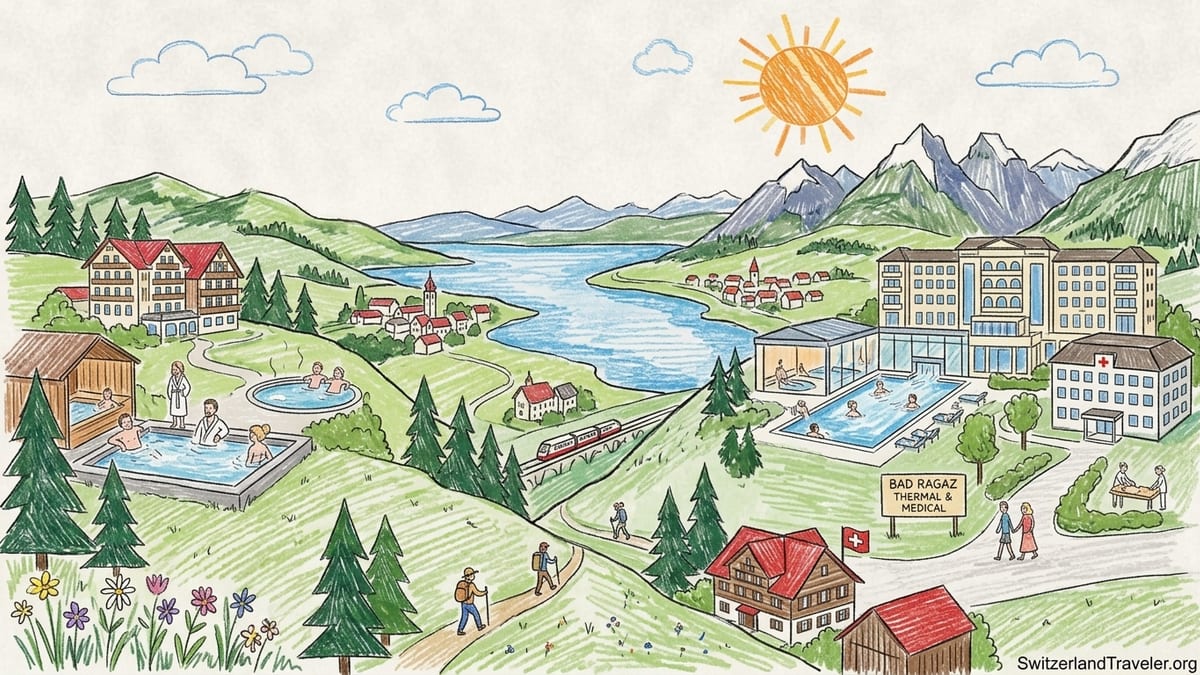
Wellness travel in Eastern Switzerland is shaped by three elements: natural settings, serious water culture and a growing medical-wellness focus. On one end of the spectrum are traditional spa hotels in Appenzell and along Lake Constance, where guests alternate between saunas, pools and walks through rolling countryside. On the other end is Grand Resort Bad Ragaz, a full-scale thermal and medical destination built around its own 36.5 degree thermal spring.
Prices reflect this range. In shoulder season it is common to find standard double rooms at Hof Weissbad, Hotel Heiden, Bad Horn Hotel & Spa or Oberwaid from roughly CHF 260 to CHF 450 per night with breakfast and spa access. At Grand Resort Bad Ragaz, entry-level doubles can easily exceed CHF 600, and premium spa suites or integrated medical packages can push total bills into the four-figure-per-night range. Booking midweek and outside school holidays usually yields the most value across all properties.
For travelers, the key question is less about star ratings and more about what type of recovery they need. Couples on a romantic weekend may prioritize lake or mountain views and shared treatments, while guests recovering from surgery or burnout will look for on-site specialists and structured programs. The five hotels in this article cover that spectrum, often in very different ways despite being within a few hours of each other.
Access is straightforward for international visitors. Zurich Airport is the main gateway, with train connections bringing you to St. Gallen, Heiden, Appenzell, Horn or Bad Ragaz often in under two hours. From there, hotel shuttles or short taxi rides link you to the properties. It is realistic to combine two stays in one week, for example three nights of hiking and spa in Appenzell followed by three nights of medical wellness in Bad Ragaz.
Spa Facilities and Pools: What You Really Get
Hof Weissbad near Appenzell operates one of the region’s most complete integrated spa concepts. Its bath and sauna house features indoor and outdoor pools heated to around 33 degrees with their own spring water, multiple saunas including a Finnish and bio sauna, a steam room, whirlpool, natural swimming pond and several relaxation rooms. Guests can move from the warm whirlpool straight into the cool pond in summer, then finish on the sun terrace overlooking the Appenzell hills. Access to this entire area is typically included in the room rate.
Hotel Heiden above Lake Constance focuses on scenic water experiences. Its Well & See Spa includes a panoramic indoor pool facing the lake, an outdoor whirlpool, steam baths, several saunas, a brine bath, Kneipp facilities and an ice fountain. The spa extends over about 1,000 square meters, giving enough space even on busy weekends for guests to find a quiet corner. Day spa passes are sometimes available, which can be attractive if you are staying elsewhere on the lake but want a serious wellness session.
Bad Horn Hotel & Spa, directly on Lake Constance, combines nautical character with spa indulgence. Guests relax in an indoor pool, lakeside whirlpools and sauna area, with loungers facing the water so you can watch boats cross the lake between Switzerland and Germany. In the evenings certain parts of the spa are opened for adults only, and some packages specifically market romantic spa access for couples with late check-out and a bottle of sparkling wine included in the room rate.
Oberwaid in St. Gallen positions its Tau Spa as a calm, almost clinical sanctuary. On roughly 1,100 square meters you find a large indoor pool, original Hamam, two steam baths, a bio sauna, outdoor whirlpool at about 35 degrees, multiple relaxation rooms and five treatment rooms. The design is restrained and contemporary; many guests move directly from physiotherapy or medical consultations to the spa for hydrotherapy or relaxation. Access to Tau Spa and gym is usually included for hotel guests. Compared to the lakeside properties, Oberwaid’s focus is less about views and more about controlled, therapeutic environments.
Grand Resort Bad Ragaz is in a different league in terms of scale. The resort’s thermal spa and Tamina Therme complex together cover well over 13,000 square meters, using 36.5 degree thermal water from the nearby Tamina Gorge. Facilities include historic indoor pools like the Helena pool, sports and garden pools, family spa zones and extensive sauna landscapes. Guests step between indoor and outdoor thermal pools, some open year-round even in snow. Certain room categories include unlimited access to both the hotel spa and the attached public thermal baths, which can add considerable value compared with paying separate day-entry fees.
Treatments, Therapies and Medical Wellness
Hof Weissbad balances classic pampering with targeted therapy. The spa menu runs from cosmetic treatments and relaxation massages to medical massages and specialized methods like haki, which focuses on releasing tension in the head, neck and shoulders. Guests staying at least two nights and arriving on a Sunday are often offered a complimentary short wellness treatment, such as a 25-minute massage, which encourages people to sample the therapy program before booking longer sessions. Many packages pair half-board dining with one or two treatments per day.
Hotel Heiden’s Well & See Spa attracts both overnight and day guests with a broad but conventional wellness offering. Typical treatments might include full-body massages, hot stone sessions, body scrubs and regional specialty rituals that incorporate Alpine herbs or brine. It is a good match for travelers who want to relax intensely for a few days rather than follow a strict medical plan. Packages occasionally bundle two nights’ accommodation, breakfast, one dinner and a set of treatments, yielding good value compared to buying services individually.
Bad Horn Hotel & Spa has built a reputation for romantic wellness getaways. The spa reception helps guests plan combined beauty and massage schedules, for example a joint body scrub followed by a couple’s massage and time in a private whirlpool zone. Many travelers time treatments around sunset so they can float in warm water while watching the last boats return across Lake Constance. Some seasonal promotions pair two nights in a superior room with a four-course dinner and one long treatment per person, ideal for anniversaries and mini-moons.
Oberwaid clearly leans toward medical wellness. Alongside its Tau Spa, the property hosts clinicians specializing in psychosomatic issues, cardiology and orthopaedic rehabilitation, as well as various preventive check-ups. Guests might combine diagnostic assessments, supervised exercise, nutrition consultation and daily spa hydrotherapy over the course of a one or two week stay. It is common to see guests arrive post-surgery or during a sabbatical aimed at stress recovery. For many, the value lies not in a single signature treatment but in the continuity between medical team, physiotherapists and wellness staff under one roof.
Grand Resort Bad Ragaz extends this model even further. Its medical center brings together dozens of specialists and therapists in disciplines ranging from sports medicine and dermatology to sleep diagnostics and weight management. Wellness visitors might book a simple “relax and thermal” package with massages and facials, while medical-wellness guests commit to longer stays that include full check-ups, lab work and individually prescribed therapies. Prices for such programs vary widely, but it is realistic for a week of intensive medical wellness, full board and spa access to cost several thousand Swiss francs per person.
Settings, Views and Sense of Place
Hof Weissbad sits in a wide valley near Appenzell, framed by green hills and the dramatic Alpstein range. From the bath house and sun terrace, guests look toward the Glandenstein rock and gentle meadows rather than towns or highways. It feels like a country clinic more than a resort, which is ideal if you want to disconnect from city life. Many travelers pair their spa days with hiking routes into the Alpstein, taking half-day walks to mountain restaurants before returning for late-afternoon sauna sessions.
Hotel Heiden offers one of the grandest viewpoints over Lake Constance. Perched above the lakeshore on the Appenzell ridge, it looks across the water toward Germany and Austria. In the panoramic pool you can float while watching ferries cross between Swiss and German ports on clear days. The village of Heiden is quiet and orderly, with traditional Appenzell-style buildings and a small main square. It works well as a base for guests who want both spa time and gentle cultural sightseeing without long transfers.
Bad Horn Hotel & Spa could not be closer to the water. The hotel stands right on the shore of Lake Constance, and its nautical styling reflects this, from wood-panelled interiors to vintage-style details recalling historic steamships. When you step outside the spa, you are essentially on the lakefront, with boardwalks, marina views and boat excursions leaving from nearby piers in season. Summer stays often revolve around swimming, sailing or stand-up paddling during the day, followed by spa time and fine dining in the evening.
Oberwaid, by contrast, sits on the edge of St. Gallen in a landscaped park. Instead of dramatic peaks or water, it offers calm garden views and distant city rooftops. This setting suits its role as a clinic-hotel hybrid; guests can focus on appointments and rehabilitation without the distractions of a resort town. At the same time, the Old Town of St. Gallen with its abbey district is only a short bus ride away, so it is easy to combine museum visits and café stops with a structured wellness schedule.
Grand Resort Bad Ragaz occupies a valley location surrounded by mountains at the gateway to the Graubünden region. From many rooms and outdoor pools you face forested slopes and Alpine peaks, yet the village center of Bad Ragaz remains only a short walk away. Guests often split days between the thermal circuit and easy hikes or bike rides on the surrounding trails. In winter, the resort becomes a base for skiers who want to combine piste days with restorative thermal sessions and spa dinners.
Romantic Escapes vs Serious Health Retreats
Couples will find good options at all five properties, but the emphasis differs. Bad Horn Hotel & Spa leans hardest into romance, with packages that include lake-view rooms, prosecco on arrival, reserved spa times in the evening and multi-course dinners. The ability to slip straight from a candlelit dessert to an evening whirlpool session overlooking a dark, calm lake gives the property a distinct mood. Many Swiss couples choose it for birthdays, proposals or quick weekend escapes from Zurich.
Hotel Heiden offers a softer, quieter version of the same idea. Its panoramic pool and outdoor whirlpool are atmospheric at sunset, and the surrounding walking trails are gentle enough for unhurried strolls between treatments. Couples who enjoy shared wellness rituals such as Kneipp walking, brine baths and alternating hot-cold circuits will appreciate the compact design of the spa, which makes it easy to move through all stations together.
Hof Weissbad and Oberwaid tilt more toward health-focused stays, though they can still feel very comfortable and even indulgent. At Hof Weissbad, couples may split days between physiotherapy or medical massages in the morning and long sauna sessions in the afternoon. In Oberwaid, it is common for partners to follow personalized programs side by side, perhaps both working through stress recovery or post-operative rehabilitation. Evenings tend to be quieter, with early dinners and time in relaxation rooms rather than nightlife.
Grand Resort Bad Ragaz successfully straddles both worlds, although often at a high price. It can function as a glamorous couple’s getaway, with Michelin-starred dining, thermal pools open late and stylish bars. At the same time, many guests are there on specific health missions, from metabolic reset programs to post-injury sports medicine blocks. The large size of the resort makes it possible for these different guest types to coexist, but travelers should be clear whether they are booking primarily for romance, medicine or a mix of both.
Sightseeing, Day Trips and Non-Spa Activities
One of Eastern Switzerland’s strengths as a wellness region is how easy it is to alternate treatments with sightseeing. From Hof Weissbad, the village of Appenzell is only a few kilometers away and connected by a hotel shuttle several times a day. Guests can spend mornings in the old town browsing cheese shops and painted houses, then return for a light buffet lunch in the spa lounge and afternoon hydrotherapy. Popular day trips include cable car rides up to Ebenalp or Hoher Kasten for panoramic hikes and simple mountain inns serving local specialties.
Hotel Heiden and Bad Horn Hotel & Spa are ideal springboards for exploring Lake Constance. From Heiden, it is a short drive or bus ride down to lakeside towns where you can board boats to Bregenz in Austria, Lindau in Germany or to other Swiss shore villages. From Horn, boats are even closer; many guests build a day around a cross-lake trip to a German spa town for lunch, then return in time for their evening massage. In summer, both hotels can help organize cycling along the marked lake routes, with the option to store bikes securely while you use the spa.
Oberwaid’s main cultural advantage is immediate access to St. Gallen. Within minutes you can reach the UNESCO-listed Abbey of St. Gall, with its baroque cathedral and historic library, plus compact shopping streets and cafés. This is helpful for longer medical stays, because it allows guests to vary their routine with museum visits, small concerts or simple city walks without planning major excursions. The hotel typically provides a local public transport ticket so guests can move easily between the property and the city center.
Grand Resort Bad Ragaz offers the richest portfolio of outdoor activities. In summer, guests head for nearby trails on the resort’s home mountain, rent bikes for valley rides or take excursions into the Tamina Gorge to see the source of the thermal water. In winter, several ski areas within a short drive attract guests who want to combine morning runs with afternoon thermal bathing. Golfers can play on the resort’s own courses during the season, and the hotel’s concierge can arrange everything from wine tasting in the Rhine Valley to visits to nearby castles and villages.
Choosing the Right Hotel for Your Wellness Style
For travelers seeking a classic Alpine spa with strong health credentials but without the scale of a mega-resort, Hof Weissbad is a compelling first choice. Its own spring-fed pools, serious sauna complex and blend of medical and wellness treatments make it ideal for guests who want to “do something for their health” without feeling they are in a hospital. Typical stays run from three to seven nights, with guests often returning annually for the same week each year.
If lake views and gentle relaxation matter most, Hotel Heiden and Bad Horn Hotel & Spa are the standouts. Heiden suits spa enthusiasts who enjoy watching the light change over Lake Constance from a hillside vantage point, while Horn is best for those who want immediate lakeshore access and a more maritime mood. Both offer competitive packages that keep overall costs below what you might pay at upscale resorts in central Switzerland, especially if you travel midweek.
Travelers with specific medical or rehabilitation goals should look first at Oberwaid and Grand Resort Bad Ragaz. Oberwaid provides structured programs in a relatively intimate environment, which appeals to guests who prefer a low-key setting close to an attractive small city. Grand Resort Bad Ragaz remains the flagship option for those who want to combine top-level diagnostics, a vast thermal world and multiple fine-dining choices, and who are prepared for higher nightly rates.
Ultimately, the best choice depends on how you imagine your ideal day. If it starts with a doctor’s consultation, continues with supervised exercise and ends with a nutrition-focused dinner, a medical wellness property will suit you. If, instead, your day revolves around thermal circuits, leisurely brunches and sunset views over a lake or mountain ridge, any of the more leisure-oriented hotels will deliver. Because Eastern Switzerland is compact, it is entirely feasible to design a trip that includes both types of experiences in a single itinerary.
FAQ
Q1. Which spa hotel in Eastern Switzerland is best for a first-time wellness trip?
For a balanced first visit, Hof Weissbad is an excellent choice because it combines serious spa facilities, access to treatments and easy hiking without feeling intimidating or overly clinical.
Q2. Where can I find the most extensive thermal spa facilities?
Grand Resort Bad Ragaz offers by far the largest thermal spa environment in the region, with multiple pools, sauna areas and access to the attached public thermal baths using 36.5 degree thermal water.
Q3. Which hotel is most suitable for couples looking for a romantic getaway?
Bad Horn Hotel & Spa is particularly popular with couples thanks to its lakeside setting, evening spa sessions and packages that combine fine dining with private or semi-private wellness time.
Q4. Are any of these hotels focused on medical wellness and rehabilitation?
Oberwaid in St. Gallen and Grand Resort Bad Ragaz both offer structured medical wellness programs, with on-site clinics and specialists covering rehabilitation, cardiology, psychosomatic medicine and preventive check-ups.
Q5. What is a realistic nightly budget for these wellness hotels?
Outside peak holiday periods, expect entry-level doubles with spa access to start around CHF 260 to CHF 450 per night, while premium suites or medical packages, especially at Grand Resort Bad Ragaz, can bring nightly costs into four-figure territory.
Q6. Which properties have the best lake or mountain views?
For lake views, Hotel Heiden and Bad Horn Hotel & Spa both face Lake Constance. For Alpine scenery, Hof Weissbad has views of the Appenzell hills and Alpstein, while Grand Resort Bad Ragaz is surrounded by mountain landscapes.
Q7. Can I visit the spas as a day guest without staying overnight?
Day spa options are sometimes available at Hotel Heiden, Bad Horn Hotel & Spa and the Tamina Therme complex in Bad Ragaz, though availability varies by season and advance reservation is strongly recommended.
Q8. How easy is it to reach these hotels by public transport?
All five properties are reachable from Zurich Airport by train followed by a short taxi or bus ride. Hof Weissbad operates a shuttle to Appenzell, Oberwaid offers a mobility ticket for St. Gallen, and Bad Ragaz has frequent rail connections to major Swiss cities.
Q9. Which hotel is best if I want to combine spa time with city sightseeing?
Oberwaid is ideal for this, as it sits just outside St. Gallen. You can spend mornings in the clinic or spa, then take a short bus ride into the historic old town for museums, shopping and cafés.
Q10. Is it worth combining two different spa hotels in one trip?
Yes, the region is compact enough that many travelers combine, for example, three nights at a lakeside spa like Bad Horn or Hotel Heiden with three or four nights at a medical-focused property such as Oberwaid or Grand Resort Bad Ragaz for a richer wellness experience.