


Southern Switzerland’s Ticino region mixes palm-lined lake promenades with medieval castles and quick rail links through the Alps. With more than 2,600 accommodations scattered around Lugano, Locarno, Ascona, Bellinzona and the rural lake valleys, finding the right hotel is less about availability and more about matching location, views and perks like the Ticino Ticket to the kind of trip you want. This guide focuses on the strongest options in and around the four main hubs, then highlights exceptional lake and rural stays that justify leaving town.
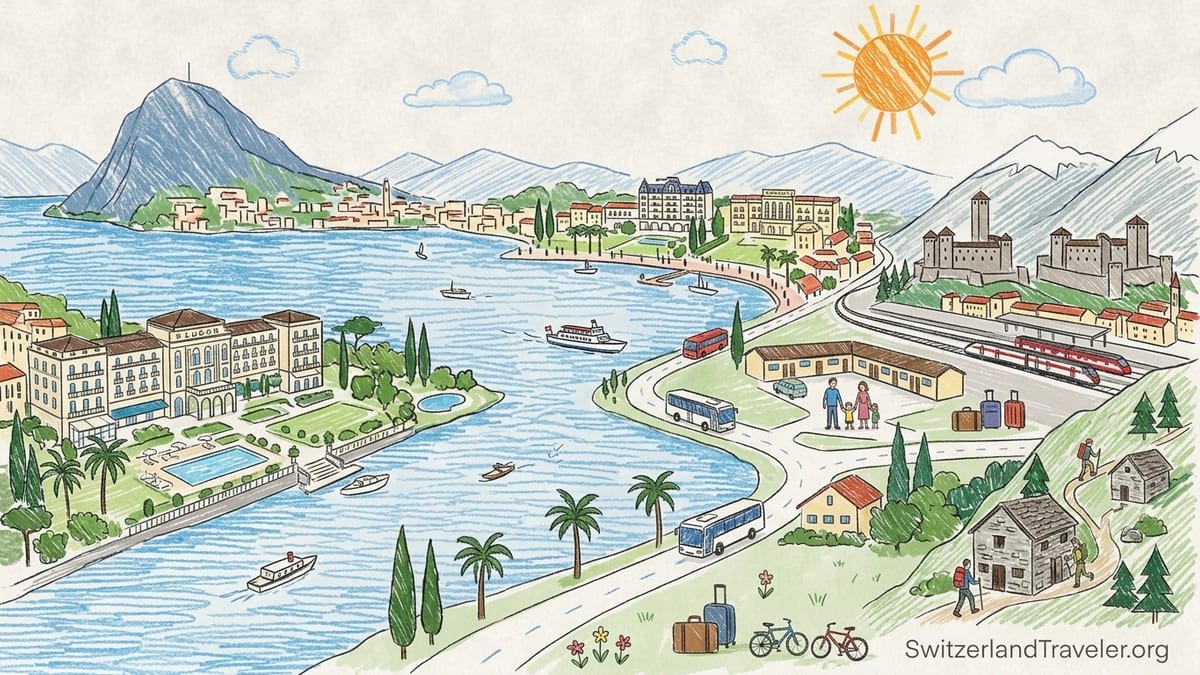
Understanding Ticino’s Hotel Landscape
Travelers are often surprised at how dense Ticino’s hotel scene is for such a compact, mostly mountainous canton. Between lakes Lugano and Maggiore and the towns strung along the valleys, there are thousands of beds, from five-star lakefront icons in Ascona to simple garni hotels a short bus ride from Locarno. The choice is less about whether you can find a room and more about whether that room is by a station, on the water, up a hillside or in a quieter village.
Lugano and Locarno work best for travelers relying on trains and boats, with railway stations that plug straight into the national network and regular lake ferries. Bellinzona, the cantonal capital, is a major Gotthard rail stop and an efficient base if you are touring multiple valleys by public transport. Ascona and the rural lake areas lean more toward resort stays and car-based visitors, although buses and boats still cover the main routes.
One of the most important region-specific factors is the Ticino Ticket, a free pass for public transport and discounts at attractions when you stay at a participating hotel, hostel or campsite. Many mid-range and upscale properties in Lugano, Locarno and Ascona now issue the ticket automatically at check-in, while some smaller pensions and apartment rentals do not. It is worth confirming before you book, especially if you plan to rely on buses, funiculars and lake boats.
Seasonality also shapes value. Lakefront suites in July and August, during events like the Locarno Film Festival or Ascona’s jazz celebrations, can cost several times more than a shoulder-season stay in May or late September. In winter, rates in lakeside towns often soften, while mountain resorts in nearby valleys fill with skiers and snowshoers. Flexible dates can make the difference between a compact courtyard room and a balcony overlooking the lake.
Luxury Lakefront Hotels: Views, Pools and Classic Service
If waking up to a wall of blue water and mountains is non-negotiable, focus on the established lakefront grand hotels in Lugano, Locarno and especially Ascona. In Lugano, properties like the historic International au Lac Historic Lakeside Hotel sit directly on the lakeside promenade near the LAC cultural center, with outdoor pools, shaded gardens and rooms that look directly across Lake Lugano. Guests here receive the Ticino Ticket, which makes it easy to step out of the hotel and ride local buses or funiculars without extra cost.
Ascona on Lake Maggiore is particularly dense with high-end waterfront options. Flagship resorts combine private lakeside lawns or small beaches, multiple pools and spa facilities with boat piers and manicured gardens dotted with palms. Many offer lake-view rooms with balconies that feel more like private loggias, especially on the upper floors. These properties often package extras like breakfast buffets heavy on local cheeses and cured meats, complimentary use of bicycles and, in most cases, the Ticino Ticket for regional transport.
Locarno’s lakefront is more compact but still offers several four-star hotels right on or just behind the promenade along Lake Maggiore. Here, a typical lakefront room might come with a French balcony overlooking the palm-lined walk and the harbor where cruise boats depart for the Brissago Islands and Italian villages. Pools are common at this level, although they can be smaller or on rooftop terraces rather than sprawling resort-style complexes. Parking in these central locations is usually underground and paid, which is worth factoring into your budget if you arrive by car.
At luxury level, almost all properties serve substantial buffet breakfasts and have on-site restaurants, often with terraces hanging over the water. The trade-off is cost and, in high season, a more formal atmosphere. Couples who like quiet aperitifs on a terrace as the sun drops behind the mountains tend to thrive here, while younger travelers who want nightlife might prefer an in-town boutique option and use public transport or taxis to reach the lakefront for a swim or dinner.
Best Boutique Hotels in Lugano, Locarno and Ascona
Boutique hotels in southern Switzerland typically trade sheer size for personality and locality. In Lugano, that can mean hillside properties that look over the lake from residential neighborhoods, with perhaps 20 to 40 rooms, small plunge pools and terraces where breakfast is served under pergolas. These hotels often appeal to independent travelers who want quieter surroundings but still be within a short bus ride or 15 to 20 minute walk of the lakefront and railway station.
Locarno’s old town, clustered behind Piazza Grande, is home to several character-rich small hotels. Expect restored townhouses with creaky staircases, exposed beams and inner courtyards used for breakfast and evening drinks. Rooms can be more compact than at lakefront resorts, but you gain immediate access to the medieval lanes, cafes and funicular to the Madonna del Sasso sanctuary. Ticino Ticket participation is mixed in this category, so it is worth checking hotel descriptions carefully if you plan to lean on free trains and buses.
Ascona has built a strong reputation for boutique and design-led properties set back from the main promenade or tucked into the Borgo, the old quarter. Typical features include rooftop or terrace pools with partial lake views, lounge spaces styled with contemporary Swiss and Italian furniture, and a breakfast emphasis on fresh local produce. Many boutique hotels here market themselves to couples and style-conscious travelers, so you may find amenities like honesty bars, curated wine lists and small wellness areas instead of children’s playrooms.
Prices at boutique properties vary widely. In shoulder season, you might find a double room with a partial lake view in a stylish Ascona or Locarno boutique for a price similar to a standard room facing the street at a larger chain hotel. In summer, these same rooms can approach luxury-resort rates. Because many of these properties have limited parking, advance reservation of a space is prudent if you will be driving. When traveling by train, prioritize those within a short walk of bus stops that connect directly to the main stations, especially for arrivals with luggage.
Family-Friendly and Good-Value Stays Around the Lakes
Ticino’s family-friendly accommodations cluster around Locarno, Ascona and nearby Losone, where riverside bike paths, lake beaches and playgrounds are close at hand. Properties marketed to families often offer apartment-style rooms or suites with kitchenettes, large gardens with pools, and extras like mini-golf, petting animals or supervised kids’ clubs in high season. These hotels usually sit slightly back from the lake or in neighboring villages, which keeps things quieter and often brings room rates down compared with the absolute waterfront.
In Losone, just inland from Ascona, long-established family hotels sit amid palm gardens with pools and outdoor dining areas. They are designed so parents can linger over breakfast or dinner on the terrace while children move between the pool, lawns and simple play areas. Many of these properties participate in the Ticino Ticket, which is especially valuable for families making multiple bus and train trips to lakes, rope parks and mountain trails. A family of four using public transport several times per day quickly recoups the implied value of the ticket versus buying individual tickets.
Bellinzona and the Magadino plain south of it provide some of the most budget-friendly bases in southern Ticino, particularly for road-trippers. Here you find straightforward three-star hotels and motels with free or inexpensive on-site parking, quick access to the motorway and family rooms that sleep three or four. Breakfasts are usually simpler than at resort hotels, but rates are also lower, and you can reach lakeside towns like Locarno or Lugano by train in under an hour from Bellinzona’s busy station. Many properties in this segment still offer Ticino Tickets, which makes day trips easy and inexpensive.
For families content with short bus rides, staying slightly inland from the lakes can yield a significant saving without sacrificing access to water and activities. Campground-based bungalows and chalet-style apartments along Lake Maggiore’s edges and in side valleys often partner with the Ticino Ticket program, include simple breakfasts or bread-delivery services, and provide direct access to swimming spots. The trade-off is that pools, if present, are more modest, and you are less likely to have daily housekeeping or on-site restaurants.
Bellinzona and Inland Bases: Castles, Rail Hubs and Overnight Stops
Bellinzona is sometimes treated as a half-day excursion from the lakes, but it is also a smart overnight base for travelers using the Gotthard rail route or exploring multiple valleys. The town’s railway station is a major node where intercity trains from Zurich and Basel meet regional services to Locarno, Lugano and Biasca. Hotels cluster within a 10 to 15 minute walk of the station and the three UNESCO-listed castles that dominate the skyline.
Accommodation in Bellinzona tends to be functional rather than resort-like, with a mix of business hotels, simple city properties and a few more characterful options in historic buildings. Rooms are typically designed with rail travelers in mind: compact but efficient, with strong Wi-Fi, early-start breakfasts and luggage storage. Many of these hotels include the Ticino Ticket, which encourages guests to treat Bellinzona as a hub for day trips into the Maggia, Verzasca or Leventina valleys without needing a car.
Parking in Bellinzona is generally easier and cheaper than in lakeside towns, especially if you choose hotels on the edge of the old town or near the station. This appeals to road-trippers breaking the north–south journey across the Alps, who may want to arrive late, park once, visit a castle or two in the morning, then continue toward Italy or central Switzerland. Because nightlife is limited compared with Lugano or Locarno, Bellinzona works best for travelers who prioritize sightseeing, rail access and value over late bars and waterfront promenades.
Further inland, small hotels and guesthouses in villages along the main valleys provide an even quieter alternative. These properties are typically closer to hiking trails and viewpoints than to lake cruises. Rooms might be simpler, often without air conditioning, but terraces and mountain breezes help in summer. Ticino Ticket coverage is widespread in these areas, reflecting the canton’s push to spread visitor traffic beyond the lakes, but you should still check individual listings when booking.
Exceptional Rural and Lake Retreats Worth Leaving Town For
While the main towns concentrate services and transport links, some of Ticino’s most memorable stays sit in quieter spots along the lakes or up side valleys. On Lake Maggiore, low-rise resorts between Locarno and Ascona or near Brissago blend lawns, small beaches and boat piers with clusters of rooms and suites. These properties are popular with guests who plan to spend most of their time on-site, alternating between pool, lake and leisurely meals, and who appreciate having parking and lake access without the bustle of a promenade.
Above Lugano, hillside and lakeside retreats in villages such as Gandria or Morcote offer fewer facilities but richer sense of place. Converted townhouses and former inns line narrow lanes, with rooms that open onto shared terraces overlooking Lake Lugano. Breakfasts often feature local bread, jams and cheeses, and guests rely on lake boats or buses for access back to Lugano’s center. The Ticino Ticket is less universal at this very small scale, but where it is offered it transforms these tranquil villages into practical bases for exploring the wider region.
Further afield, rural hotels in valleys like Maggia and Verzasca put you close to river swimming holes, stone bridges and hiking routes instead of lake promenades. Here, amenities skew toward rustic charm: stone houses, wooden balconies, simple but hearty dinners and perhaps a small pool or hot tub. These properties attract walkers and repeat visitors who prefer waterfalls and chestnut forests to city cafes. The Ticino Ticket is common in these valleys and makes it straightforward to combine a rural base with day trips to Locarno or Ascona without a car.
These exceptional retreats typically require more advance planning. Public transport might run only once an hour, boat timetables can be seasonal and late-night dining options are fewer. In exchange, you gain darker skies, quieter nights and a stronger sense that you are in a very specific corner of Switzerland rather than a generic resort. For travelers building a longer trip, combining a few nights in a town like Lugano or Locarno with two or three nights at a rural lake or valley property offers the best of both worlds.
Practical Comparisons: Transport, Parking, Pools and Breakfasts
Location relative to a railway station is the single biggest practical divider between Ticino hotels. In Lugano, staying within rolling-bag distance of the station and funicular saves both time and money, especially if you plan to do day trips. Similar logic applies in Locarno, where the station area connects to boat piers and buses to side valleys. Ascona does not have its own mainline station, so you will always rely on buses or boats, which is fine for relaxed stays but less convenient for very early departures. Bellinzona, by contrast, is optimally placed for north–south and east–west rail journeys, making hotels near its station ideal for one-night stopovers.
Parking policies vary even within the same category. Lakefront luxury properties in Lugano, Locarno and Ascona commonly charge for underground parking, sometimes at rates that add a noticeable amount to the nightly bill. Smaller inland hotels in Bellinzona, Losone or the valleys are more likely to include outdoor parking in the rate or charge only a modest supplement. If you are road-tripping and want to minimize surprises, double-check whether parking is on-site or in a nearby public garage and whether reservations are needed.
Pools are not universal. Luxury lakefront resorts generally have at least one sizable outdoor pool and sometimes indoor options or spa pools. Boutique hotels may offer a single plunge pool or rooftop basin primarily for cooling off rather than doing laps. In-town business-style hotels, even some with four stars, sometimes skip pools altogether, relying on proximity to lake beaches or lidos. Families who plan to spend hours by the water should prioritize properties that clearly advertise their pool size and layout rather than assuming every hotel near a lake will have one.
Breakfast tends to be a strong point across the region, but there are differences. Resort and upscale boutique hotels often include hot items like eggs, bacon and waffles alongside cold cuts, cheeses, fruit and pastries, served on terraces or in lake-view dining rooms. Simpler three-star or garni properties may focus on continental spreads with fresh bread, jams, cereals and yogurt. When comparing rates, pay attention to whether breakfast is included, optional or excluded, as adding it to room-only rates can narrow apparent price gaps between budget and mid-range options.
The Takeaway
Choosing a hotel in southern Switzerland is less about finding somewhere to sleep and more about deciding what kind of Ticino you want at your doorstep. Lugano and Locarno connect smoothly to rail and boat networks and offer a spectrum from classic lakefront grand hotels to compact boutiques near lively squares. Ascona leans more toward resort-style and design-conscious stays, while Bellinzona and the inland valleys provide quieter, better-value bases with easier parking and quick access to castles and mountain trails.
Across all these areas, the Ticino Ticket has become an important thread. At participating hotels it bundles free or heavily discounted local transport into your room rate, effectively shrinking travel times and costs between lakes, towns and valleys. Combined with clear-eyed choices about parking, pools, lake views and breakfast style, it can help you turn Ticino’s dense inventory of more than 2,600 accommodations into a short, targeted list that fits your budget and travel style.
FAQ
Q1. What is the Ticino Ticket and how do I get it?
The Ticino Ticket is a guest card available at participating hotels, hostels and campsites that grants free or discounted use of regional public transport and price reductions at certain attractions. You usually receive it at check-in when staying at a partner property; it is included in the room rate rather than sold separately.
Q2. Which town is the best base for first-time visitors to southern Switzerland?
For most first-time visitors, Lugano or Locarno work best. Lugano has the feel of a small city with strong rail connections, shopping and dining, while Locarno combines lake access, a historic center and good transport to Ascona and the nearby valleys. Ascona is excellent for a slower, more resort-like stay but depends on buses and boats for train access.
Q3. Are lakefront hotels worth the premium compared to inland options?
Lakefront hotels command higher prices because of direct views, promenades and easy access to boat piers. They are worth the premium if you plan to spend time on your balcony, stroll the waterfront daily and appreciate on-site pools and dining. Travelers who mostly use the hotel for sleep and breakfast can often save significantly by choosing an inland property and using the Ticino Ticket to reach the lakes.
Q4. How important is it to stay near a railway station?
Staying near a station in Lugano, Locarno or Bellinzona is very helpful if you rely on public transport or have heavy luggage. It reduces time spent transferring by bus and makes early departures or late arrivals easier. If you are driving and plan few train trips, you can prioritize parking and quiet surroundings over immediate station access.
Q5. Do most hotels in Ticino have air conditioning and pools?
Many mid-range and upscale hotels offer air conditioning, especially in lakeside towns, but it is not universal in older or rural properties. Pools are common in luxury resorts and some boutique and family hotels, but many urban three-star hotels do without. Always check room and hotel descriptions if climate control or a pool is important to you.
Q6. Is parking difficult at hotels in Lugano, Locarno and Ascona?
In central lakeside areas, parking is often in underground garages with nightly fees, and spaces can be limited in peak season. Some hotels require advance reservation of parking. Inland towns like Bellinzona or Losone, and rural areas, generally offer easier and often cheaper or included parking, making them attractive to road-trippers.
Q7. When is the best time of year to find good hotel value in Ticino?
Shoulder seasons such as late April to early June and late September to October often offer better value, with lower rates and fewer crowds than high summer. Major events like the Locarno Film Festival in August and popular holiday periods push prices up, especially at lakefront properties, so booking well ahead or aiming for quieter weeks can improve value.
Q8. Are boutique hotels in Ticino suitable for families?
Some boutique hotels welcome children and offer family rooms or suites, but many position themselves primarily for couples or design-focused travelers. For families, it is often easier to choose properties that explicitly market family facilities such as larger rooms, play areas and pools. Always check bedding configurations and policies before booking a boutique stay with children.
Q9. How long should I stay in Lugano, Locarno or Ascona?
Allow at least two nights in any of the main towns to explore the immediate area and enjoy the lake. With four to six nights you can comfortably split your stay between two locations, such as three nights in Lugano for city and Lake Lugano excursions and three nights in Locarno or Ascona for Lake Maggiore and valley day trips.
Q10. Can I combine a town stay with a rural or mountain hotel in the same trip?
Yes, combining a few nights in a town like Lugano or Locarno with two or three nights in a rural valley or quieter lakeside village works very well. You can use trains and buses covered by the Ticino Ticket or drive short distances to shift bases, gaining both easy transport and a more immersive nature experience in one itinerary.