


Everyone tells you that the Mount Pilatus Golden Round Trip is “the” mountain excursion to do from Lucerne. I wanted to know if it really justified the price, the planning, and the hype, so I set aside a full day in late summer to do the complete loop myself: boat from Lucerne to Alpnachstad, cogwheel railway up to Pilatus Kulm, cable cars down to Kriens, and bus back to Lucerne. What follows is a practical, first-hand account of what worked, what did not, and how I would book it differently next time.
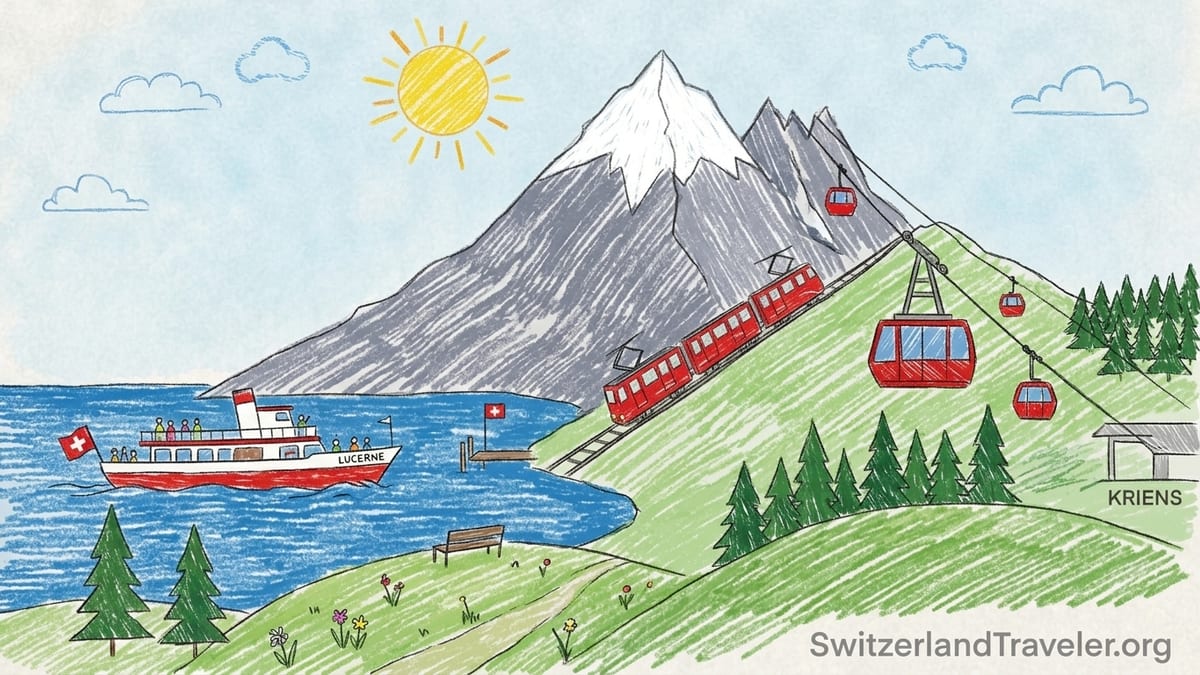
Choosing the Route: Why I Started by Boat and Cogwheel
I decided to follow the classic Golden Round Trip direction, starting in Lucerne and going by boat to Alpnachstad, then up on the cogwheel railway before descending to Kriens by cable car. There are good reasons this direction is recommended. The steepest part of the experience, the Pilatusbahn cogwheel railway, feels far more dramatic on the way up than on the way down, and finishing with the gentle gondola and bus ride keeps the day from ending in a rush.
From Lucerne’s lakeside piers outside the main station, boats to Alpnachstad typically run several times a day during the main season, with a dedicated pier for Pilatus connections. I chose a mid-morning departure to avoid the commuter feel of the earliest boat and the peak tour group crowds that often arrive around lunchtime. I boarded about fifteen minutes before departure and found a seat on the open upper deck, with views toward Mount Pilatus slowly opening up as we left the city skyline behind.
The cruise itself felt like a bonus excursion rather than just a transfer. We passed lakeside villages, small private boathouses, and stretches of forested shoreline. Announcements on board called out Alpnachstad as the Pilatus stop, so there was no real risk of missing it, but I still found it useful to check the onboard timetable display for timing. The entire ride took roughly an hour, long enough to feel unhurried but not so long that it ate the whole day.
Some travelers choose to skip the boat and take the train directly from Lucerne to Alpnachstad, which is quicker and usually cheaper. After doing the boat, I would still pay the extra for the lake cruise on a clear day, because it adds variety and lets you see Pilatus rising ahead from water level. In poor weather or on a tight schedule, though, the rail option would be a sensible alternative.
Arrival in Alpnachstad and Boarding the World’s Steepest Cogwheel Railway
Alpnachstad’s boat pier and the cogwheel railway station sit only a short walk apart, which makes the connection straightforward. When we docked, an informal flow of passengers moved along the marked path to the Pilatusbahn entrance, where staff directed everyone toward ticket checks and the waiting platforms. Even with a through ticket, you still pass through a brief control point before walking up to the train.
The cogwheel railway ascent from Alpnachstad to Pilatus Kulm is the part of the trip I had been most curious about. It is billed as the world’s steepest cogwheel railway, climbing to more than 2,000 meters above sea level, and in person it really does feel unusual. The carriages are stepped inside so that you stand or sit level while the track climbs at gradients that would be impossible for a normal train. Looking out the side windows as we started to climb, I could see the lake and village dropping away surprisingly fast.
I had pre-booked both my ticket and a cogwheel reservation time, which proved important. Trains were running every half hour or so, and on arrival I saw two distinct lines: one for people with reservations and one for those hoping to board the next available train. The reservation line moved continuously, while the non-reserved passengers were admitted only after reserved seats had been filled. On my day this meant I boarded my intended departure with no stress, while the non-reserved line spilled back toward the station entrance.
The journey itself took roughly 30 minutes. The lower section runs through forest and past meadows, then the route emerges onto open rock and grass slopes, with increasingly broad views toward Lake Lucerne. There were brief commentary announcements in several languages, but the real focus for most people in my carriage was the view and the occasional sense of exposure as the track clung to steep rock faces. I spent much of the ride standing near the window, switching between watching the cog mechanism at work below and scanning the path of the track above as it disappeared into tunnels cut into the mountainside.
First Impressions at Pilatus Kulm: Weather, Crowds and Summit Time
At the top station of Pilatus Kulm, you step directly into a compact summit complex with hotel buildings, terraces, restaurants, and a short tunnel that leads out toward the viewing platforms. My first impression was how quickly the environment changed compared with Alpnachstad below. Even in summer, a fresh wind greeted us as we exited, with temperatures at least 10 degrees Celsius cooler than in Lucerne that morning. I was glad I had packed a light insulated jacket and a thin hat in my daypack.
The summit area can feel busy right after a train arrives, because everyone empties onto the same terrace level at once. I found that simply walking a few minutes farther along the marked paths quickly thinned out the crowds. There are several short walking routes, including up to viewing points on adjacent rocky knolls. I chose to follow one of the better-marked paths that loops up above the hotel complex, taking advantage of the dry conditions and broken clouds that still left wide patches of blue sky.
Wind conditions change fast at this altitude, and I experienced three distinct moods in roughly an hour: crystal-clear views over the lake, fast-moving low cloud that hid everything below, and a period of hazy sunshine where the distant peaks looked almost painterly. The constant shift made it worth lingering. I ended up staying at Pilatus Kulm for just over two hours, which allowed time for a slow circuit of the paths, many photographs, and a simple lunch at the self-service restaurant.
If I could change one thing about my summit time, it would be arriving slightly earlier in the day. My late-morning cogwheel train meant that by the time I finished exploring and eating, early afternoon crowds were peaking. By contrast, people who had taken the first or second cogwheel train reported that the terraces were almost quiet when they arrived, with more space to enjoy the first views in relative calm.
Descending via the Dragon Ride and Panorama Gondolas to Kriens
For the descent I followed the cable car route toward Kriens, which consists of two distinct sections. The upper stage, known as the Dragon Ride, is a large aerial cableway from Pilatus Kulm down to Fräkmüntegg, while the lower stage uses smaller panorama gondolas from Fräkmüntegg to Kriens. Together they turn the descent into a continuous sequence of changing perspectives as you move from high alpine rock to lower forested slopes.
At Pilatus Kulm, cable car boarding starts inside the summit complex, with signage indicating the queue for the Dragon Ride. I joined a line of about 40 people and waited roughly 15 minutes before boarding. Cabins run frequently and hold many passengers, so even with a moderate queue the line moved steadily. Once inside, most people headed straight to the windows facing the valley, but I found that even the less obvious side of the cabin still offered spectacular views as we glided just below the summit cliffs.
The Dragon Ride itself lasts only a few minutes, but it was one of the highlights of the day. The floor-to-ceiling windows and standing-room layout give it a very different feel from the cogwheel railway. Instead of gradually climbing through the landscape, you are suddenly suspended above it, watching rocky ridges pass beneath you and tree lines rise to meet the cabin. On my trip there was a brief moment where we entered a band of cloud and then emerged into clear air again, which brought a spontaneous murmur from almost everyone inside.
At Fräkmüntegg I transferred to the four-seat panorama gondolas for the lower descent to Kriens. This section took about 30 minutes, divided into an upper forested stretch and a more open lower hillside where local houses and farm buildings appeared. The gondolas move continuously, so there was almost no wait to board, and each small cabin meant a more private experience. I shared with one other traveler who was also returning to Lucerne, and we spent the ride trading impressions of the day and pointing out small details below, like narrow farm lanes and forest clearings. The gentle rocking, combined with late-afternoon light slanting through the trees, made this segment surprisingly relaxing.
Back to Lucerne: Logistics, Queues and How the Day Felt Overall
The gondolas arrive at the valley station in Kriens, a suburban area a few kilometers outside central Lucerne. From there, local buses connect back to the main station in about 15 minutes. The Golden Round Trip combination ticket includes this bus ride in the main season, so I simply followed the crowd from the station exit to the signposted bus stop and boarded the next bus, which arrived within ten minutes.
Door to door, my day ran from roughly 9:00 in the morning, when I walked to the boat pier, until just after 17:00, when I stepped off the bus back at Lucerne station. That included a mid-morning boat departure, a short wait at Alpnachstad, the cogwheel ascent, just over two hours at the summit, the cable car descent via Fräkmüntegg, and transfer time in Kriens. It was a full day but not an exhausting one.
In terms of queues, the longest single wait was for the Dragon Ride cable car at the summit, followed by the initial crowding at the cogwheel boarding area in Alpnachstad. The boat, gondolas, and bus all felt relatively straightforward. I noticed that queues swelled noticeably around late morning and mid-afternoon, lining up with the most popular departure times for tour groups. If you have flexibility, choosing either an earlier start or planning to descend slightly later in the afternoon can make the experience feel more relaxed.
Regarding value, the mountain transport is a significant expense. Current Pilatus pricing lists around 40 Swiss francs one way from Kriens to Pilatus Kulm, with similar one-way pricing from Alpnachstad to Pilatus, and the same mountain fares applying when using passes such as Swiss Travel Pass, Interrail or Eurail under their discount structures. When you add boat and bus segments, the integrated Golden Round Trip ticket ends up comfortably into three figures for an adult without a pass. I felt that for a clear-weather day and a first-time visitor to central Switzerland, the combination of lake, cogwheel railway and aerial cableway justified the outlay, but it is not a decision to take lightly if you are watching your budget closely.
What I Would Book Differently Next Time
Walking away from the trip, I identified several things I would approach differently if I returned to Pilatus. The first is timing. I chose mid-morning for the boat in order to sleep a little longer, but in hindsight an earlier departure would have been smarter. Taking the first or second boat or train to Alpnachstad would put you aboard an earlier cogwheel train, arriving at the summit before the bulk of group tours. This would translate into shorter queues for the Dragon Ride later and more space on the terraces for those first summit views.
The second change would be how I structured the ticketing. I bought a bundled round-trip mountain ticket that covered all segments in one. While convenient, it offered limited flexibility. Given the published single fares of around 40 Swiss francs per mountain leg and the fact that mountain sections can be purchased separately from any public transport passes, I would consider buying individual point-to-point tickets next time. For example, if clouds rolled in at the summit and I wanted to return the same way I had come instead of completing the loop, separate tickets would make that decision simpler.
I would also pay closer attention to the detailed timetable before choosing my descent time. On my visit, I lingered at the summit without a specific cable car departure in mind. This worked out, but it meant queueing for the Dragon Ride at one of the busiest times of the day. Studying the schedule and aiming either slightly before or after the peak pattern of tour group descents would improve the experience, especially for anyone who dislikes lines.
Finally, I would build in a little more margin in Lucerne at the start and end of the day. Boat and cogwheel segments are coordinated, but weather or operational changes can still affect the timing. Arriving at the pier or the cable car station with at least half an hour to spare allows time to find the correct platform, adjust layers, and buy any last-minute snacks without rushing.
Practical Tips From Being There in Person
Based on doing the full loop, a few practical details stood out that guidebooks often mention only briefly. The first is clothing. Even on a warm day in Lucerne, Pilatus Kulm can feel chilly, particularly if there is wind or cloud cover. I saw several visitors shivering in T-shirts on the terraces while others layered up happily in light jackets and scarves. Packing a compact extra layer, a simple hat, and gloves in shoulder seasons can make the difference between cutting your summit visit short and fully enjoying the panoramic paths.
Food is another point worth planning. There are restaurant options at the summit, including self-service counters and hotel dining rooms, but prices are fairly high and popular seating areas fill quickly at lunchtime. I chose a modest hot meal and a drink at the self-service restaurant, which added a noticeable amount to the total cost of the day. Next time I would still plan to buy a hot drink at the top but would also pack a simple picnic from a Lucerne supermarket, then use the terrace benches or the quieter paths for a more leisurely and less expensive lunch.
For photography, the transition from boat to cogwheel to cable car offers varied perspectives. On the boat, sitting on the right-hand side when facing the bow gave me slightly better early views of Pilatus, while on the cogwheel railway the seats on the valley side delivered the most dramatic sense of steepness. In the Dragon Ride cabin, standing near a side window rather than pushing directly to the front actually provided a more balanced composition that included both lake and cliffs in the same frame.
If you are sensitive to heights, it is worth preparing mentally for both the cogwheel and the cable cars. The railway feels enclosed and secure, but the angle is very steep at points. The Dragon Ride, by contrast, creates a floating sensation high above the slopes. Watching a departure from the terrace first and then deciding if you feel comfortable boarding can ease nerves. I saw one traveler choose to descend by cogwheel back to Alpnachstad rather than by cable car, which is a valid alternative if exposure is a concern and schedules allow.
The Takeaway
By the end of the day, I understood why the Pilatus Golden Round Trip has become such a signature excursion from Lucerne. It condenses several classic Swiss experiences into one coherent circuit: a scenic lake cruise, an engineering landmark of a cogwheel railway, and sweeping aerial cable car views, all anchored by a summit that feels appropriately alpine yet still accessible to casual visitors.
At the same time, this is not a casual budget outing. Between mountain fares that start at around 40 Swiss francs per one-way section and the added costs of food or extras, you feel the financial weight of the day. Queues at key pinch points and changeable mountain weather can also shape your overall impression. For me, the combination of clear spells at the summit, a relatively uncrowded boat ride, and the thrill of both the cogwheel ascent and the Dragon Ride descent made it worth the effort and the cost.
If you are considering the trip, my strongest advice is to treat it as a full-day investment. Check the forecast carefully, start earlier rather than later, reserve the cogwheel where possible, and give yourself permission to slow down at the top instead of racing through a checklist of photo stops. With those adjustments, the loop from Lucerne over Pilatus and back becomes less a logistical puzzle and more a smoothly unfolding mountain story.
Would I do it again? Yes, with small but important changes. I would aim for the first connections of the day, carry my own picnic, and be more strategic about queue times. With those lessons applied, a return to Pilatus would feel less like research and more like pure enjoyment.
FAQ
Q1. Is the Golden Round Trip from Lucerne to Mount Pilatus worth the cost?
For a clear-weather day, I felt it was worth the high price because you combine a lake cruise, a famous cogwheel railway and dramatic cable cars into one cohesive experience, but budget-conscious travelers should weigh the cost carefully.
Q2. How long does the full Mount Pilatus round trip take from Lucerne?
My door-to-door loop, including boat, cogwheel railway, summit time, cable cars and bus back to Lucerne, took about eight hours, and I would recommend planning for a full day.
Q3. Should I start the trip via Kriens or via Alpnachstad?
I started by boat and cogwheel via Alpnachstad and was glad I did, because ascending on the steep railway felt more impressive than descending it, and finishing by gondola and bus felt more relaxed.
Q4. Do I need reservations for the Pilatus cogwheel railway?
On my visit, having a timed cogwheel reservation made boarding in Alpnachstad significantly smoother, while travelers without reservations faced a longer, less predictable wait in a separate line.
Q5. What is the weather like at Pilatus Kulm compared with Lucerne?
When I visited, it was comfortably warm in Lucerne but around 10 degrees Celsius cooler and much windier at the summit, so a light jacket and extra layer were essential.
Q6. How long should I plan to stay at the summit of Mount Pilatus?
I stayed just over two hours, which allowed time for short walks, photography and lunch; next time I would still plan for at least two to three hours at the top.
Q7. Are the cable cars or the cogwheel railway scarier if you are afraid of heights?
The cogwheel railway feels enclosed but very steep, while the Dragon Ride cable car has open views and a clear sense of being suspended high above the slopes, which some people may find more challenging.
Q8. Can I buy separate tickets instead of a full Golden Round Trip package?
Yes, mountain sections such as Kriens to Pilatus Kulm or Alpnachstad to Pilatus Kulm can be bought individually, with one-way fares around 40 Swiss francs, and this can offer more flexibility if you want to change plans.
Q9. What would you change if you did the Pilatus trip again?
I would start earlier in the morning, study the timetable more carefully for quieter descent times, bring a simple picnic instead of relying solely on summit restaurants, and consider individual mountain tickets for added flexibility.
Q10. Is the trip suitable for children and older travelers?
The route is generally suitable for families and older visitors, with step-free access on key segments, but the altitude, cooler summit temperatures, and occasional queues mean planning for comfort and pacing is important.